
Volkswagen ID. Buzz Skips U.S. Market for 2026

Key Points
- The Volkswagen ID. Buzz reportedly won’t be offered in the U.S. or Canada for 2026.
- A combination of tariffs, high prices and waning electric-vehicle demand helped seal the ID. Buzz’s fate for our market.
Shoppers looking for a 2026 Volkswagen ID. Buzz are going to be out of luck. After just a year on the U.S. market, Volkswagen reportedly has decided not to offer the all-electric minivan for 2026, citing a combination of market forces that has flatlined sales.
Related: These EVs Are Discontinued for 2026
- ${price_badge()}
- ${ami_badge()}
- ${battery_badge()}${ev_report_link()}
- ${hot_car_badge()}
- ${award_badge()}
- ${cpo_badge()}
${price_badge_description}
${ami_badge_description}
The EV Battery Rating is based on this vehicle's current expected range relative to the vehicles expected range when new. ${battery_badge_text}
This vehicle is certified pre-owned, backed by a manufacturer warranty, and typically undergoes a rigorous multi-point inspection to ensure quality and reliability.
This vehicle is currently in high demand given its competitive price, desirable features, and overall condition, and may have a higher chance of selling quickly.
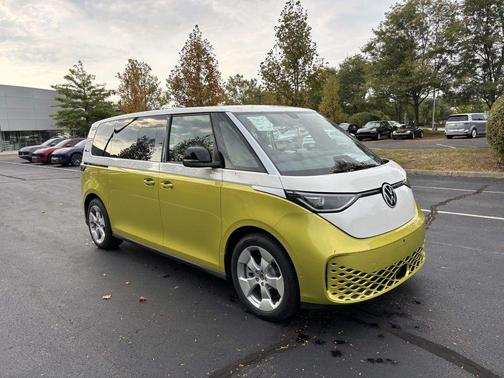
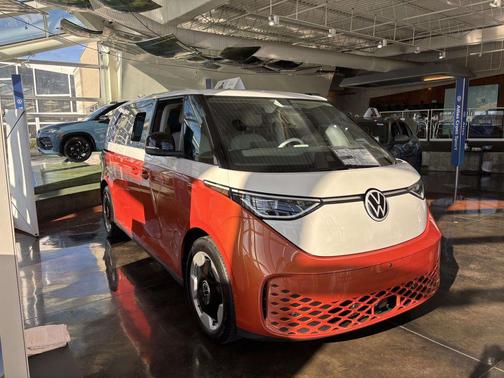
Shop the 2025 Volkswagen ID. Buzz near you
High Price, Low Range
The ID. Buzz’s journey to market was a long time coming that started life as a concept originally shown in 2017. But even after VW faced calls from everywhere to “build it now,” the company was anticipating that production wouldn’t begin until 2025. Fast forward five years and VW finally showed the production version of the ID. Buzz. It went on sale in Europe first and launched on our shores in 2024.
When the ID. Buzz finally hit dealers, the specs were a bit underwhelming. When the concept was shown, VW said buyers would be able to option either an 83-kilowatt-hour battery with rear-wheel drive or a 111-kWh battery with all-wheel drive, DC fast charging, the ability to hit 60 mph in just five seconds and get 270 miles of range a charge. The reality was different: VW did offer the ID. Buzz with either RWD (with 282 horsepower) or AWD (with 335 hp), but there was only one battery offered: a 91-kWh unit. Charging was OK, with VW saying it could go from 10%-80% on a DC fast charger in just 26 minutes. The main problems with the ID. Buzz were range and price.
That 270 miles VW initially promised dropped to 234 miles for RWD models and 231 miles for AWD. In our cold weather testing of the EV, we saw range top out at 30 miles less than its maximum estimate. But even without cold weather, some tests of the ID. Buzz still saw a max range of less than 200 miles.
The other issue was its price. Including $1,550 for destination, VW wanted buyers to plunk down $61,545 to get into a base ID. Buzz Pro S; higher trims, including the limited 1st Editions, could crest $70,000. Sales suffered as a result, as pricing turned it into a niche luxury product that didn’t have mass appeal. In its first full quarter on sale stateside, VW sold less than 2,000; by the second quarter of 2025, sales plunged to just 564. Sales were back up in the fall to just under 2,500 thanks to a last-minute run to dealers by customers trying to take advantage of the federal EV tax credit before it expired.
Read More Volkswagen News From Cars.com:
All Is Not Lost
Strangely, VW is saying the ID.Buzz isn’t dead for good; this is more of a pause. In a statement reported by Automotive News, Volkswagen Group of America CEO Kjell Gruner said the ID.Buzz is an important part of VW’s lineup.
“The ID Buzz remains an important part of the Volkswagen portfolio, and I want to be clear: We are not canceling this product in the U.S. market,” Gruner said. He hinted that the automaker is readying the ID.Buzz to return for the 2027 model year.
Tariffs have also affected the ID. Buzz since it’s produced in Germany. Despite VW admitting it’s been an uphill battle because of the tariffs, the automaker has no plans to produce the eclectic van in the U.S.
Related Video:
Cars.com’s Editorial department is your source for automotive news and reviews. In line with Cars.com’s long-standing ethics policy, editors and reviewers don’t accept gifts or free trips from automakers. The Editorial department is independent of Cars.com’s advertising, sales and sponsored content departments.