

Buy Now or Wait?

Summer is here, so the question naturally arises: Buy before the new models come out this fall and absorb a 2007 model’s year of depreciation, or wait a few more weeks to buy a new vehicle and lose out on the year-end discounts.
“It used to be that if you waited for year-end discounts you paid more than you wanted because those end-of-the-year cars were loaded with options that would offset any discount,” said Art Spinella, general manager of CNW Marketing Research, a Bandon, Ore.-based company that specializes in why people buy the vehicles they do. “But today people are premium shoppers and load cars with 90 percent of the options offered anyway, so by waiting for year-end discounts it’s not that you have to pay more for options as it is, you end up having to settle for the silver car because the blue ones are all gone.”
Spinella says the number of people who wait to buy at the end of the model year is on the rise.
“It used to be that consumers kept their cars three to four years before trading them in. Now they keep them six to seven years. The high cost and length of financing contracts has forced some to keep their cars longer, while others simply don’t buy a new car as often because there are other things they want to spend their money on,” Spinella said, referring to items ranging from homes to high-tech audio and computer systems.
“Since cars don’t change that much from one model year to another, and most people don’t recognize styling changes as much as they used to, there’s not the cheapskate stigma that you waited until year-end to buy to save money,” he said.
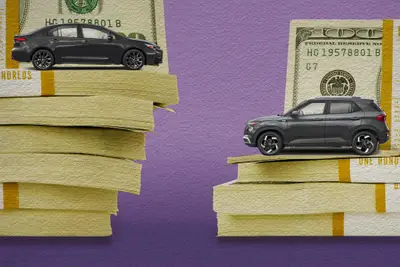
One drawback, of course, is that while waiting until year-end to buy in order to get a 5 to 10 percent discount, you also quickly absorb about 35 percent in depreciation on the 2007 model, as the new 2008 model comes out so soon.
But, at the same time, Spinella said, by waiting until year-end you not only get a discount, you avoid the price increase that comes with the new model, which helps offset some of the loss from depreciation.
“If you only keep a new car three years, you lose big from depreciation when buying at year-end, but if you keep a car six to seven years, you don’t lose as much on depreciation because 6- to 7-year-old cars are in good demand as used vehicles, and that means you’ll get a good chunk of change for yours when you trade it in,” he said.
“If you trade your car in one to three years, buy at the beginning of the model year or in January or February when the weather means that not only do the automakers give incentives, the dealers toss some of their own money into the kitty to help sell cars,” he said.
And what, perhaps, are the best year-end buys in the market?
“Big SUVs; they are knocking thousands off on those vehicles,” Spinella said.
Related
When an Auto Writer Buys a Car: Part I (KickingTires)
More Cay Buying News (KickingTires)


