Shop smart with vehicle certification and condition programs
Manufacturer Certified
A used car is certified by the original manufacturer (e.g., Ford, Toyota, BMW) and sold by a franchised dealer of that brand.
Factory warranty
The vehicle manufacturer will typically honor the warranty. If a Ford Certified Pre-Owned vehicle breaks down, any authorized Ford dealer in the country will honor the warranty.
Strict inspection standards
Strict, uniform, and high-standard inspection (often 100+ points) set by the corporate factory.
Key advantage: Peace of mind
Highest level of peace of mind and resale value. Usually includes manufacturer-backed roadside assistance, free loaner vehicles, and complimentary satellite radio trials.
Third-Party Certified
A dealer (e.g., a Chevrolet dealer) sells a different brand (e.g. a used Ford) and labels a used car "certified."
Third-party warranty
The dealer or a third-party insurer provides a warranty, this may not be the manufacturer vehicle. It may have higher deductibles or fewer covered components compared to a factory warranty.
Inspection standards vary
Inspections vary widely and are often less rigorous than manufacturer standards.
Key advantage: Affordability
Can be cheaper; offers a way to get a "certified" used car for a brand that doesn't have a local dealer nearby.
A dealer independently verifies the vehicle, offering a snapshot of its condition. A scanner can be used during verification.
Physical inspection
The dealer verifies the vehicle for visible physical damage like dents or scratches.
Electrical scan (optional)
The dealer plugs a diagnostic scanner (OBDII) into the car. The scanner retrieves real-time information from the vehicle, which may identify electrical or mechanical issues.
Key advantage: Knowledge
Use this report to learn more about the vehicle and see if maintenance is on the horizon. Please note that vehicle condition warranties are excluded.
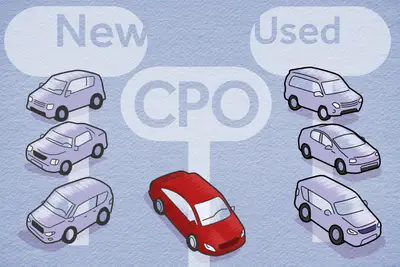
A CPO used car is a certified pre-owned car and they’re very different from the average used car. A car can be certified either by a dealer using an automaker’s specifications,
or dealers can certify cars on their own. There are a number of advantages that come along with certification:
A multipoint inspection: An automaker or dealer will check on hundreds of parts and systems to ensure they meet the minimum requirements.
An extended warranty: Typically, the CPO car will get a warranty that extends the miles covered, the months remaining, or both to the bumper-to-bumper warranty or powertrain warranty.
Other incentives: CPO cars often come with a vehicle history report at no extra charge, roadside assistance programs and more.
One element to weigh, though, is that CPO cars typically run more expensive than non-CPO cars, so consider the benefits versus that extra cost and decide which approach is best for you.
Compare CPO Programs
Explore how different manufacturer’s certified pre-owned programs stack up against each other.