





chicagotribune.com's view
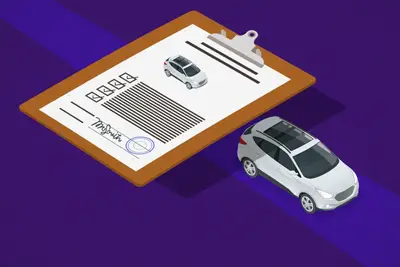
The Toyota RAV4. Funny name. But no one in Detroit is laughing. That’s because the RAV4 may prove to be the story of the year in the auto industry for 1996 and beyond.
A subcompact sport-utility vehicle, which doesn’t go on sale in the U.S. until December, the RAV4 has attracted the attention-and become the envy-of rivals and wannabes. And it was the most talked about vehicle at a preview last week of the Chevrolet Geo Tracker, at which time we were able to test drive Chevy’s new sport-utility.
Chevrolet, Suzuki and Chrysler have offered small sport-utilities for years: Chevrolet, the Tracker; Suzuki, the Samurai and Sidekick; and Chrysler, the Jeep Wrangler.
But this entry from Toyota, has given credence to a market segment that has been overlooked for years. One reason is that the teenie Samurai scared the bejabbers out of so many people that they fled subcompact SUVs for the size and security of compacts such as the Blazer, Explorer and Cherokee.
Other than perceived safety, another factor that kept consumers cool to small sport-utilities was the appeal of those larger compact SUVs at affordable prices-at least to begin with. The more popular compacts became, the higher the prices rose, so that you can now easily spend $25,000 to $35,000 to put one in your driveway.
With the RAV4, Toyota is turning the focus back to safety by offering dual air bags as standard, four-wheel anti-lock brakes as optional, as well as prices people can afford-reportedly a base less than $20,000, which is at least $5,000 less than the price of a compact.
RAV4, which will be offered in two- and four-door versions, has prompted those offering a mini-sport-utility to spruce up and beef up their models while sending others in search of one to call their own. One of the automakers hoping to capitalize on the attention being given to RAV4 is Chevrolet, which relies on Suzuki of Japan to supply it with its Tracker lineup, offshoots of the Sidekick. For 1996 Chevy adds a larger four-door Tracker.
Ford, which has no mini-utility, tried to obtain one from Kia of South Korea, but the deal fell through and Ford may build a sport-utility off its next generation Escort car. Honda only a few weeks ago (Cartalk, Sept. 17) said it will display a sport-utility built off its Civic sedan to gauge public reaction to not only selling one here, but also building it here. Chrysler has a redesign coming early next year of its Wrangler that, like the RAV4, will offer dual air bags, but not four doors.
Chevy’s new four-door Tracker comes in base and upgraded TSi versions in hardtop only. Before ’96 Tracker came as only a two-door in softtop or hardtop.
The four-door is built on a 97.6-inch wheelbase (11 inches longer than the two-door) and is 158.7 inches long. The RAV4 is built on a 94.9-inch wheelbase, but is longer at 162 inches.
Not only is the four -door Tracker longer and heavier than the two-door, but it also sports dual air bags as standard and four-wheel ABS that works in two- or four-wheel-drive mode as optional to emphasize safety in a small machine.
Unfortunately ABS is a $565 option, an extra-cost goodie to keep the base price less than the $20,000 level that Toyota is aiming at with the RAV4, which also will have dual bags as standard, but ABS as an option.
In testing the base model four-door with 4WD, we found price a concern. It started at $15,635, which includes the $315 freight charge, but options pushed the sticker to more than $19,000 without three of the items most folks want on their vehicles-power locks, power windows and power mirrors, a package that runs $580 more.
To keep the base price down, Chevy makes a lot of items optional (ABS $565, automatic transmission $800)
Chevy insists it’s trying to keep the price down so its mini Tracker doesn’t bump up against its compact B lazer.
Phil Carlisle, Tracker product manager, said dealers are being encouraged to display vehicles equipped in the $16,000 to $17,000 range to keep the $5,000 spread between it and Blazer.
“We don’t want Tracker to step on Blazer’s toes,” Carlisle said. “We want Tracker to draw more people into the SUV segment rather than pull them down from the Blazer.”
In testing the four-door Tracker, mini-utility candidates must keep in mind that you don’t get the car-like ride and handling and certainly not the room that you do in a compact. In return for lower price and higher mileage, you must accept having to count the tar marks in the road, considerable body lean, a little top-heavy wobble in sharp corners such as on/off ramps and a 4-cylinder engine that needs a running start to take that steep hill. You want plush pampering and performance? Grab $5,000 more and move up to a compact.
The 1.6-liter, 95-horsepower, 16-valve 4-cylinder in the base model four-door Tracker we tested (the TSi adds body color bumpers and bodyside moldings and upgraded seats) is aimed at obtaining optimum mileage-22 miles per gallon city/25 m.p.g. highway with 4-speed automatic (24/26 with standard 5-speed).
The 1.6 reacts a bit more quickly with the 5-speed, but will never pass as a sports model. The RAV4, by comparison, will be powered by a 2-liter, 120-h.p., 4-cylinder.
Interior room isn’t bad and feels like a ballroom compared with the two-door. Rear seat legroom is a tad tight in the four-door, however. Road noise is kept to a minimum with the front windows closed. Crack those windows a tad, and it starts to sound like a locker room. Word of warning: open all four windows and the wind thumping into the rear compartment will batter the eardrums of those in the cheap seats.
Tracker is solid for its size, but heavy winds on the interstate will cause the slab-sided SUV to dance a bit side to side.
Visibility is excellent from the large glass area. In back, the full-size spare tire is mounted to the rear swing-out door so it doesn’t need to be removed to get to the cargo. But the spare sticks up into the driver’s rear field of vision. Chevy ruled out all three solutions to blocked vision-using a mini-spare, which owners dislike; placing the spare under the body where there’s no room; or putting it in the cabin where it would block cargo room.
As for cargo, split folding rear seat backs add to capacity. Also, the seat back/bottom lifts/folds to rest flat against the front seat backs just by pulling a handle.
While the Suzuki Samurai left folks with the impression that mini-utilities were as safe as carrying a hand grenade in your lap because of its small size and lack of safety features, the Tracker features dual air bags and, as noted, four-wheel ABS that’s costly, but does function in two- or four-wheel drive mode. In many larger SUVs, you lose ABS when 4WD is engaged. Nice touch.
And Tracker offers 4WD. Studies show that 90 percent of all 4WD owners never go off-road and seldom use 4WD, but they like to know they have it if they need it.
To show how 4WD works in Tracker, Chevy found a sand dune. Tracker went up, over, around and through without problem. Considering its size and short front and rear overhang, one of the benefits of a small SUV is that front and rear don’t bump, bounce or break against most off road obstructions when you take to a playground.
One gripe: “Like a Rock” is supposed to apply to durability, not the stiffness of the seats. The first 100 miles spent roaming the countryside felt like 1,000 miles on the tailbone. Long-distance in Tracker batters the butt. If you want to be cushioned, move up to a Blazer and batter your budget instead.
Notable features include daytime running lamps, 5-m.p.h. bumpers, side-door guard beams, front and rear tow hooks, 15-inch tires (wider profile with 4WD), hood release in the locking glove box, Scotchgard protected seats, stainless steel exhaust, galvanized steel body panels for all but the roof and a 14.5-gallon fuel tank (only 11.5 gallons on the two-door).
Take note: Manual locking hubs are standard; automatic locking hubs a $200 option. And there is no shift-on-the-fly capability to engage four-wheel-drive, so you must stop to move the transfer case lever.
>> 1996 Chevrolet Geo Tracker 4WD Wheelbase: 97.6 inches Length: 158.7 inches Engine: 1.6-liter, 95-h.p., 16-valve, 4-cylinder Transmission: 4-speed automatic EPA mileage: 22 m.p.g. city/26 m.p.g. highway Base price: $15,635, includes $315 freight. Price as tested: $19,521. Add $1,171 for option group No. 3 including air conditioning, electronic AM/FM stereo with digital clock upgrade from the $220 AM/FM stereo with cassette, carpeted mats and bodyside moldings; $800 for automatic transmission; $565 for four-wheel ABS; $335 for alloy wheels; $200 for automatic locking hubs; $175 for cruise control; $125 for rear window wiper/washer; and $75 for skid plates for underbody protection off-road. (The power windows/locks/mirrors option package runs $580.) Pluses: Longer, larger, four-door model now available with dual air bags standard. ABS that functions even when four-wheel-drive is engaged as optional. Great visibility. Very good cargo capacity. A lot cheaper than most larger compact sport-utility vehicles. High mileage and 4WD insurance in bad weather or off road. Minuses: Cheaper than most compact SUV’s only if you forgo the myriad high-cost options. ABS and automatic transmission alone add $1,365 to price and the in-demand (especially among women) power options-door locks, windows and mirrors-add another $580. Seat backs as stiff as a granite slab. The 1.6-liter engine acts asthmaticwith automatic. >>
Latest news


