





What Car Shoppers Need to Know
- The DB12 S is a sharper, quicker and more capable variant of the grand tourer.
- Power increases from 671-690 horsepower.
- All yours starting at $276,000
Don’t you love a good “Aha!” moment? The last one I had was in the lovely 2026 Aston Martin DB12 S. Long gaps between reference drives mean it’s sometimes tricky to suss out the differences between models no matter what the reviewer might say. I’m usually fairly forthright about this stuff; I’m not sure I can truly say a Porsche 911 Carrera S is sharper and quicker than a 911 Carrera, but so decree both Porsche and the specs sheet. Aston says the Vantage and all its iterations are decidedly pointier than the larger, cushier DB12, but it’d been a few months since I drove a Vantage S, and I feared I’d have to take Aston at its word.
Related: The 2026 Aston Martin Vantage S Is a Leather-Wrapped Chainsaw: Review
Not so: same twin-turbo 4.0-liter V-8 and eight-speed automatic transmission, same platform, different results. Not drastically, but meaningfully so. Where the Vantage is a super sports car, the DB12 is the super grand tourer, focused more on a balance of speed and comfort to the Vantage’s max-attack ‘tude. The difference in personality revealed itself somewhere in the squiggled canyon roads above Malibu, Calif., where I found the Vantage S’ Sport+ chassis and throttle calibration a bit too touchy for the tight, technical roads. I most enjoyed the DB12 S in Sport+ mode, which noticeably shored up body roll and suspension motion.
What’s the Difference Between the Aston Martin DB12 and DB12 S?
- Takeaway: The S adds a bit more power, a new exhaust, comprehensive chassis upgrades and new cosmetic options.
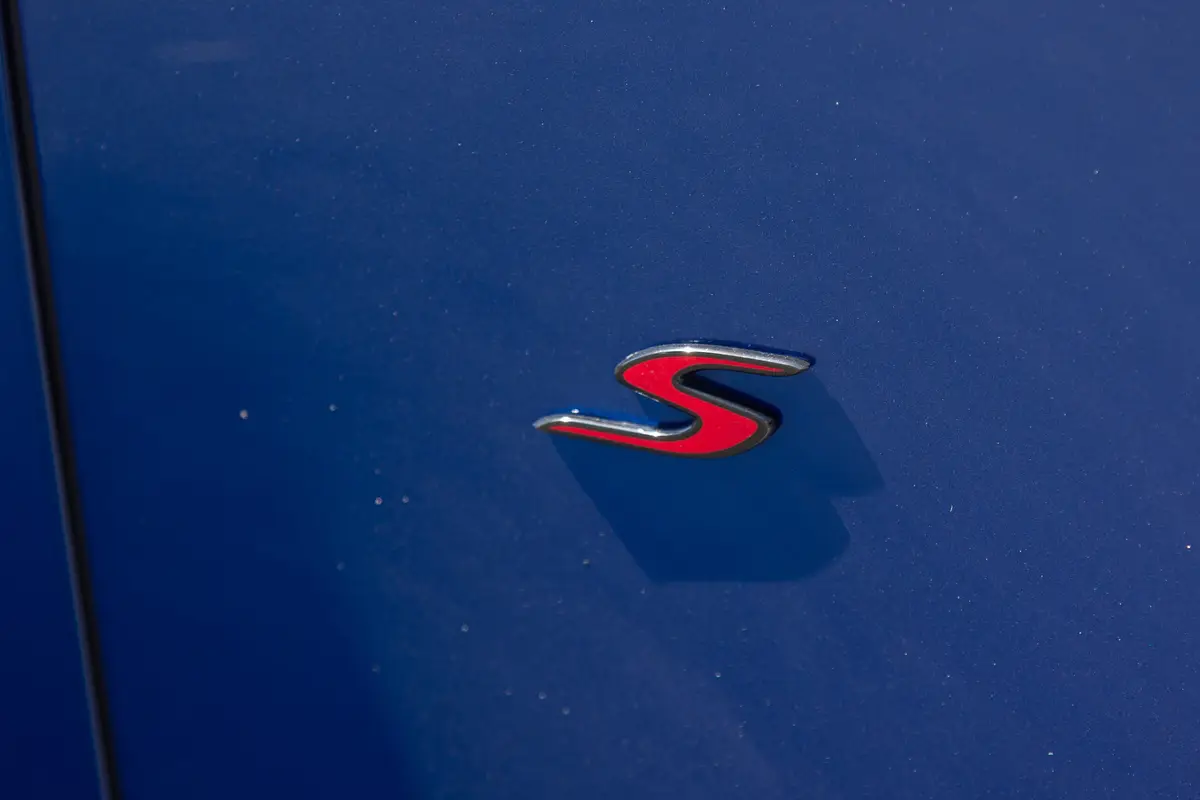
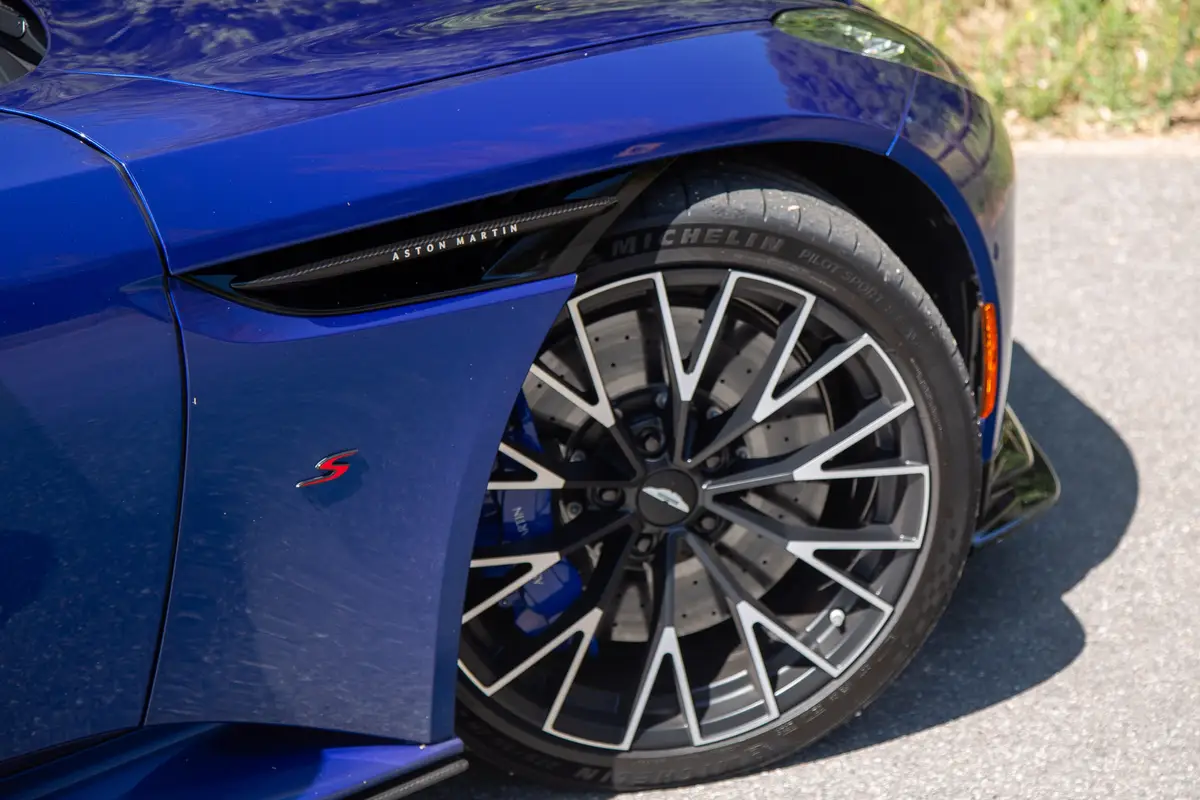
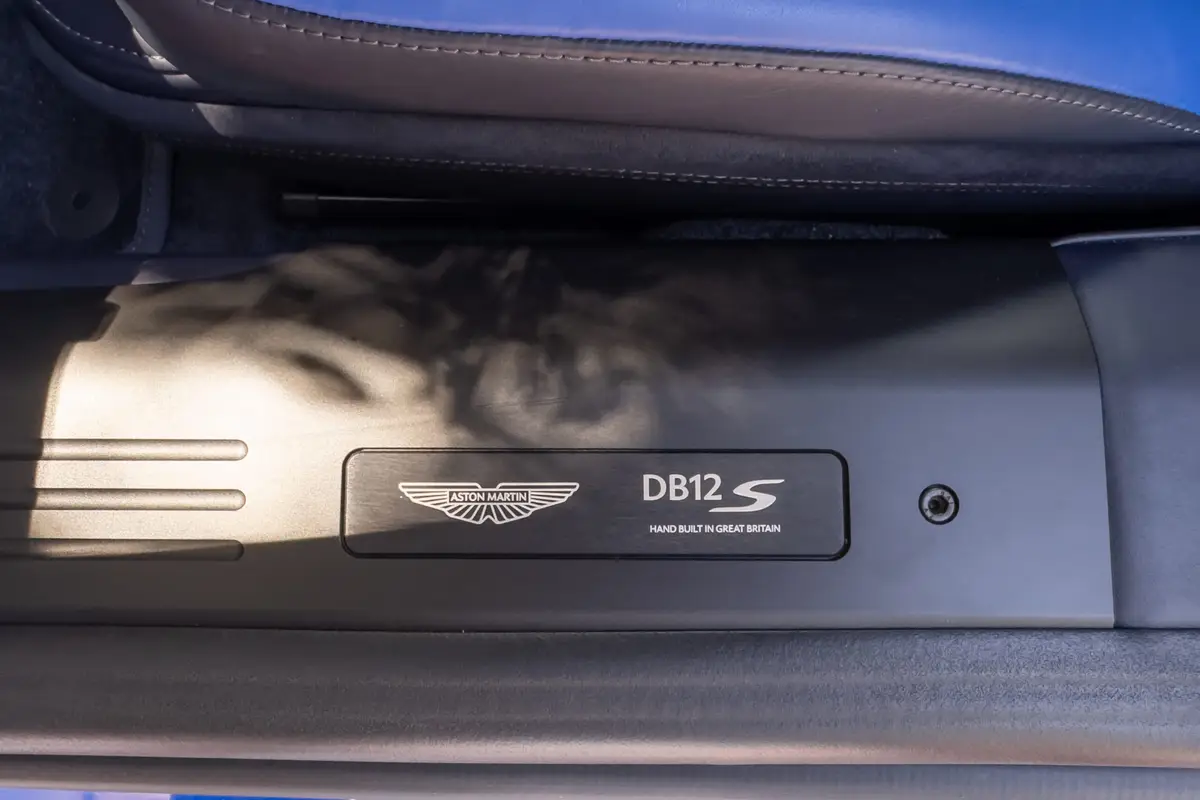
But what about the difference between the DB12 and DB12 S? Just as it is on the Vantage and DBX, that crimson, enamel-filled “S” badge indicates comprehensive but restrained performance gains over the base car, its influence extending to powertrain, chassis and style alike. The standard 671 hp swells to 690 hp, complemented by an unchanged 590 pounds-feet of torque. Transmission logic is revised, with particular attention given to the launch control system that returns a 0.1-second improvement in the 0-60 mph time, which is now 3.4 seconds.
Expert Rating: 7.9/10
- Powertrain: 10/10
- Ride quality: 8/10
- Handling: 8/10
- Steering feel: 8/10
- Driver comfort: 9/10
- Interior quality: 9/10
- User interface: 7/10
- Value: 7/10
- Overall appeal: 10/10
- Fuel economy: 3/10
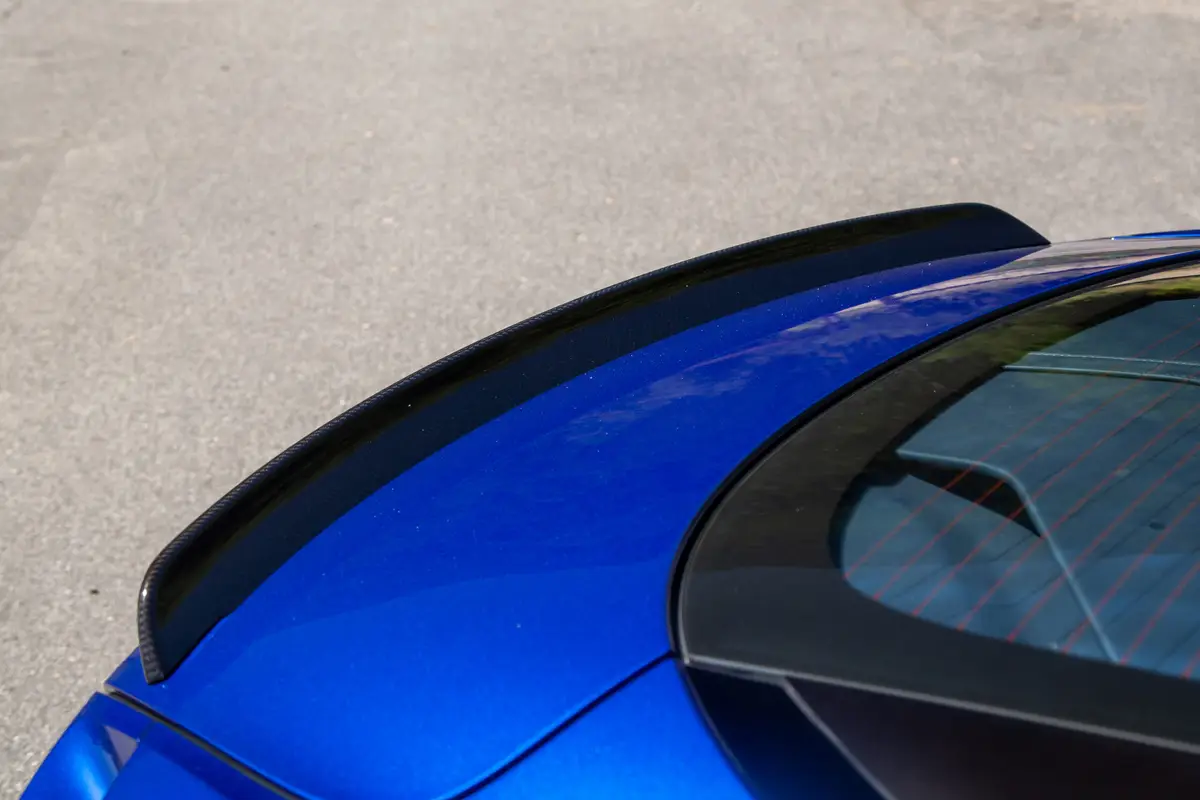
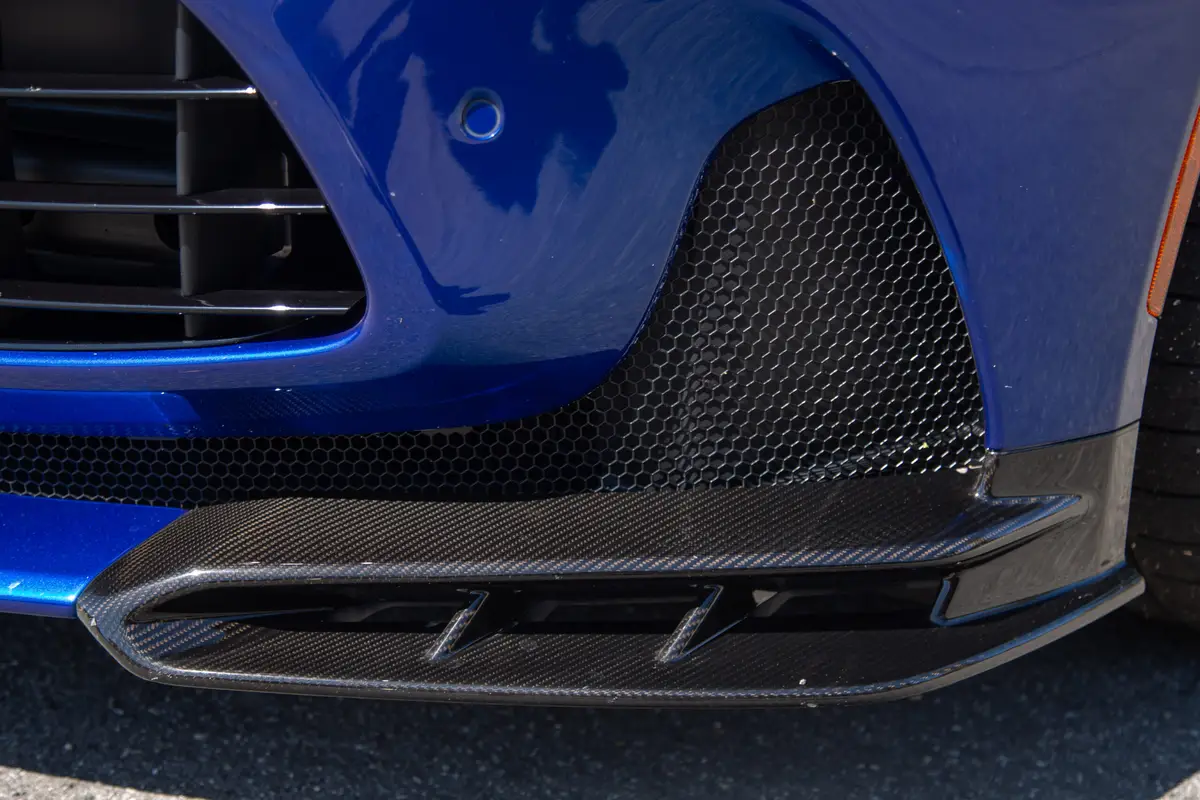
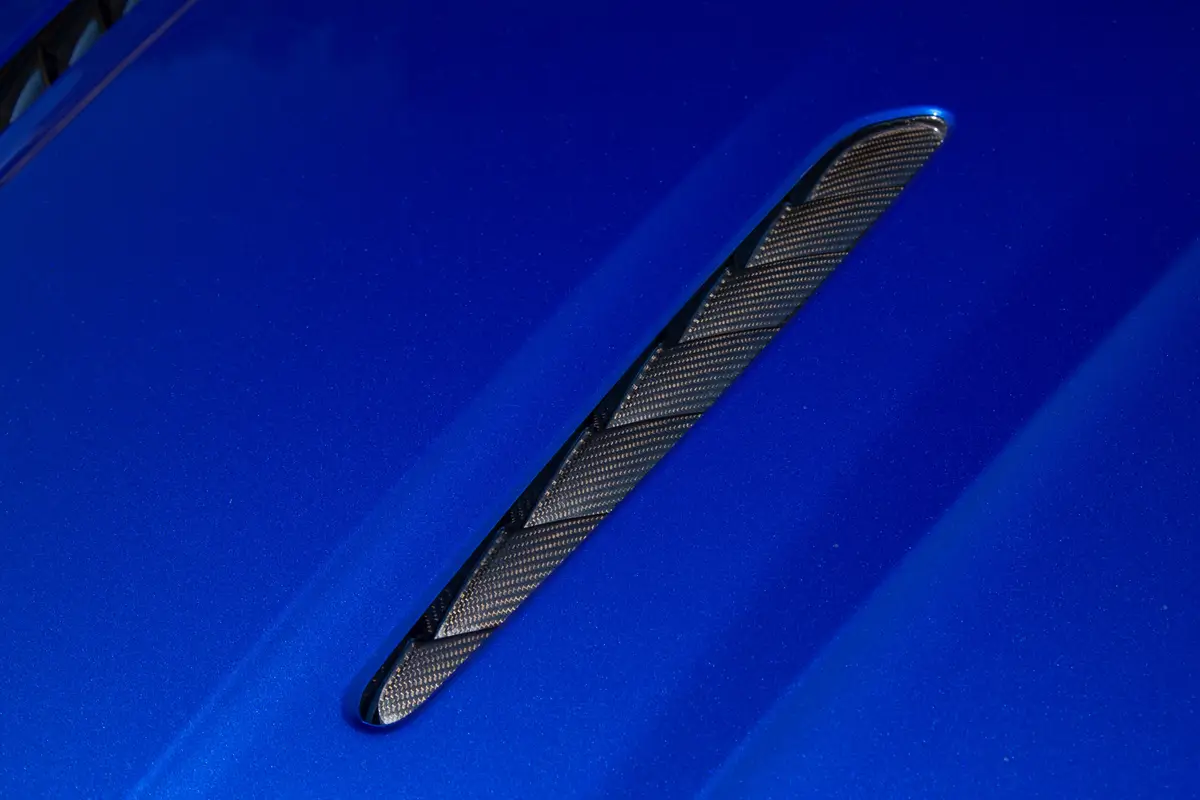
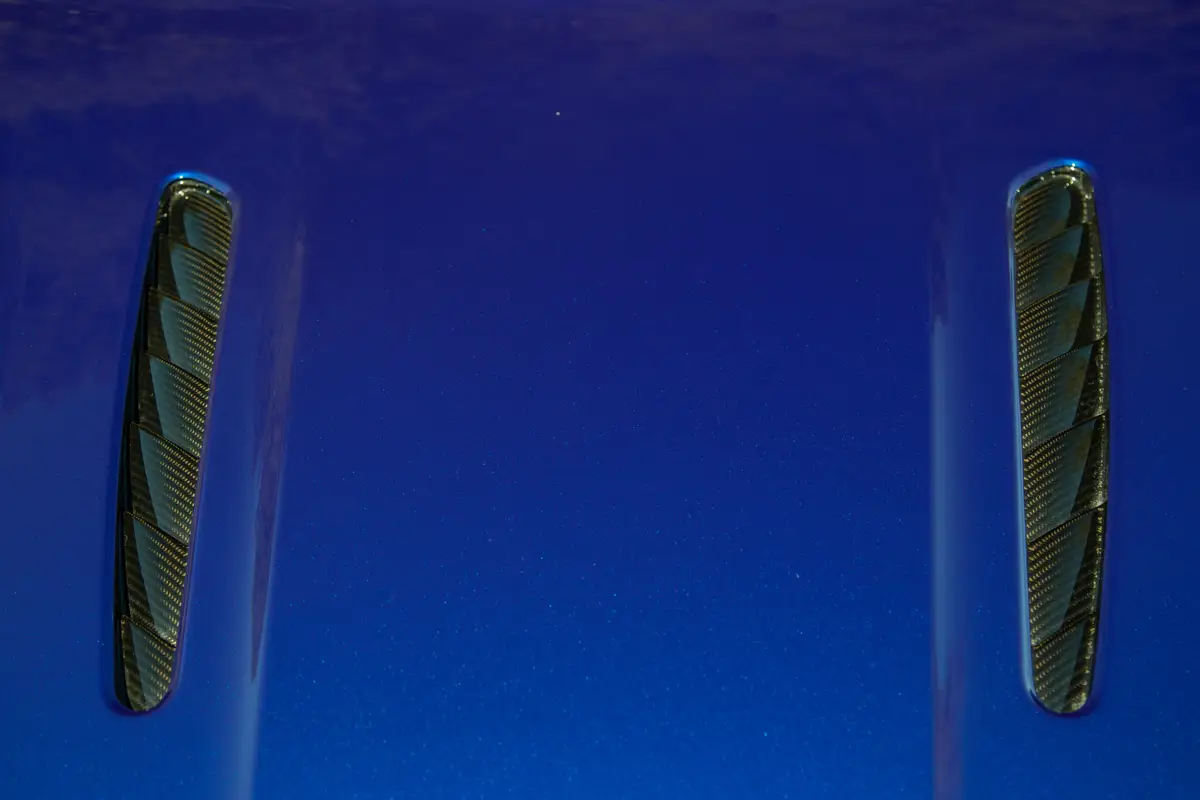
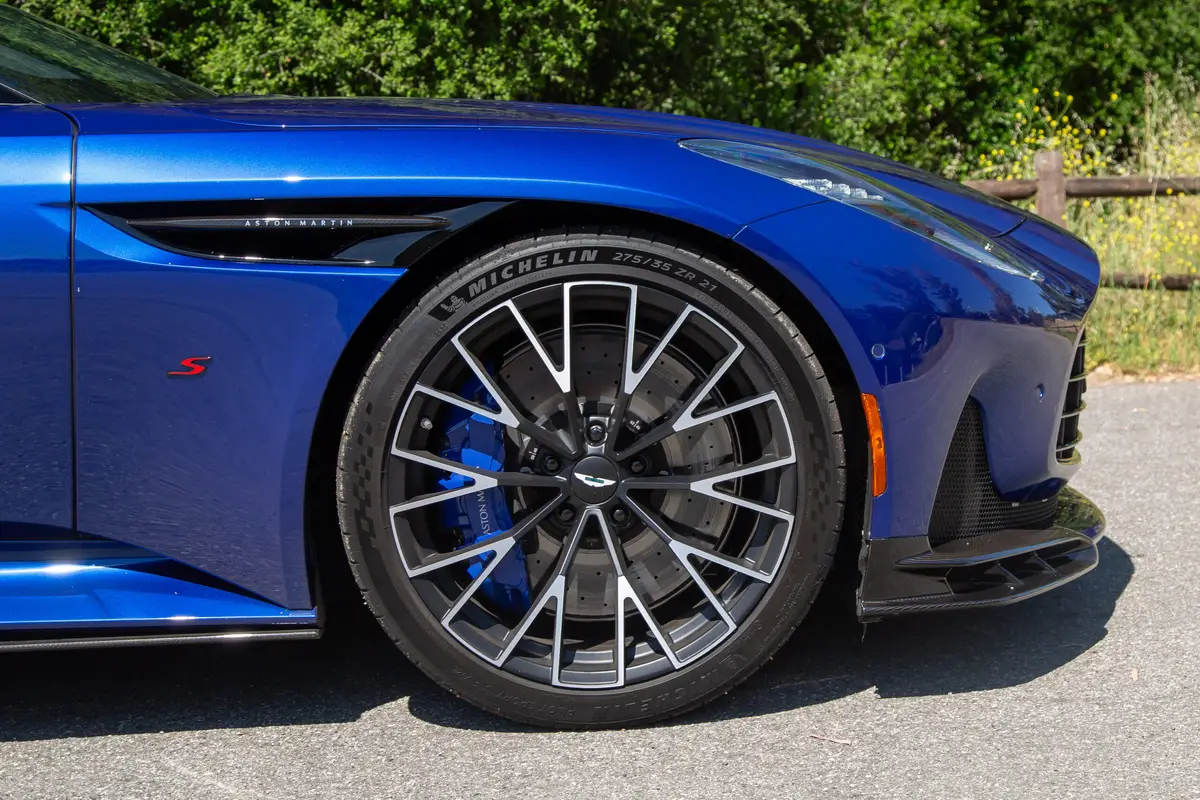
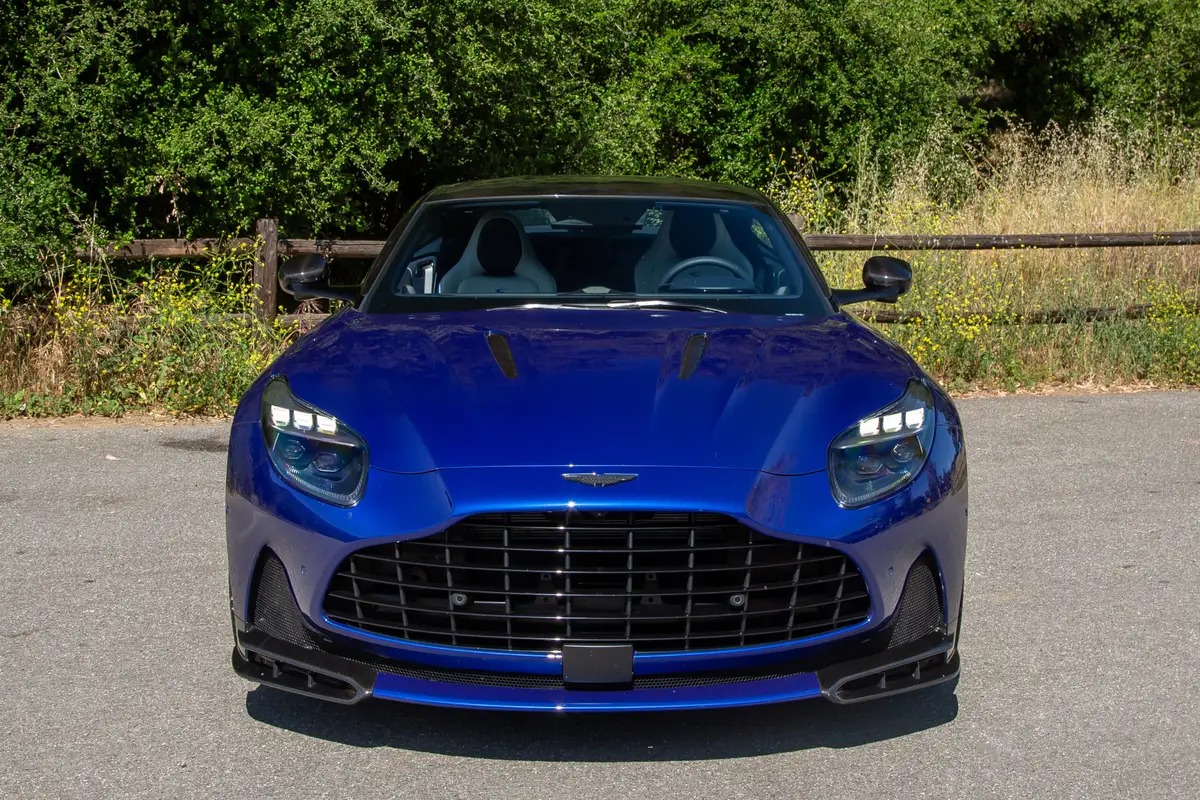
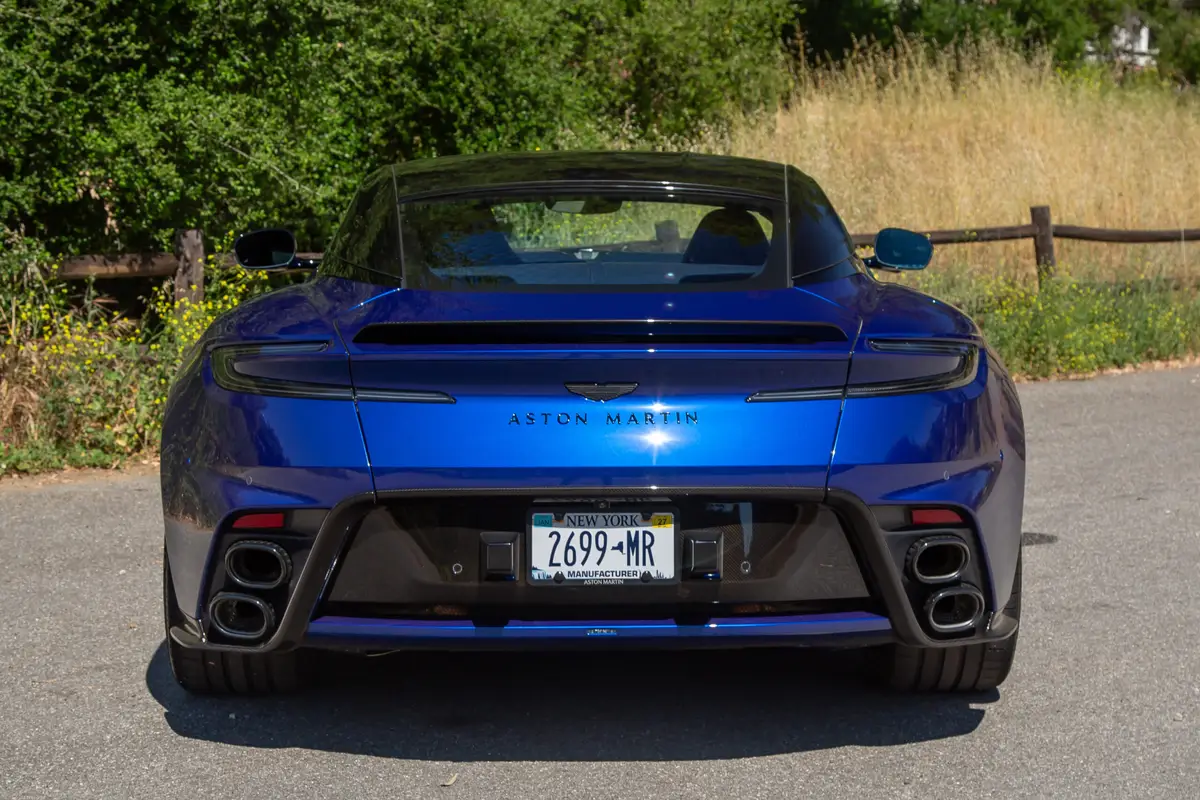
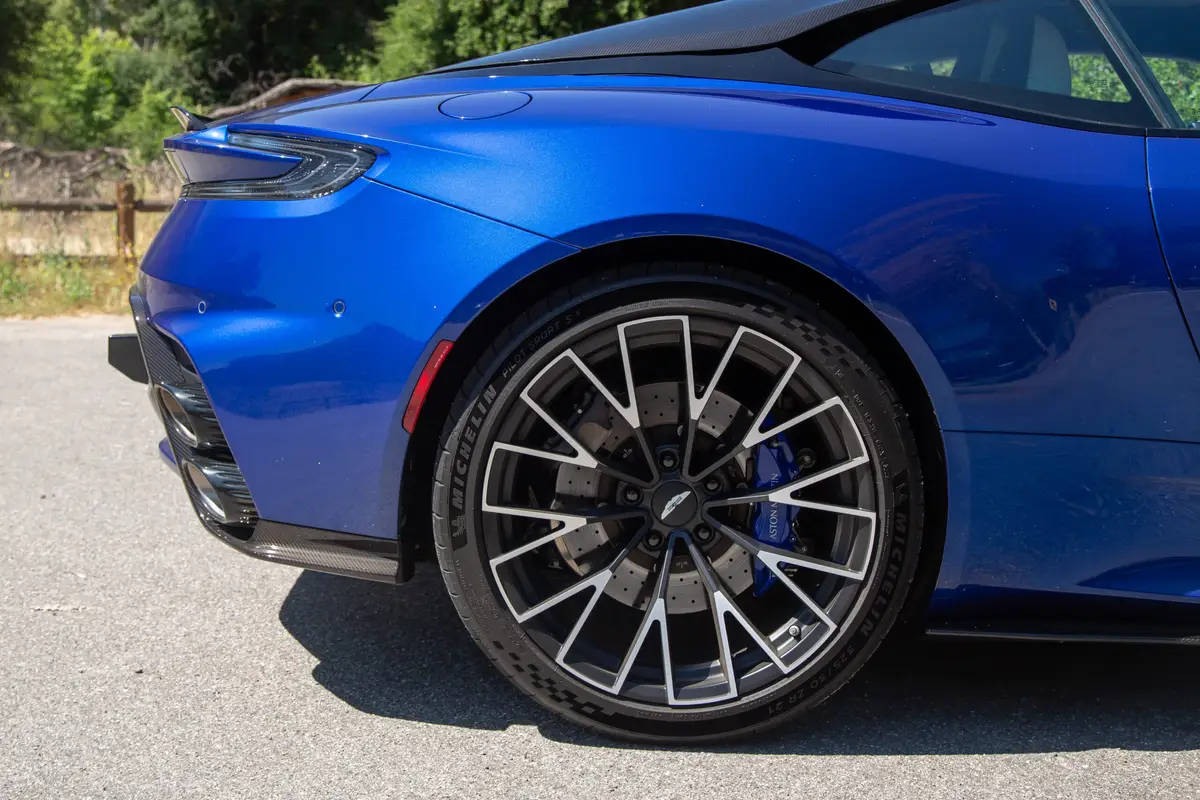
A new stainless-steel exhaust thunders through quad chutes out back, while an optional titanium system deafens by an additional 1.5 decibels while also dropping a neat 26 pounds versus the steel exhaust. There’s a new stiffer rear anti-roll bar, retuned software for the adaptive shocks and electronic limited-slip rear differential, and amendments to the suspension geometry. Massive carbon-ceramic brakes are now standard — you’ll fork over $14,500 to equip a standard DB12 as such — and a new front splitter, hood vents and rear diffuser tastefully increase the visual aggro.
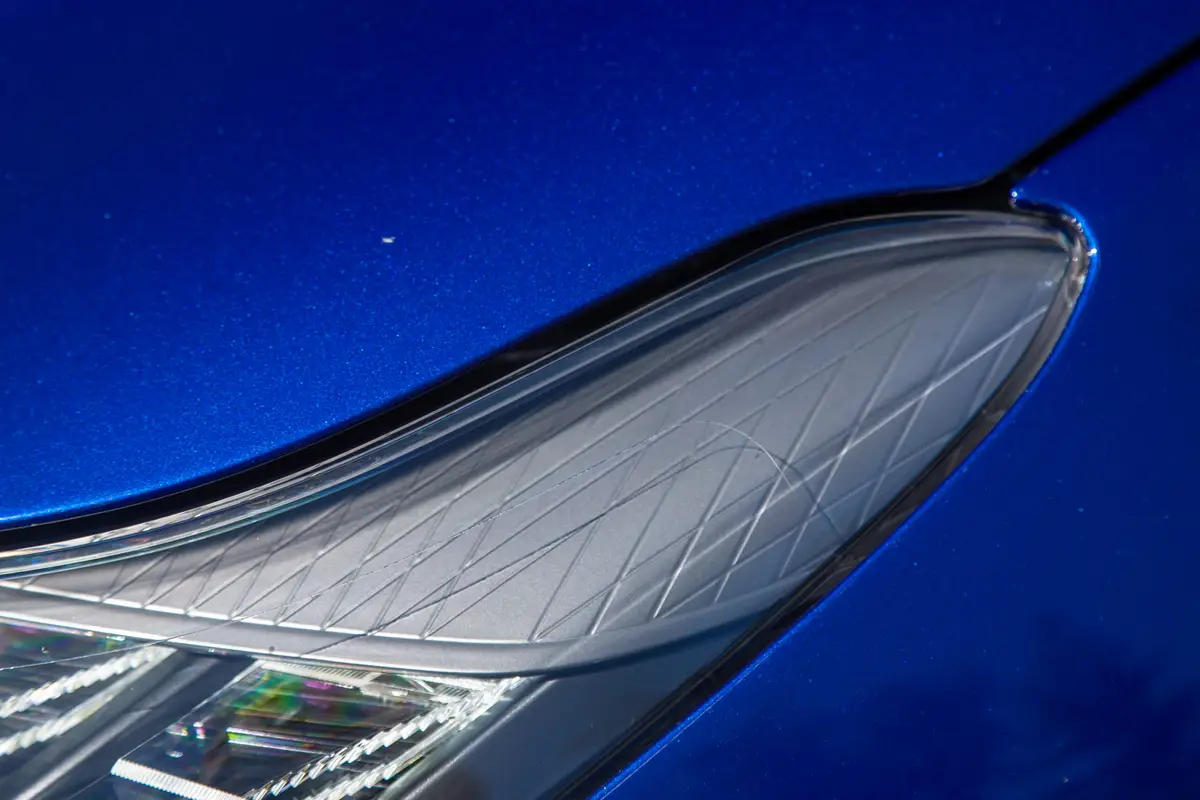
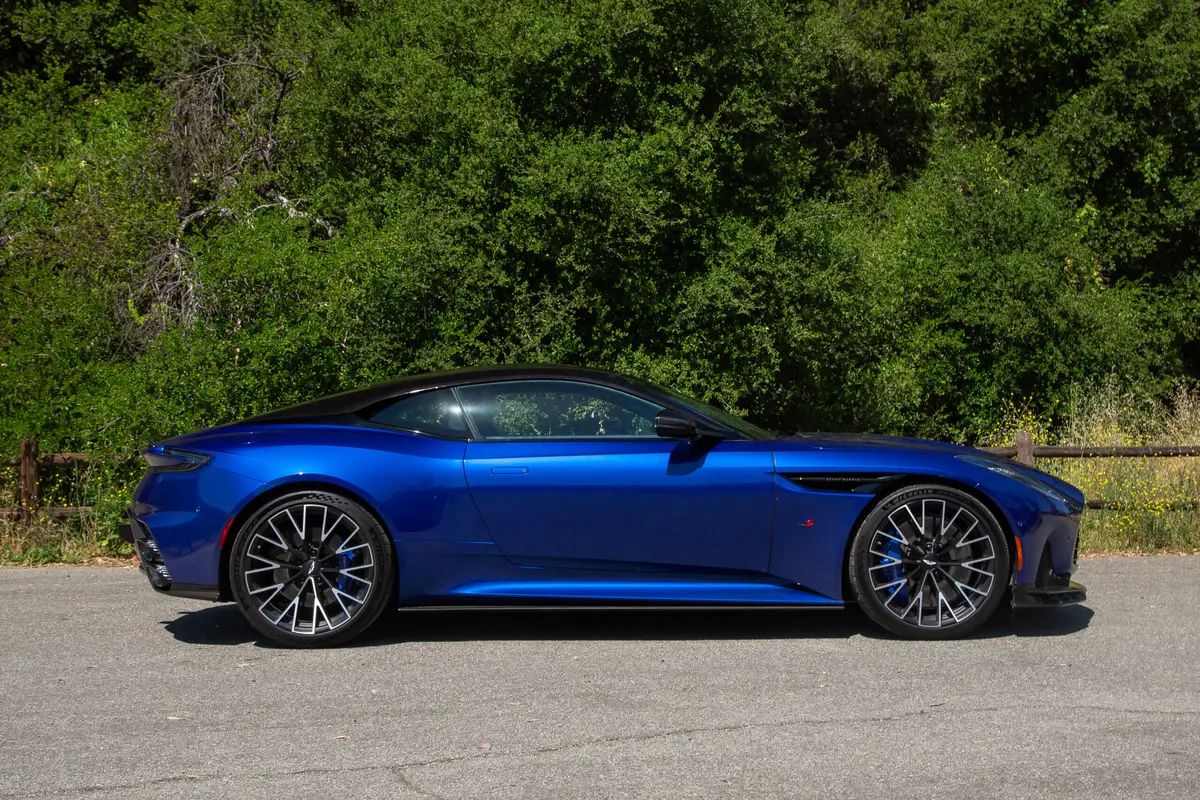
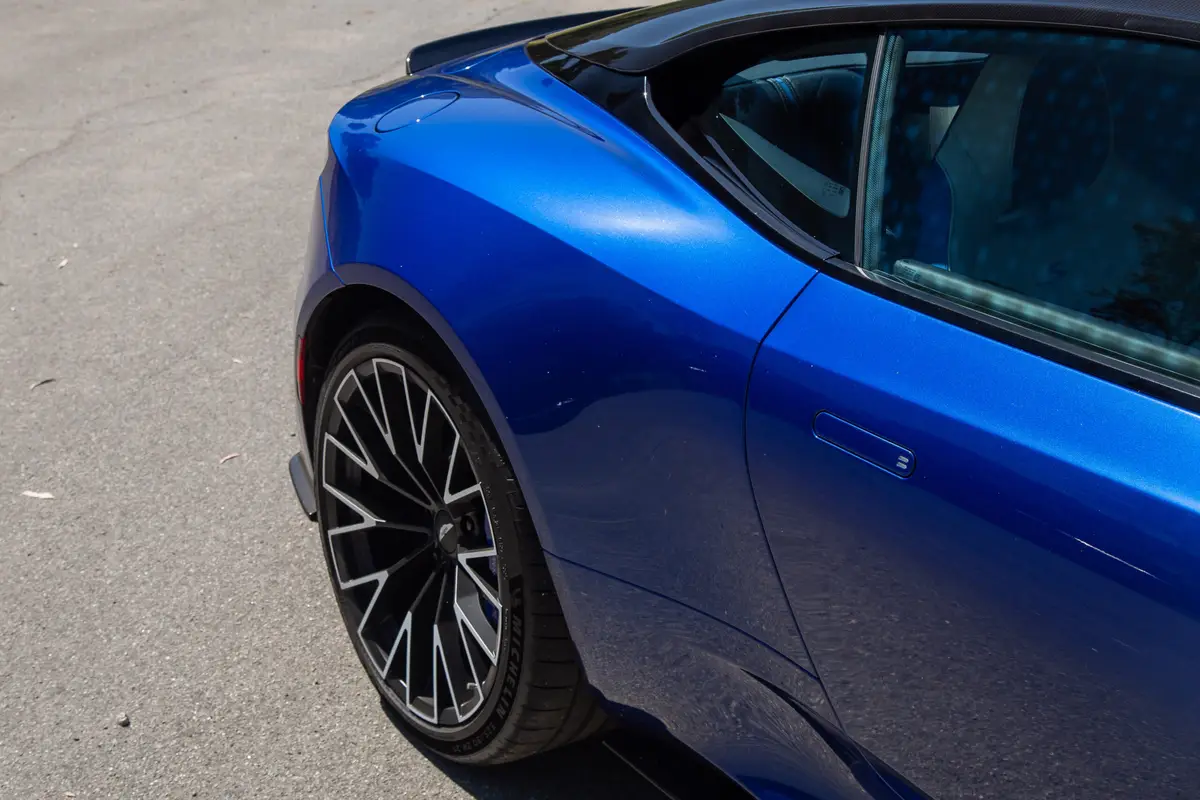
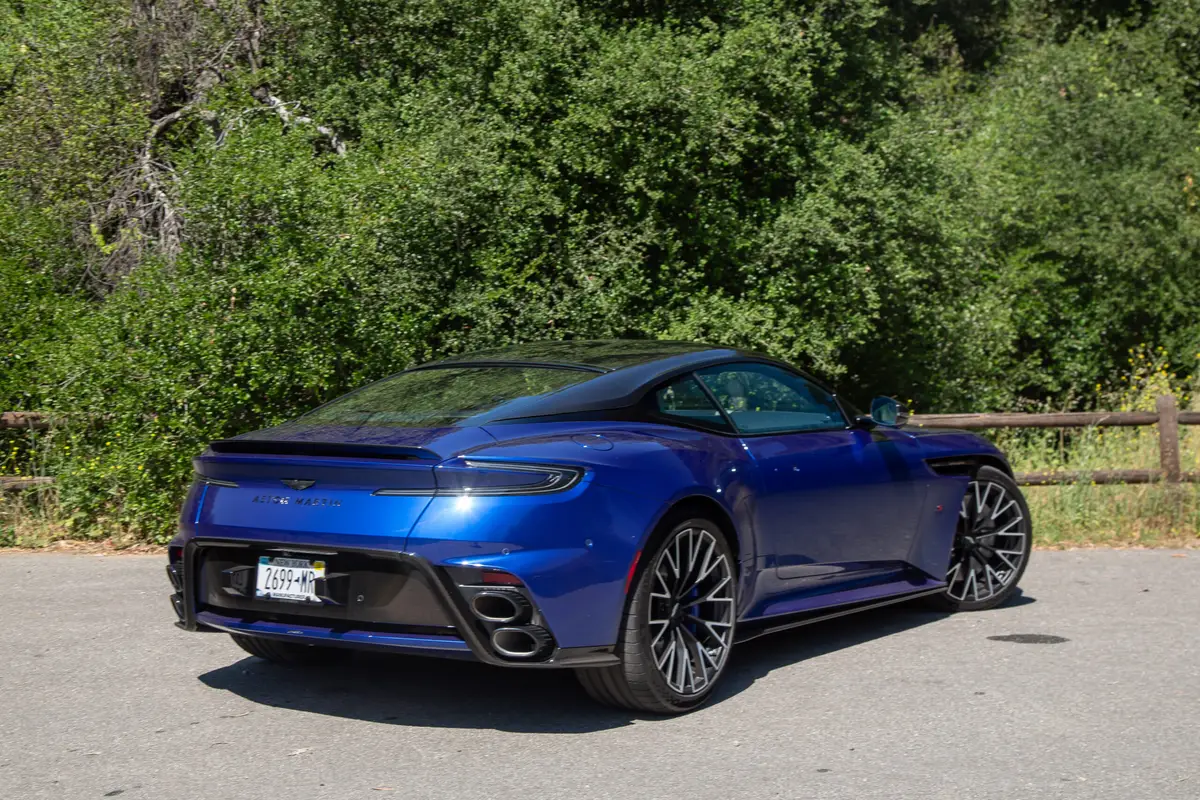
We don’t talk styling here at Cars.com often, but … c’mon. The DB12 — in all its forms — is easily one of history’s most beautiful cars (though admittedly, I seem to mumble this around every two-door Aston I come across). More cohesive and proportional than the DB11 and not as exuberant as the current Vanquish, the DB12 is a master class in the balance of grace and muscularity. In the right colors, it could easily pass for the “big” Aston — Vanquish, DBS, etc. — especially when contrasted with its direct predecessors. The DB9 and 11 are beautiful, but the 12 is stunning.
Does the Aston Martin DB12 S Have Apple CarPlay Ultra?
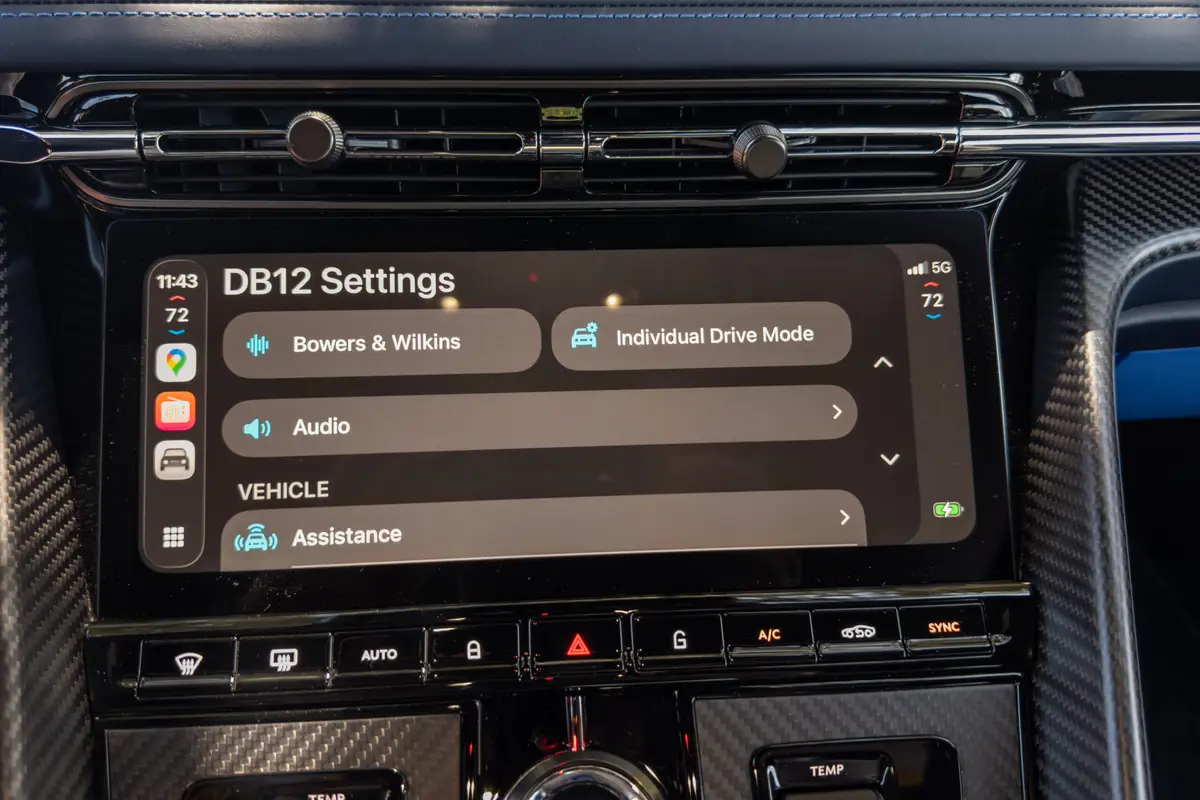
- Takeaway: Like all current-generation Aston Martins, the DB12 S incorporates both standard CarPlay and CarPlay Ultra.
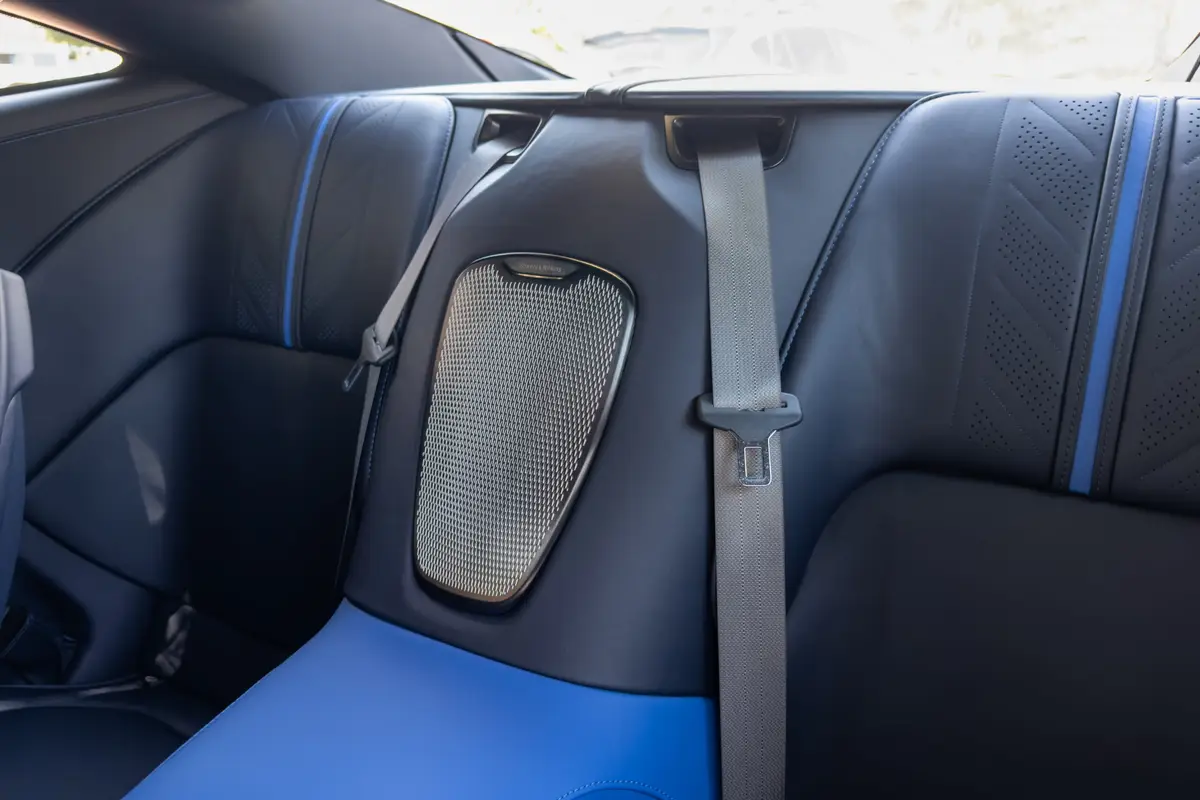
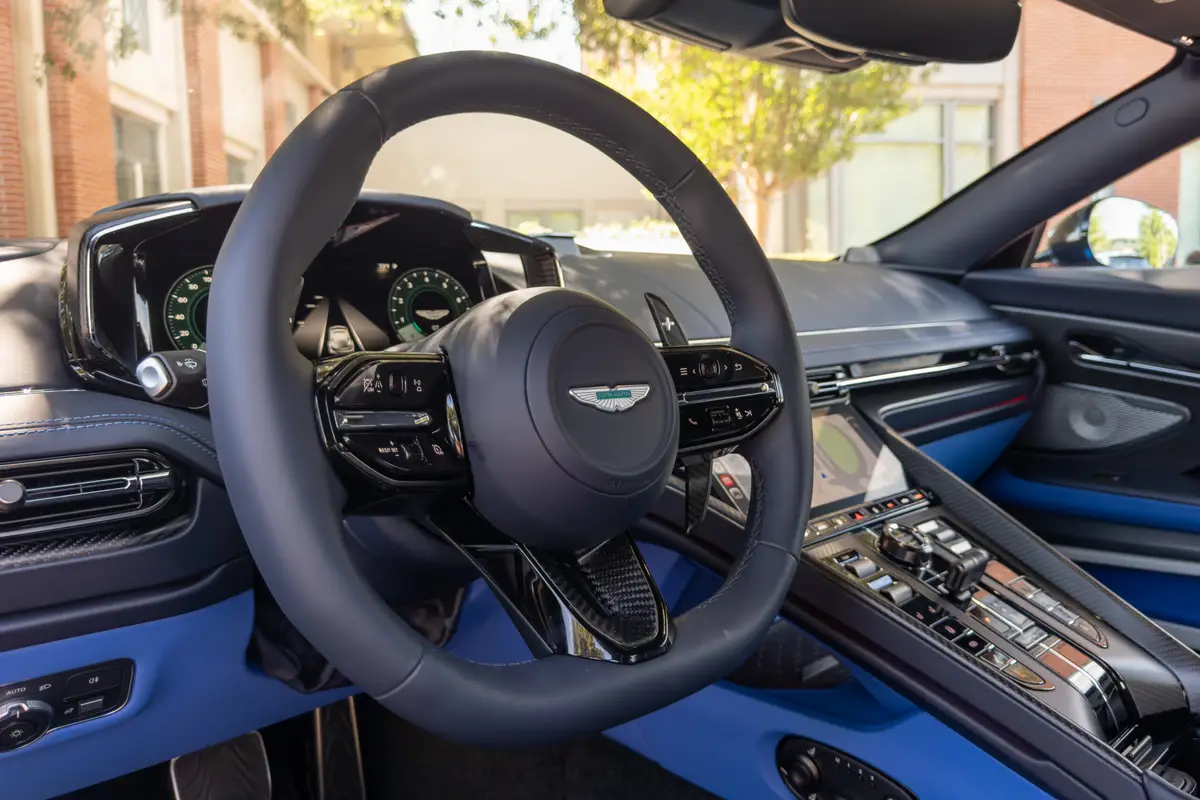
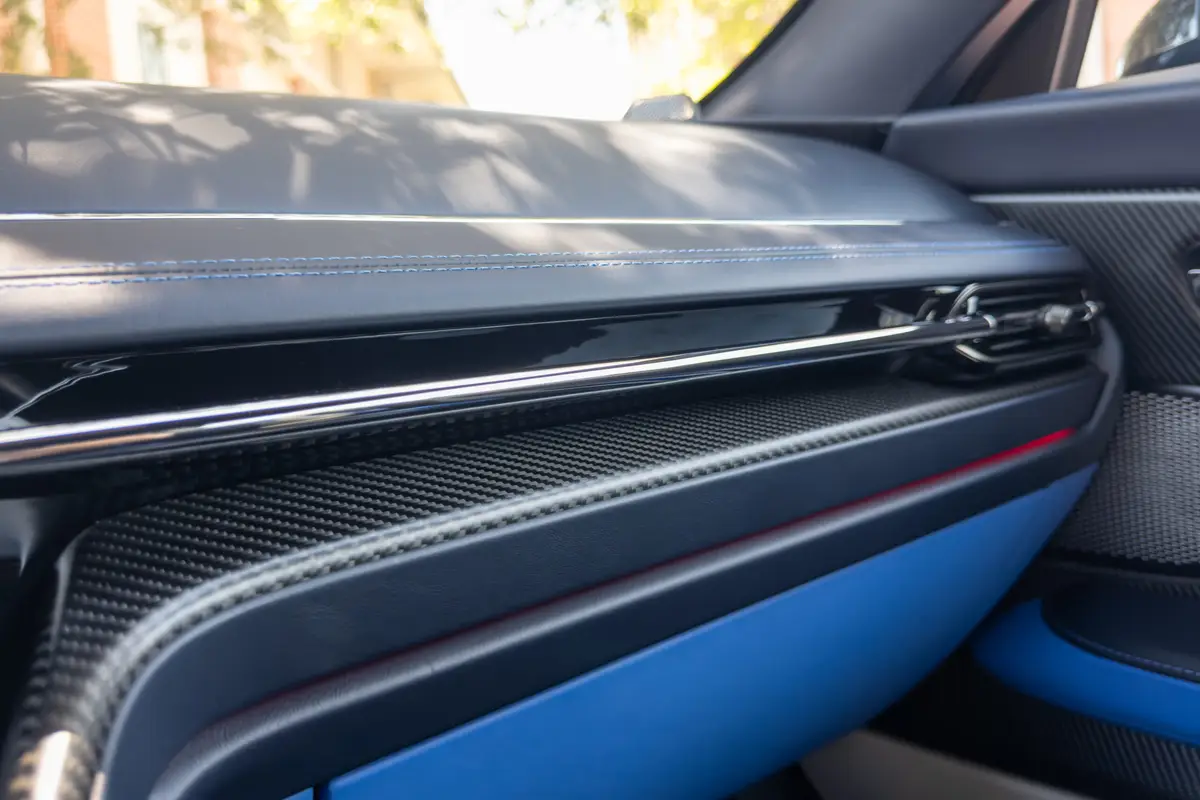
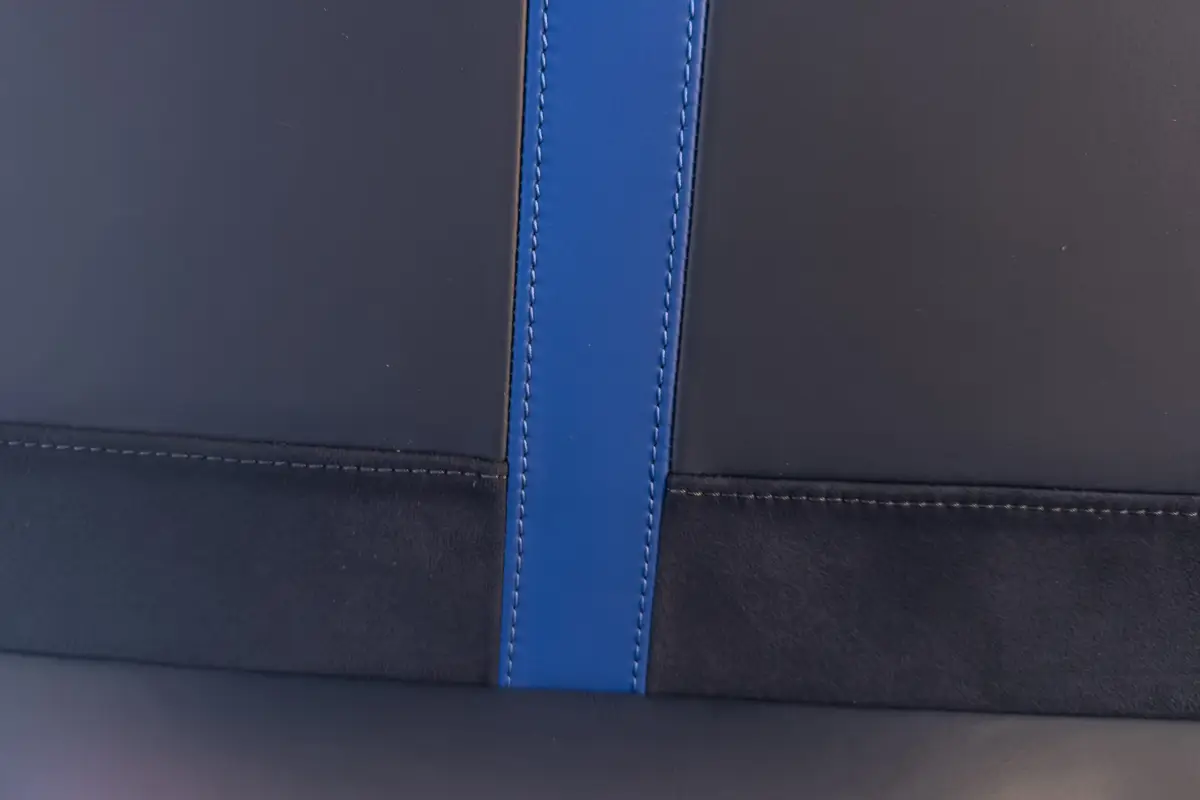
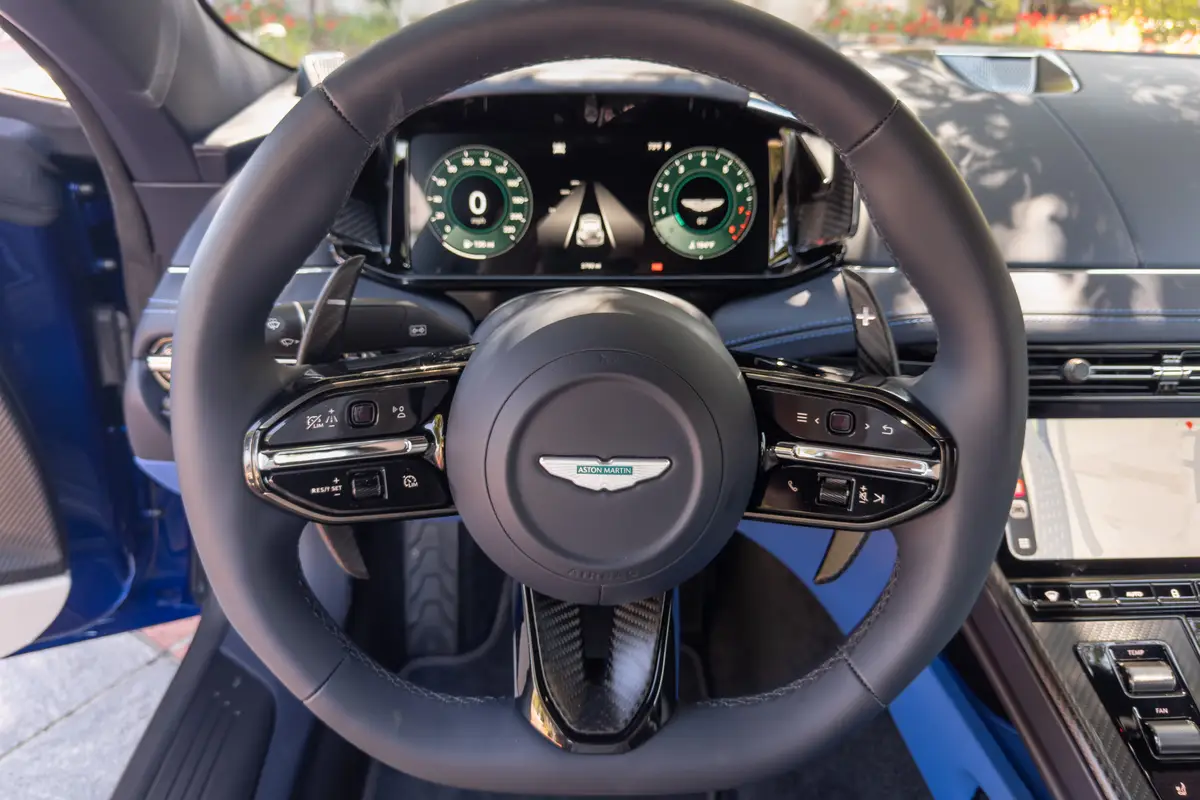
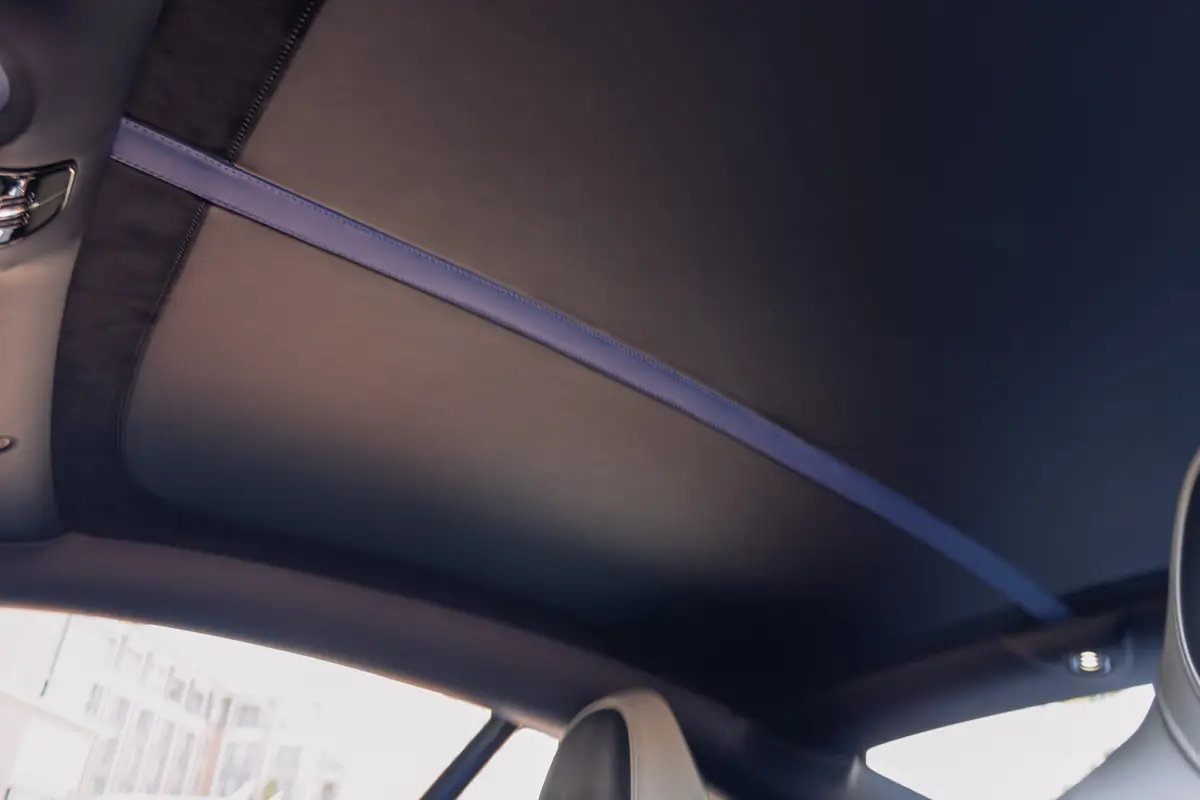
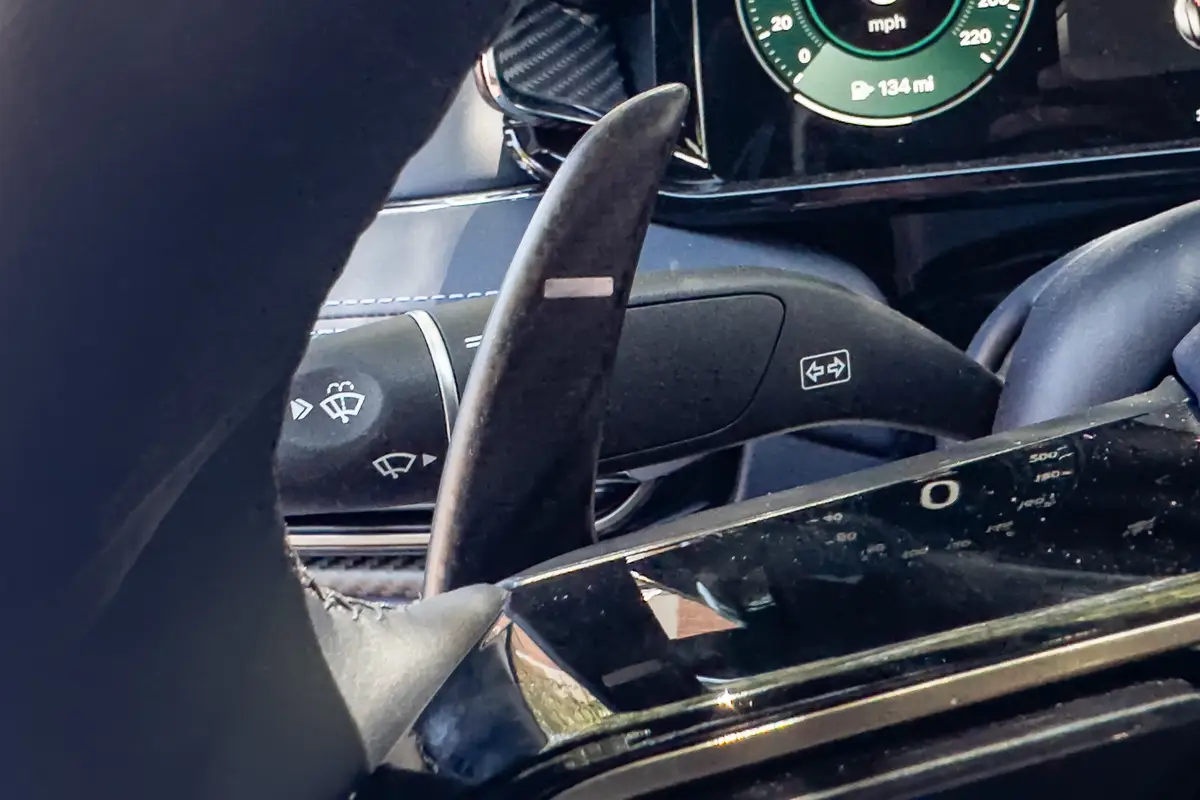
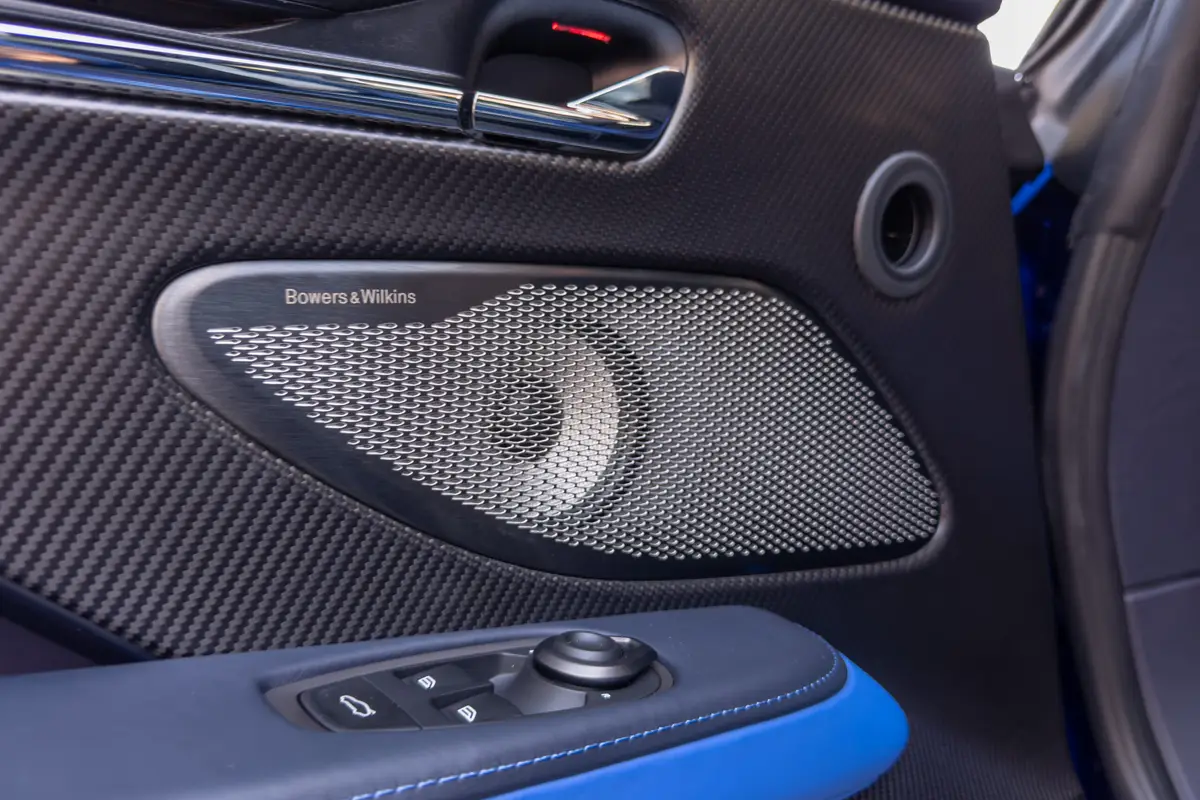
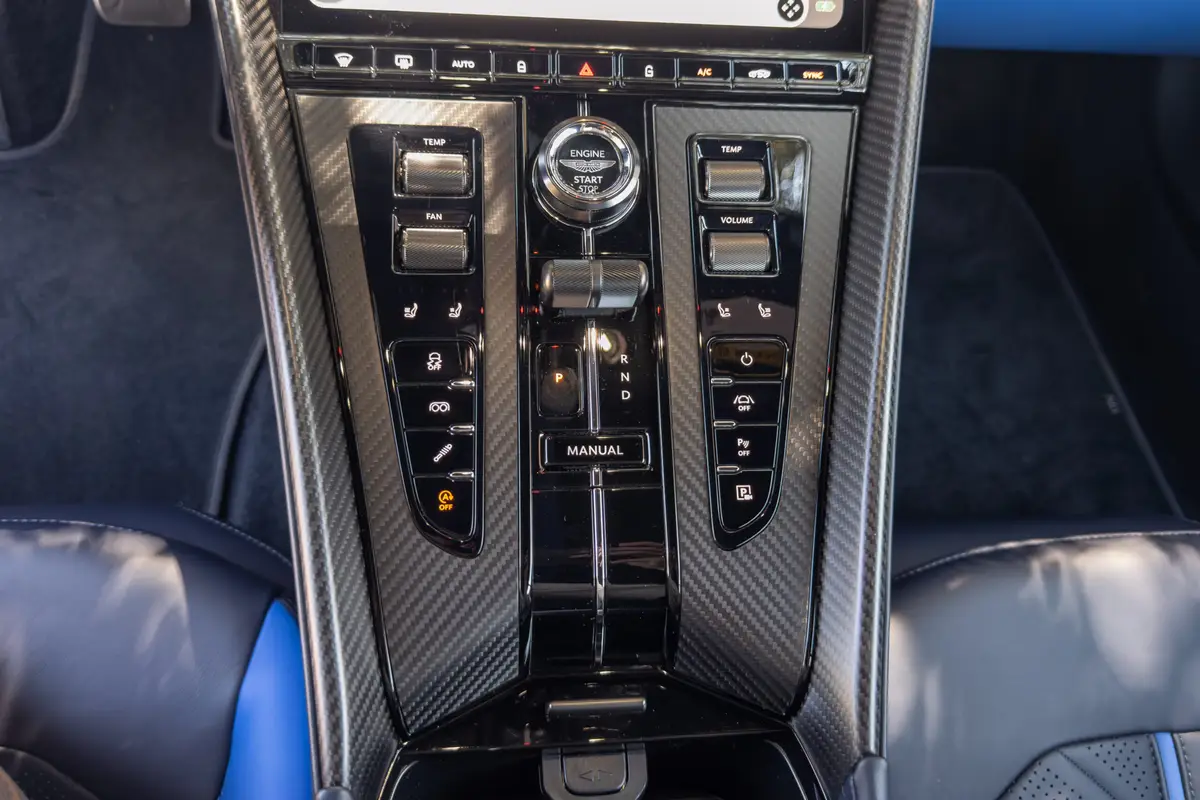
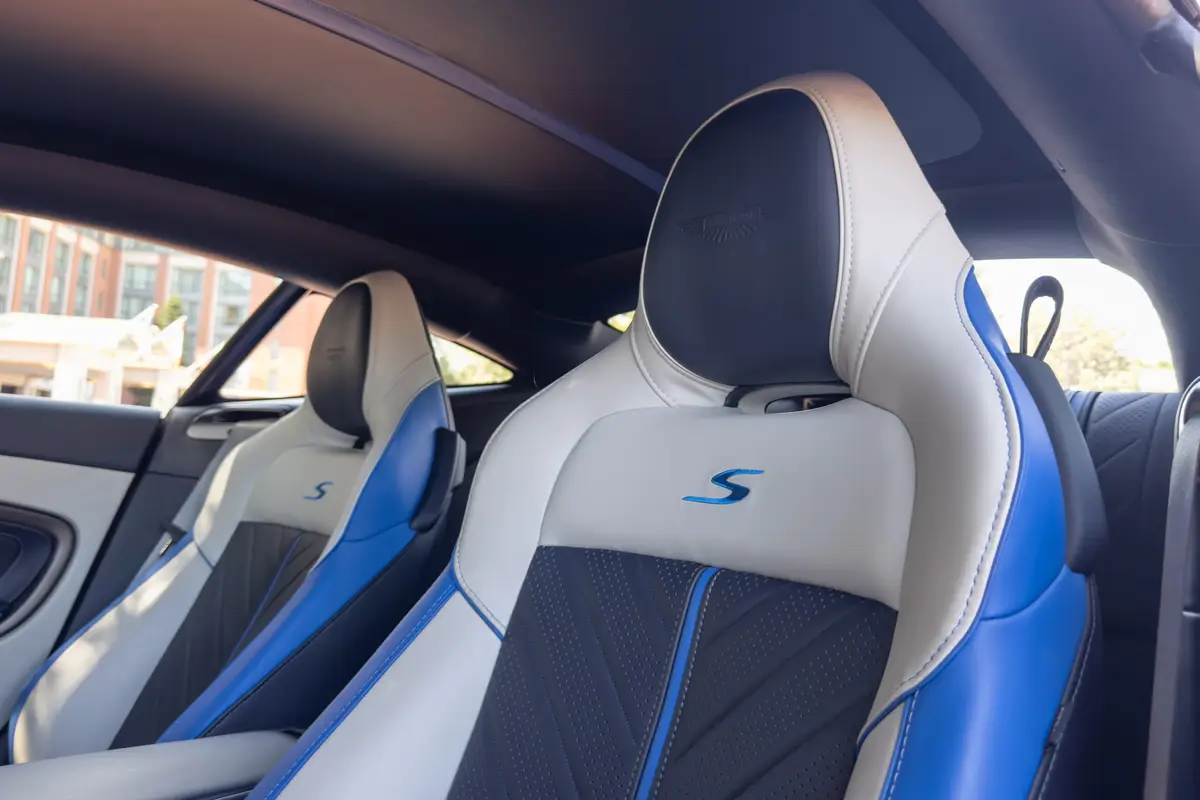
And it’s all with an interior to match, though it’s certainly a cockpit layout shared with the other two-door Astons. Materials, presentation and general tech feel more like three generations removed from the previous generation of Astons, not one. While there is just a sniff of Mercedes-Benz-sourced controls peppered throughout the cabin for stuff like steering-column stalks and headlight controls, the main center controls are proprietary. Knobs and rollers are satisfyingly knurled and tactile, mounted in an angled console whose delicious assortment of physical controls is a tonic against the modern software-defined vehicle.
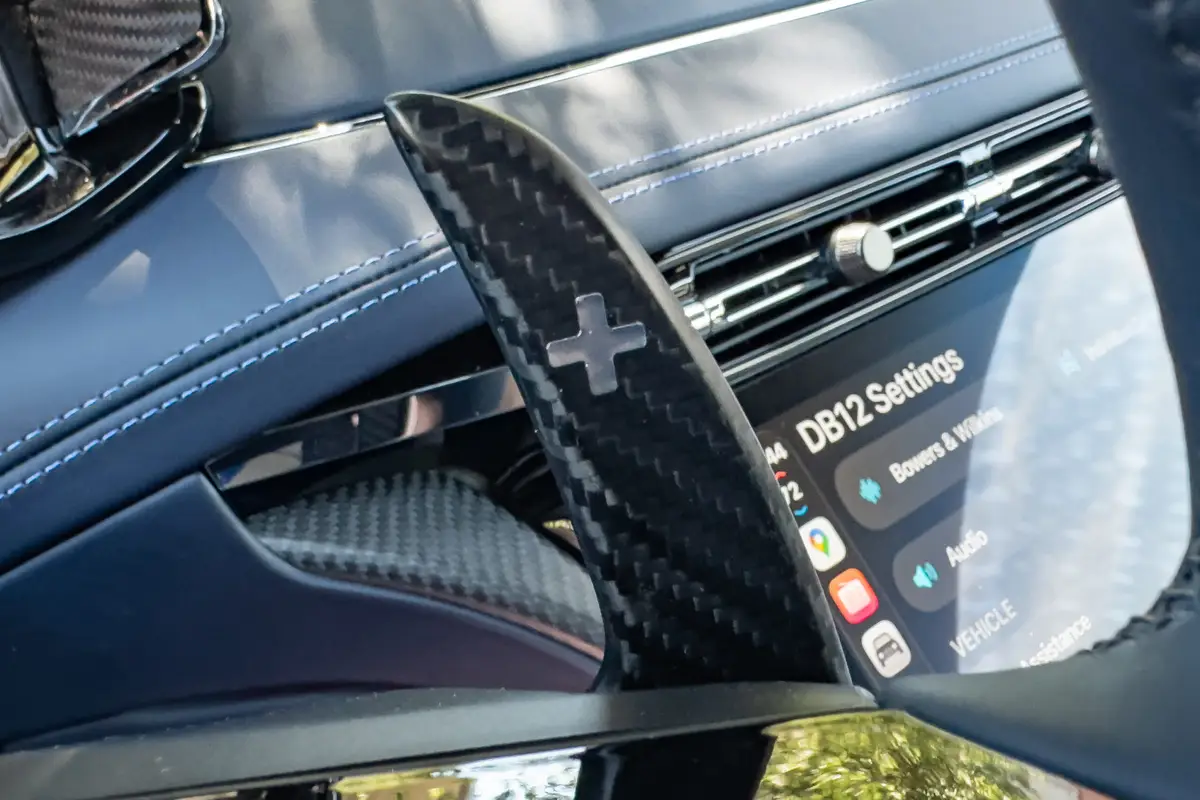
Of course, there’s still a suite of digitech embedded in this tableau of metal, carbon fiber and quilted leather. Apple CarPlay Ultra extends to the digital driver’s display and gives access to some vehicle and climate controls without reverting to the native user interface. I go into far more detail in my hands-on assessment with Apple CarPlay Ultra, so I’ll leave it at “works great, looks nice enough.”
How Fast Is the Aston Martin DB12 S?
- Takeaway: 0-60 mph cracks off in 3.4 seconds, with 0-124 mph in 10.2 seconds, all on its way to a 202 mph top speed.
I didn’t futz with the screens much, as I was far more focused on shimmying the big coupe through some of my favorite California roads. Aston highlighted the DB12’s long legs by routing us down both interstates and the Pacific Coast Highway, a trail that also wove right angles through open stretches of agricultural land. Great visibility and a distinct lack of traffic saw me, ah, moving to impressive speeds that I’ll leave at “very fast.” A 3,930-pound curb weight muffles some of the accelerative pressure, but its sizzling 10.2-second 0-124 rush is more than commensurate with appearance, badge, soundtrack and purpose.
Ah, that soundtrack. What a noise. As also noted in the Vantage S, Aston worked wonders coaxing a personality from Mercedes-AMG’s excellent but overly clinical V-8. In the “63” line of AMGs, the twin-turbo 4.0-liter V-8 is a surgical, no-nonsense dynamo that at full chat blankets a square mile with a greasy, metallic gnash that suits AMG’s brutalist nature but not cultured, finespun Aston’s. There are still undertones of that mechanical mauling, but Aston engineered in some genuine ferocity, with a bit more muscle-car caramel and heaps more volume.
The coastal cruising didn’t last long. I nosed the Ion Blue coupe into the hills and through some of the most meandering tarmac in Southern California. Sport mode immediately replaced the comfort-oriented GT drive mode, which soon gave way to the more appropriate Sport+. The DB12 S is neither a small car nor a light one, but quick, moderately weighted steering, well-managed body motions and that trick e-differential psychologically shrinks the car two sizes. Grip from the staggered 275-wide front and 325-wide rear Michelin Pilot Sport S 5 steamrollers equals that of flypaper, effectively reigning in front scrub and rear scuttle even under paleolithic throttle application.
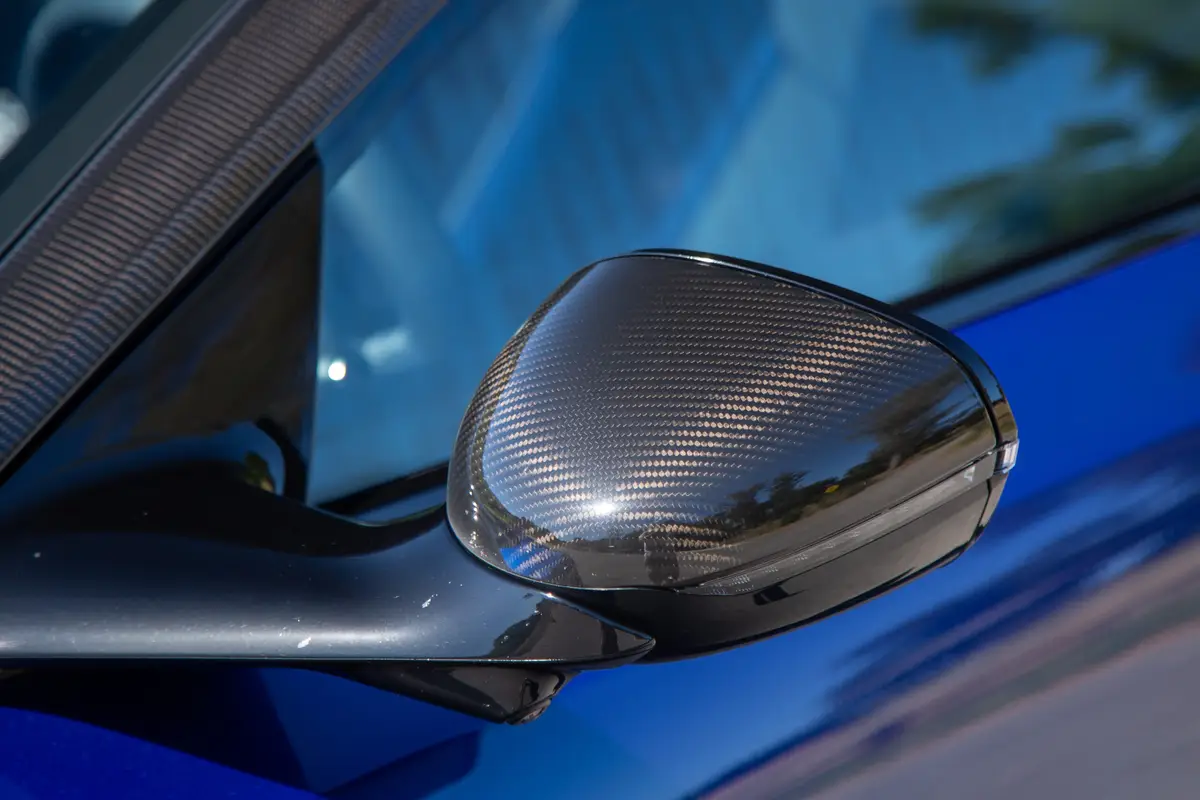
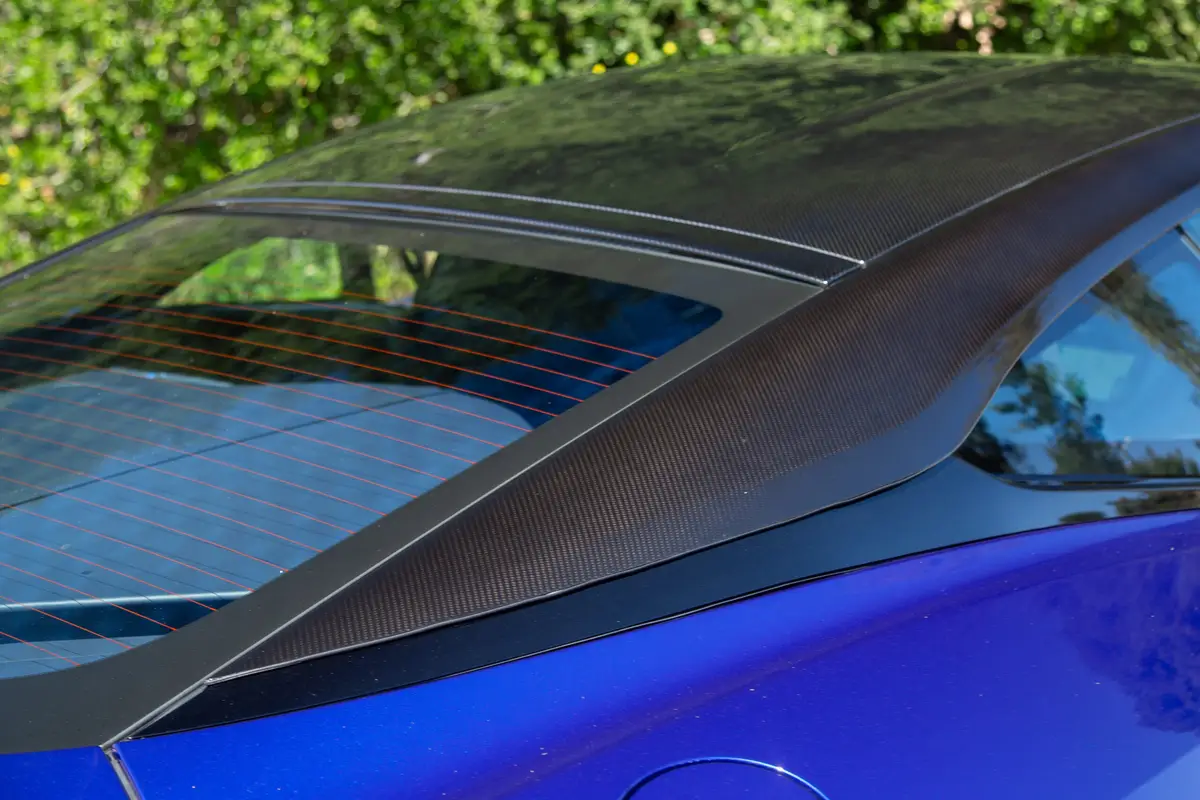
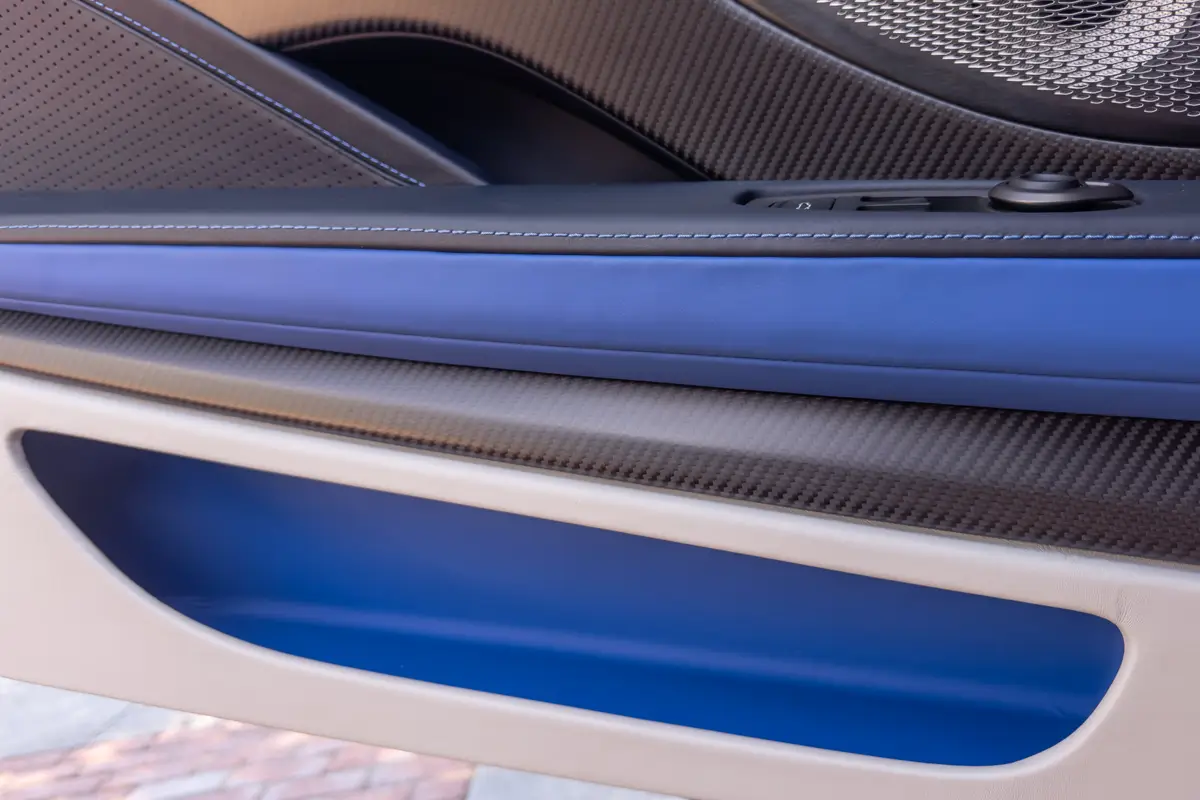
Get the Vantage for the track and the DB12 for the mountain pass to the track. It doesn’t carve but flows, balancing genuine capability with cosseting comfort to match a Bentley. It’ll sure carve up your checkbook, however, with a starting price of $276,000. But why stop there? I’m sure the family office can extend at least half a mil in credit, which means you can match my $418,400 test car and its $46,800 of carbon-fiber trim.
The order books are open — what are you waiting for? Get six of ‘em.
Related Video:
We cannot generate a video preview.
Cars.com’s Editorial department is your source for automotive news and reviews. In line with Cars.com’s long-standing ethics policy, editors and reviewers don’t accept gifts or free trips from automakers. The Editorial department is independent of Cars.com’s advertising, sales and sponsored content departments.