





1992
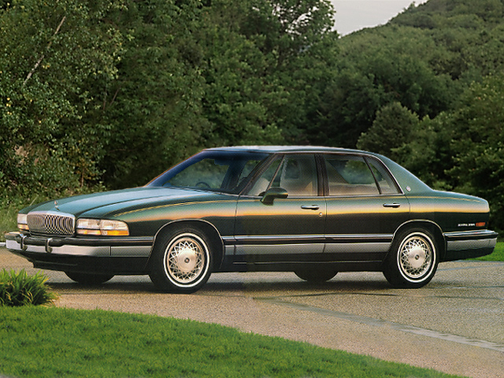
Buick Park Avenue

Starts at:
$25,285
Shop options
New 1992 Buick Park Avenue
See ratings
Not rated
Consumer rating
Owner reviewed vehicle score
Not rated
Safety rating
NHTSA tested vehicle score
Not rated
Consumer rating
Owner reviewed vehicle score
Not rated
Safety rating
NHTSA tested vehicle score
Shop Cars.com
Browse cars & save your favorites
Dealers near you
Find & contact a dealership near you
no listings

We're not finding any listings in your area.
Change your location or search Cars.com to see more!

Change location

Available trims

See the differences side-by-side to compare trims.
  • 4dr Sedan
    Starts at
    $25,285
    See all specs
  • 4dr Sedan Ultra
    Starts at
    $28,780
    See all specs

The good & the bad

This vehicle doesn't have any good or bad insights yet.

Use our comparison tool to look at this model side-by-side with other vehicles or view the full specifications list .

Start your comparison

Expert 1992 Buick Park Avenue review

Our expert's take
By Cars.com Editors
Full article

Buick is not out of the woods yet.

True, the General Motors division was the only American automaker to post an improvement in sales in 1991.

And, yes, Buick is building cars that consistently rank among the best-built, most trouble-free in the industry.

But one wonders when Buick will take the next step.

When will Buick raise the level of refinement in its cars to match that of comparably priced imports?

Buick already has several huge advantages over most of the competition: The division’s cars are built well, styled nicely, offer more safety features and get better gas mileage.

But this week’s Park Avenue – and several other GM products I have tested recently – shows the automaker is not keeping pace with many imports in the same price range when it comes to refinement and attention to detail.

PERFORMANCE

It takes a sharp eye to tell the difference between a supercharged Park Avenue Ultra and a standard version. Only the wheels are different, and the trunk lid contains a small, ”supercharged” script in chrome.

However, press the accelerator and the difference is readily apparent.

The supercharged Park Avenue Ultra performs much like the powerful big-engined Buick sedans of the ’60s and ’70s.

It has plenty of muscle. The car’s 3.8-liter V-6 develops 210 horsepower.

The engine is smooth and quiet, but a heavy foot provokes a wonderful symphony of mechanical sounds as the engine revs up and breathes in massive gulps of air.

A supercharger may connote visions of dragsters and jacked-up hot rods because those are the types of vehicles where this performance-increasing device most often is used.

Superchargers blast more fuel into the engine, and that increases power. Unlike a turbocharger, which is powered by exhaust gases, a supercharger is either belt-or gear-driven.

Buick engineers have tuned their supercharged engine to deliver civilized performance.

This car comes onlywith GM’s computer-controlled four-speed automatic, which parcels out the power to the front wheels with finesse in normal driving conditions.

However, on slippery roads the car must be driven with a light foot because the front tires can lose traction and send the car veering to the left or right.

Traction control – a computerized device that prevents tires from spinning on slippery pavement – is optional, but the test car did not have it. Traction control should come standard on all supercharged Park Avenue Ultras.

The test car delivered 19 mile per gallon in city driving and 26 mpg on a trip to Daytona Beach.

HANDLING

With a set of bucket seats and a floor shifter, Buick probably could market the supercharged Park Ultra as a sports sedan. But it comes only with bench seats and a column shifter.

Though the Park Avenue Ultra has a rather soft and bump-absorbing ride, it still retains its poise in fast cornering maneuvers and in spirited driv ing. It would, in fact, be a joy to drive this way were it not for the seats, which fail to hold driver and passengers firmly in place.

The variable effort rack and pinion steering seems connected to your subconscious – response is instantaneous, crisp and accurate.

Variable effort, by the way, means that the effort required to turn the steering wheel changes with the speed of the vehicle. At slower speeds, it’s easier to turn, but at higher speeds, the steering wheel is a bit harder.

The power-assisted anti-lock brakes – discs up front and drums in the rear – are powerful.

FIT AND FINISH

The test car was put together well, but I never could get comfortable in it.

The driver’s seat was terrible. The bottom cushion was too soft, and I sort of sank into it.

However, the seats looked nice with an embroidered ”Ultra” on the seat backs.

I also didn’t care for the unlighted, chrome-covered window switches on the door panels. They were ha d to use at night and looked like something out of 1965.

The electric door locks worked fine, but they w ere loud and clunky to the point of being annoying.

The interior has several nice touches. For instance, Buick’s air-conditioning system lets the driver and passenger control air temperature on their side of the car.

Rear passengers also have sun visors with vanity lights. Also, there is generous room in the back seat for three adults, plus a trunk large enough to carry four or five full-size suitcases.

I like the supercharged Park Avenue’s performance. I like the way it is built.

But Buick has to move on now and start engineering greater comfort and refinement into its cars.
1992 Buick Park Avenue review: Our expert's take
By Cars.com Editors

Buick is not out of the woods yet.

True, the General Motors division was the only American automaker to post an improvement in sales in 1991.

And, yes, Buick is building cars that consistently rank among the best-built, most trouble-free in the industry.

But one wonders when Buick will take the next step.

When will Buick raise the level of refinement in its cars to match that of comparably priced imports?

Buick already has several huge advantages over most of the competition: The division’s cars are built well, styled nicely, offer more safety features and get better gas mileage.

But this week’s Park Avenue – and several other GM products I have tested recently – shows the automaker is not keeping pace with many imports in the same price range when it comes to refinement and attention to detail.

PERFORMANCE

It takes a sharp eye to tell the difference between a supercharged Park Avenue Ultra and a standard version. Only the wheels are different, and the trunk lid contains a small, ”supercharged” script in chrome.

However, press the accelerator and the difference is readily apparent.

The supercharged Park Avenue Ultra performs much like the powerful big-engined Buick sedans of the ’60s and ’70s.

It has plenty of muscle. The car’s 3.8-liter V-6 develops 210 horsepower.

The engine is smooth and quiet, but a heavy foot provokes a wonderful symphony of mechanical sounds as the engine revs up and breathes in massive gulps of air.

A supercharger may connote visions of dragsters and jacked-up hot rods because those are the types of vehicles where this performance-increasing device most often is used.

Superchargers blast more fuel into the engine, and that increases power. Unlike a turbocharger, which is powered by exhaust gases, a supercharger is either belt-or gear-driven.

Buick engineers have tuned their supercharged engine to deliver civilized performance.

This car comes onlywith GM’s computer-controlled four-speed automatic, which parcels out the power to the front wheels with finesse in normal driving conditions.

However, on slippery roads the car must be driven with a light foot because the front tires can lose traction and send the car veering to the left or right.

Traction control – a computerized device that prevents tires from spinning on slippery pavement – is optional, but the test car did not have it. Traction control should come standard on all supercharged Park Avenue Ultras.

The test car delivered 19 mile per gallon in city driving and 26 mpg on a trip to Daytona Beach.

HANDLING

With a set of bucket seats and a floor shifter, Buick probably could market the supercharged Park Ultra as a sports sedan. But it comes only with bench seats and a column shifter.

Though the Park Avenue Ultra has a rather soft and bump-absorbing ride, it still retains its poise in fast cornering maneuvers and in spirited driv ing. It would, in fact, be a joy to drive this way were it not for the seats, which fail to hold driver and passengers firmly in place.

The variable effort rack and pinion steering seems connected to your subconscious – response is instantaneous, crisp and accurate.

Variable effort, by the way, means that the effort required to turn the steering wheel changes with the speed of the vehicle. At slower speeds, it’s easier to turn, but at higher speeds, the steering wheel is a bit harder.

The power-assisted anti-lock brakes – discs up front and drums in the rear – are powerful.

FIT AND FINISH

The test car was put together well, but I never could get comfortable in it.

The driver’s seat was terrible. The bottom cushion was too soft, and I sort of sank into it.

However, the seats looked nice with an embroidered ”Ultra” on the seat backs.

I also didn’t care for the unlighted, chrome-covered window switches on the door panels. They were ha d to use at night and looked like something out of 1965.

The electric door locks worked fine, but they w ere loud and clunky to the point of being annoying.

The interior has several nice touches. For instance, Buick’s air-conditioning system lets the driver and passenger control air temperature on their side of the car.

Rear passengers also have sun visors with vanity lights. Also, there is generous room in the back seat for three adults, plus a trunk large enough to carry four or five full-size suitcases.

I like the supercharged Park Avenue’s performance. I like the way it is built.

But Buick has to move on now and start engineering greater comfort and refinement into its cars.

Factory warranties

Currently no warranties for this model year
This vehicle doesn’t currently have warranty details.
You can still learn about car warranties, review what’s best, and identify coverage that may be right for you.
Cars.com warranty hub

Consumer reviews

No reviews yet

This car doesn’t have a consumer review yet.
Write the first review

Latest news from Cars.com

See all news

Buick dealers near you

FAQ

What trim levels are available for the 1992 Buick Park Avenue?

The 1992 Buick Park Avenue is available in 2 trim levels:

  • (1 style)
  • Ultra (1 style)
Your list was successfully saved.


Save list Compare
[{"cat":"luxurypassenger_standard","stock_type":"used","bodystyle":"Sedan","page_type":"research/make-model-year","oem_page":false,"search_fuel_types":[null]}]