


These EVs Are Discontinued for 2026

Key Points
- These electric vehicles have been discontinued so far for the 2026 model year: Acura ZDX; F-150 Lightning; Genesis Electrified G80; Nissan Ariya; Tesla Model S and Model X; Volkswagen ID. Buzz
- Plans for these electrified vehicles have been scrapped: Dodge Charger Daytona SRT Banshee; Ford three-row SUV; Honda three-row SUV; Jeep Gladiator 4xe and Renegade EV; Kia EV4 and EV9 GT; Nissan electric sedans; all-electric Ram 1500 REV; Volkswagen ID.7
- Slow sales, impending tariffs and a shifting EV landscape are to blame for many of the canceled models and trims.
Editor’s note: This story was updated Feb. 9, 2026, to reflect additions to the list.
The year 2026 is shaping up to be just as tumultuous as 2025 for electrified vehicles. The Trump administration’s EV-negative policies have spelled the death of the $7,500 federal EV tax credit, and demand for these vehicles has taken a hit, too. The uncertain market combined with tariffs has majorly affected automakers’ short- and long-term product and manufacturing plans, and some EVs planned to debut in the next couple of years have been scrapped. Below is a list of EVs that we won’t get to see, as well as the current EVs that have been discontinued for the 2026 model year.
Related: These Cars Have Been Discontinued for 2026
These Current EVs Are Discontinued

Acura ZDX
Acura’s all-electric ZDX SUV has been discontinued after just one model year. It’s not the first time, either; the original gas-powered ZDX lasted only for four model years and was more popular than the EV version. The ZDX was the only EV in Acura’s lineup, but it won’t be the last, as the brand plans to launch a new EV based on the RSX Prototype.
Ford F-150 Lightning
There was a lot of buzz around Ford’s all-electric pickup truck when it debuted for 2022, but the F-150 Lightning was never as popular as the automaker expected. Due to weak demand and high costs, Ford has announced that it is discontinuing its all-electric truck.
But the Lightning’s story isn’t quite over as the F-150 won’t lose all of its electrification. The next-generation F-150 Lightning will be a range-extended EV with an onboard generator similar to the setup in a BMW i3 or Chevrolet Volt. The truck will still use a battery pack and electric motors will still drive the wheels, but it will use a smaller battery pack that can be charged via a gas engine. Ford hasn’t yet announced when the new truck will go on sale, however.
Genesis Electrified G80
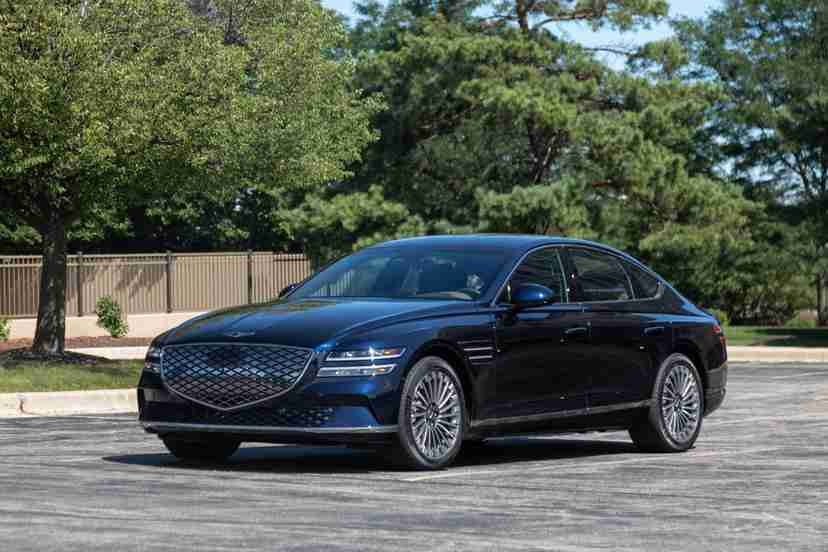
After a short three-model-year run, the Genesis Electrified G80 sedan has been canceled for the U.S. despite a refreshed-for-2026 version planned for global markets. The Electrified G80 was built in South Korea, so it wasn’t eligible for any tax credits but could be caught in the tariff crossfire due to its foreign production.
Slow sales are also to blame: According to Automotive News, the luxury electric sedan’s monthly sales are down 77% compared to last year, with only 10 Electrified G80’s sold in July.
Nissan Ariya
Nissan teased the arrival of its Ariya electric SUV for more years than it actually existed. Nissan decided to axe the Ariya EV after just three model years due to weak sales, ongoing import tariffs and the end of the $7,500 federal EV tax credit. The Ariya joined the Leaf in the automaker’s EV lineup but never achieved much popularity, and even though Nissan cut prices, inspiring some sales growth in the first half of 2025, production is ending for the model.

Tesla Model S and Model X
The robots have come for Tesla’s EVs. The automaker announced it’s ending production of its first mainstream EVs, the Model S sedan and Model X SUV, to make room for robot production. According to Tesla CEO Elon Musk, Tesla will reconfigure the Model S and Model X factory in Fremont, Calif., to build Optimus humanoid robots.
The Model S sedan first hit the market for model-year 2012, and the Model X SUV joined the lineup for 2016, and lately, both have suffered poor sales. According to estimates from Automotive News, Model S sales in the U.S. fell by one-third in 2025, while Model X volume was roughly halved.

Volkswagen ID. Buzz
Volkswagen’s electric bus was a looooong time coming (we first saw it in concept form in ahead of the 2017 Detroit auto show), but it turns out the ID. Buzz has a (temporarily, at least) short shelf life. VW announced the EV won’t be offered in the U.S. or Canada for 2026. As with many others on this list, the ID. Buzz couldn’t survive the toxic market cocktail of shifting tariffs, high prices and waning EV demand. However, all is not lost for fans of the funky, retro bus: VW said this is more of a pause than a cancellation as the automaker plans to resurrect the ID. Buzz for the 2027 model year.
These Electrified Vehicles Will Never Get a Chance

Dodge Charger Daytona SRT Banshee
While the Dodge Charger Daytona soldiers on into 2026, the electric muscle car’s trim lineup has been gutted with the cancellation of the base Daytona R/T variant as well as the range-topping SRT Banshee trim. The SRT Banshee was supposed to sport an 800-volt battery architecture, two-speed transmission and lightning-quick acceleration, but in a total lineup reversal, Dodge is instead adding more V-8s to its stable in place of EVs. According to Mopar Insiders, slow Charger Daytona sales, softening EV demand and consumer backlash have prompted the brand to pull back on its EV strategy.
Ford 3-Row Electric SUV
For a while, the Kia EV9 and related Hyundai Ioniq 9 were the only mainstream three-row all-electric SUVs out there — and it looks like they’ll continue to corner that market in the short term, as Ford’s planned three-row electric SUV competitor has been canceled. InsideEVs reports that the automaker announced it would initially delay the 350-mile battery-powered SUV but has now decided to kill production and shift its strategy to include more hybrids.
“In addition to adjusting the cadence of product launches and realigning battery sourcing, Ford now plans to leverage hybrid technologies for its next three-row SUVs,” the automaker said in a statement.

Honda 3-Row Electric SUV
Similarly, Honda’s electric family hauler also won’t see production due to a shift away from a planned EV-heavy lineup and toward more hybrids. InsideEVs reports that the three-row SUV was likely to be based off the Honda 0 Prototypes, which debuted at the 2024 Consumer Electronics Show. For now, Honda will continue to offer just one EV, the two-row Prologue SUV developed in partnership with GM.
Jeep Gladiator 4xe
The plug-in hybrid version of Jeep’s Gladiator pickup truck has gone to the big off-road park in the sky. Jeep announced the Gladiator 4xe in September 2024 and promised a late-2025 on-sale date; however, as with the Charger Daytona SRT Banshee cancellation, Jeep cited weakening EV demand as well as slow Gladiator sales as reasons to pull the plug, per InsideEVs. For now, there are two 4xe plug-ins left in Jeep’s lineup: the Wrangler and Grand Cherokee models, with the range-extended Grand Wagoneer on the way.
Jeep Renegade EV
Jeep announced plans in 2022 to electrify its lineup and promised four new EVs by 2025, including the Renegade EV. Obviously, those plans are now toast, and the rebirth of Jeep’s subcompact SUV, which was discontinued in 2023, as an EV will no longer happen. Electrek is reporting that Stellantis CEO Antonio Filosa told reporters the automaker is no longer planning to bring the EV to the U.S. The move is not surprising given that Stellantis just pulled the plug on Chrysler and Jeep plug-in hybrid vehicles due to slow sales, weak demand and lots of reliability issues.

Kia EV4
Kia’s smallest and most affordable EV debuted at the 2025 New York Auto Show and was supposed to hit U.S. shores in early 2026, but the EV4’s arrival here has been indefinitely delayed. The compact sedan was supposed to be built on the same platform that underpins other Kia and related Hyundai EVs, as well as feature two battery pack options: the base Light trim level would have a 58.3-kilowatt-hour pack, and the rest of the lineup would use an 81.4-kWh pack. Kia expected EV range between 235 and 330 miles, depending on equipment. According to InsideEVs, market timing was to blame. “As market conditions for EVs have changed, the release of the upcoming EV4 electric sedan will be delayed until further notice,” a Kia spokesperson told InsideEVs. Currently, Kia offers three EVs in its U.S. lineup: the EV6, EV9 and Niro EV.
Kia EV9 GT
Kia was planning on expanding the lineup of its already-impressive EV9 three-row SUV to include a more powerful GT version, but those plans have been scrapped. According to Electrek, the brand is delaying the variant until further notice, and tariffs are likely a factor. While the EV9 is built in West Point, Ga., the GT was going to be imported from South Korea. The EV9 GT was announced at the 2024 Los Angeles Auto Show; Kia estimated it to pack 501 horsepower and sprint from 0-60 mph in 4.3 seconds — 122 hp more than the EV9 GT-Line and 0.7 second quicker.
Nissan Electric Sedans
Nissan is canceling plans to make a pair of electric sedans, according to Automotive News. With softening EV demand compounded by a steep decline in sedan sales, it’s not surprising that the automaker put these cars on the shelf. This comes on the heels of Nissan announcing the cancellation of its 2026 Ariya compact electric SUV due to slowing EV sales, ongoing import tariffs and the end of the EV tax credit. The redesigned 2026 Leaf will be the only electric Nissan on sale in the U.S. for the new model year.

Ram 1500 REV
Stellantis (Alfa Romeo, Dodge, Fiat, Jeep and Ram’s parent company) has a third vehicle on this list. Ram has canceled the all-electric 1500 REV pickup truck. The Ford F-150 Lightning challenger was expected to have two battery options that offered 350-500 miles of estimated max range. In January, Ram announced that only the 350-mile-range version would be coming when the pickup made its debut for 2026. Now, the automaker is canceling plans altogether.
“As demand for full-size battery-electric trucks slows in North America, Stellantis is reassessing its product strategy and will discontinue development of a full-size BEV pickup,” the automaker said in a statement. Instead, Ram will focus on a range-extended electric pickup, which uses a gas generator in addition to a battery and has now been renamed the, well, 1500 REV.

Volkswagen ID.7
Volkswagen has long teased the arrival of its mid-size electric sedan, but it turns out the ID.7 is a no-show. It was supposed to go on sale in 2025 with 300-plus miles of range and go head-to-head with the Hyundai Ioniq 6. But according to Fast Company, the cancellation just affects the North American market; the ID.7 has already launched in both Europe and China. With the ID.7 out, Volkswagen’s EV lineup shrinks to just two models: the ID.4 electric SUV and ID. Buzz minivan.
Read More EV News Coverage on Cars.com:
- How Are Automakers Responding to Trump’s Tariffs?
- Here Are the 11 Cheapest Electric Vehicles You Can Buy
- What to Know Before Purchasing an Electric Vehicle: A Buying Guide
- What to Know Before Buying a Used Electric Car
- Find Your Next Car
Related Video:
Cars.com’s Editorial department is your source for automotive news and reviews. In line with Cars.com’s long-standing ethics policy, editors and reviewers don’t accept gifts or free trips from automakers. The Editorial department is independent of Cars.com’s advertising, sales and sponsored content departments.


