












What Car Shoppers Need to Know |
||
| Expert Rating: 6.6/10 | Quick Specs | |
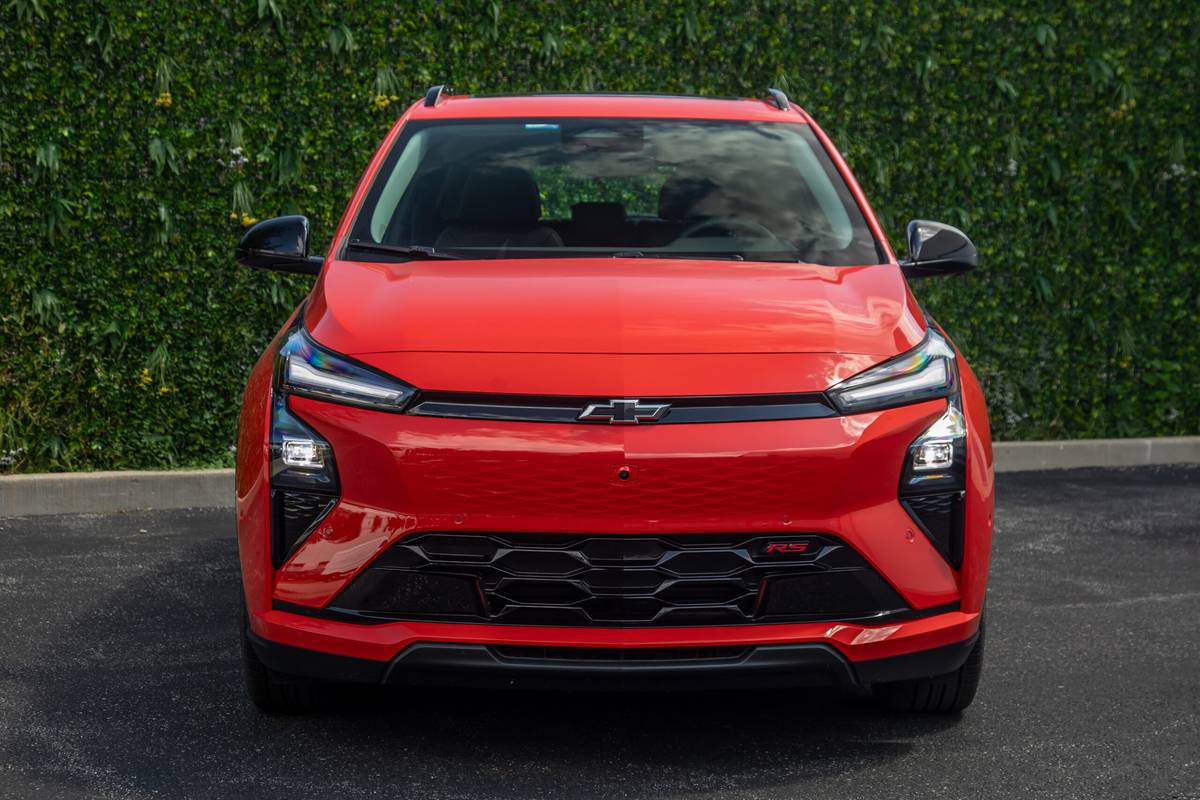
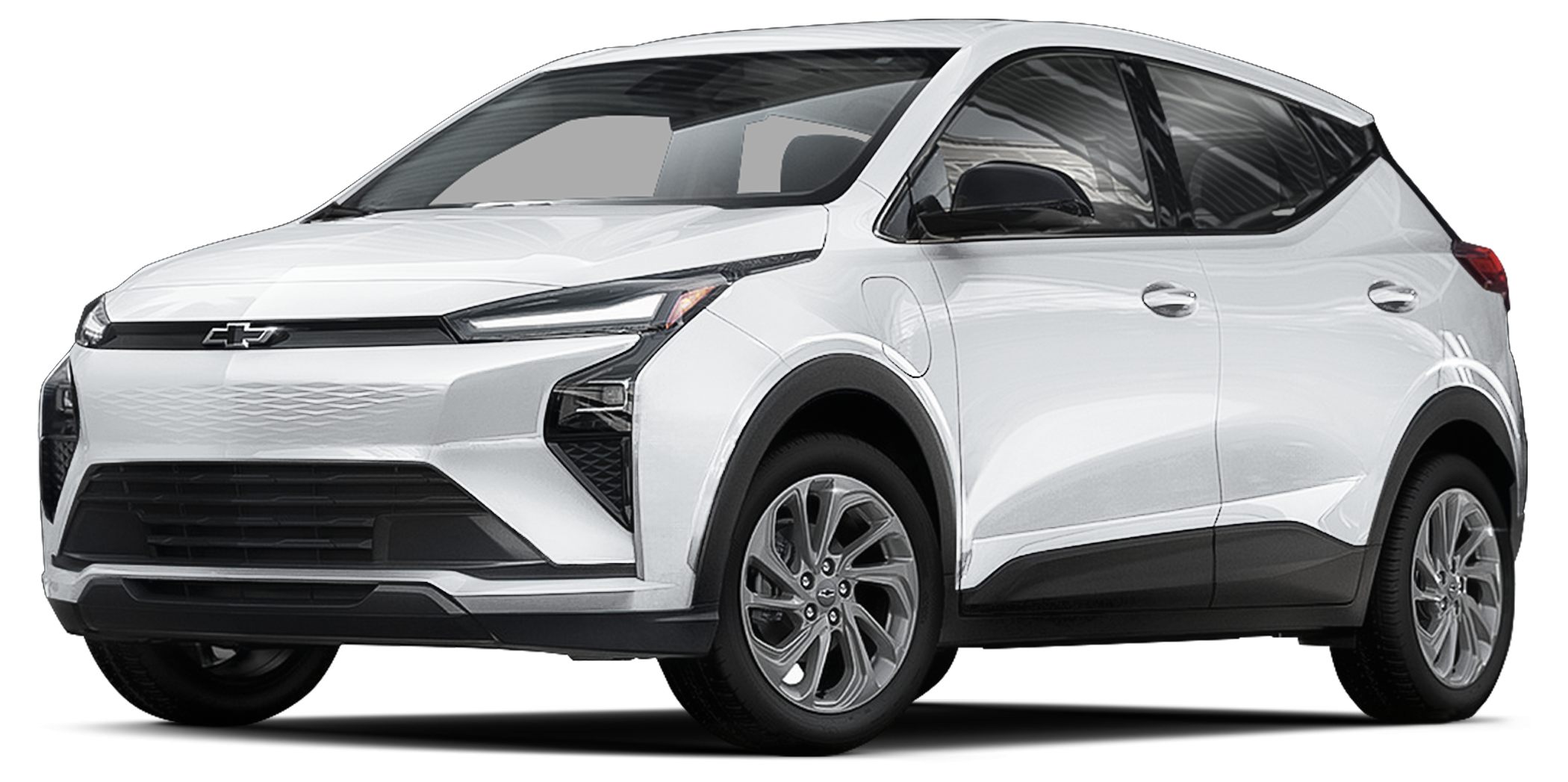
| Cars.com says: The 2027 Chevrolet Bolt is a great value at $28,995 (all prices include destination fee), but that advantage starts to erode when its price tag approaches $39,000, putting it squarely in Tesla Model 3 territory. | Test vehicle: | 2027 Chevrolet Bolt RS |
| As-tested price | $38,940 | |
| EPA-rated range | 262 miles | |
| DC fast-charging speed | 25 minutes to go from 10%-80% (Chevrolet-estimated) | |
| Charging connector | Tesla-style North American Charging Standard port | |
As quick as a bolt of lightning, the sub-$30,000 2027 Chevrolet Bolt reemerged onto the electric-vehicle scene for this model year — and it will disappear just as fast, as it’s limited to a single model year. Is it worth trying to capture lightning in a bottle with the 2027 Bolt? (I swear, that’ll be it for bad meteorological puns.)
Related: The 2027 Chevrolet Bolt Is Now the Cheapest EV Available
The Bolt last appeared as a 2023 model, when the body style here was called the Bolt EUV; it was an SUV-styled version of the Bolt EV hatchback. This new 2027 Bolt has some nice upgrades over its predecessor, but once-optional equipment has raised its bargain starting price, and you can find good EV alternatives for the same, or not much more, money.
Related Video:
We cannot generate a video preview.
Expert Rating: 6.6/10
- Powertrain: 6/10
- Ride quality: 6/10
- Driver comfort: 8/10
- Passenger comfort: 7/10
- Interior quality: 4/10
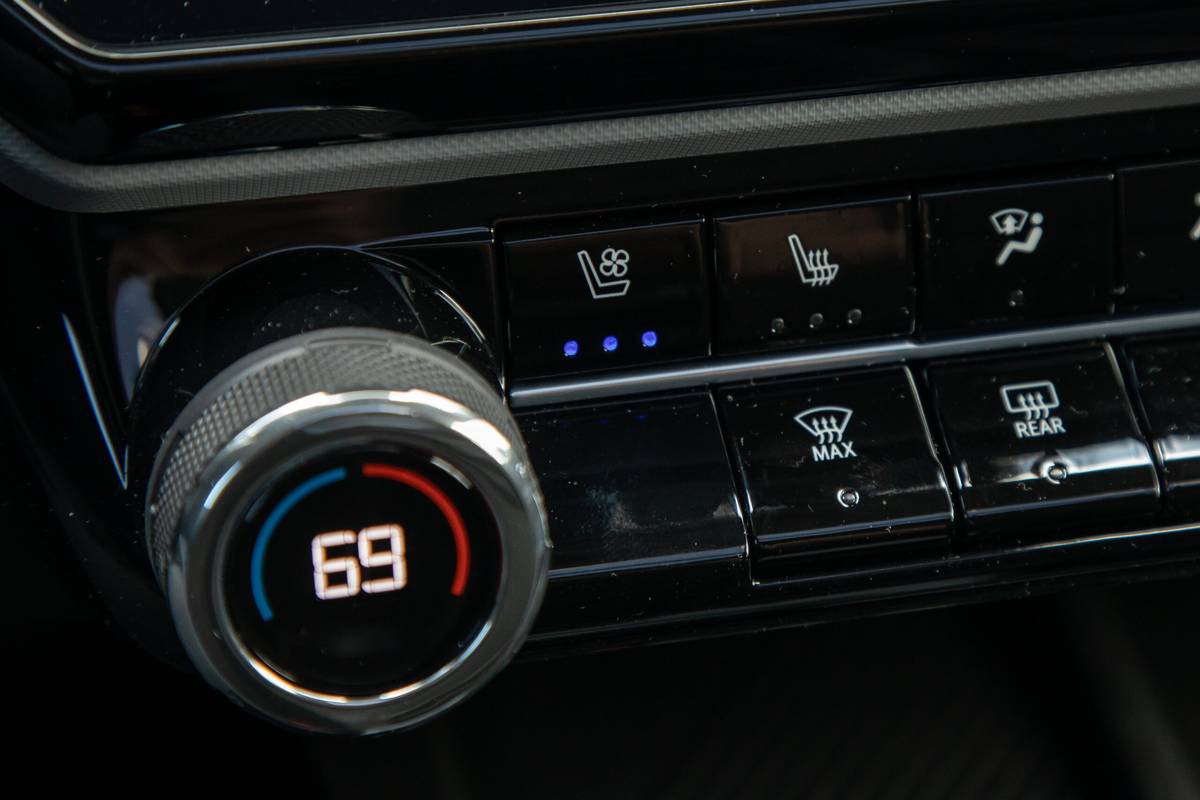
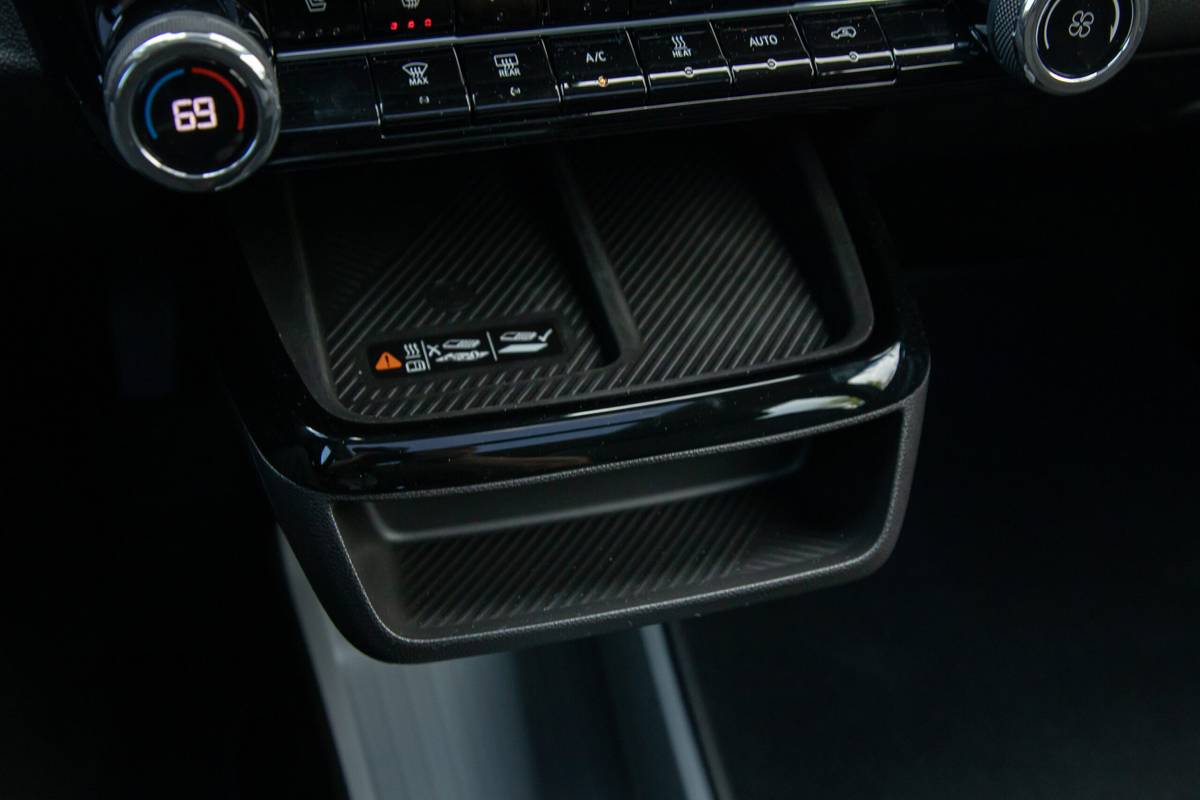
- User interface: 8/10
- Cargo space: 6/10
- Value: 6/10
- Overall appeal: 7/10
- Driving range: 6/10
- Charging speed: 6/10
- Efficiency: 9/10
I spent two weeks with the Bolt, using it for a daily commute and everyday living in the Chicago area. Here are four things I liked about the new 2027 Chevrolet Bolt RS and three I didn’t.
What Do We Like About the 2027 Chevrolet Bolt?
1. Cheapest EV on Sale
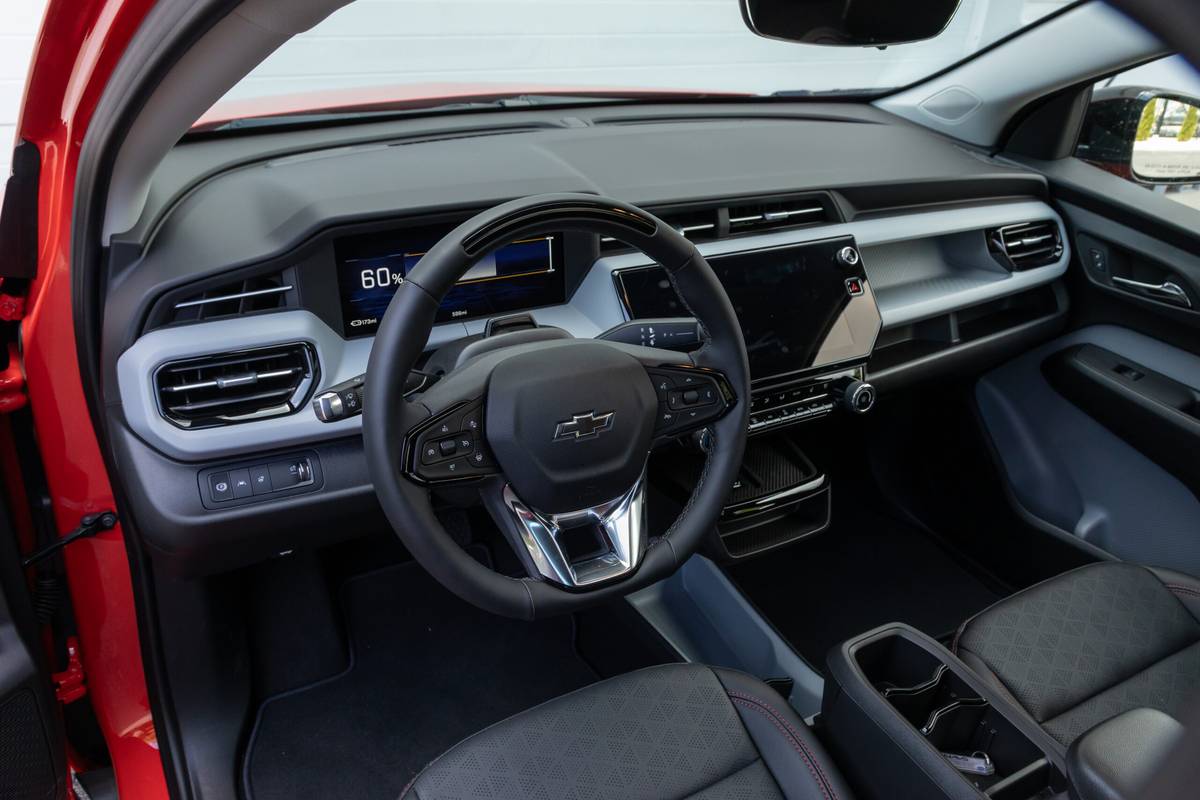
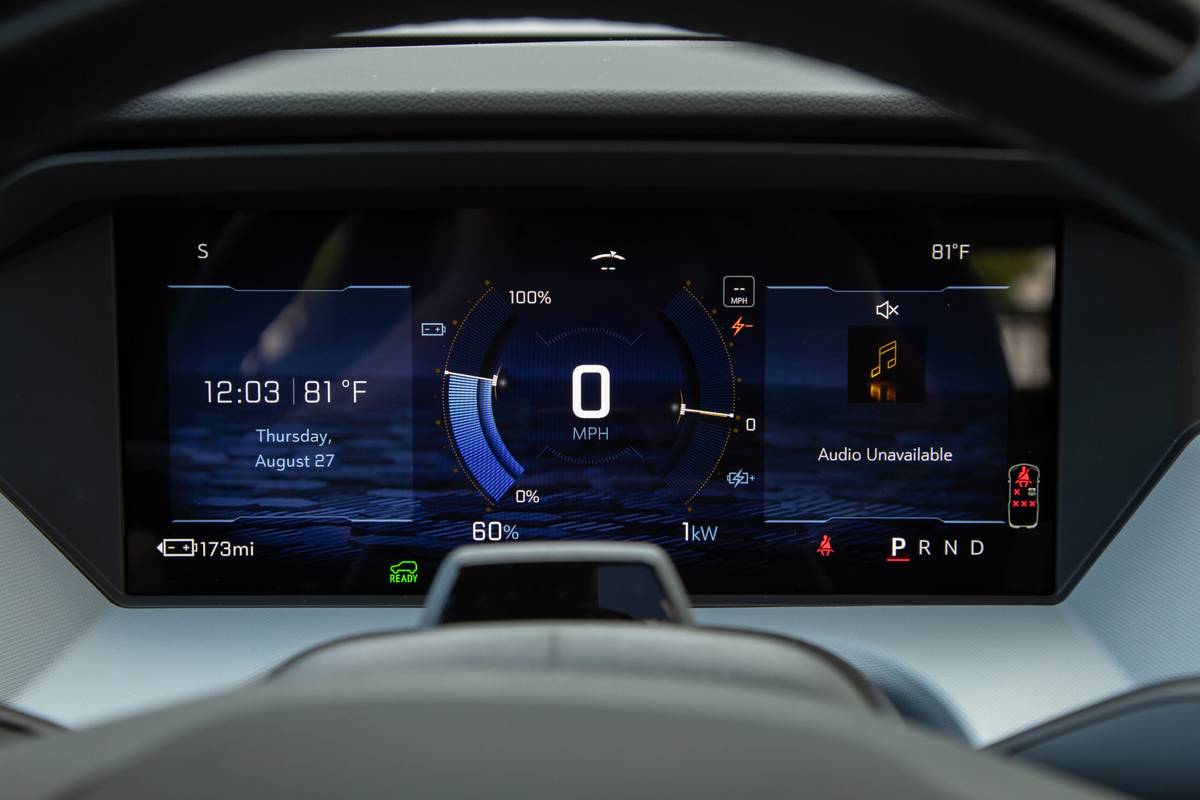
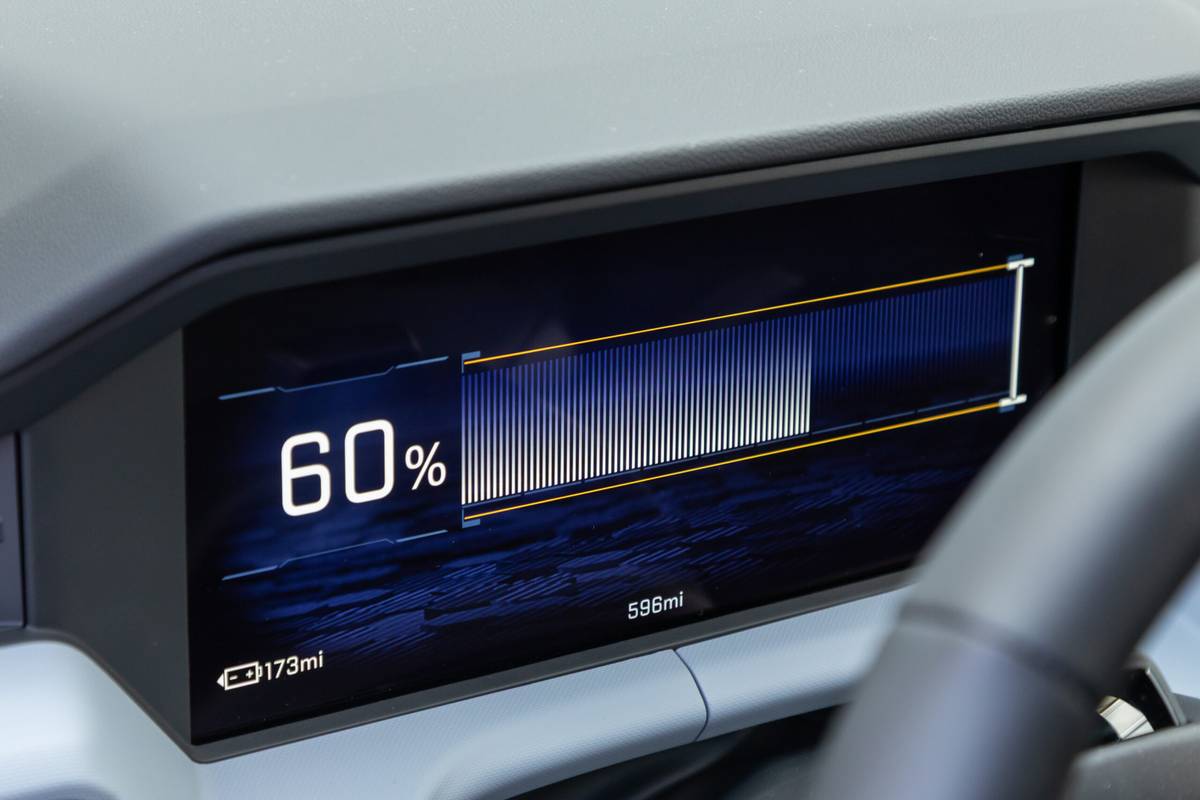
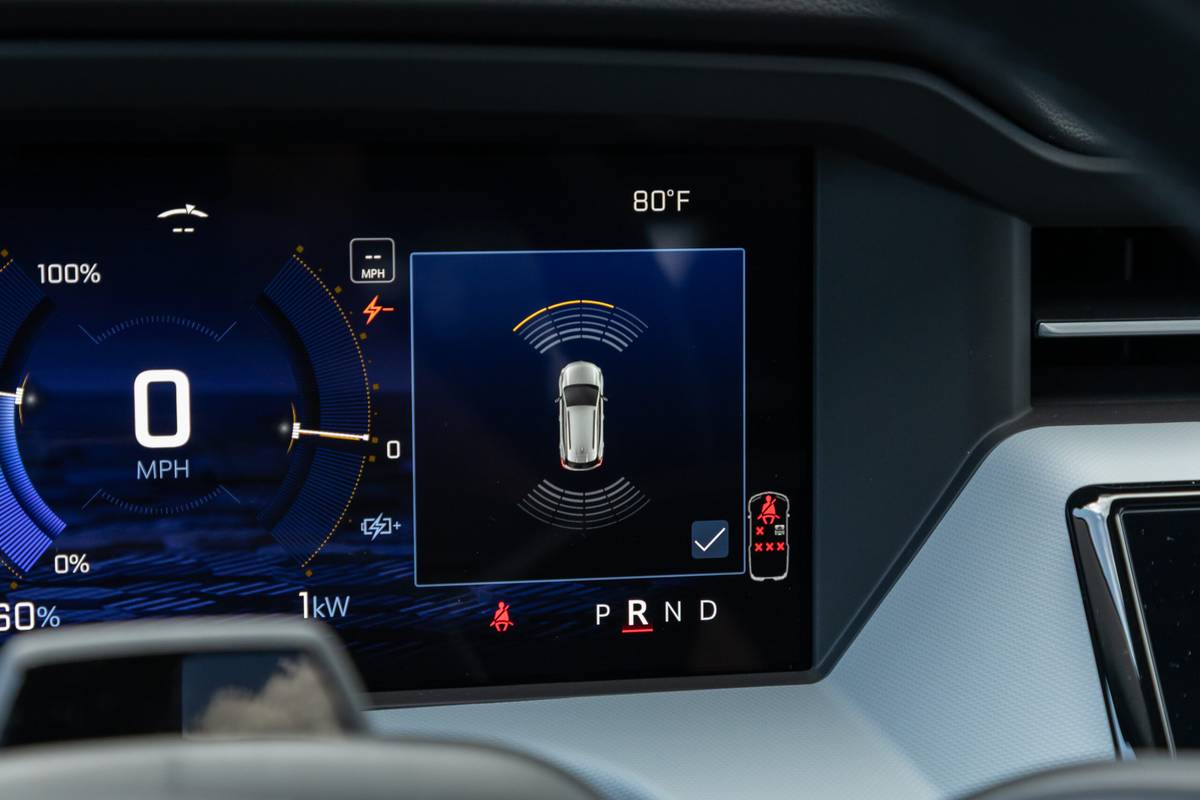
The Bolt is the cheapest EV on sale, with respectable driving range, efficiency and charging speed for a rock-bottom price of $28,995. Its 262-mile EPA-rated range is enough for commuters, and I observed up to 280 miles of range on a full charge during warm summer weather, which benefits EV range. The instrument cluster’s range estimator was accurate during my drive (again, mild ambient conditions help), and the information displays for range, efficiency and vital information like speed were easy to read and attractive for such an affordable car.
2. Super Cruise Hands-Free Driving Is Cheaper Than Tesla’s Full Self-Driving
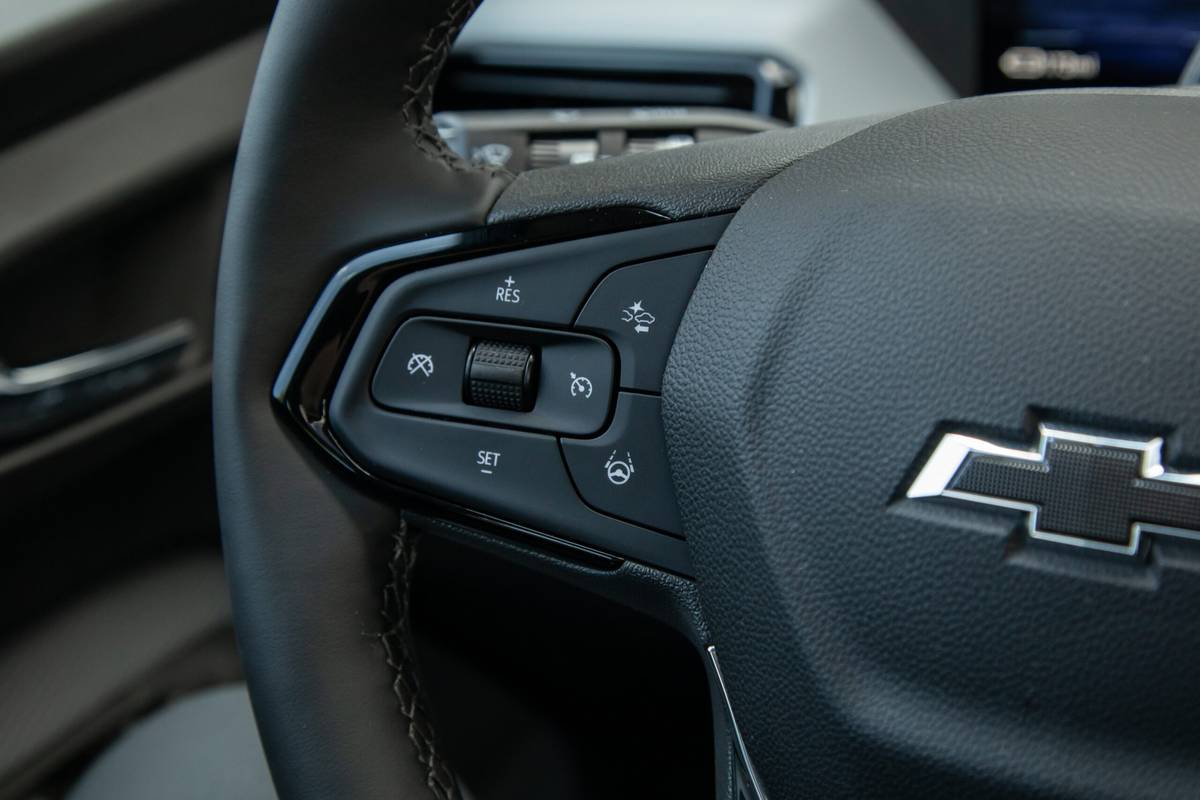
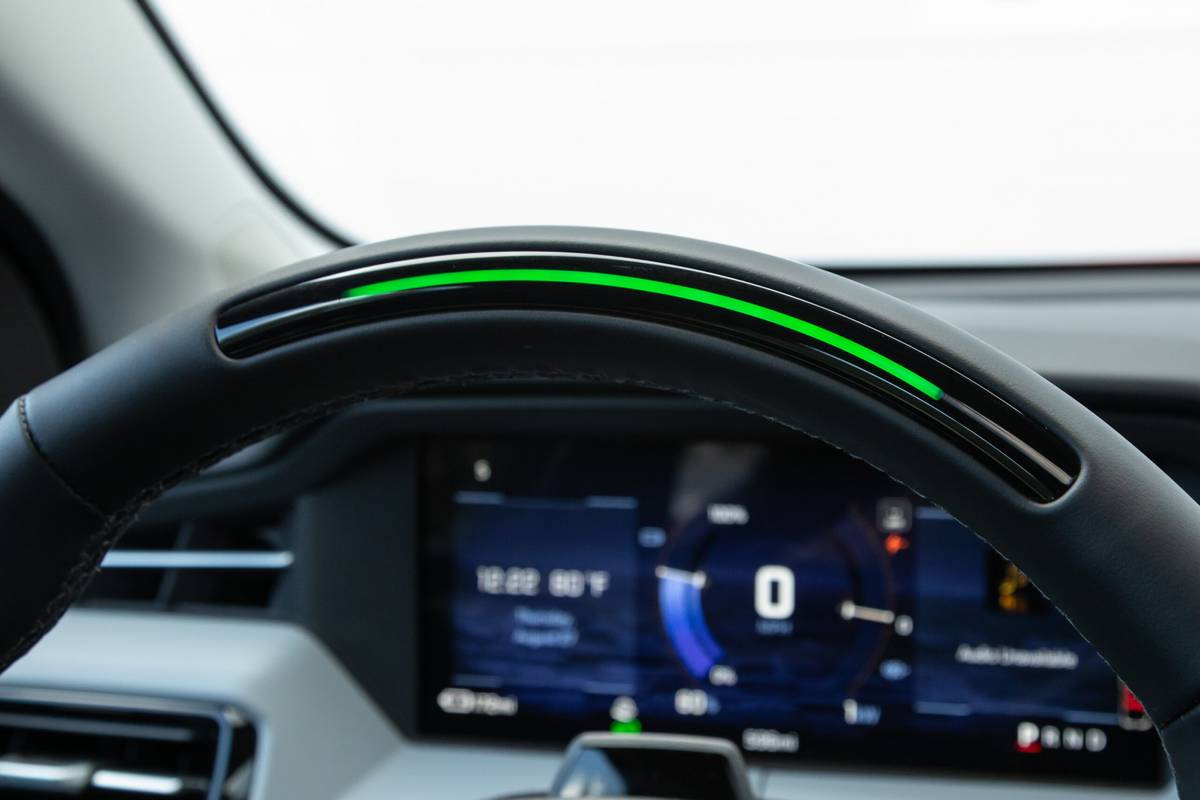
I was pleasantly surprised to learn that the Bolt can be optioned with GM’s Super Cruise hands-free driving system, even though that was also the case on the previous Bolt. Super Cruise continues to be one of my favorite hands-free driving systems because of the confidence it exhibits (on roads where it’s available, of course). It’s an expensive option on the Bolt relative to its starting price: At $3,255, it’s 11% of the overall starting price — and that doesn’t include the subscription fee after the free trial ends. After five years, though, it’ll actually be less expensive than Tesla’s $99 monthly charge for Full Self-Driving.
The downside is that the Bolt isn’t exactly a great car for highway driving, which is where Super Cruise helps take some of the load off the driver. The Bolt’s road manners are skittish and rough, and its EPA-rated highway range of 232 miles isn’t exactly conducive to long-haul highway driving. It’ll make more sense if you commute on a compatible road for a short-to-medium-length distance.
| 2027 Chevrolet Bolt Super Cruise Price | 2026 Tesla Model 3 Full Self-Driving Price | |
| Initial cost | $3,255 | $0 |
| Monthly subscription | $39.99 after three-year free trial | $99 from first day |
| Five-year cost | $4,215 | $5,940 |
| 10-Year cost | $6,614 | $11,880 |
3. Powerful Home Charging
The Bolt is capable of adding more range faster on a home charger than some of its affordable competitors, including the Nissan Leaf. Your numbers may vary based on your home charging setup, but the Bolt is capable of adding up to 40 miles of range per hour when plugged into a dedicated Level 2 home charging circuit that supports 11.5 kilowatts. That’s similar to what you’ll see from more expensive EVs; the more comparably priced Leaf charges at a maximum 7.2 kW, which nets just 25 miles of added range per hour.
As a bonus, the Bolt comes with a mobile charging cable that allows you to plug into a NEMA 14-50 Level 2 outlet at 7.7 kW and add 27 miles of range per hour without a fixed, hard-wired charging setup, though it’s still a good idea to use an outlet rated for EV charger usage.
That’s a whole lot of numbers; if you’re an EV newbie enticed by more affordable electric cars, check out our EV Buying Guide: What to Know Before Purchasing an Electric Vehicle: A Buying Guide.
2027 Chevrolet Bolt Vs. 2026 Nissan Leaf Charging Speeds
| 2027 Chevrolet Bolt | 2026 Nissan Leaf | |
| Home charging maximum power | 11.5 kW (48 amps) | 7.2 kW (30 amps) |
| Maximum miles of range added per hour (Level 2) | 40 miles per hour | 25 miles per hour |
| Maximum DC fast-charging speed 10%-80% | 25 minutes | 35 minutes |
| Charging connector | Tesla-style NACS | Tesla-style NACS for DC fast charging, J1772 for home charging |
4. In-Vehicle Gemini AI Works Well
I’m skeptical of any vehicle app or software integration outside of Apple CarPlay and Android Auto, because they’re often a fad or not really useful (OpenTable, Amazon Alexa and MovieTickets.com all come to mind). Google’s AI assistant, Gemini, is part of the Bolt’s Google Built-In system, and it managed to buck that trend with natural voice recognition that worked really well. Simply saying, “Find me an open EV charger near my destination” actually found an open charger near my destination — and, much to my surprise, it actually was available.
What Do We Dislike About the 2027 Chevrolet Bolt RS?
1. A $39,000 Bolt Doesn’t Add Up
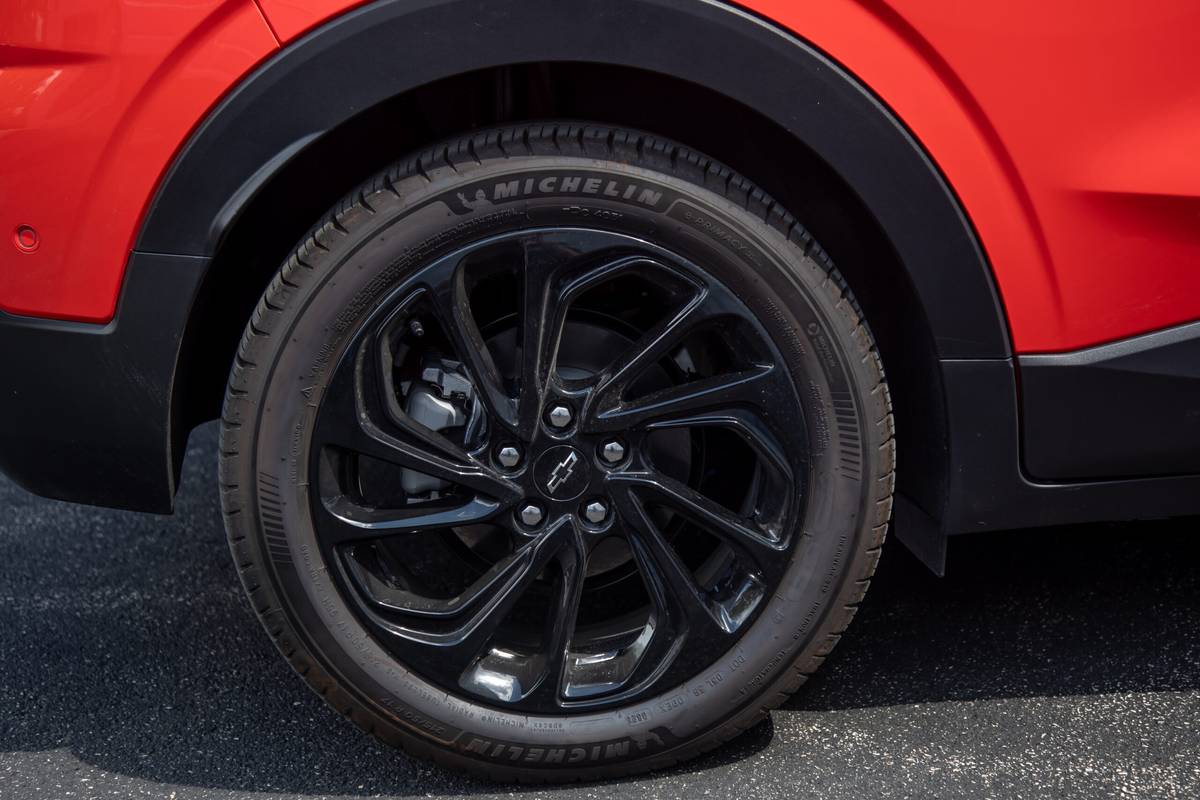
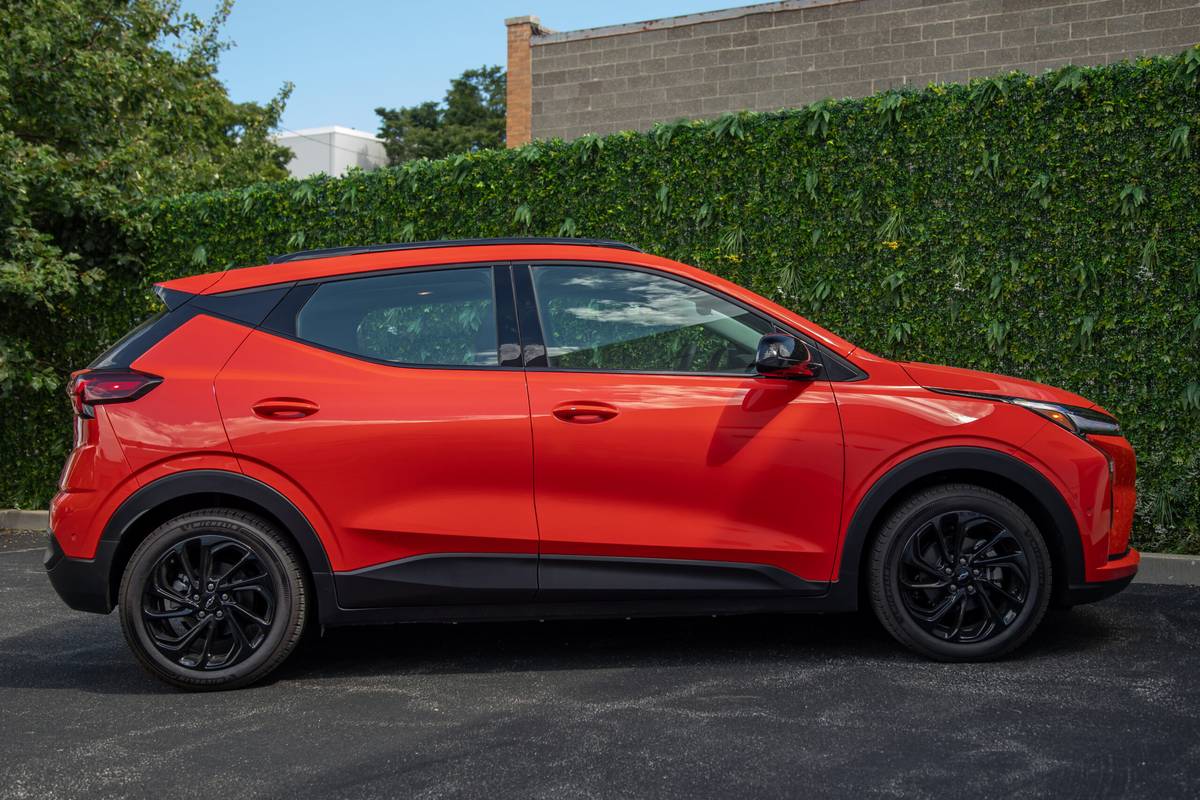
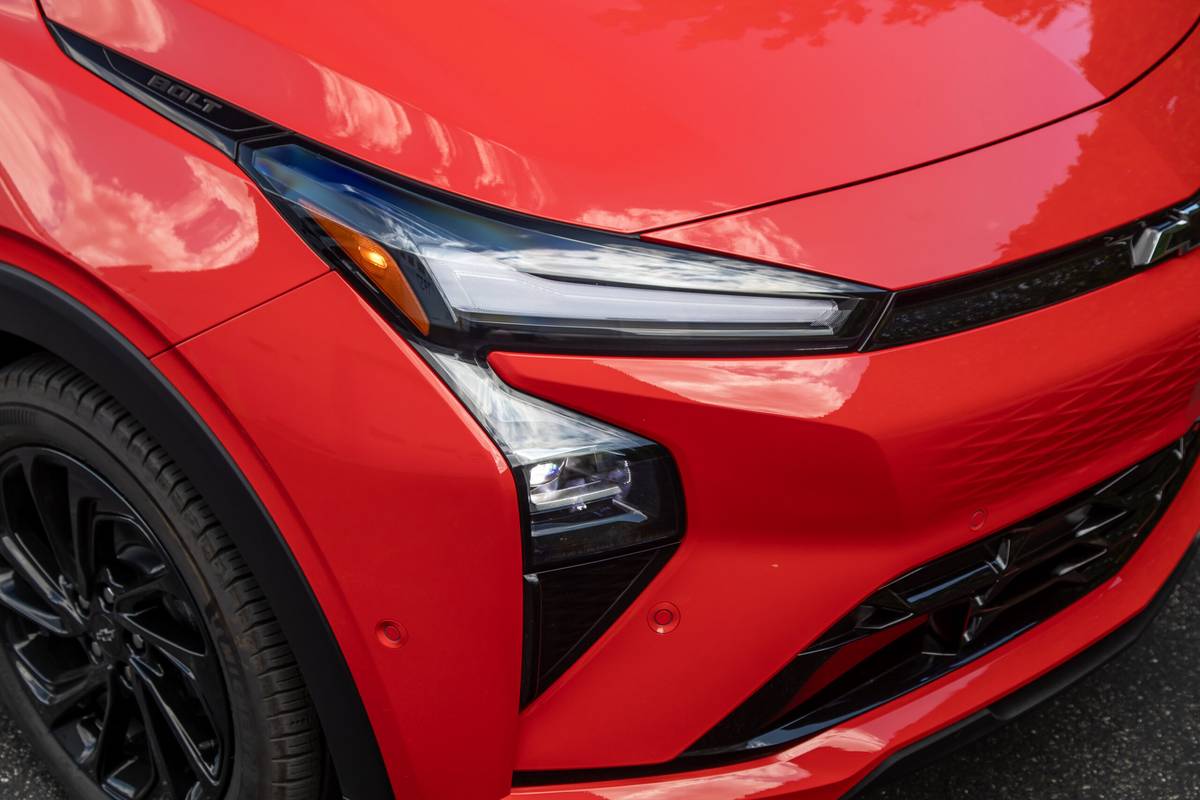
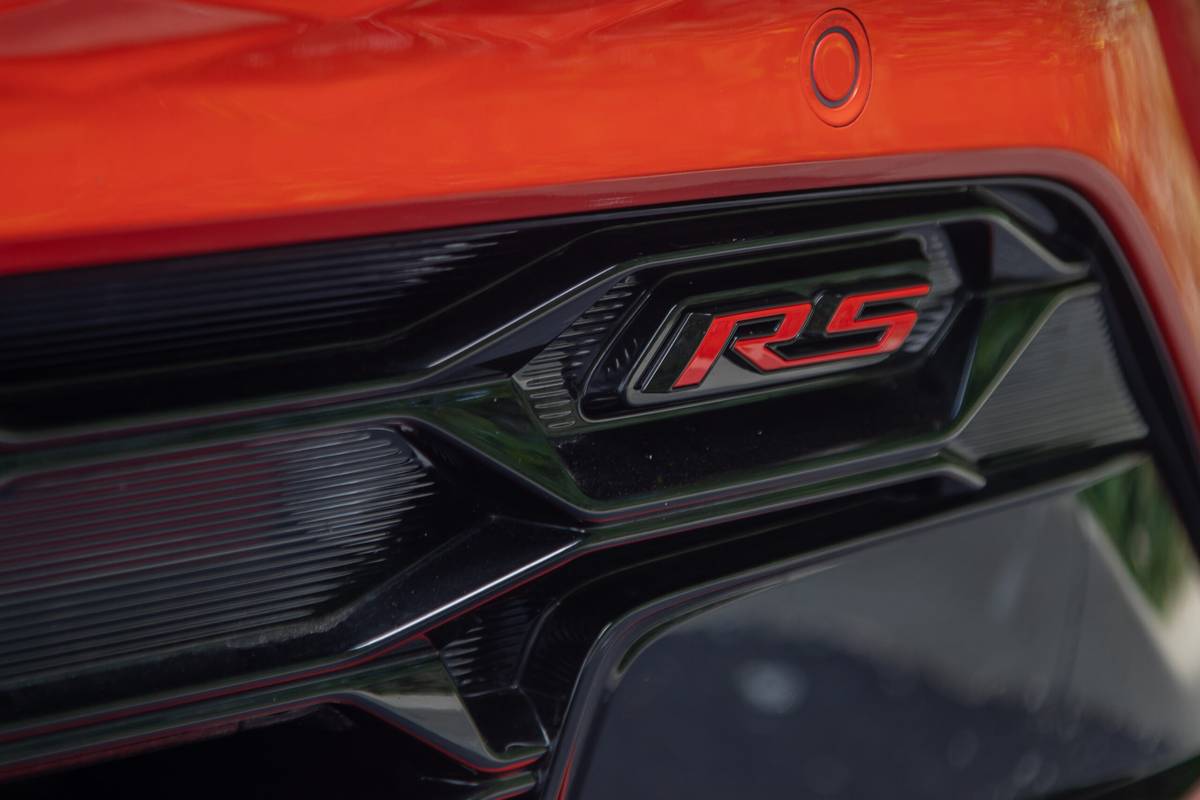
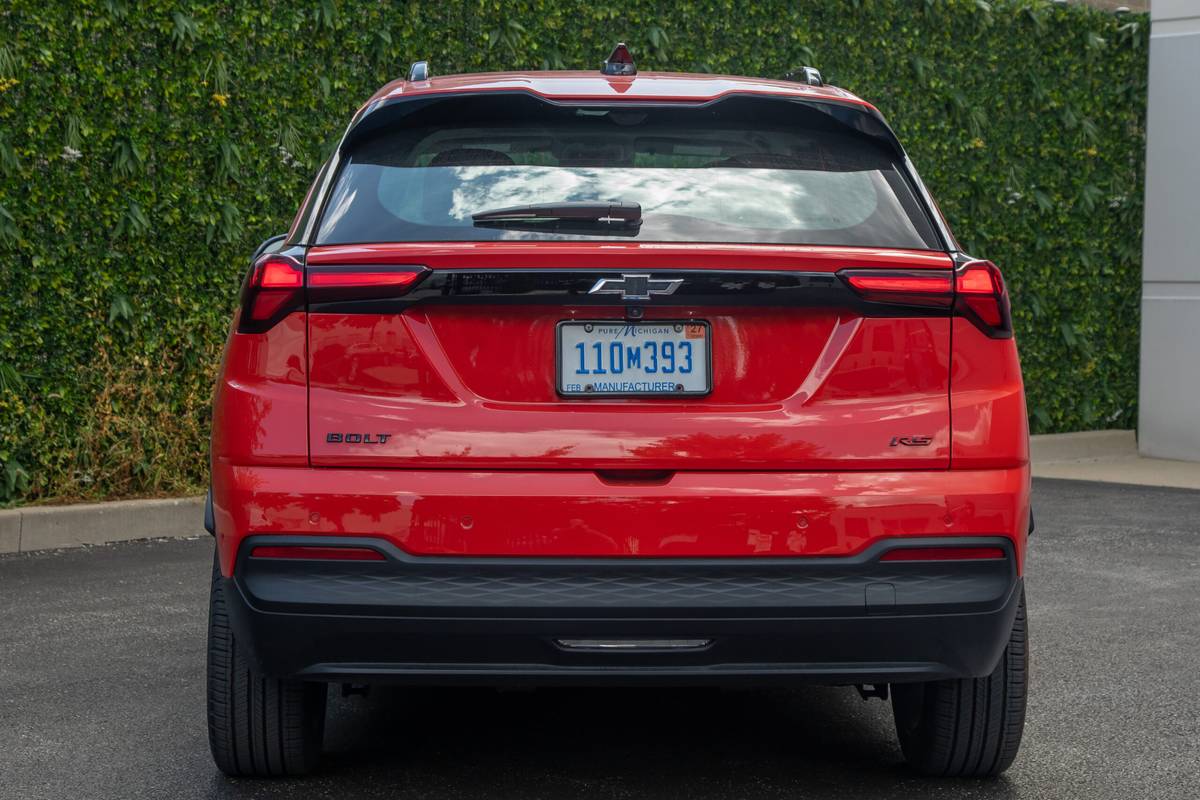
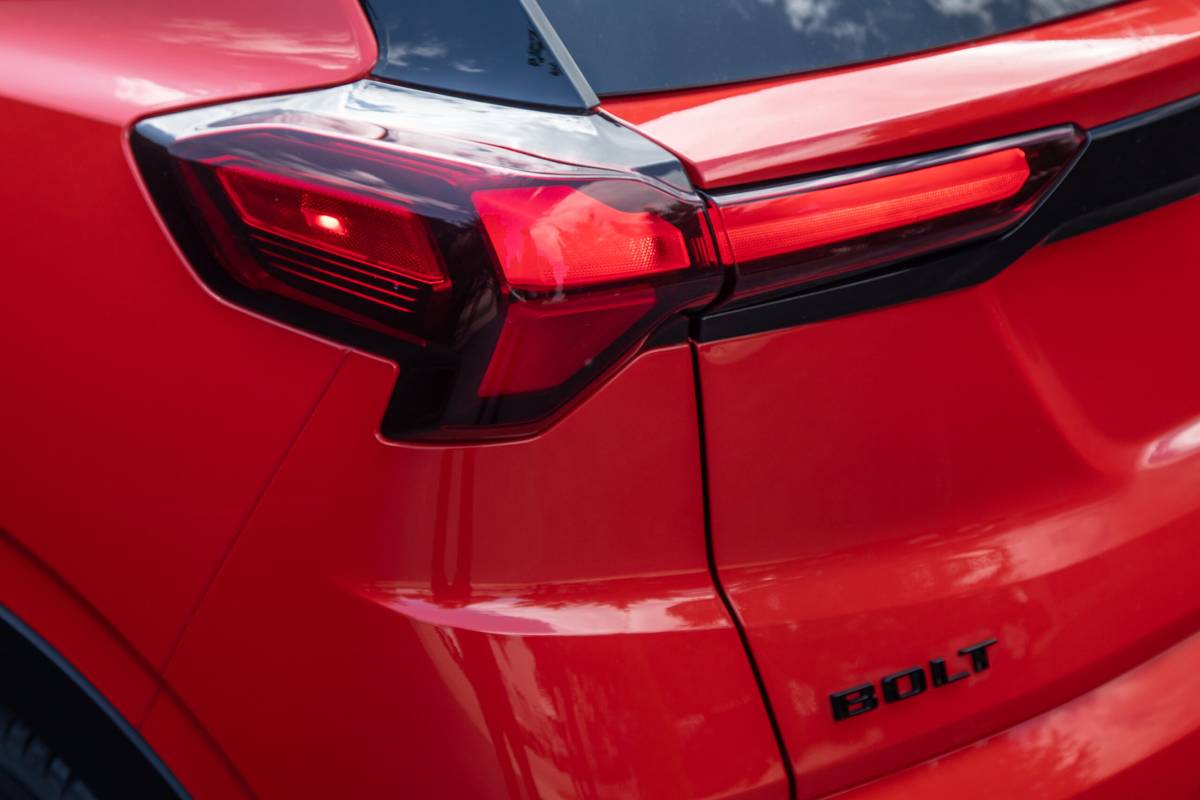
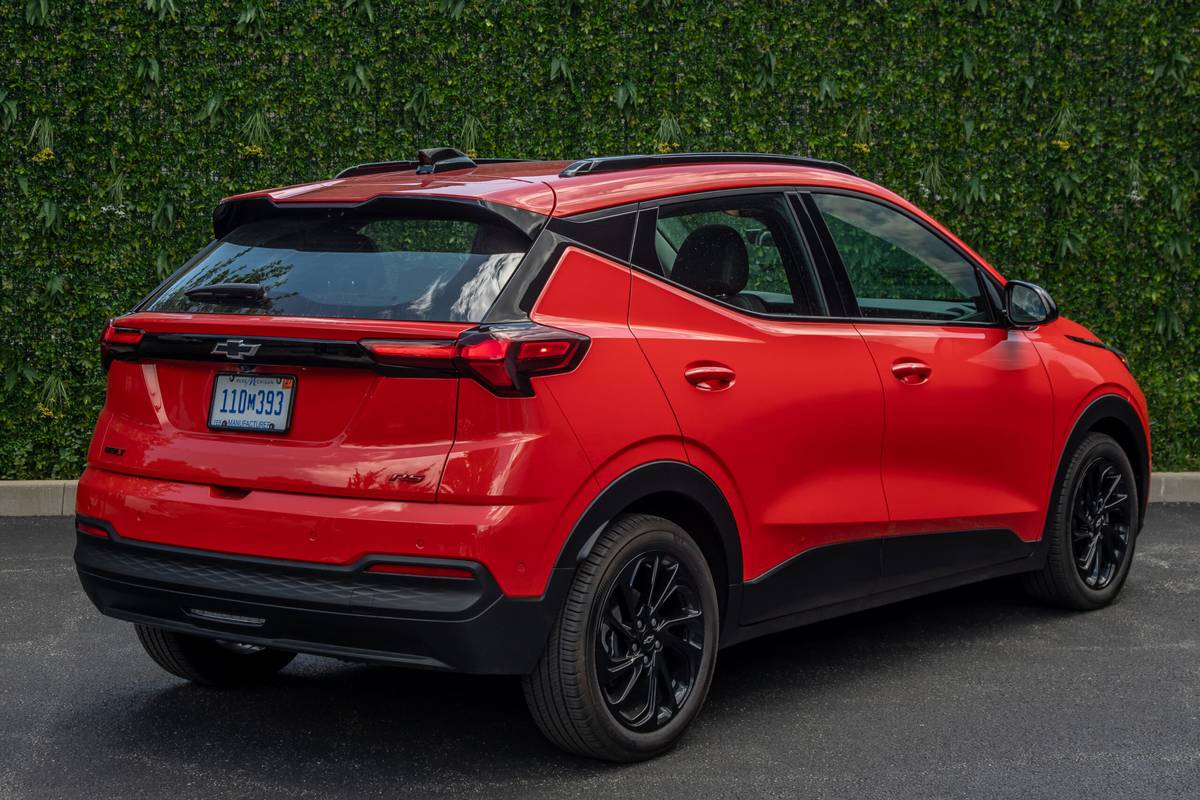
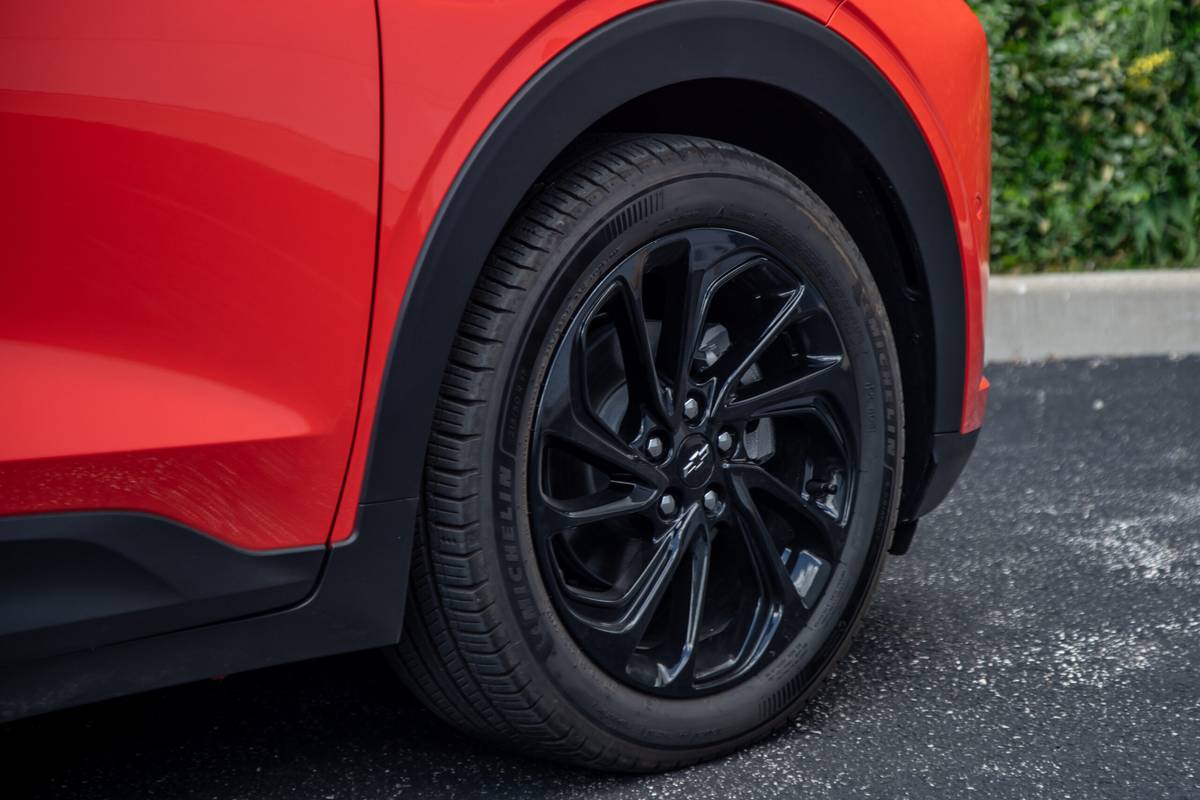
While the Bolt starts below $30K, the loaded Bolt RS trim level I tested had a sticker price of $38,940. This trim level starts at $32,995, and my test model added heated and ventilated front seats, an eight-way power driver’s seat, a leather-wrapped steering wheel and gloss-black wheels. Nothing groundbreaking there; most of it is included in a $995 Comfort Package that’s available on the base LT. What really drove up the price was the optional Super Cruise hands-free driving package, a Technology Package and a panoramic moonroof, which added nearly $6,000 in options to the car.
Here’s the good news: It appears my as-tested car is an outlier, because the average listing price of new Bolts in Cars.com’s national inventory database is around $31,000.
2. No Apple CarPlay Is Annoying
Please don’t misunderstand my previous praise for Google Built-In as full acceptance. The single most frustrating aspect of driving the 2027 Bolt is the lack of Apple CarPlay and Android Auto. Yes, there are benefits to Google Built-In, like native trip planning that integrates Google Maps with the vehicle’s driving data to plan a trip and charging stops. The negatives, however, far outweigh the positives.
Simply listening to a podcast or receiving or responding to a text message through Google Built-In is a multistep, complicated process that requires setup on both the phone and car. It is absolutely not plug-and-play like Apple CarPlay, requiring multiple app logins and configuration. And it’s not just the initial setup; it remains inconvenient because the user interface is more fragmented than the single screen you get with Apple CarPlay and Android Auto. Our resident Android Auto user also expressed frustration with the phone integration. GM has recently announced a rollback of its plans to eliminate Apple CarPlay and Android Auto on other models, and I hope to see a similar rollback on its EVs.
3. Skittish Ride
The broken pavement of Chicago revealed strange ride characteristics in my test Bolt. On rough roads, the antilock brakes engaged during normal braking and the car felt rickety; the electronic stability control system engaged to keep it from sliding during normal turning. These are roads on which I’ve driven many test cars, and I haven’t experienced these kinds of characteristics before. The Bolt’s ride quality wasn’t nearly as offensive on smoother roads, but my time tooling around the city wasn’t very enjoyable. The sweet spot for the Bolt’s ride is a 45-55 mph suburban or country road.
How Does the 2027 Chevrolet Bolt RS Compare With Prior Models?
The biggest change to the 2027 Bolt from the 2023 Bolt EUV is how Chevrolet has addressed the old version’s painfully slow DC “fast-charging” speeds. While the previous Bolt took 60 minutes to charge from 10%-80% at its 55-kW maximum power, GM says the new Bolt can do so in 25 minutes thanks to a new-style battery and 150-kW DC charging capability. Will that change how many Bolt drivers occupy a 350-kW DC fast charger despite not being able to use anywhere near that capacity while I wait in line with a 350-kW-capable EV at 3% battery? Probably not.
Other changes for 2027 include slightly more horsepower — up to 210 from 200 hp — but less torque. It’s down to 169 pounds-feet from 266 pounds-feet, but I didn’t perceive any noticeable lag in acceleration.
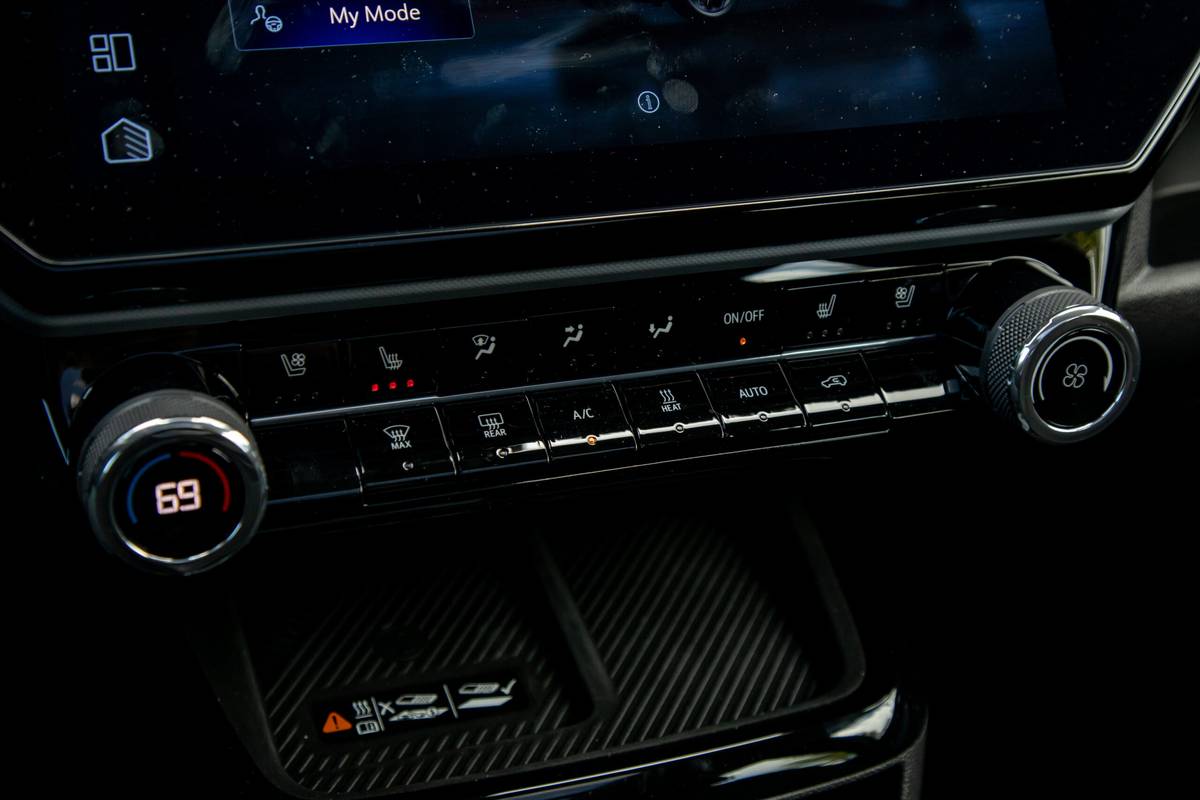
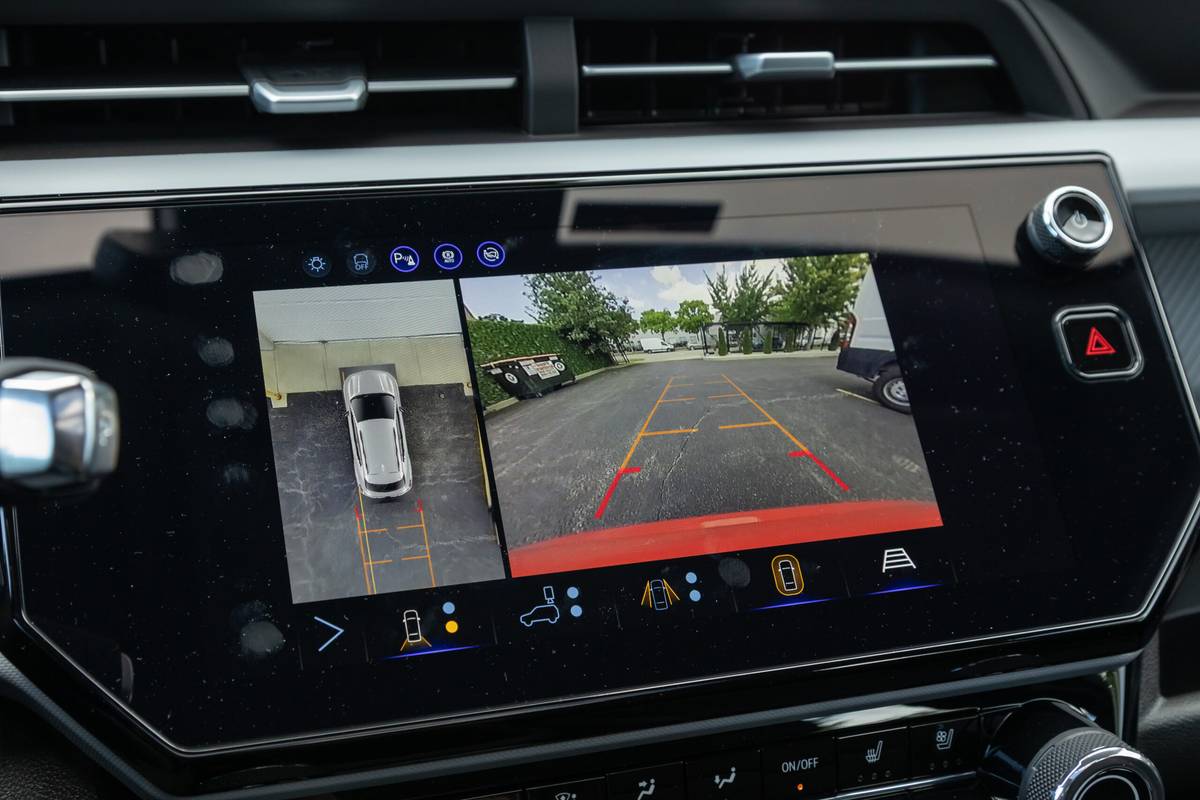
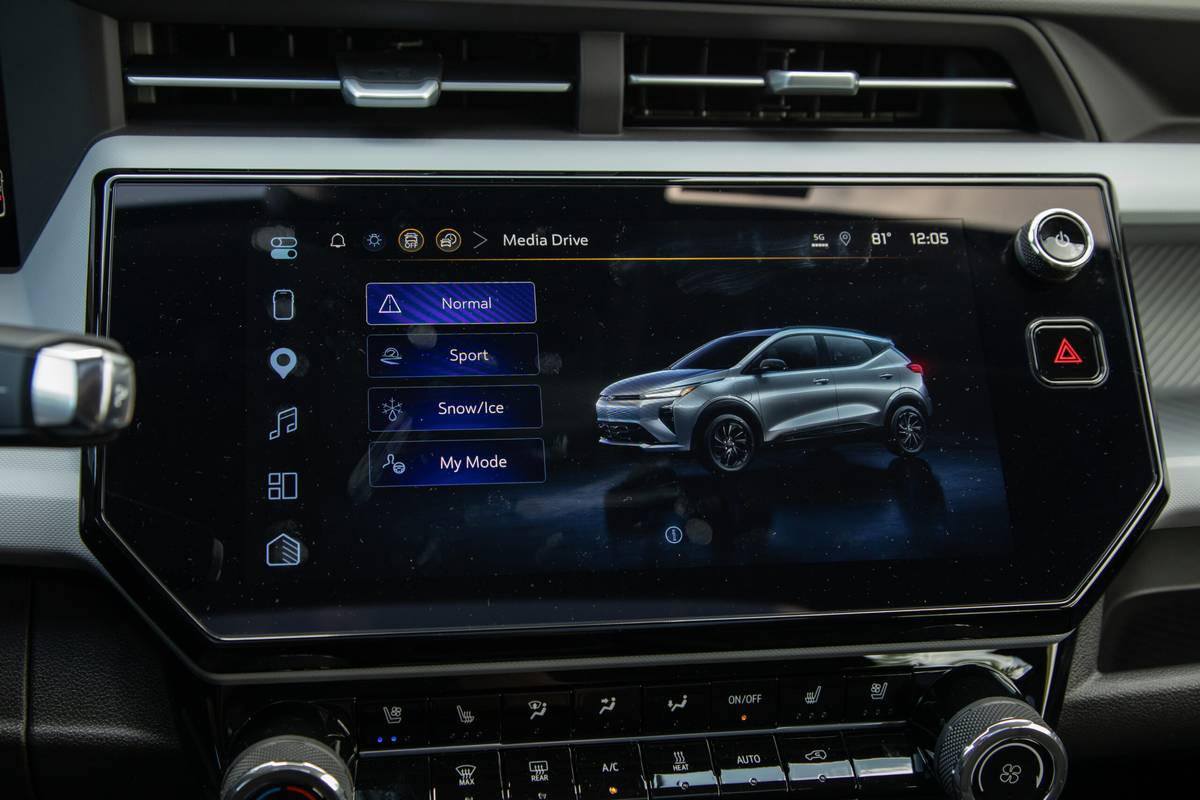
Dimensions are nearly identical on the inside, but there are changes on the technology front, with a larger 11.3-inch touchscreen for the multimedia system. The digital gauge cluster also increases, from 8 inches to 11 inches. Like other affordable Chevys, the screens’ resolution and ease of use are impressive considering the Bolt’s base price. As stated, though, I’d prefer to have Apple CarPlay and Android Auto back; competitors offer both Google Built-In and Apple CarPlay/Android Auto.
2027 Chevrolet Bolt RS Vs. the Competition
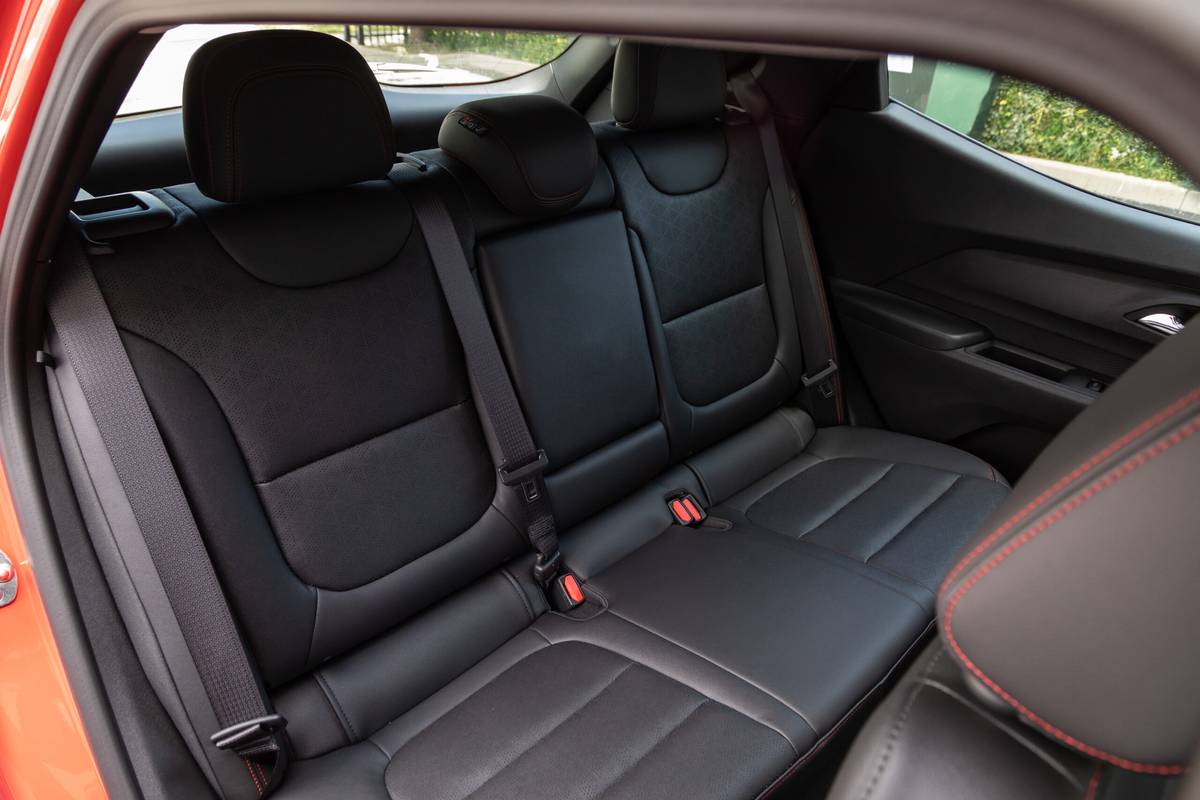
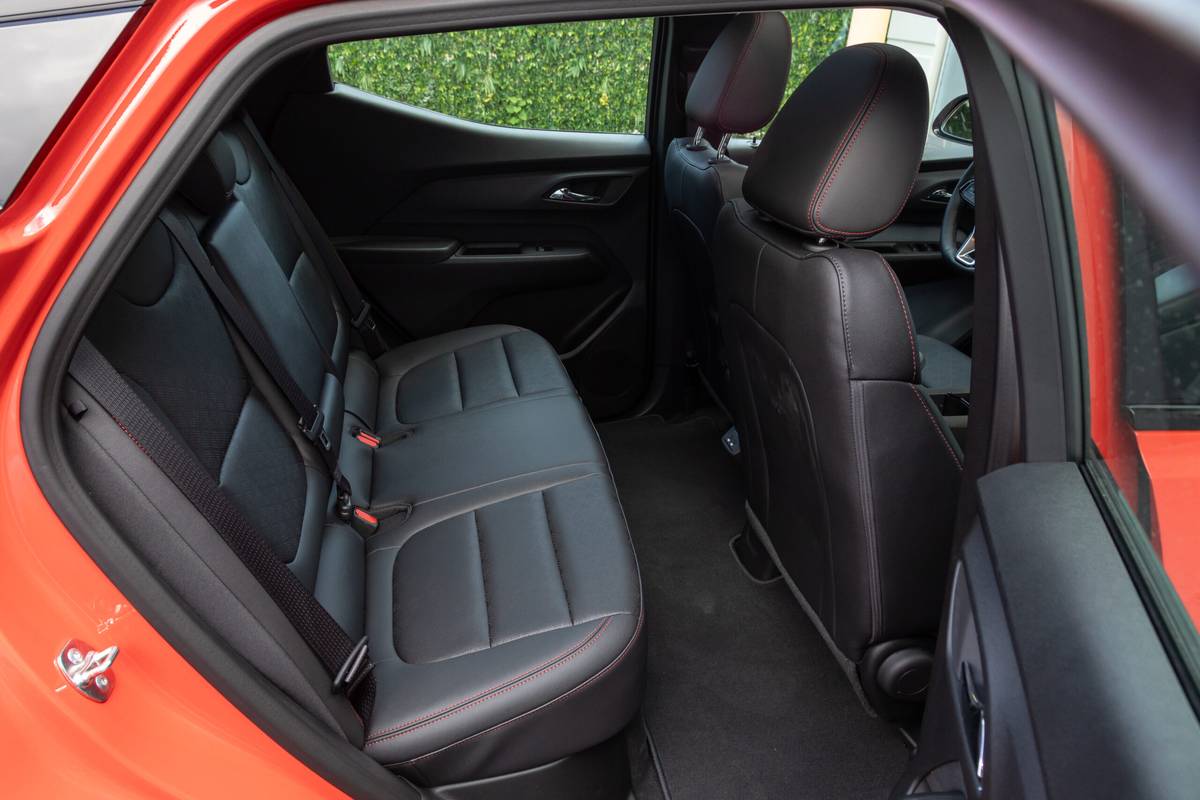
The Bolt is without a doubt the smallest subcompact EV on the market. It’s the shortest from front to rear and has the shortest wheelbase (which may exacerbate its poor ride quality), and it’s also the narrowest. Its taller height, however, means the interior doesn’t feel cramped, though the backseat will be tight for 6-footers. Even though the Bolt is now classified as a “utility” vehicle, you should still think of it as a small hatchback with SUV-like styling, not an SUV; all-wheel drive isn’t available, and its ground clearance is still very much that of a hatchback or sedan.
We named the 2026 Leaf our Best Car of 2026 before driving the 2027 Bolt, and the Bolt doesn’t move the needle enough to make us regret that decision. Yes, this Bolt is improved over the previous version, but there are many new, affordable EVs that I’d rather drive — like the Leaf, because it has Apple CarPlay and Android Auto in addition to Google Built-In.
And while the Leaf is a great alternative in the $30,000 range, once you’re looking at spending $39,000 on a Bolt, you’re squarely in Tesla Model 3 territory. A base Model 3 with rear-wheel drive costs $38,630 and is a much more sophisticated car in terms of handling and acceleration than the more rickety-feeling Bolt. The Model 3 also doesn’t have Apple CarPlay, but the Tesla’s screen makes its systems much easier to use once you’ve set up all its phone integration and built-in capabilities.
And, oh yeah, Chevrolet itself makes a really good compact electric SUV: The Equinox EV has more space and available AWD, and it isn’t that much more expensive.
When it comes down to it, the 2027 Bolt makes the most sense when it’s priced in the high-$20,000 to low-$30,000 range. Outside of that, there are alternatives with more range and room for the money.
| Model | Price (With Destination) | Range (Miles) | Length (Inches) | Width (Inches) | Height (Inches) | Drive Type | Segment | Horsepower |
| 2027 Chevrolet Bolt LT | $28,995 | 262 | 169.6 | 69.7 | 63.9 | FWD | Subcompact SUV | 210 |
| 2026 Nissan Leaf S+ | $31,565 | 303 | 173.4 | 71.3 | 61.3 | FWD | Subcompact SUV | 214 |
| 2027 Subaru Uncharted Premium | $36,470 | 308 | 177.8 | 73.6 | 63.8 | FWD | Subcompact SUV | 221 |
| 2027 Toyota bZ XLE | $36,575 | 236 | 184.6 | 73.2 | 65 | FWD | Compact SUV | 165 |
| 2027 Chevrolet Equinox EV LT1 | $36,795 | 319 | 190.6 | 76.9 | 64.8 | FWD | Compact SUV | 220 |
| 2027 Hyundai Ioniq 5 SE Standard Range | $36,900 | 245 | 183.3 | 74.4 | 63 | RWD | Compact SUV | 168 |
| 2026 Tesla Model 3 Base | $38,630 | 321 | 185.8 | 72.8 | 56.7 | RWD | Compact luxury sedan | 271 |
Frequently Asked Questions
1. How much does the 2027 Chevrolet Bolt cost?
The 2027 Chevrolet Bolt LT starts at $28,995, making it the least expensive EV on sale. The fully optioned Bolt RS trim I tested reached $38,940 with Super Cruise, the Technology Package and a panoramic moonroof. The average listing price in Cars.com’s national inventory for a 2027 Bolt is around $31,000.
2. What is the EPA driving range of the 2027 Bolt?
The 2027 Bolt has an EPA-rated range of 262 miles combined (with a highway rating of 232 miles). In mild summer driving, I observed a range of up to 280 miles on a full charge.
3. How fast does the 2027 Bolt charge?
With its Tesla-style NACS connector and 150-kW DC fast-charging capability, the Bolt can charge from 10% to 80% in 25 minutes. Level 2 home charging at 11.5 kW can add up to 40 miles of range per hour.
4. Does the 2027 Bolt support Apple CarPlay or Android Auto?
No, Apple CarPlay and Android Auto are not available. The Bolt uses a Google Built-In-based infotainment system with an 11.3-inch touchscreen and in-vehicle Gemini AI voice recognition.
5. Will the 2027 Bolt be available for multiple years?
No, the Bolt is limited strictly to a single model year (2027).
Read More About the Chevrolet Bolt on Cars.com:
- Costco Members Can Save Up to $1,250 on 2027 Chevrolet Bolt
- The Newest Electric Vehicles at the 2026 Chicago Auto Show
- 2027 Chevrolet Bolt: We’ve Missed You, Smol Fren
- Throwing Back the Bolt: Chevrolet Bolt Returns for Second Generation
- 10 Biggest News Stories of the Month: Subaru Crosstrek, VW Atlas Win as Chevy Bolt, Nissan Leaf Save
Cars.com’s Editorial department is your source for automotive news and reviews. In line with Cars.com’s long-standing ethics policy, editors and reviewers don’t accept gifts or free trips from automakers. The Editorial department is independent of Cars.com’s advertising, sales and sponsored content departments.