











Key Points in This Review
- Even though its core design dates back to the 2019 model year, the Mazda3 remains one of the most athletic and engaging mainstream compact cars you can buy.
- The 3’s available all-wheel drive is a key asset; AWD is a rare feature for compact cars, and an AWD Mazda3 enjoys a unique position in the segment.
- The Mazda3’s biggest shortcomings are its cramped backseat and outdated infotainment system, which uses a console-mounted control knob in place of a proper touchscreen.
While compact cars have largely been pushed to the sidelines over the past decade or so by the rise of subcompact and compact SUVs, the category is still decently diverse. It’s experienced an uptick in sales over the past couple of years, too, as ongoing affordability concerns have prompted American consumers to think (and buy) smaller. Beyond that, the typical compact car delivers a more engaging driving experience than a comparably sized SUV, which might trump the SUV’s superior passenger and cargo space for some shoppers.
Related: How Much Is the 2026 Mazda3?
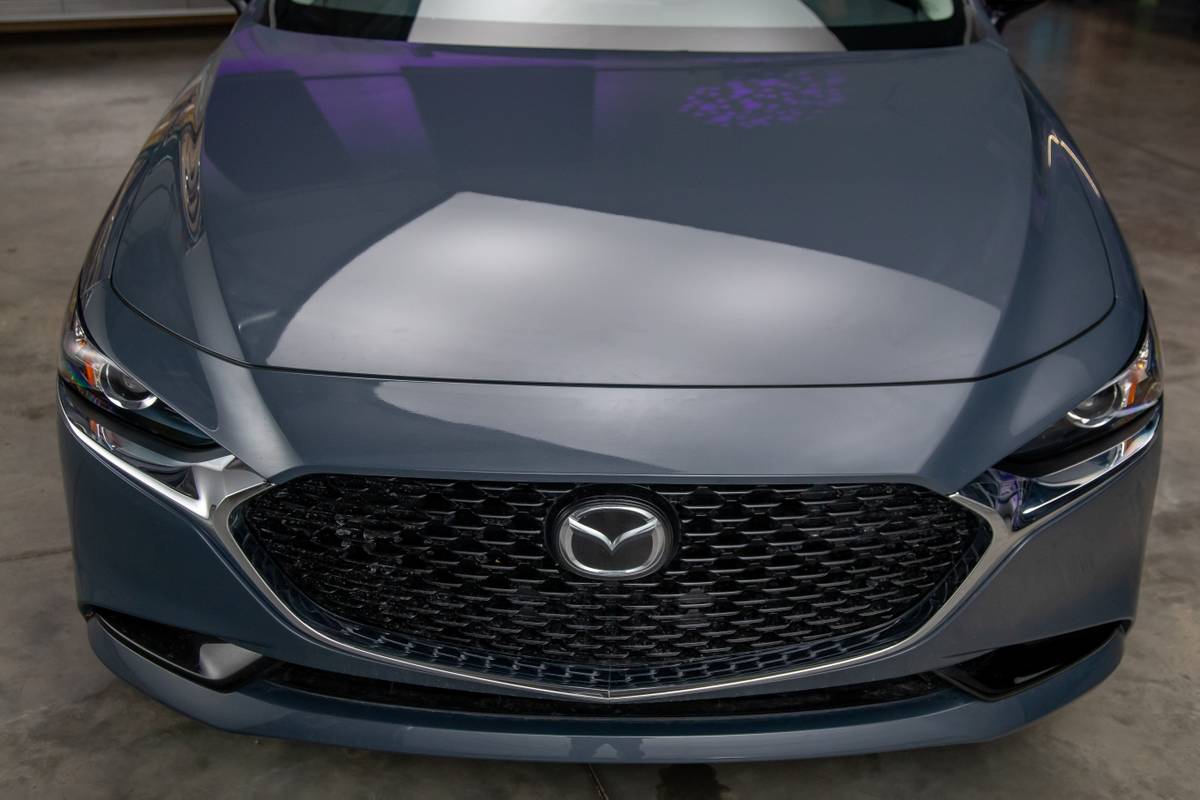
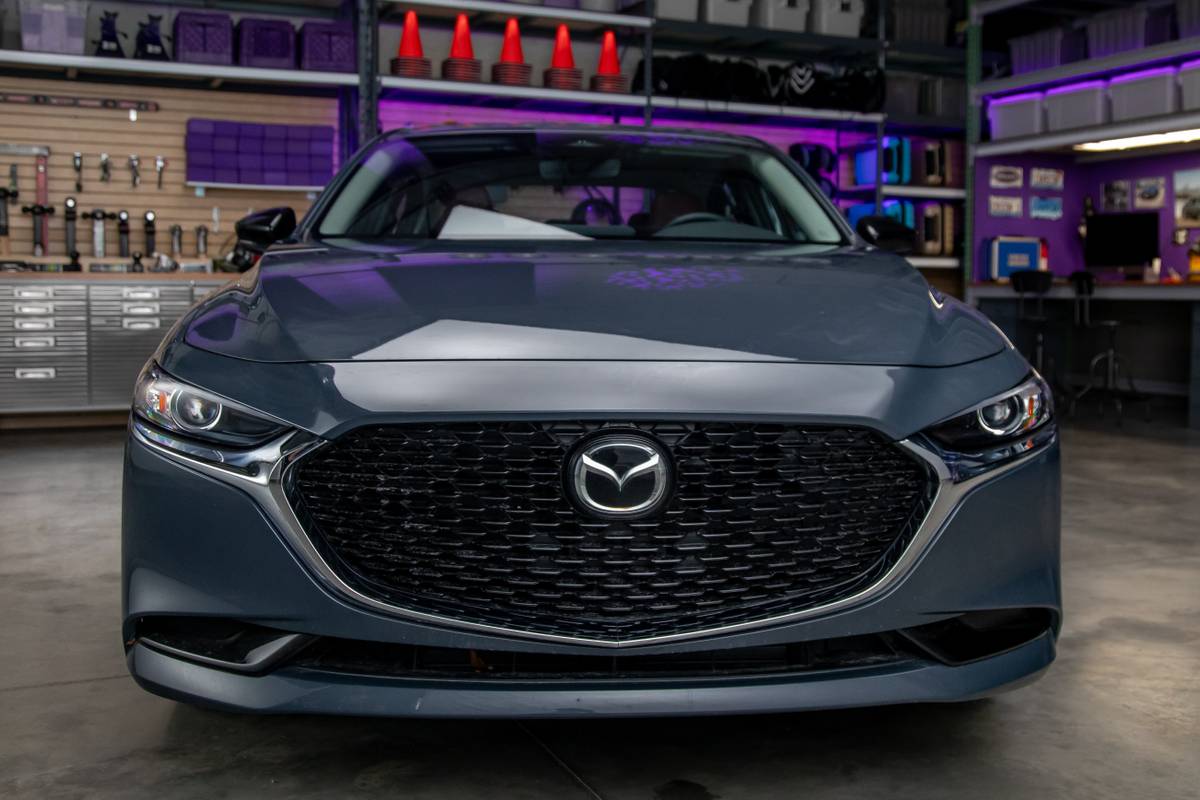
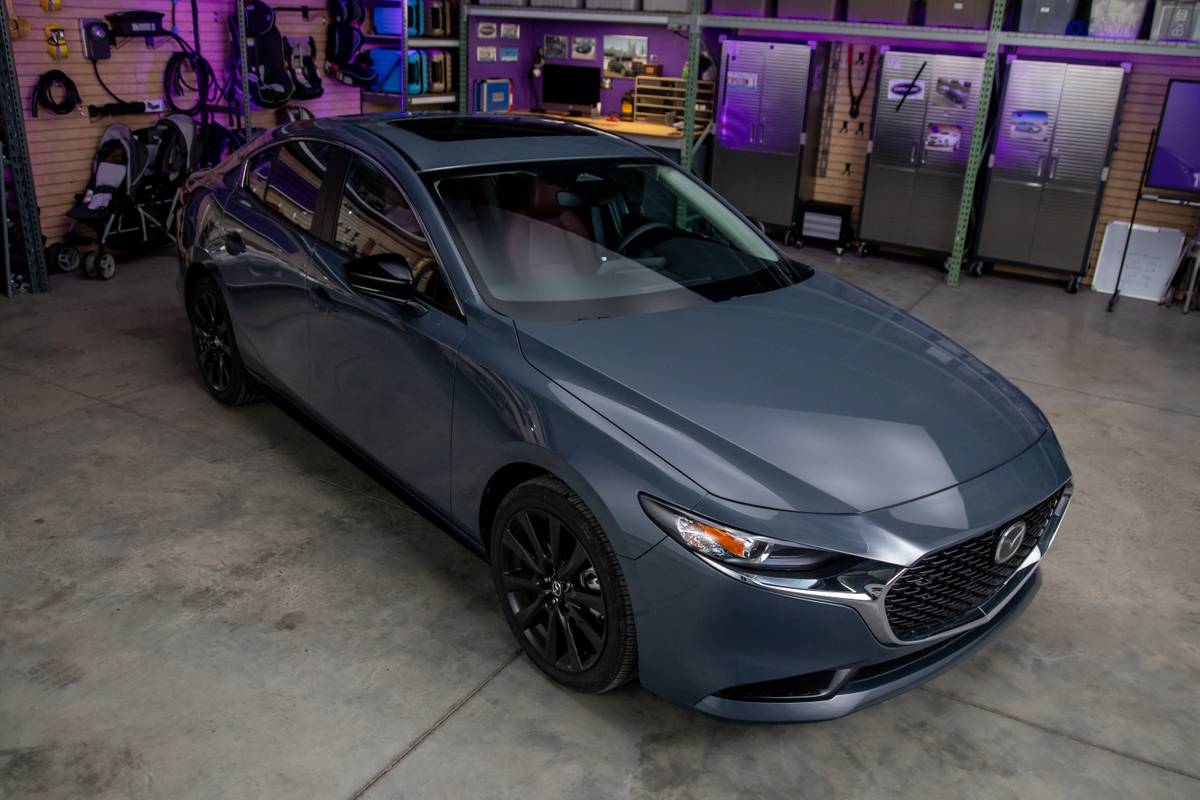
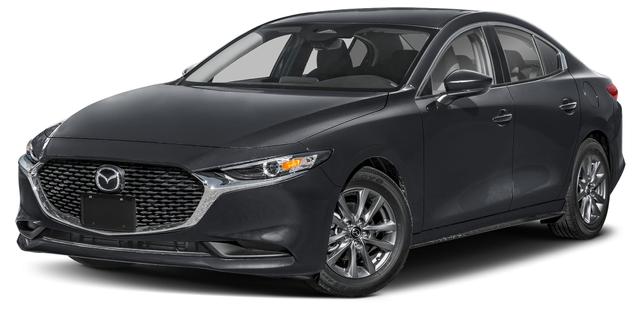
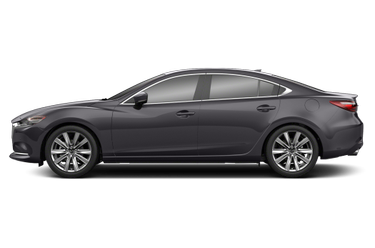
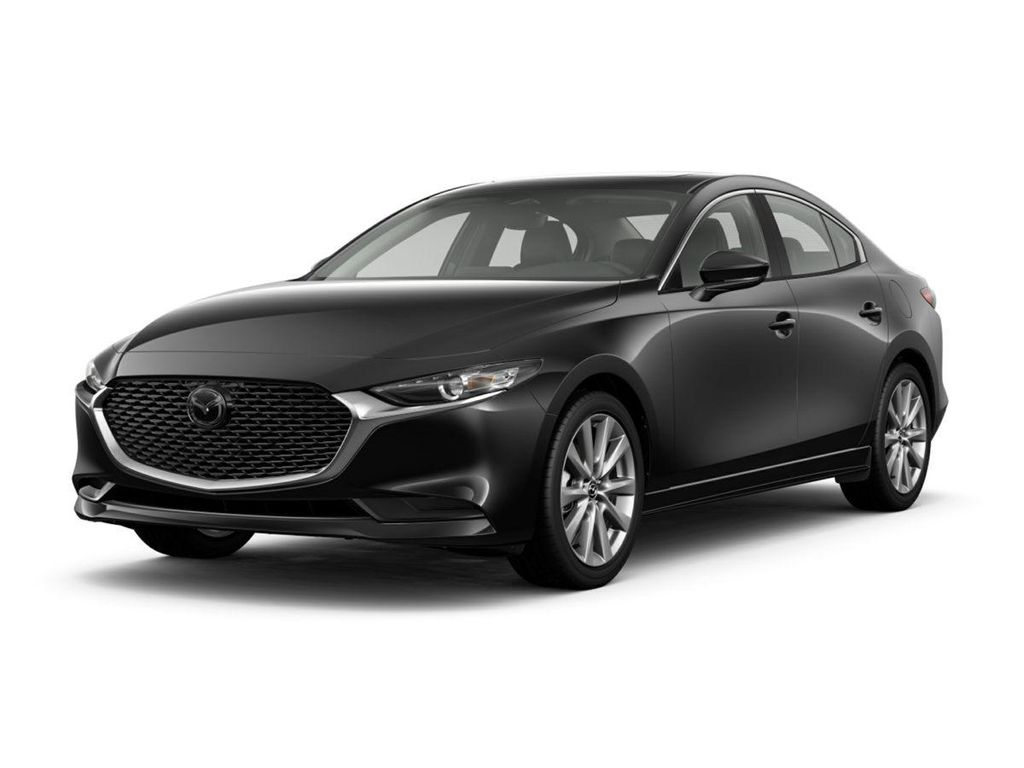
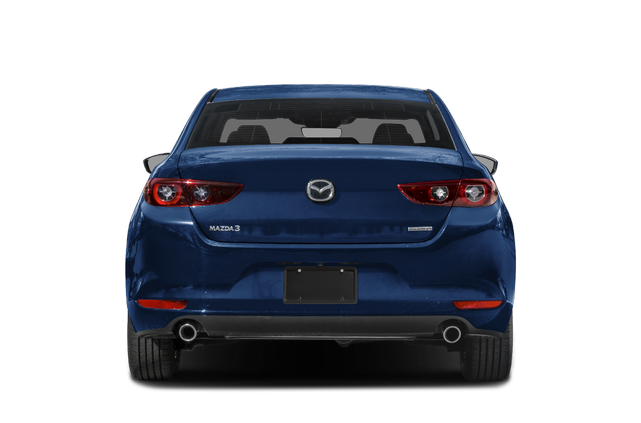
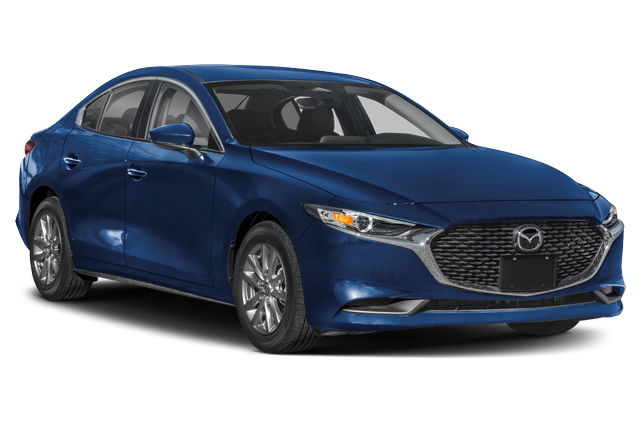
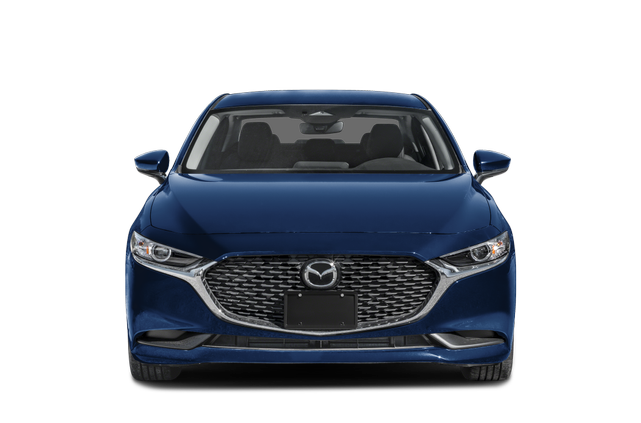
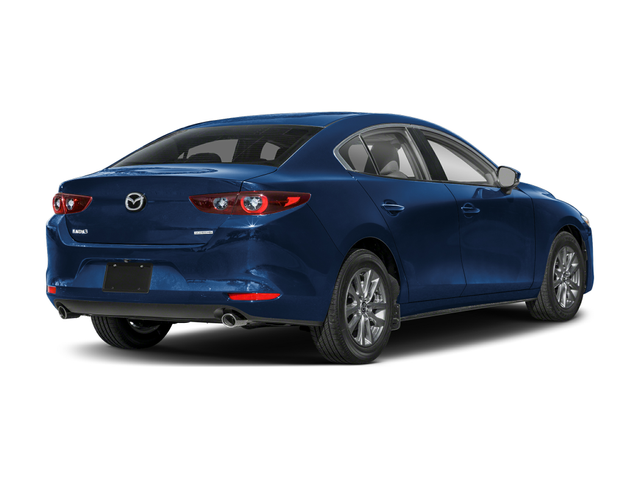
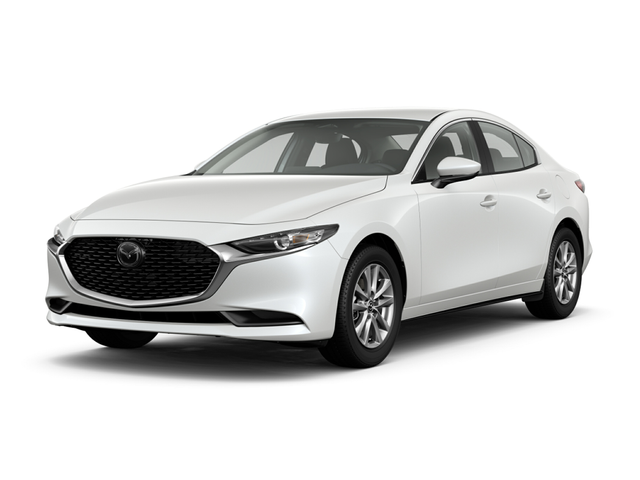
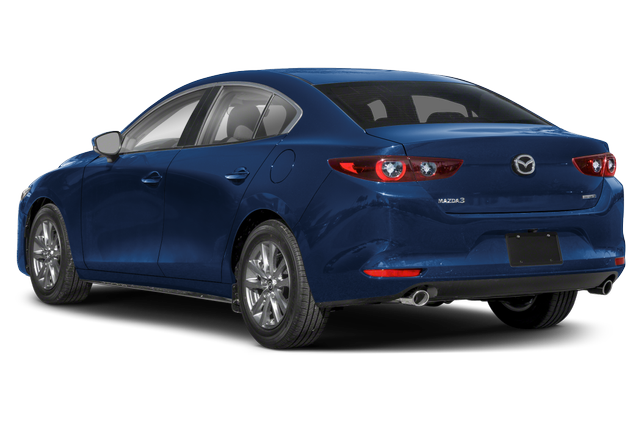
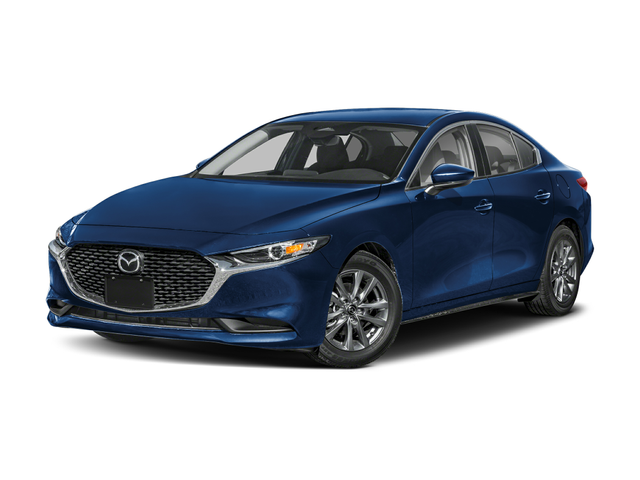
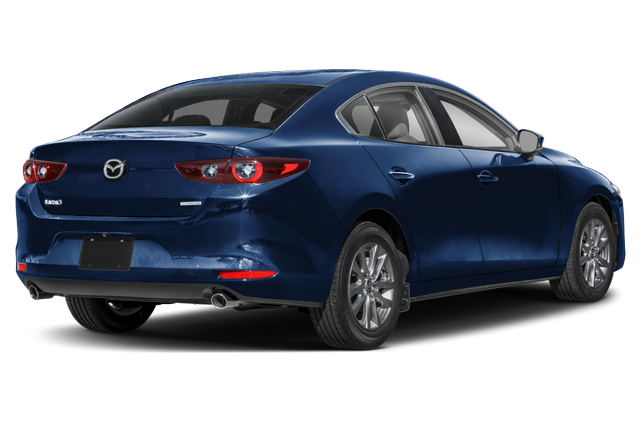
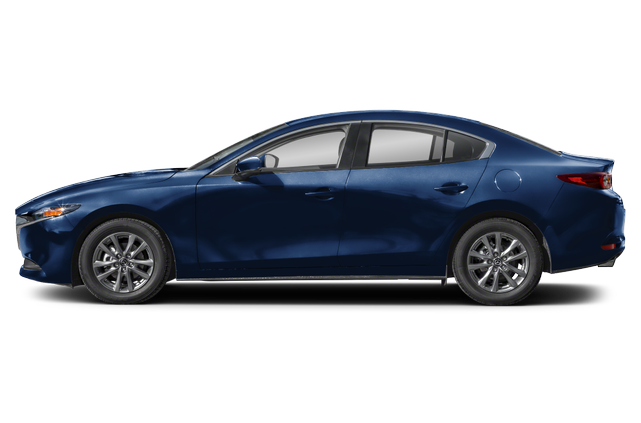
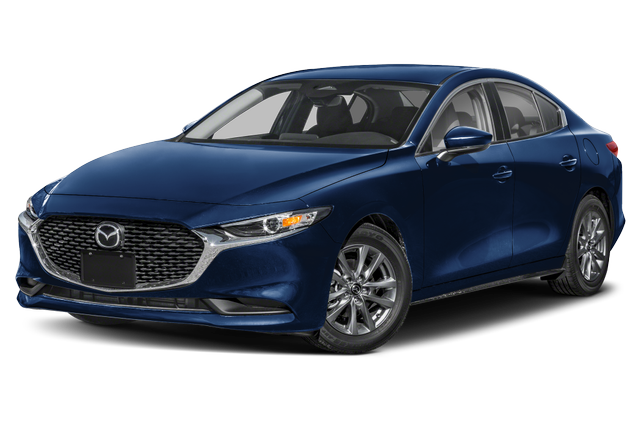
The 2026 Mazda3 sedan I recently tested put its pluses and minuses versus the rest of the compact-car class into sharper focus. The 3 is one of the oldest designs in the segment; it debuted for the 2019 model year and hasn’t seen any major updates since. Its most noteworthy upgrades have been the introduction of a turbocharged engine with up to 250 horsepower for 2021 and the addition of an available 10.25-inch infotainment screen for 2024. As such, the 3 feels a tad behind the times in some respects, but its overall upscale feel and athletic driving character still make it stand out against its competitors.
How Does the Mazda3 Drive?
- Takeaway: The Mazda3’s base engine boasts significantly more hp than its rivals, and its handling is more nimble than most of them, too.
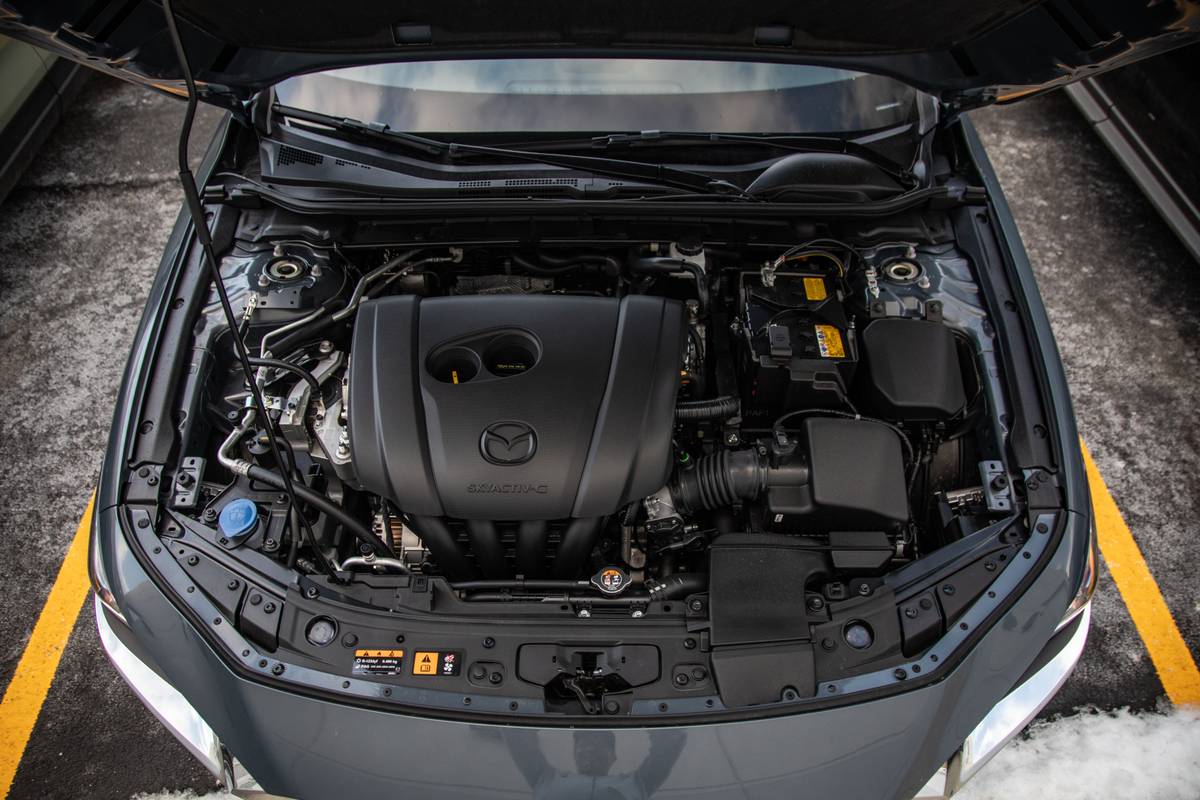
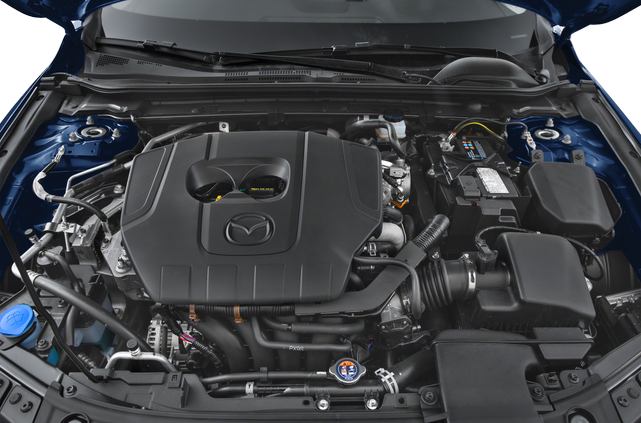
Across the model line, Mazdas are among the most athletic, sporty vehicles in their respective classes, and that’s certainly true of the 3. Its base engine is a naturally aspirated 2.5-liter four-cylinder that makes 186 hp — a slight decrease from last year’s 191-hp rating, but still comfortably above the class norm of 150-160 hp. In fact, its output isn’t far off from the turbocharged four-cylinders of sport-tuned models like the Honda Civic Si (200 hp), Hyundai Elantra N Line (201 hp) and Kia K4 GT-Line Turbo (190 hp).
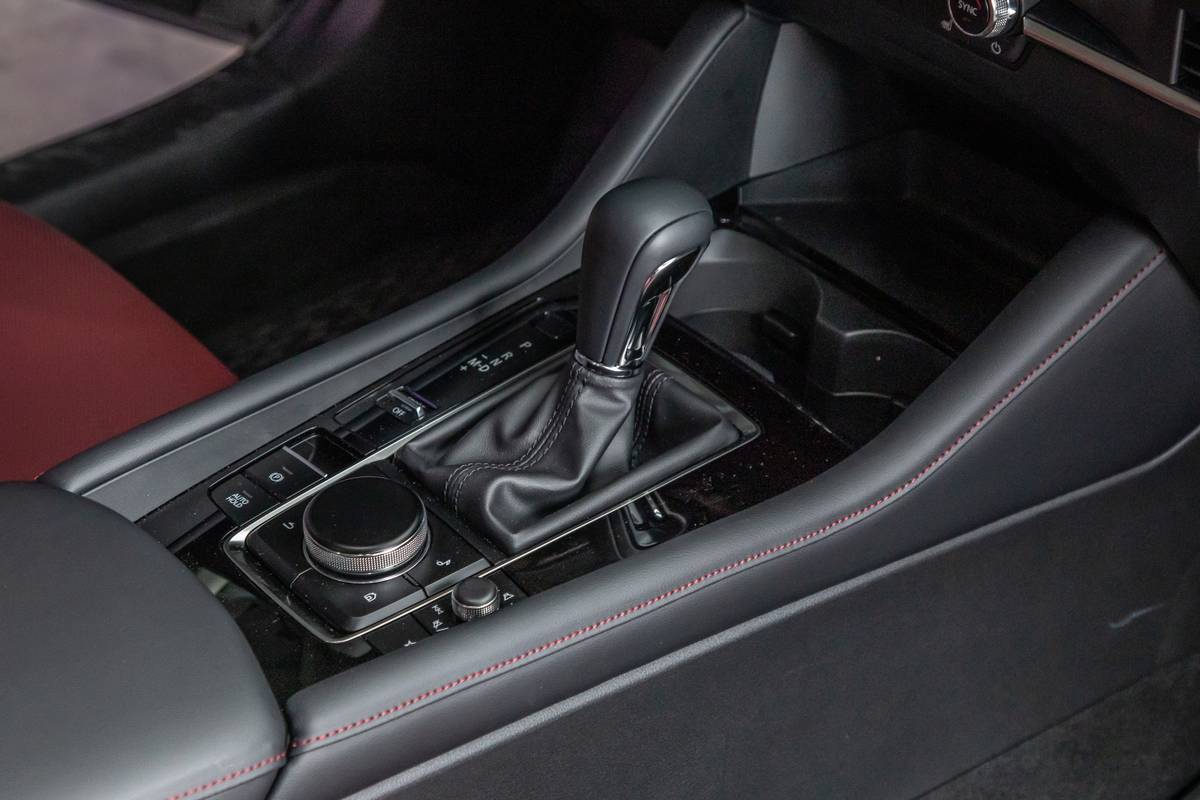
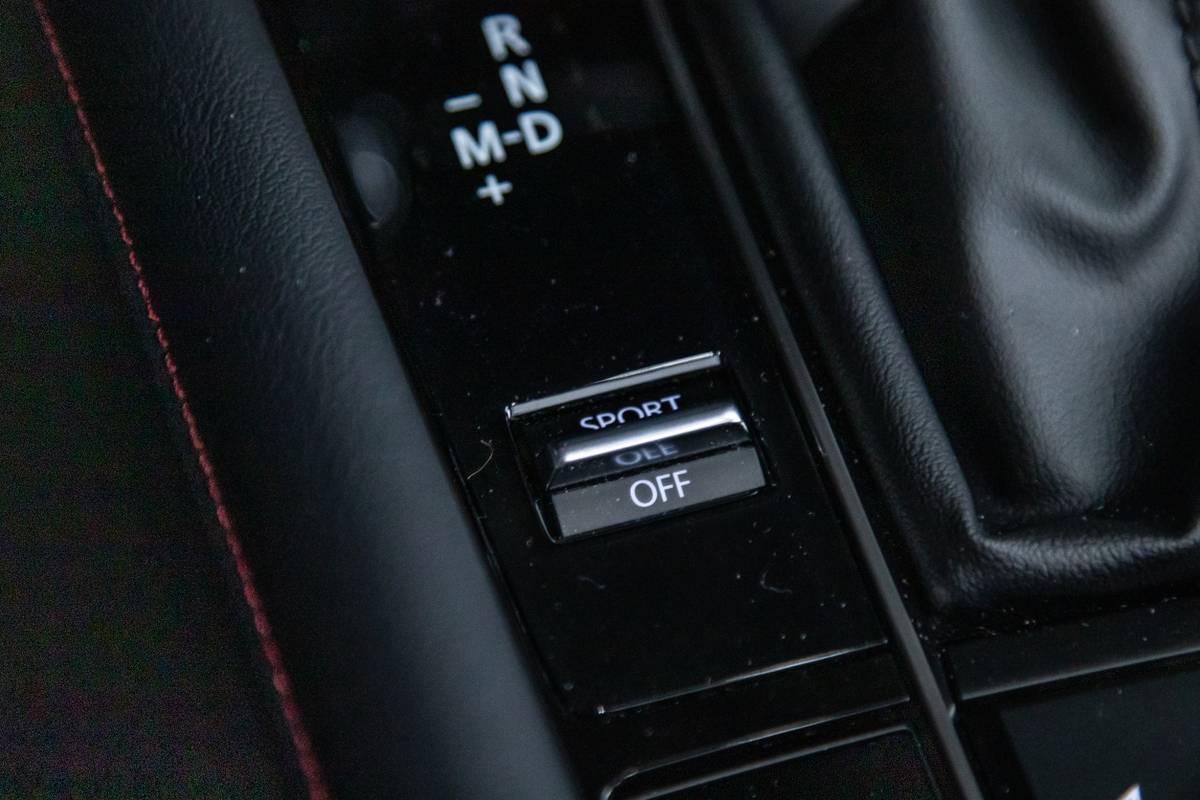
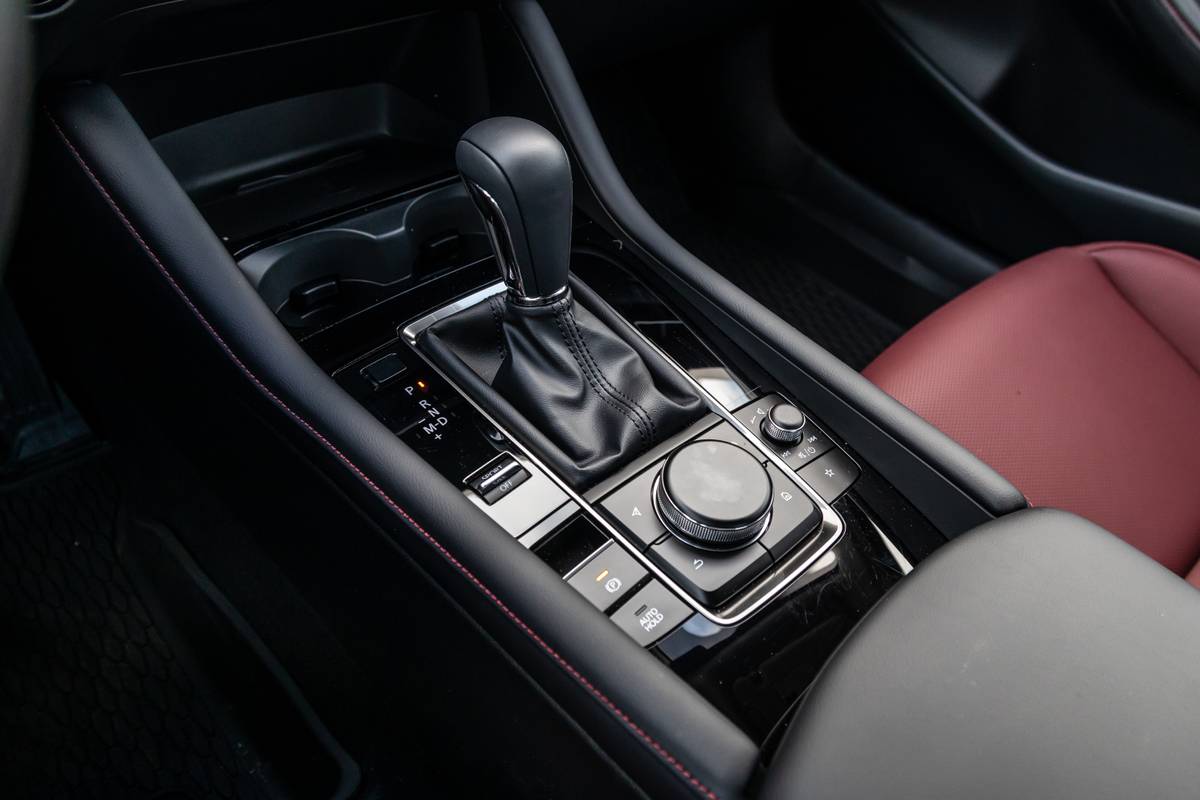
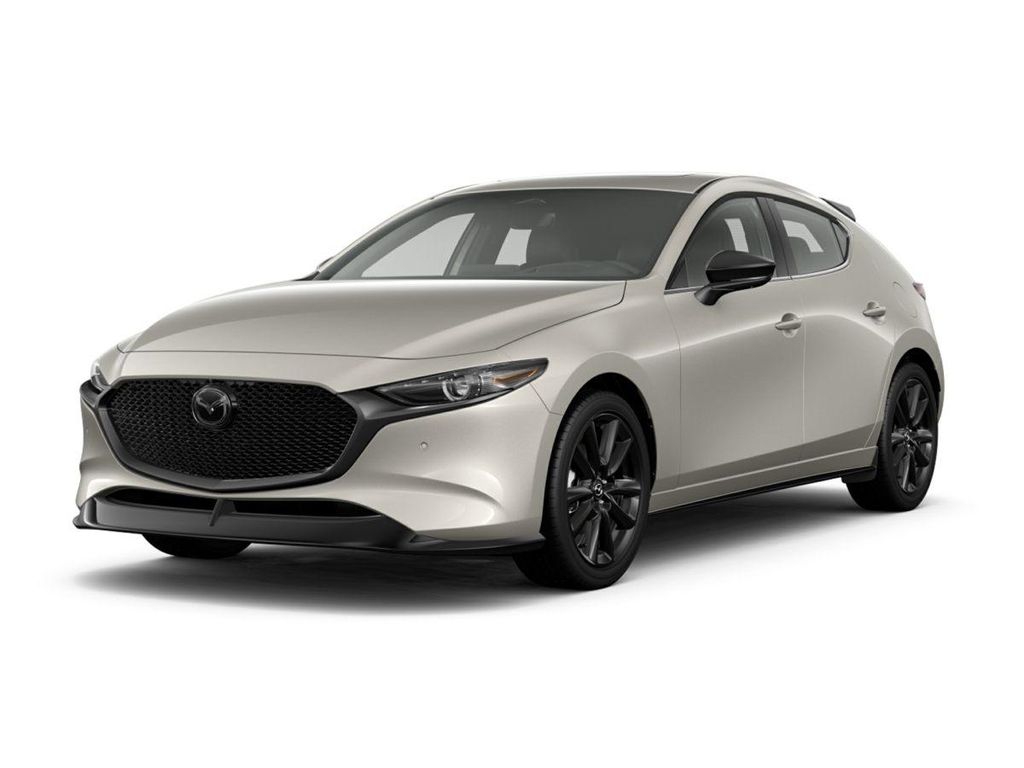
The 3’s base engine delivers just enough zip to be entertaining, and for a mainstream four-cylinder, it sounds pretty good when you wring it out. Almost all 3s come standard with a six-speed automatic transmission; a six-speed manual is available, but only on the 2.5 S Premium trim, which comes only as a four-door hatchback. On paper, an automatic transmission with just six gears is a little behind the times, but this one performs very well. It’s responsive and nicely matched to the engine, and it delivers a sportier feel than the continuously variable automatic transmissions of most rivals.
If 186 hp isn’t enough for you, Mazda also offers a turbocharged 2.5-liter four-cylinder that makes 250 hp on 93-octane gas (227 hp on 87-octane fuel), but it’s available only in the line-topping AWD 2.5 Turbo Premium Plus trim level. That turbo engine elevates the 3 to the realm of luxury-brand rivals like the Audi A3, BMW 228 Gran Coupe and Mercedes-Benz CLA-Class.
With either engine, the 3 is exceptionally nimble and engaging to drive. It corners crisply, and its steering tuning is excellent, providing good feedback without feeling nervous. The downside is ride quality that’s a tad stiffer than the class norm, but it’s still perfectly acceptable in everyday driving given the cornering prowess on tap.
All-Weather Grip of All-Wheel Drive
- Takeaway: AWD is a rare feature among non-luxury compact cars, and the 3’s AWD system hits a sweet spot among its competition.
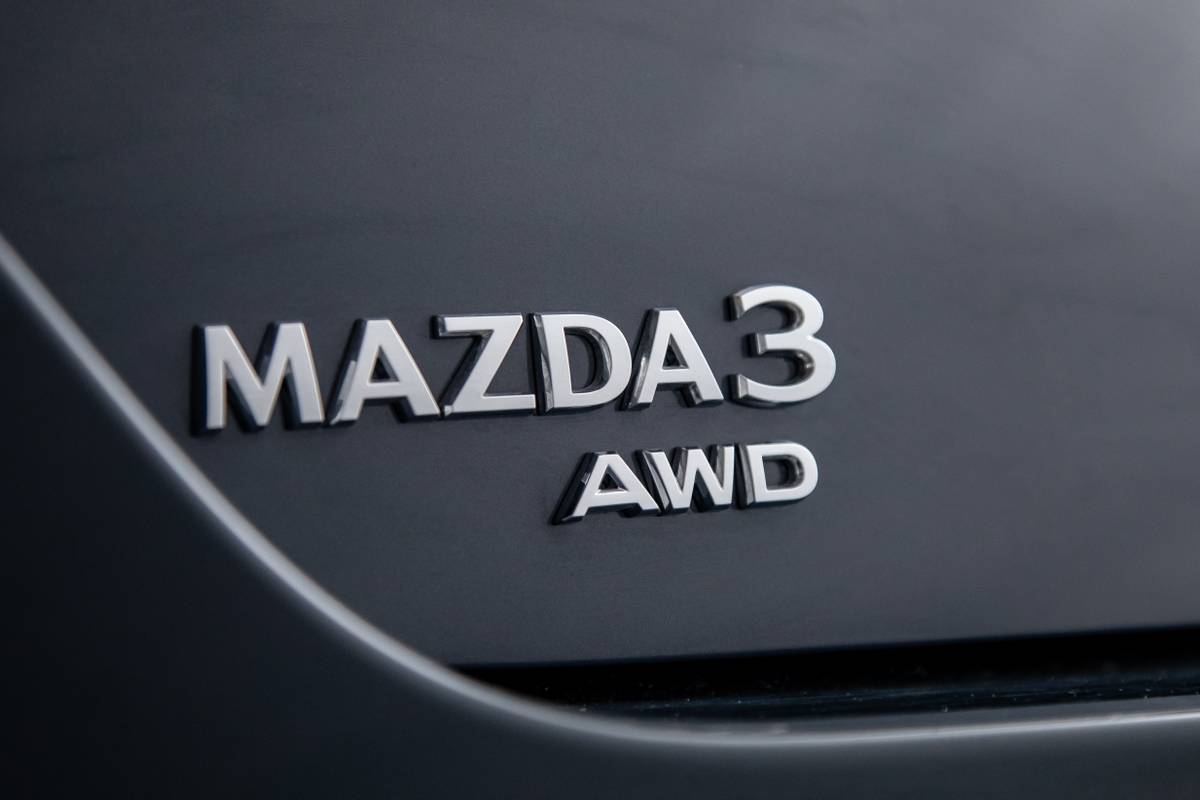
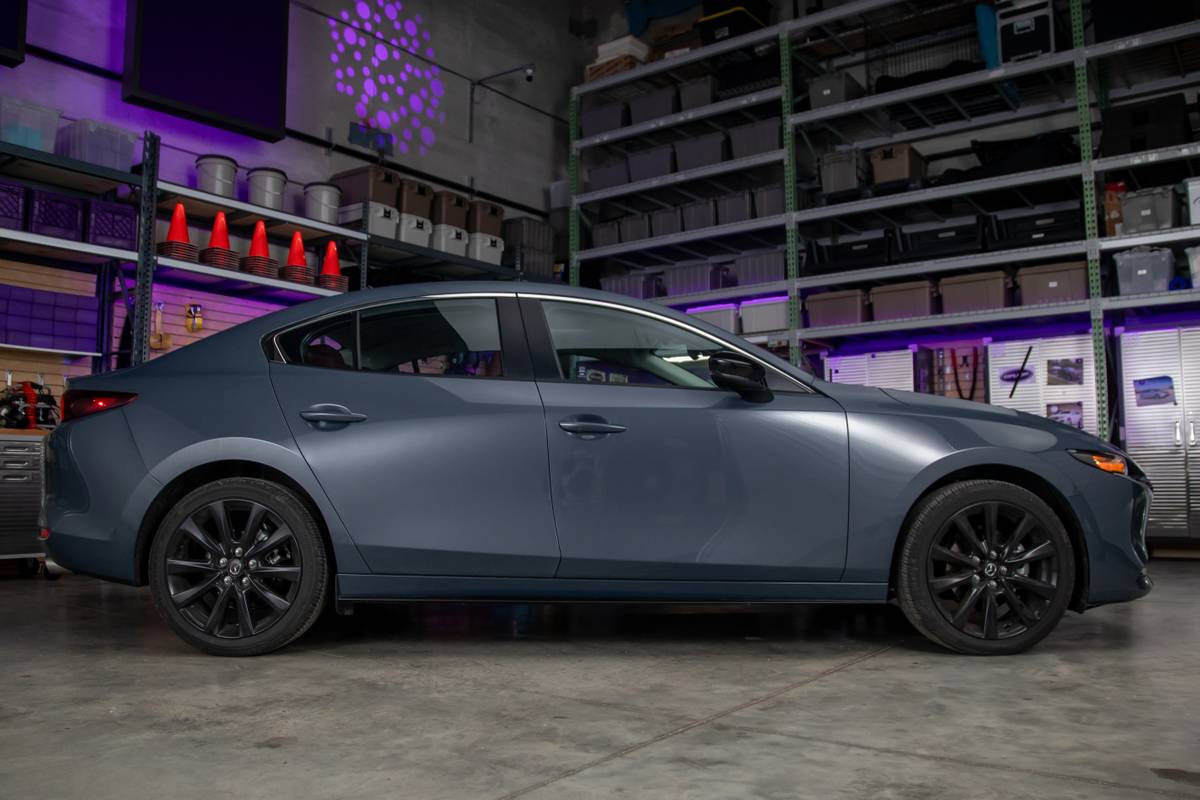
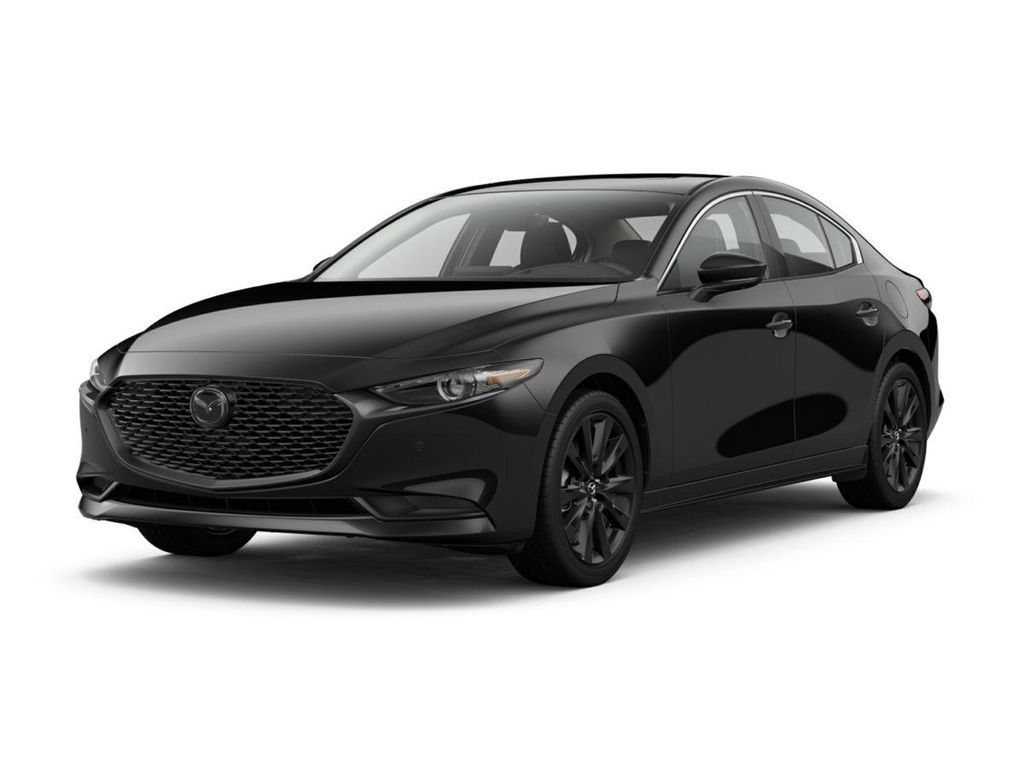
Our test car was a 2.5 S Carbon Edition, which comes only with AWD and is available as both a sedan and hatchback. (The Carbon Edition is the only trim to combine AWD and the 3’s base engine; the turbocharged engine pairs solely with AWD.) I appreciated having AWD on the wet and snowy roads of a Chicagoland winter, and I easily powered through some piled-up snow left by a city snowplow at the end of my driveway.
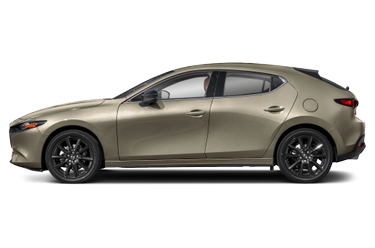
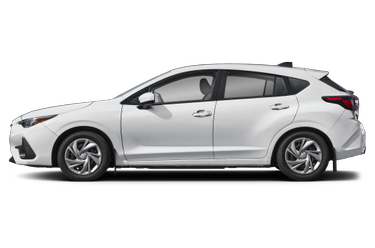
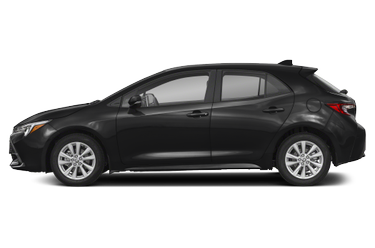
AWD is a rare feature among mainstream-brand compact cars, and the Carbon Edition’s AWD hits a sweet spot among its competition. The Subaru Impreza and AWD Toyota Corolla Hybrid aren’t as much fun to drive, and the performance-focused Subaru WRX, Toyota GR Corolla and Volkswagen Golf R are significantly more expensive.
What’s the Mazda3’s Interior Like?
- Takeaway: The Mazda3’s interior boasts an upscale look and feel, but it’s not very spacious, and Mazda’s infotainment system is subpar.
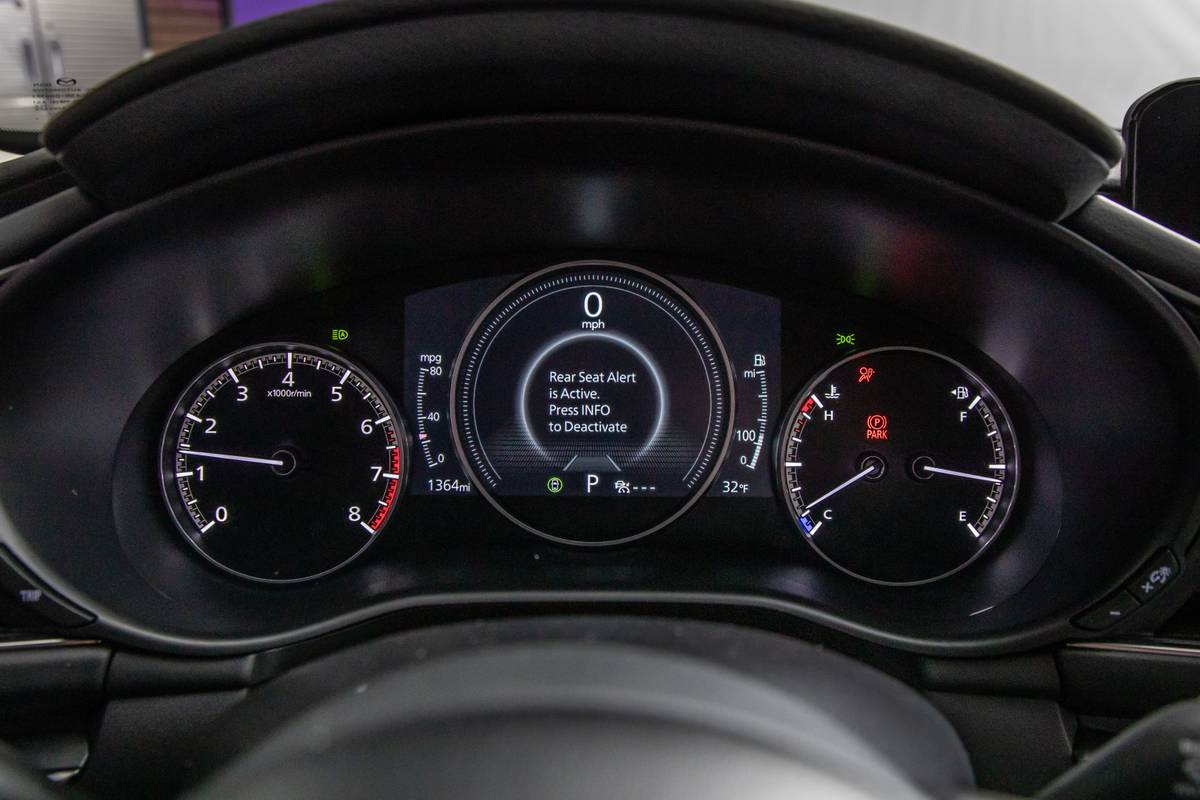
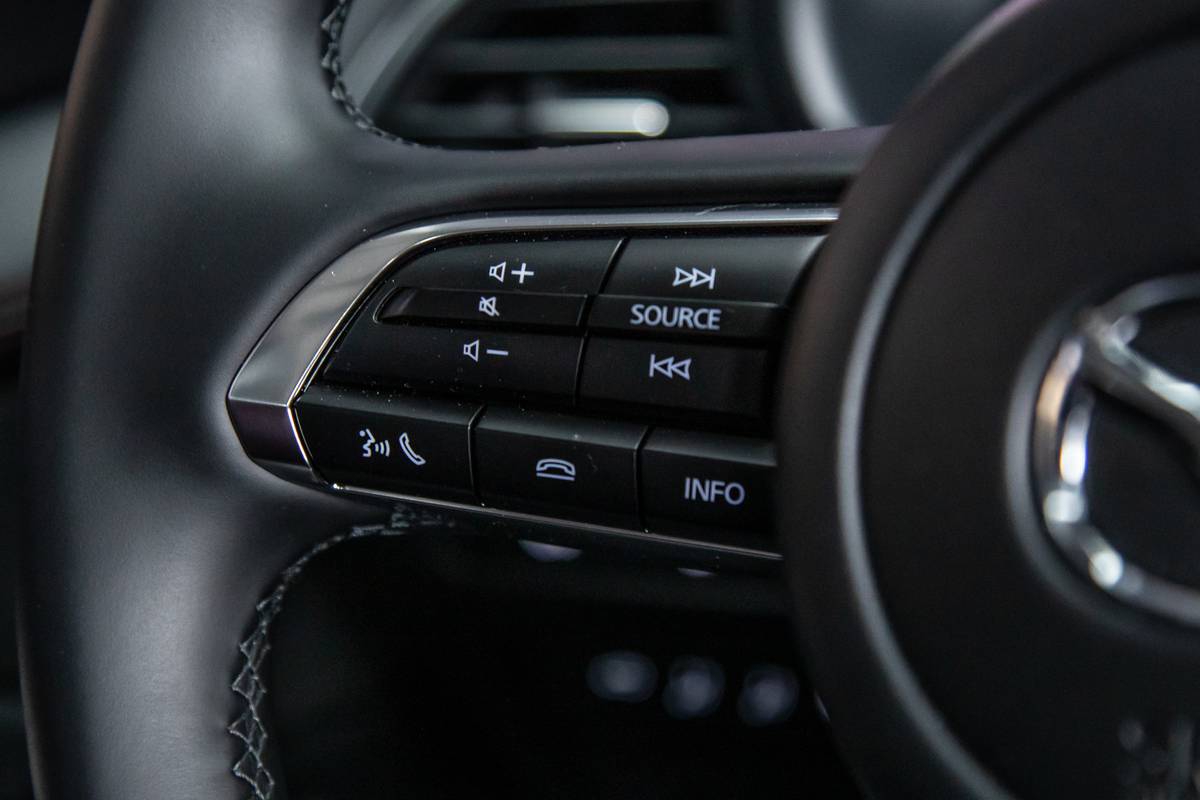
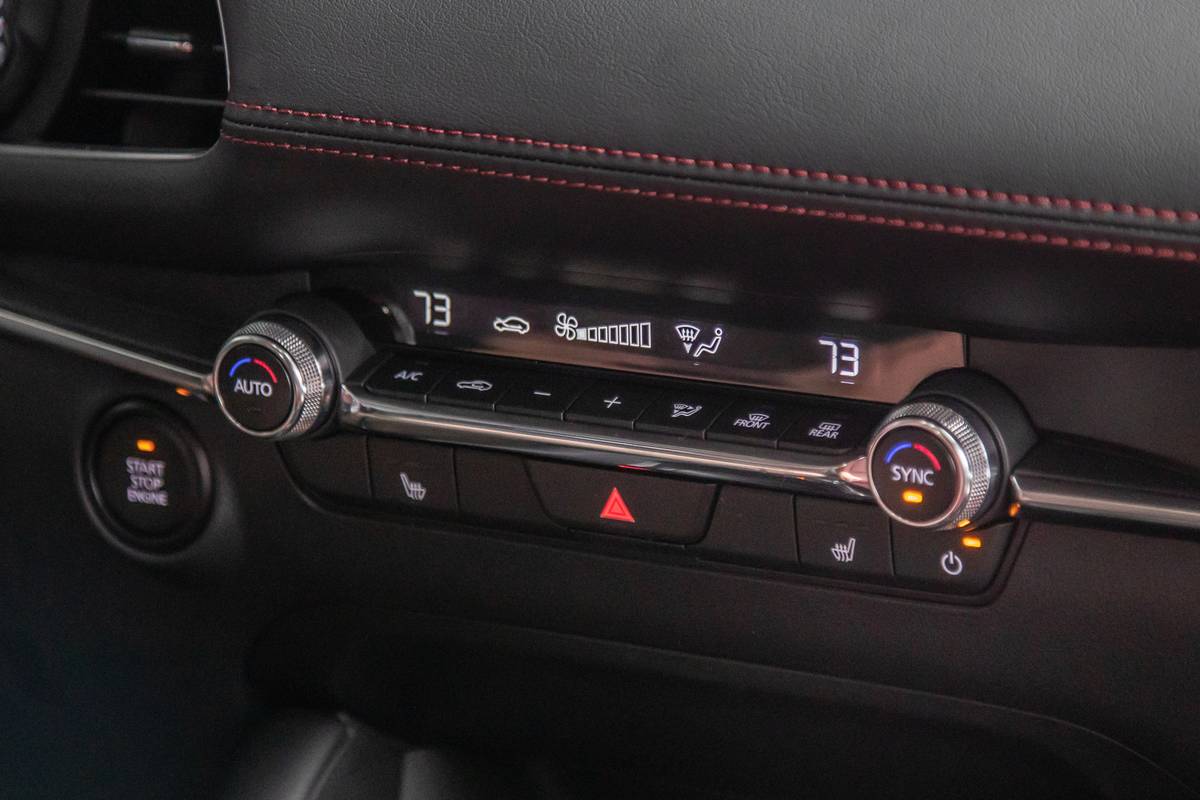
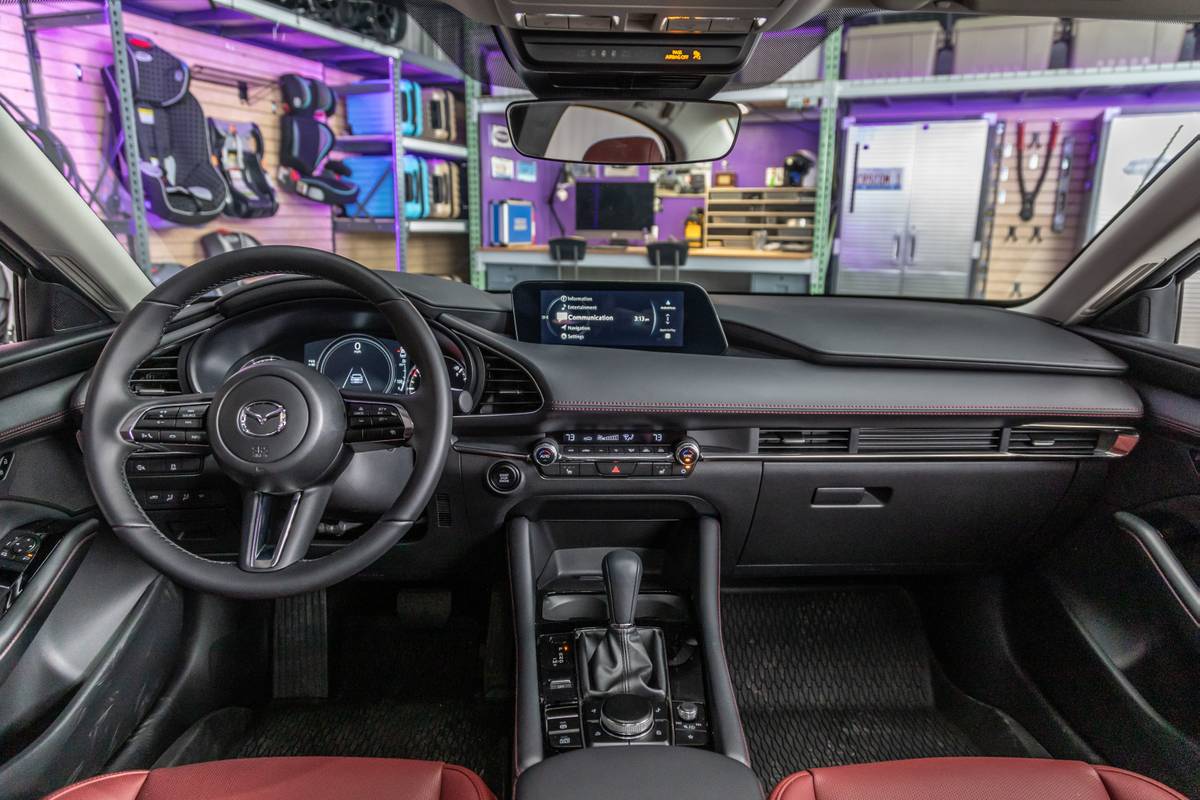
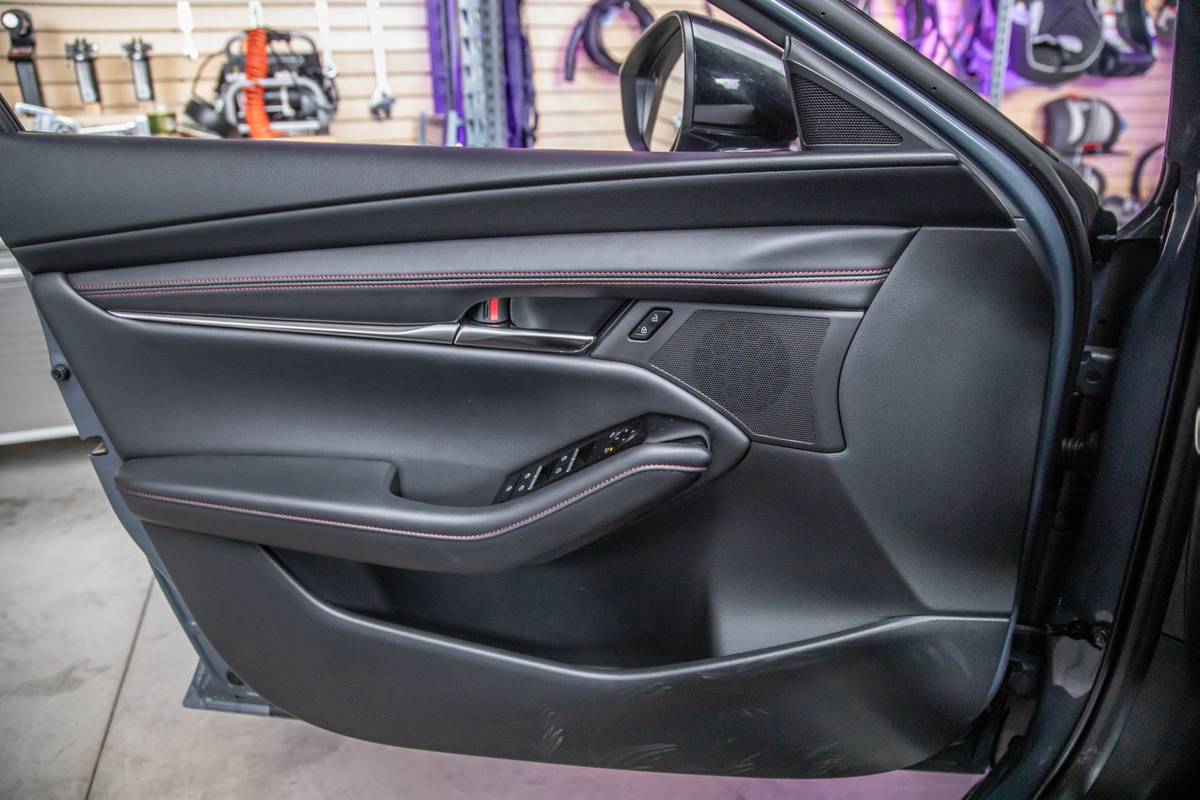
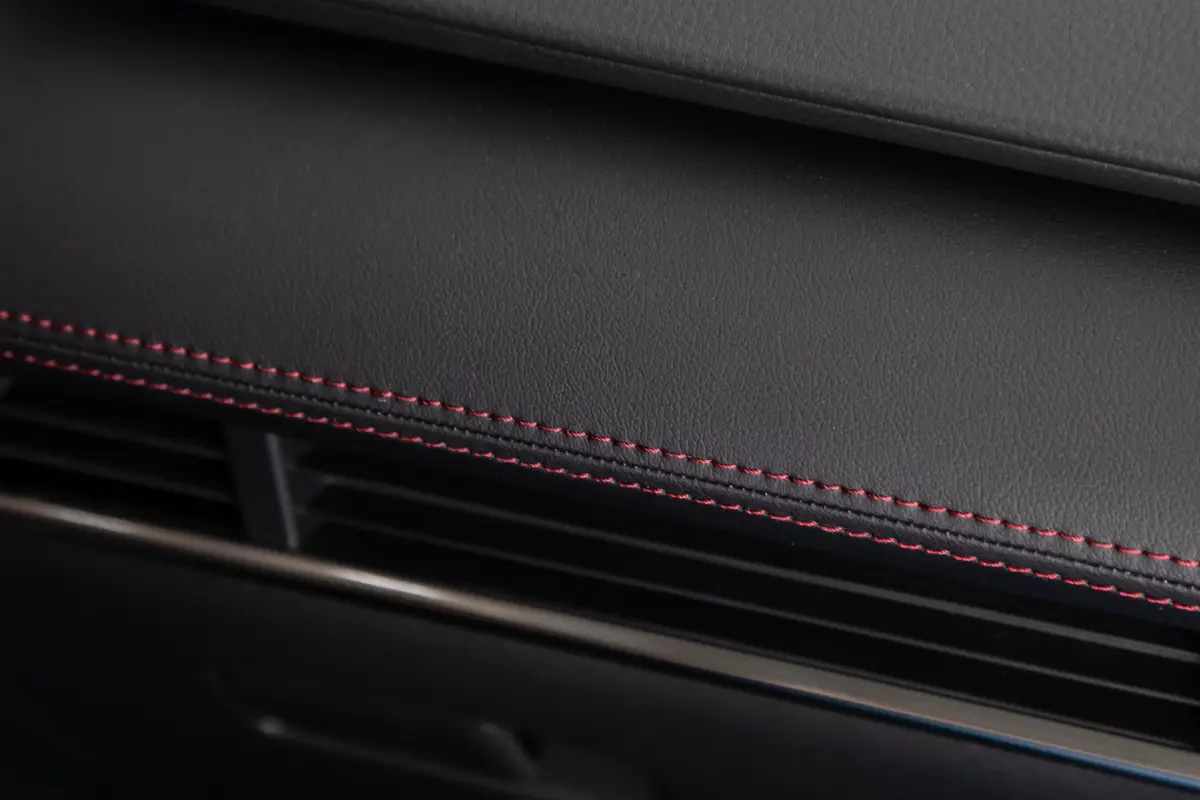
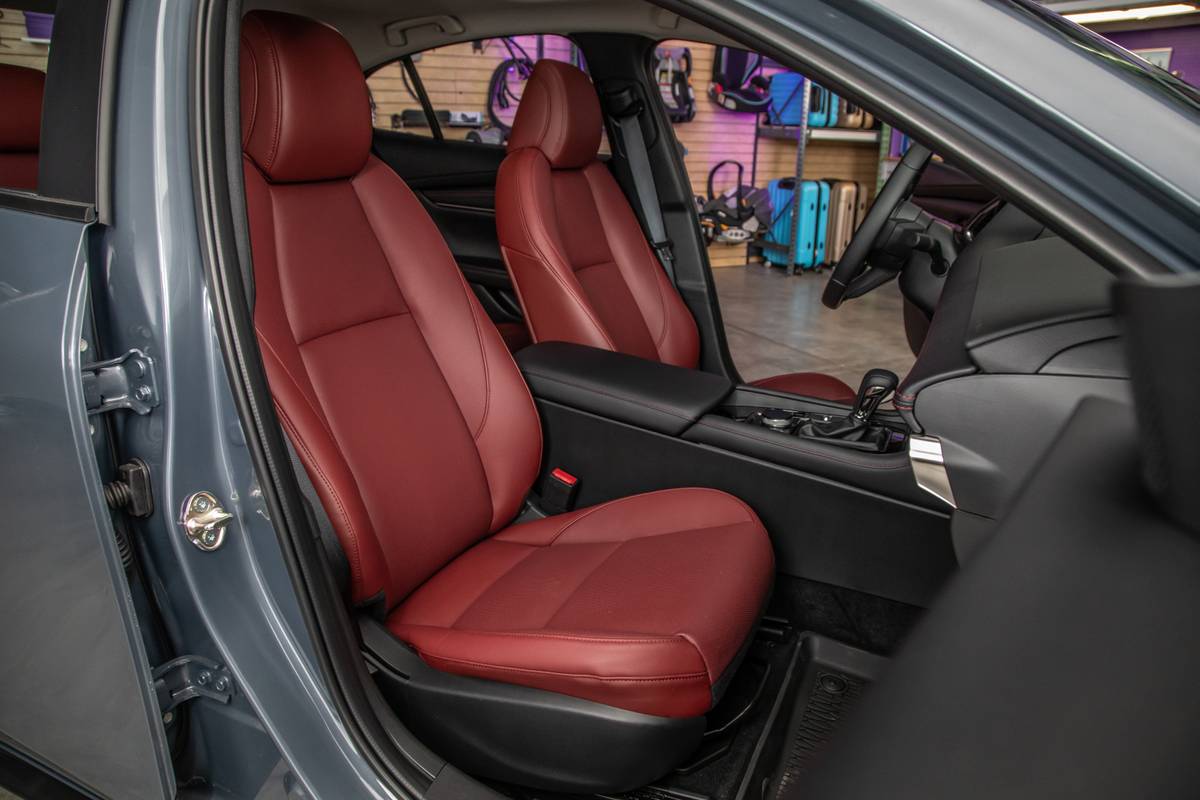
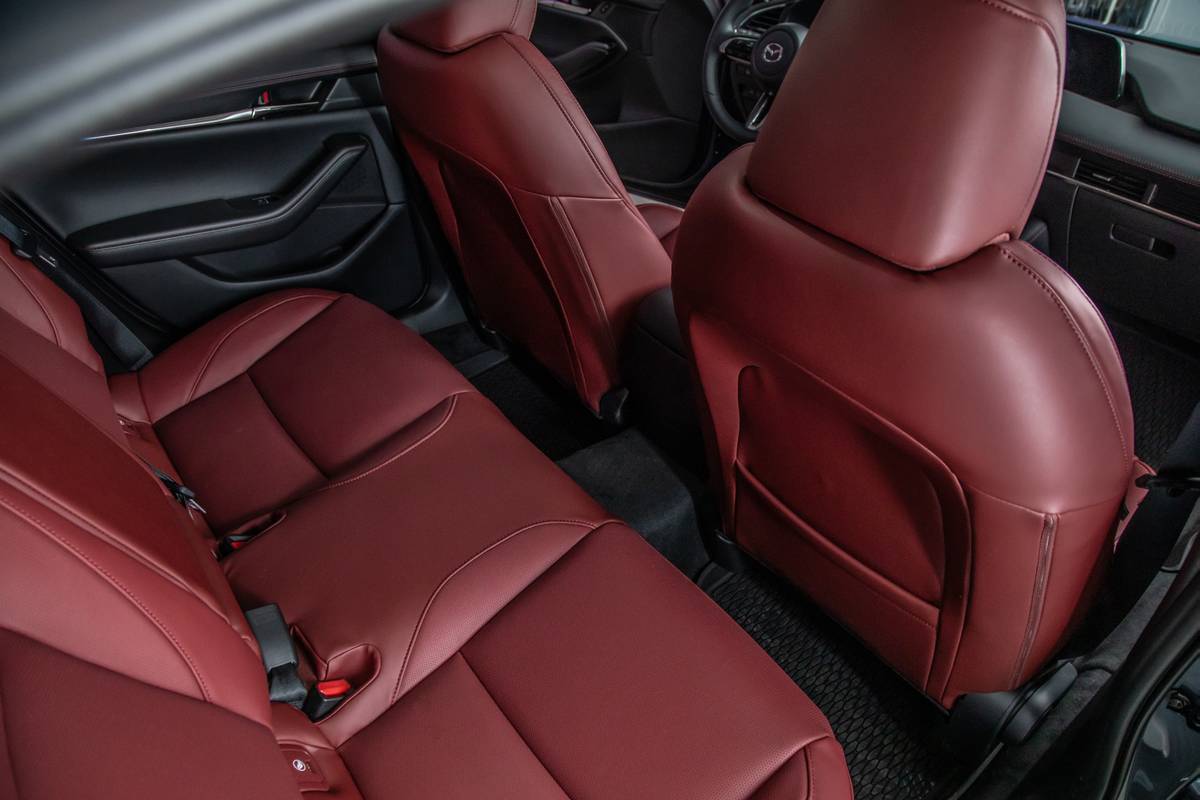
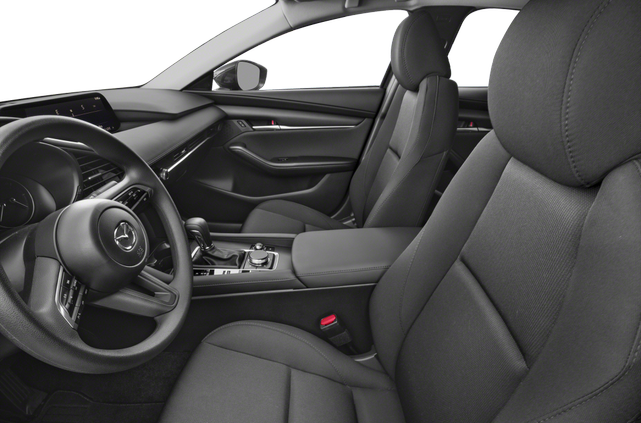
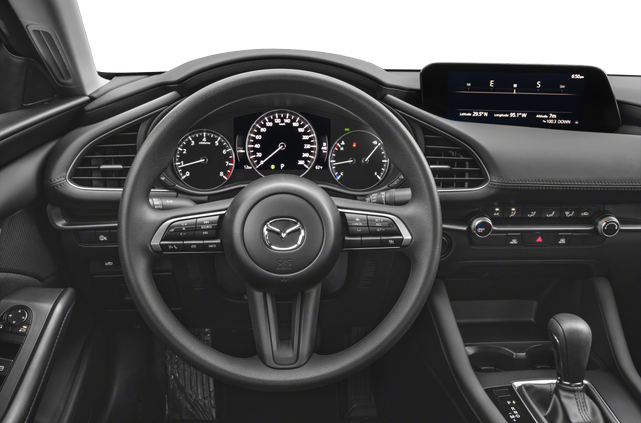
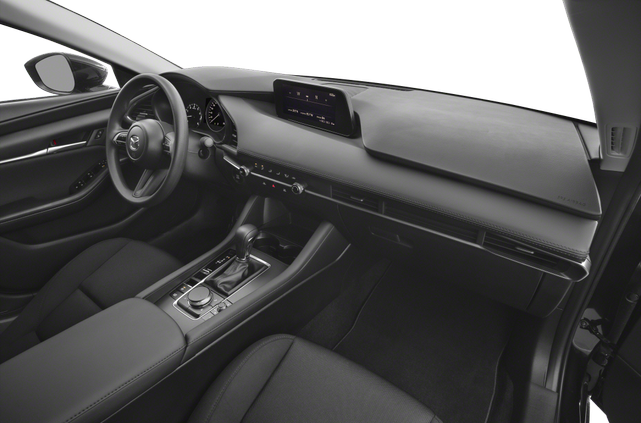
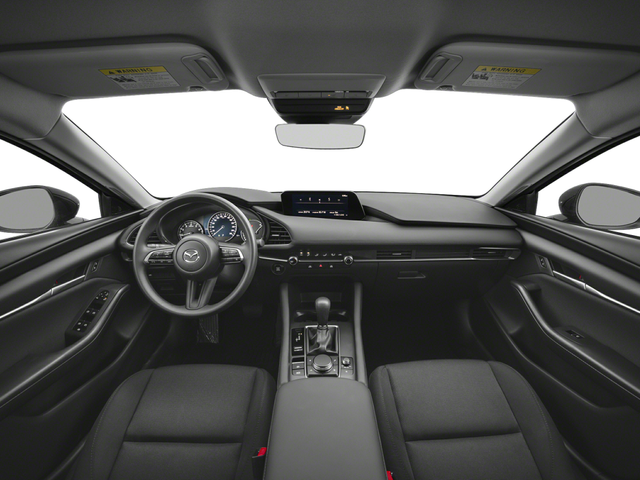
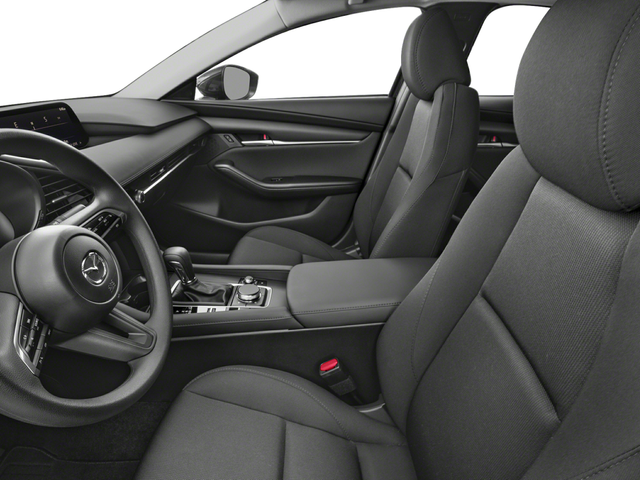
Even after eight model years with no significant changes, the 3’s cabin ambiance is at the top of the compact-car class; it even compares favorably with entry-level luxury cars. Its high-quality materials, padded surfaces, contrast stitching and dynamic styling deliver a sporty and classy look and feel. The Carbon Edition is a step above the middle of the 3’s trim roster, and it comes standard with a wireless charging pad, power-adjustable driver’s seat with memory, heated front seats and great-looking dark-red leather upholstery.
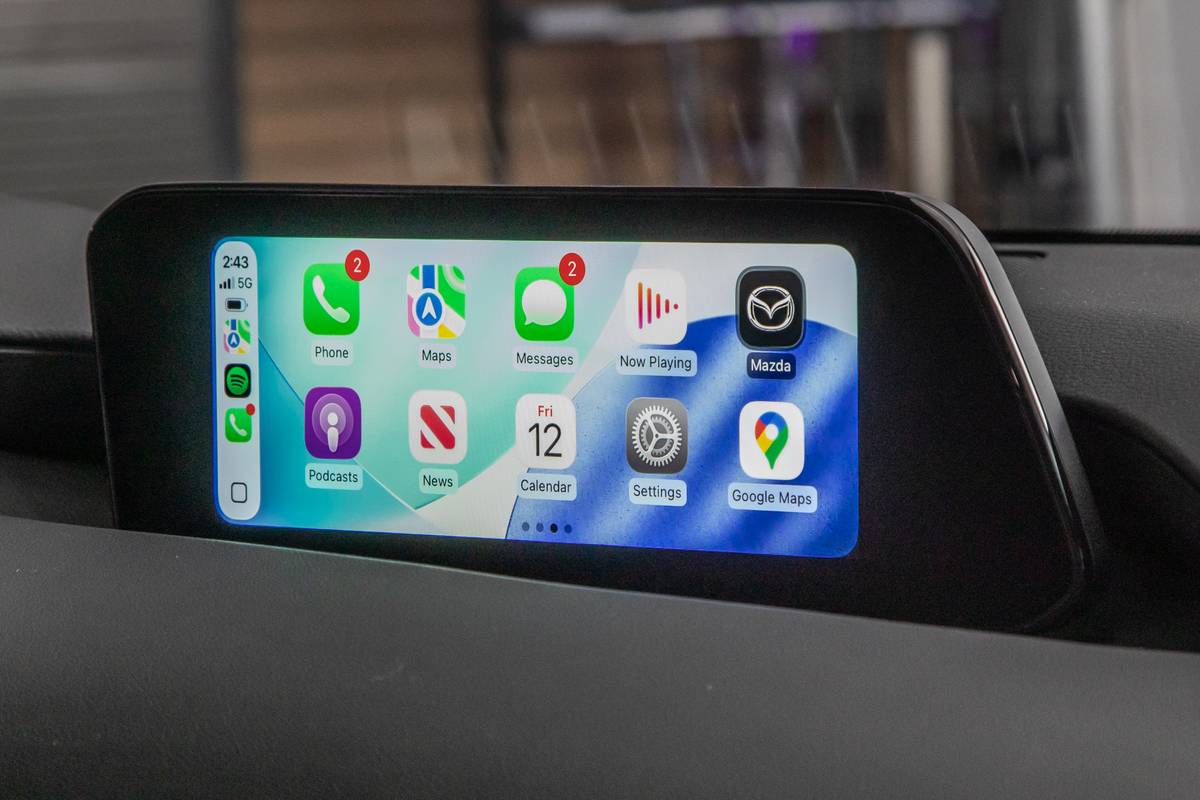
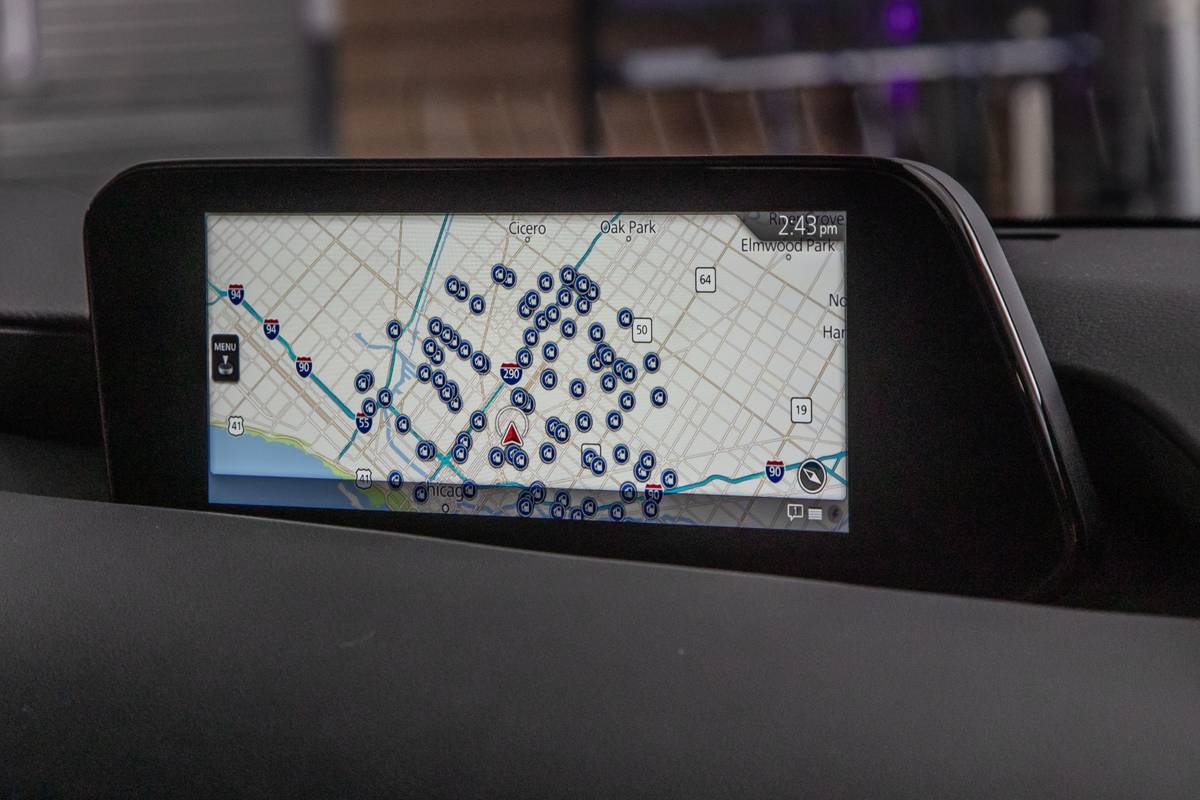
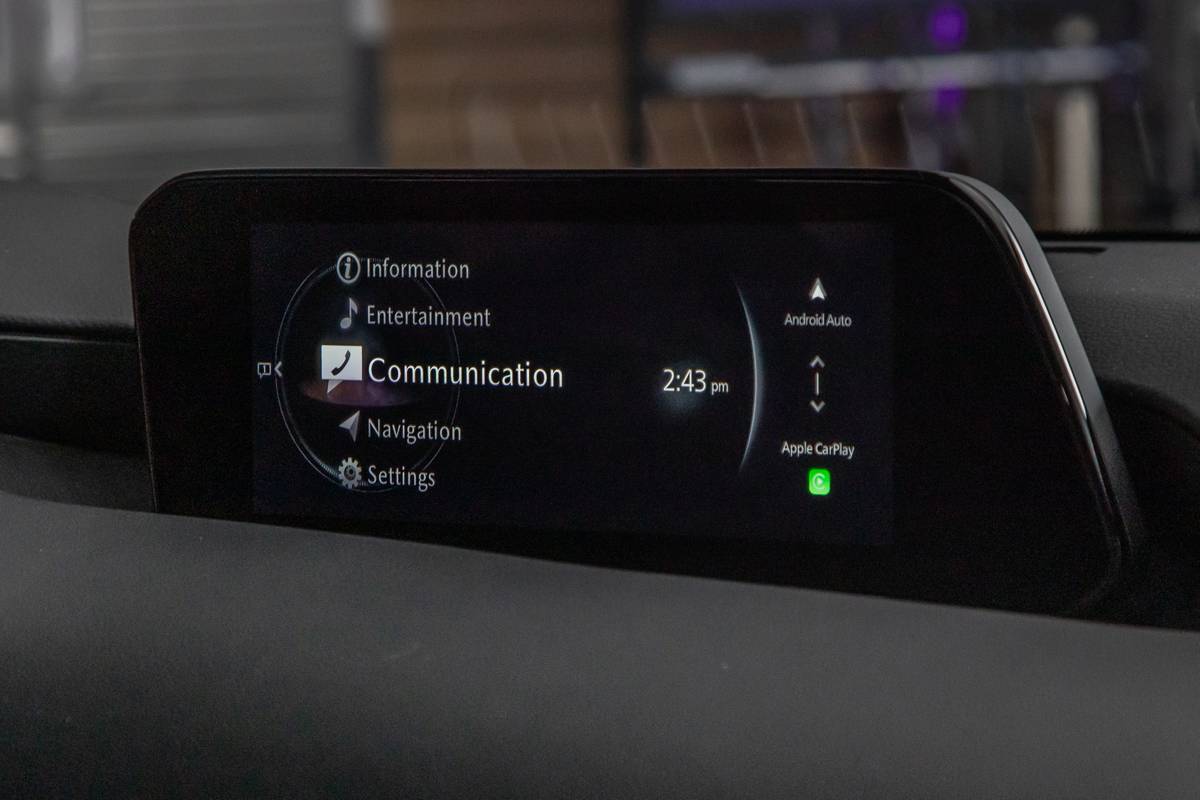
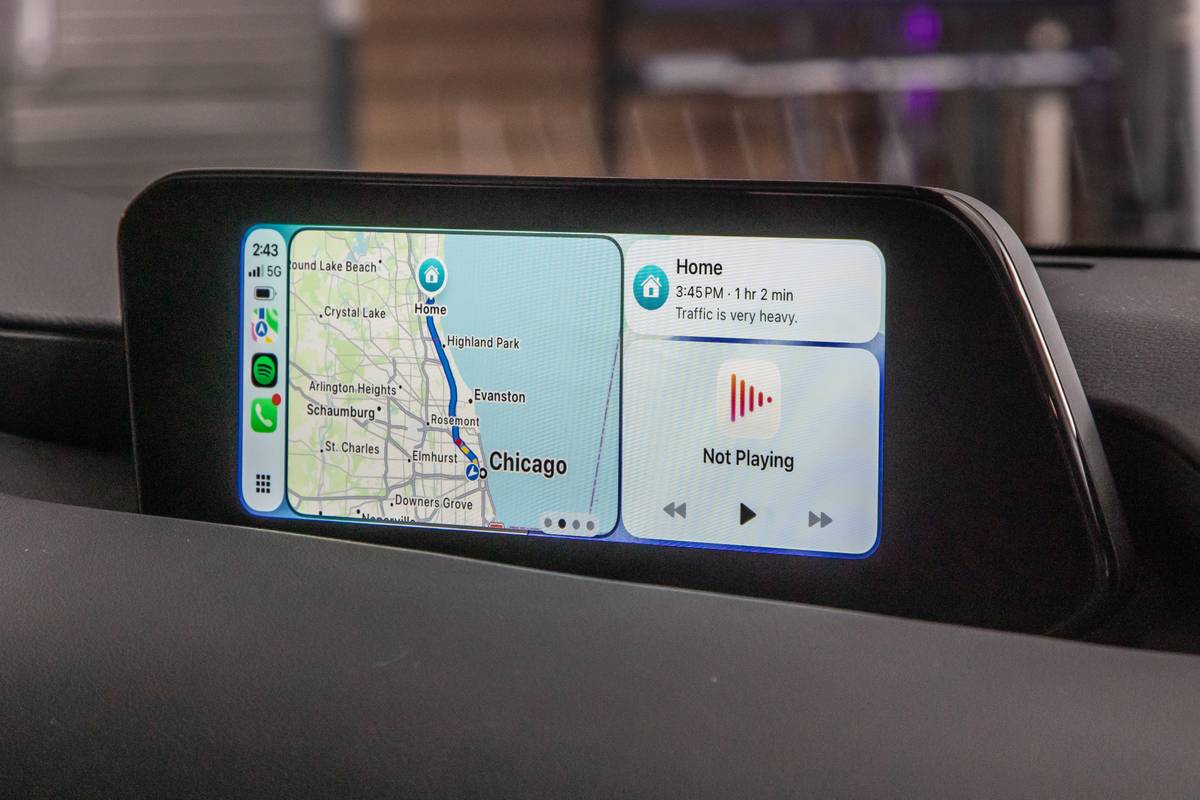
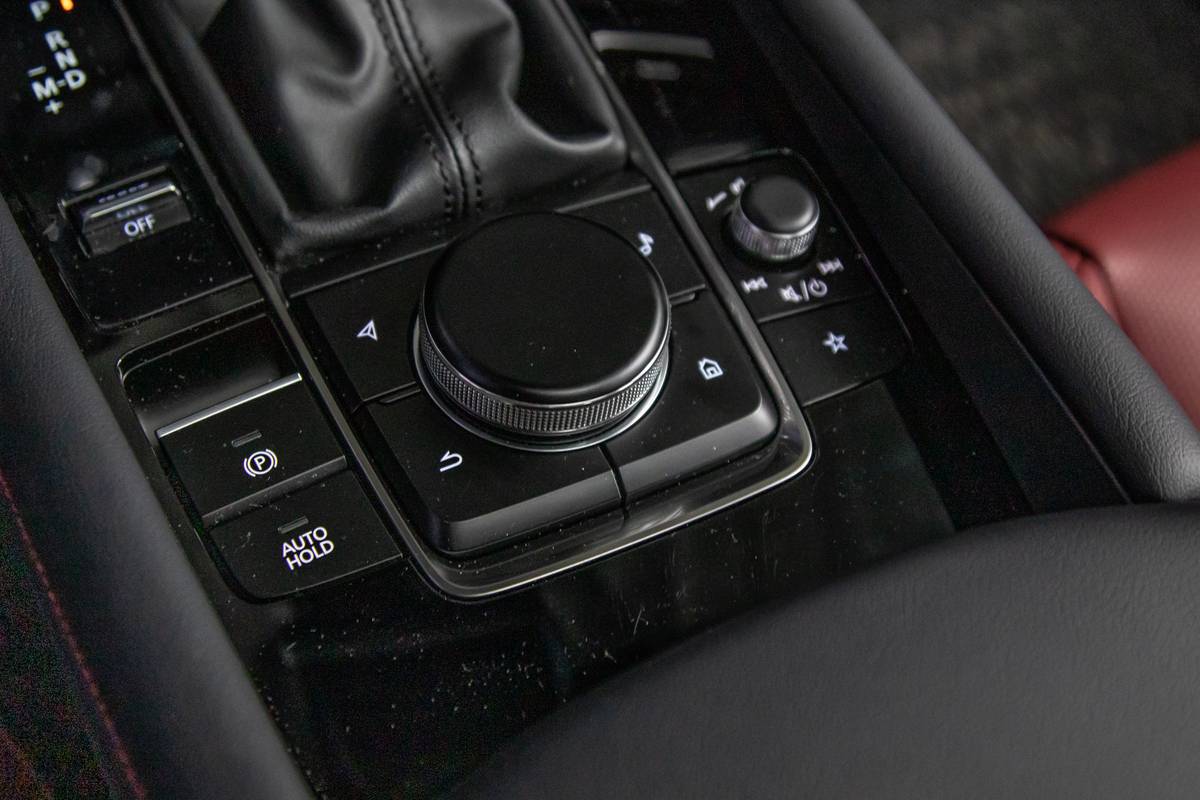
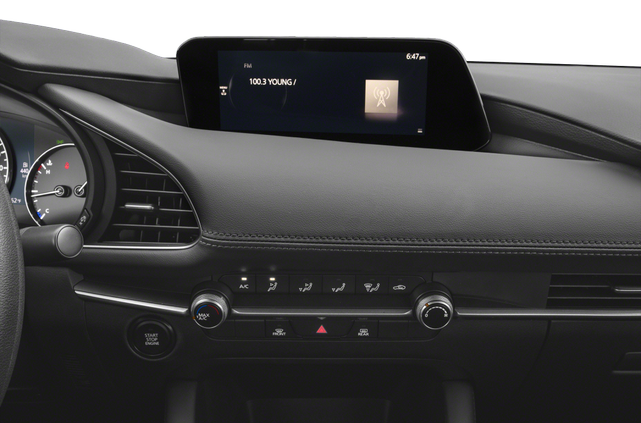
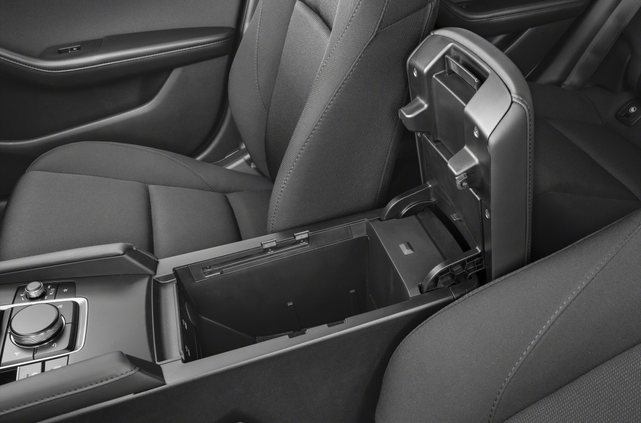
Wireless Apple CarPlay and Android Auto are also standard in the Carbon Edition, but not an upgraded infotainment screen — it makes do with the base 8.8-inch screen, not the 10.25-inch screen that comes in the Turbo Premium Plus. Both screens are hampered by a remote control interface that uses a console-mounted control knob and buttons, which our editors find more distracting and tedious to use than a typical touchscreen-based system. The base screen has no touchscreen functionality at all, and while the 10.25-inch screen does have touchscreen functionality, it’s only available when using Apple CarPlay or Android Auto. Even so, the touchscreen is placed far enough from the driver that it’s not easy to reach. What’s more, Mazda’s infotainment software itself isn’t as robust or feature-rich as most competitors’ systems.
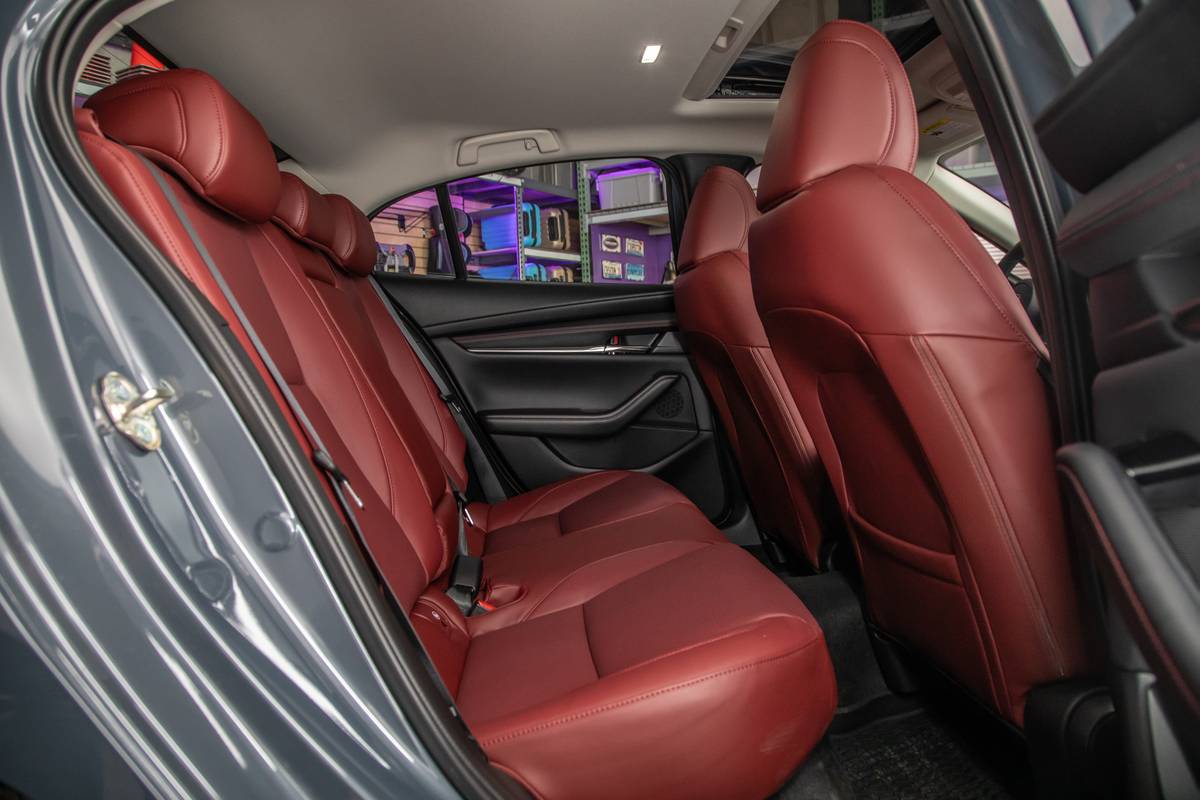
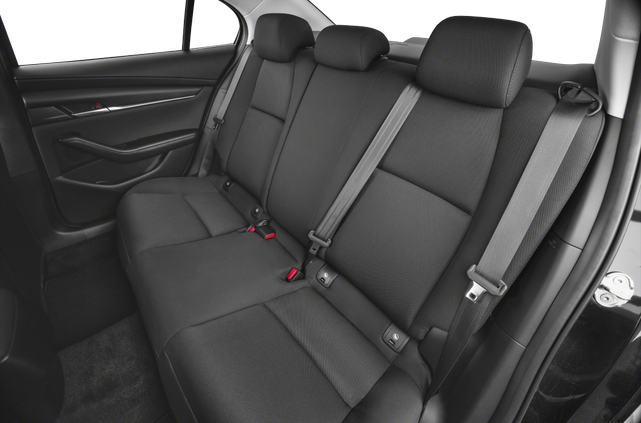
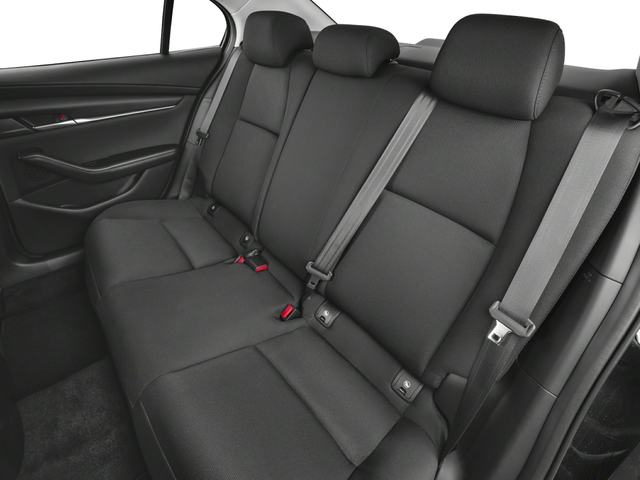
The 3 also comes up short in terms of interior room. Its backseat is stingy even by compact-car standards; the space is tight enough to make it best suited for kids, especially when the front seats are positioned all or most of the way back to accommodate taller front-seat occupants. My 12-year-old son is about 5 feet, 3 inches tall, and he had a tough time fitting in the backseat unless the front seat was more than halfway forward.
For extra-tall folks like me, it’s a little cozy in the front seat, too. I needed to adjust the driver’s seat all the way down and back for adequate space, which puts the seatback a bit aft of the B-pillar. As a result, my view to the left was compromised by that roof pillar. The front door openings are a bit stingy, too, which can complicate entry and exit for big and tall people.
Related Video:
We cannot generate a video preview.
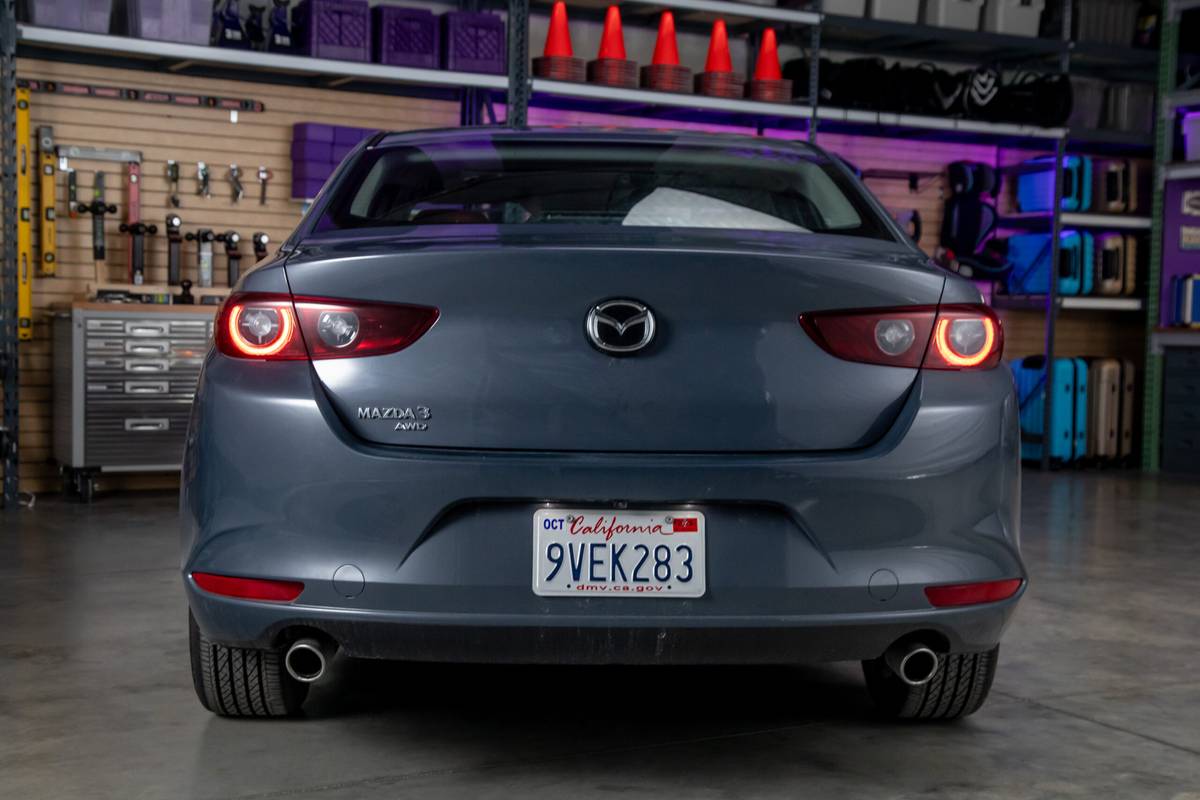
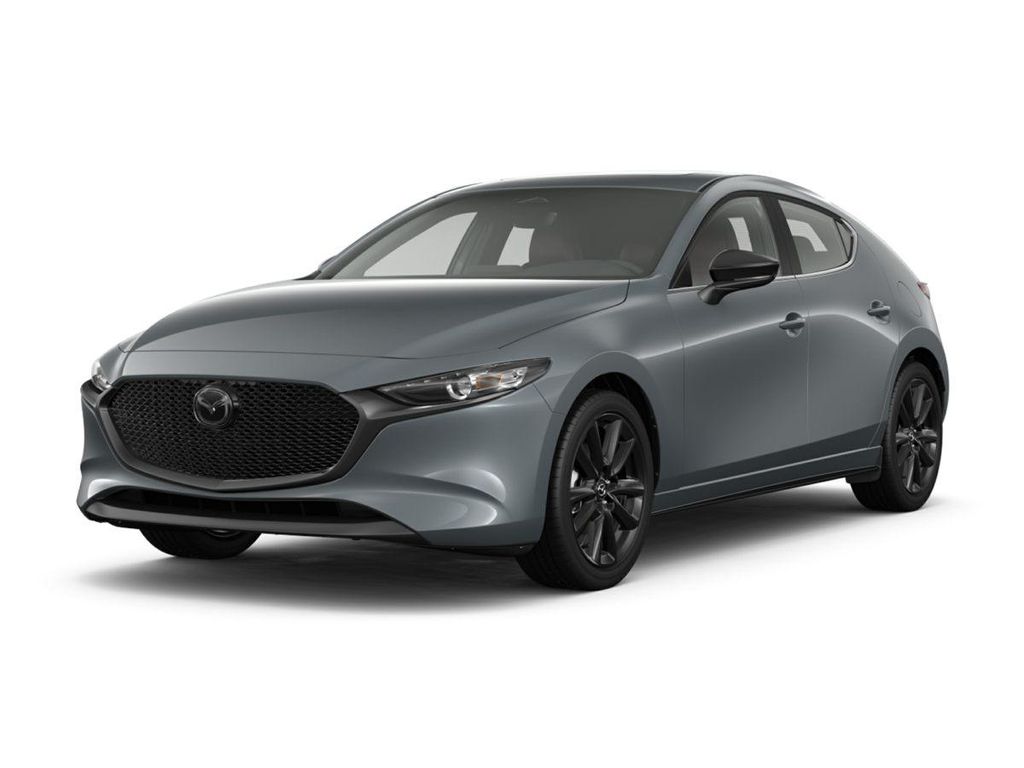
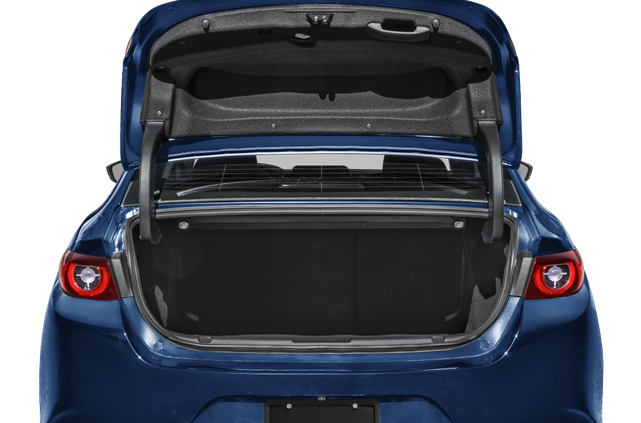
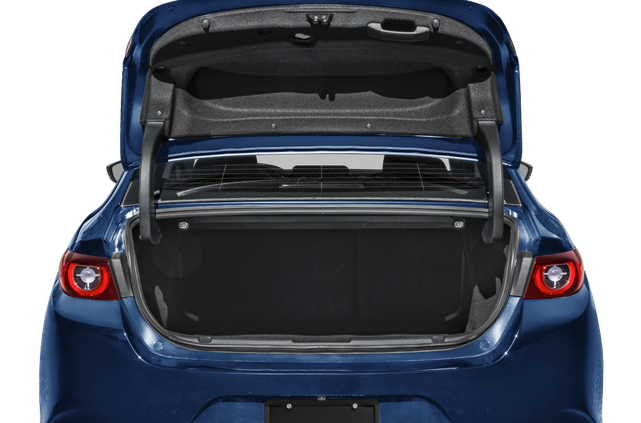
The Mazda3 sedan isn’t as cargo-versatile as its hatchback sibling, but it’s not bad for a compact car. According to manufacturer measurements, the 3 sedan has 13.2 cubic feet of trunk space, which is about 1 cubic foot less than most competitors, but it’s still spacious enough for everyday use. The 3 sedan also has better rear visibility than the hatchback with its thick rear roof pillars.
Is the Mazda3 a Good Value?
- Takeaway: The Mazda3’s pricing is competitive with comparably equipped rivals, making it a good value — IF you prioritize driving dynamics over interior room and infotainment features.
The Mazda3 starts at $25,785 for a 2.5 S sedan and tops out at $39,125 for a 2.5 Turbo Premium Plus hatchback (all prices include a $1,235 destination charge). Save for the hatchback-only 2.5 S Premium, every Mazda3 trim level is available as a sedan or hatchback. The sedans are equipped identically to their hatchback counterparts but cost $555-$1,350 less, depending on the trim. The only options are accessory-type items; a Carbon Edition sedan starts at $31,445, and our test car was equipped with all-weather floormats ($190), illuminated doorsill trim plates ($575) and a navigation SD card ($500; it adds navigation functionality to the native infotainment system) for a total price of $32,710.
Across the board, the Mazda3’s prices are on par with most comparably equipped mainstream and luxury rivals, so it’s a compelling choice — IF you care about driving dynamics and upscale style more than an up-to-date infotainment system and interior room. The 3’s only updates for 2026 are the addition of two more speakers in the base sound system and the discontinuation of the Carbon Turbo trim level. Considering current trends and sales numbers, I’d wager the Mazda3 is just as likely to be discontinued as it is to be redesigned within the next two or three years, so if you’re a fan, you might want to act soon.
More Mazda News From Cars.com:
- 2026 Mazda CX-5 Promises More Space, Greater Efficiency
- 2025 Mazda CX-30 Review: Pushing Toward Premium
- Nearly 105,000 Mazda CX-70, CX-90 SUVs Recalled for Fuel Gauges
- How Much Is the 2026 Mazda CX-70?
- How Much Is the 2026 Mazda CX-90?
Cars.com’s Editorial department is your source for automotive news and reviews. In line with Cars.com’s long-standing ethics policy, editors and reviewers don’t accept gifts or free trips from automakers. The Editorial department is independent of Cars.com’s advertising, sales and sponsored content departments.