







What Car Shoppers Need to Know
- The Prius is the most efficient hybrid on the market, rated up to 57 mpg combined.
- The Prius also comes in a plug-in hybrid version with up to 44 miles of electric driving range.
- Both versions sport sleek styling that compromises interior space.
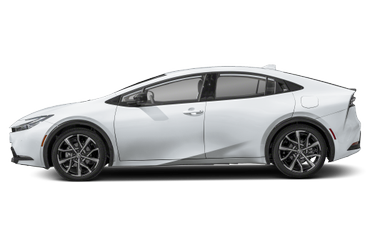
The Toyota Prius is a pioneering car. Along with the Honda Insight, it was the first hybrid to hit the market, and Toyota’s model has hung on to represent the efficiency that can be achieved with a hybrid system. The standard Prius is now EPA-rated as high as 57 mpg combined, and it’s been joined by a Prius Plug-in Hybrid (previously called Prius Prime) that delivers up to 44 miles of electric driving range. Both come wrapped in a package that is now sleek rather than frumpy, but that rakish shape limits cargo and passenger space despite its hatchback body style.
What’s New for 2026?
The Prius is unchanged for 2026, while the Prius Plug-in Hybrid is now available in the Nightshade Edition trim that the standard Prius added for 2025.
Pricing
The Prius lineup comes in several trim levels, each of which comes standard with front-wheel drive. For $1,400 extra, all-wheel drive can be added to the conventional hybrid Prius; the Prius Plug-in Hybrid comes only with FWD. The prices below include a mandatory $1,295 destination fee and are correct as of September 2026 (manufacturers sometimes change a vehicle’s pricing over the course of a model year).
Prius
- LE: $30,050
- XLE: $33,495
- Nightshade Edition: $34,300
- Limited: $37,065
Prius Plug-in Hybrid
- SE: $35,275
- XSE: $38,525
- Nightshade Edition: $39,295
- XSE Premium: $41,970
Trims and Features
Toyota’s Safety Sense 3.0 suite of driver-assist features is standard on every Prius. It includes forward collision warning with pedestrian detection, automatic emergency braking, lane departure warning, lane departure steering assist, adaptive cruise control, road-sign recognition and automatic high beams. Blind spot warning, rear cross-traffic alert and a safe exit system also come standard. The Prius Plug-in Hybrid’s base trim adds traffic-jam assist and front cross-traffic alert.
Prius LE/Prius Plug-in Hybrid SE
The entry-level Prius LE comes standard with cloth upholstery, manually adjustable front seats, an 8-inch infotainment touchscreen, wireless Apple CarPlay and Android Auto, a six-speaker audio system, keyless entry and start, LED headlights and taillights, and 17-inch alloy wheels. The Prius Plug-in Hybrid’s entry-level SE trim adds rain-sensing windshield wipers to the LE’s feature content.
Prius XLE/Prius Plug-in Hybrid XSE
The Prius XLE adds rain-sensing wipers, and both it and the Plug-in Hybrid XSE add synthetic leather upholstery, a power-adjustable driver’s seat, heated front seats, wireless phone charging, 19-inch wheels, and front and rear parking sensors with automatic braking.
Nightshade Edition
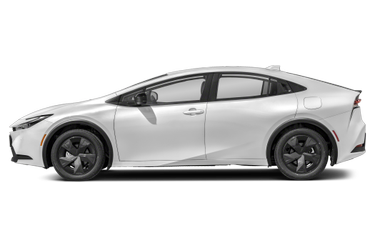
Both versions of the Prius have an available Nightshade Edition, which adds an appearance package to the XLE and XSE trims’ features. Nightshade brings black exterior trim and badging, black wheels, and a unique black interior with gray accent stitching.
Prius Limited/Prius Plug-in Hybrid XSE Premium
The Limited and Plug-in Hybrid XSE Premium trims upgrade to heated and ventilated front seats, a 12.3-inch touchscreen, an eight-speaker JBL sound system, a fixed panoramic glass roof, a power liftgate and a digital key. A 360-degree camera system and automatic parking are optional on both.
Powertrains and Fuel Economy
The standard Prius is powered by a 2.0-liter four-cylinder engine paired with two electric motors and a continuously variable automatic transmission. The powertrain makes a combined 194 horsepower and 139 pounds-feet of torque with FWD. AWD versions add another motor at the rear that increases power slightly to 196 hp.
The Prius is the most efficient hybrid on the market. In its base LE trim level with FWD, it earns an EPA-rated 57/56/57 mpg city/highway/combined; with AWD it’s rated 53/54/54 mpg. Other trims are rated 52/52/52 mpg with FWD and 49/50/49 mpg with AWD.
The Prius Plug-in Hybrid also uses a 2.0-liter four-cylinder engine and two electric motors, which make a combined 220 hp. It also uses a CVT but comes only with FWD. All Prius Plug-in Hybrids have a 13.6-kWh battery, and the most efficient trim is the SE, which has an EPA-rated electric driving range of 44 miles and is rated 53/51/52 mpg thereafter. Other PHEVs have 39 miles of electric range and a 50/47/48 mpg rating.
Prius
| Trim | Powertrain | City MPG | Highway MPG | Combined MPG |
| LE FWD | 2.0-liter | 57 | 56 | 57 |
| LE AWD | 2.0-liter | 53 | 54 | 54 |
| XLE, Nightshade, Limited FWD | 2.0-liter | 52 | 52 | 52 |
| XLE, Nightshade, Limited AWD | 2.0-liter | 49 | 50 | 49 |
Prius Plug-in Hybrid
| Trim | Combined MPG | MPG-Equivalent | Electric-Only Range (Miles) |
| SE | 52 | 127 | 44 |
| XSE, Nightshade, XSE Premium | 48 | 114 | 39 |
Interior
The Prius comes standard with cloth upholstery and manually adjustable front seats. Moving up the trim ladder brings synthetic leather upholstery, a power-adjustable driver’s seat, and heated and ventilated front seats, but Toyota doesn’t offer a power-adjustable front passenger seat.
While front seat space is generally adequate, the Prius’ low roofline and sharply raked windshield make entry and exit difficult for some people. The backseat is likewise tricky to get into and out of, and headroom will be insufficient for most anyone over 5-foot-10.
Similarly, cargo space is rather small for a hatchback: According to Toyota, the standard Prius LE has 23.8 cubic feet of cargo space with the rear seats in place; other Prius trims have 20.3 cubic feet. Every Prius Plug-in Hybrid has the same 20.3 cubic feet of space with the rear seats up and 26.7 cubic feet with the rear seats folded down.
Versus the Competition
The Prius stands out as the most efficient hybrid on the market, and while several automakers offer plug-in hybrid SUVs, the Prius Plug-In Hybrid is the only mainstream plug-in car on the market for 2026. Its slick profile is a selling point, but it also compromises the Prius in several ways, limiting passenger and cargo space and making the car hard to get into without whacking your head.
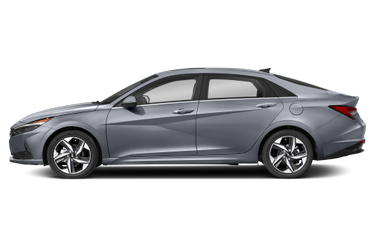
The standard Prius has several rivals that offer more space and better value propositions. The Honda Civic hybrid has much better backseat room and more cargo space in its available hatchback body style, though it tops out at 49 mpg in combined city/highway driving. Toyota’s own Corolla Hybrid sedan starts around $26,000 and achieves up to 50 mpg combined. The Hyundai Elantra Hybrid sedan also starts around $26,000 and offers up to 54 mpg combined. The Kia Niro hybrid SUV also starts lower than the Prius and offers up to 53 mpg combined, with much more cargo space. None of these rivals suffer from the Prius’ compromises, though they also aren’t as fuel-efficient and none offer a PHEV. (The Niro’s PHEV version was dropped after the 2025 model year).
Do We Like the Toyota Prius and Prius Plug-in Hybrid?
A 2023 redesign gave the Prius an unexpectedly sexy, stylish attitude, but it also made the car much less practical as an everyday commuter: This car’s cargo room, occupant space and ergonomics are all compromised by its raked-back profile. The Prius’ interior materials aren’t particularly impressive, either, but its class-leading fuel economy, respectable power and balanced ride and handling are strong points. Unless you love the Prius’ design or really want a PHEV, check out other compact hybrids to get more space for your money.