








What Car Shoppers Need to Know
- The BMW X3 is a compact luxury SUV with standard all-wheel drive.
- Two turbocharged engines are available: a 255-horsepower four-cylinder and a 393-hp inline-six.
- Priced from $52,650, with the six-cylinder X3 M50 starting at $67,850 (all prices include a $1,350 destination charge)
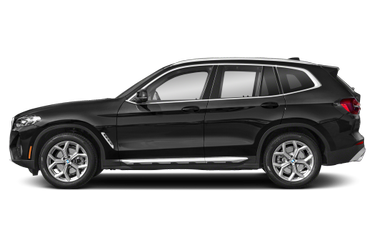
Wholly redesigned for 2025, the BMW X3 is a compact luxury SUV that is the brand’s bestselling vehicle in the U.S. It offers a choice of powerful engines, with standard AWD and — thanks in part to mild-hybrid assistance for both engines — surprisingly good fuel economy for a vehicle with its power.
What’s New for 2026?
The X3 sees no significant changes for 2026 after its redesign for the 2025 model year.
Pricing
The X3 is one of — but not the — most expensive vehicles in its class. Its base price is higher than that of the Acura RDX, Lexus NX and Mercedes-Benz GLC300 (which does not come standard with AWD) but lower than the Audi Q5 and Porsche Macan. The following prices are correct as of June 2026 (manufacturers sometimes change a vehicle’s pricing over the course of a model year):
- 30 xDrive: $52,650
- M50 xDrive: $67,850
Trims and Features
Standard safety technologies on the 2026 X3 include forward collision warning with automatic emergency braking, lane-keep assist, blind spot warning and automated parking.
30 xDrive
The entry-level X3 30 xDrive rides on 19-inch wheels and features LED headlights, rain-sensing windshield wipers, a power liftgate, keyless entry and start, and digital key capability, which allows an owner to use their phone as a vehicle key and for remote monitoring. Inside, the entry-level X3 includes perforated synthetic leather upholstery, heated and power-adjustable front seats, dual-zone automatic climate control and ambient lighting. Cabin tech includes a 12.3-inch digital instrument cluster and 14.9-inch touchscreen, navigation, Apple CarPlay and Android Auto, and wireless phone charging.
M50 xDrive
BMW uses the letter M to denote its sportier models. The X3 M50 xDrive gets a more powerful engine than the 30 xDrive, as well as a sport suspension with adaptive dampers, upgraded brakes with blue calipers, retuned steering and a torque-vectoring M Sport rear differential. Different bumpers, rocker panels, black exterior trim and 20-inch wheels distinguish the M50 from the X3 30. The sportier model also includes a panoramic moonroof, more aggressively bolstered front seats, a heated steering wheel and remote start.
Powertrains and Fuel Economy
The X3 30 xDrive is powered by a turbocharged 2.0-liter four-cylinder engine that generates 255 hp and 295 pounds-feet of torque. The M50 xDrive gets a turbocharged 3.0-liter inline-six with 393 hp and 428 pounds-feet of torque. Both engines are backed by an eight-speed automatic transmission with paddle shifters and standard AWD.
The X3 requires premium fuel, but so do many of its competitors — and the BMW gets more miles from each gallon of gas than most. BMW says the X3 30 can accelerate from 0-60 mph in 6 seconds, while the M50 needs just 4.4 seconds.
| Trim | Powertrain | City MPG | Highway MPG | Combined MPG |
| 30 xDrive | 255-hp, turbocharged 2.0-liter four-cylinder | 27 | 33 | 29 |
| M50 xDrive | 393-hp, turbocharged 3.0-liter inline-six | 25 | 30 | 27 |
Interior
BMW has gone high-tech with the X3 cabin’s styling, and we don’t love it. Its single-pane digital dashboard and infotainment display look fine, but the latter’s chaotic library of tiles for apps and settings is reminiscent of a new smartphone the first time you turn it on. BMW’s new interior signature look involves backlit, crystal-look trim accenting the dashboard and door panels. You can vary the color of the backlighting, but whatever color you choose, it just looks like backlit plastic, which detracts from the luxury atmosphere we expect at this price.
The X3 also lacks the space a luxury-brand SUV should. There’s actually less room in both the X3’s front and rear seats than there is in the smaller BMW X1. The X3 does have a larger cargo hold than its little sibling, but if we had to choose between having comfortable passengers every day or room for all their luggage on the occasional airport run, we’d choose everyday comfort.
Versus the Competition
The X1 is a compelling in-brand rival to the X3 for another important reason: Its base price is more than $8,000 less than the X3’s. The Genesis GV70 isn’t quite as affordable as the X1, but it’s another appealing alternative that undercuts the X3’s price by more than $2,000. It doesn’t offer the same degree of excitement behind the wheel as the BMW, but its cabin materials and finishes make for a much richer interior than its German rival’s.
BMW’s traditional rival, Mercedes-Benz, also fields a strong competitor to the X3 in its GLC. Like the Genesis, the GLC looks and feels more luxurious than the X3 on the inside. It, too, suffers from an overly distracting tech interface, but this Mercedes’ balance between ride comfort and handling is about as fine a yardstick as you’ll find in this class.
Do We Like the BMW X3?
The X3 still drives with the verve BMW has conditioned the world to expect from its products over the past 100 years or so. Even its smaller engine feels plenty powerful, and the X3 M50 is a legitimate performance machine dressed in a family-SUV wrapper. Both enjoy balanced handling and nimble reflexes, but it’s hard to endorse a luxury vehicle that is so short on luxury, especially when there are so many enticing alternatives in its class — and even within BMW’s own showrooms. Unless you’re solely fixated on straight-line speed, the X1 is a much better package with a much lower price tag.