




2010
Nissan Sentra

Starts at:
$15,420
Shop options
New 2010 Nissan Sentra
See ratings
Consumer rating
Owner reviewed vehicle score
Not rated
Safety rating
NHTSA tested vehicle score
Consumer rating
Owner reviewed vehicle score
Not rated
Safety rating
NHTSA tested vehicle score
Shop Cars.com
Browse cars & save your favorites
Dealers near you
Find & contact a dealership near you
Listings near 43272
Change location See all listings

Available trims

See the differences side-by-side to compare trims.
  • 4dr Sdn I4 Manual 2.0
    Starts at
    $15,420
    24 City / 31 Hwy
    MPG
    5
    Seat capacity
    Gas I4
    Engine
    Front Wheel Drive
    Drivetrain
    See all specs
  • 4dr Sdn I4 CVT 2.0
    Starts at
    $16,600
    26 City / 34 Hwy
    MPG
    5
    Seat capacity
    Gas I4
    Engine
    Front Wheel Drive
    Drivetrain
    See all specs
  • 4dr Sdn I4 CVT 2.0 S
    Starts at
    $17,160
    26 City / 34 Hwy
    MPG
    5
    Seat capacity
    Gas I4
    Engine
    Front Wheel Drive
    Drivetrain
    See all specs
  • 4dr Sdn I4 CVT 2.0 SR
    Starts at
    $17,160
    26 City / 34 Hwy
    MPG
    5
    Seat capacity
    Gas I4
    Engine
    Front Wheel Drive
    Drivetrain
    See all specs
  • 4dr Sdn I4 CVT 2.0 SL
    Starts at
    $18,560
    26 City / 34 Hwy
    MPG
    5
    Seat capacity
    Gas I4
    Engine
    Front Wheel Drive
    Drivetrain
    See all specs
  • 4dr Sdn I4 CVT SE-R
    Starts at
    $19,580
    24 City / 30 Hwy
    MPG
    5
    Seat capacity
    Gas I4
    Engine
    Front Wheel Drive
    Drivetrain
    See all specs
  • 4dr Sdn I4 Manual SE-R Spec V
    Starts at
    $20,080
    21 City / 28 Hwy
    MPG
    5
    Seat capacity
    Gas I4
    Engine
    Front Wheel Drive
    Drivetrain
    See all specs

Photo & video gallery

2010 Nissan Sentra 2010 Nissan Sentra 2010 Nissan Sentra 2010 Nissan Sentra 2010 Nissan Sentra 2010 Nissan Sentra 2010 Nissan Sentra 2010 Nissan Sentra 2010 Nissan Sentra 2010 Nissan Sentra 2010 Nissan Sentra 2010 Nissan Sentra 2010 Nissan Sentra 2010 Nissan Sentra 2010 Nissan Sentra 2010 Nissan Sentra 2010 Nissan Sentra 2010 Nissan Sentra 2010 Nissan Sentra 2010 Nissan Sentra 2010 Nissan Sentra 2010 Nissan Sentra 2010 Nissan Sentra 2010 Nissan Sentra 2010 Nissan Sentra 2010 Nissan Sentra 2010 Nissan Sentra 2010 Nissan Sentra 2010 Nissan Sentra 2010 Nissan Sentra 2010 Nissan Sentra 2010 Nissan Sentra 2010 Nissan Sentra

Notable features

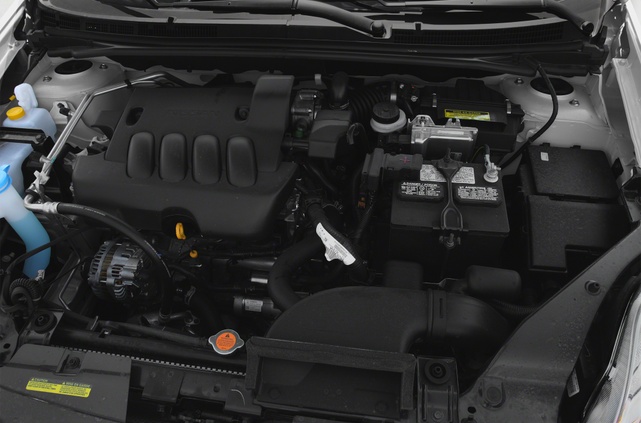
2.0-liter four-cylinder
Six-speed manual or CVT
Trunk partition
2.5-liter SE-R version

The good & the bad

The good

Standard side-impact and side curtain airbags
Optional keyless start
Standard tire pressure monitoring system
Open, airy interior
Supersized cupholders

The bad

ABS not standard
Drum rear brakes standard
A-pillar can block view
So-so styling
SE-R is underwhelming

Expert 2010 Nissan Sentra review

our expert's take
Our expert's take
By Mike Hanley
Full article
our expert's take

Some cars get all the attention, and the Nissan Sentra isn’t one of them. Its name isn’t always uttered in the same sentences as models like the Honda Civic and Toyota Corolla, but after driving one it’s clear that it should be; this car deserves to be on compact-car buyers’ shopping lists. While you probably wouldn’t regret getting a Civic or Corolla, the Sentra outdoes those cars in some areas and offers a number of upscale features for exceptionally affordable prices.

In the world of everyday, economy transportation, the Sentra is a pleasant surprise — a hidden gem for those willing to give it a try.

I tested an uplevel Sentra 2.0 SL. This trim level starts at $18,560, but with options its as-tested price was $20,630.

Styling

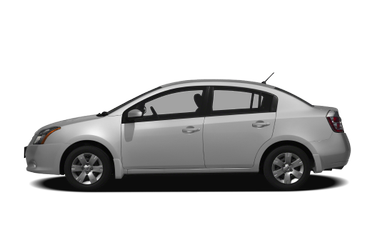
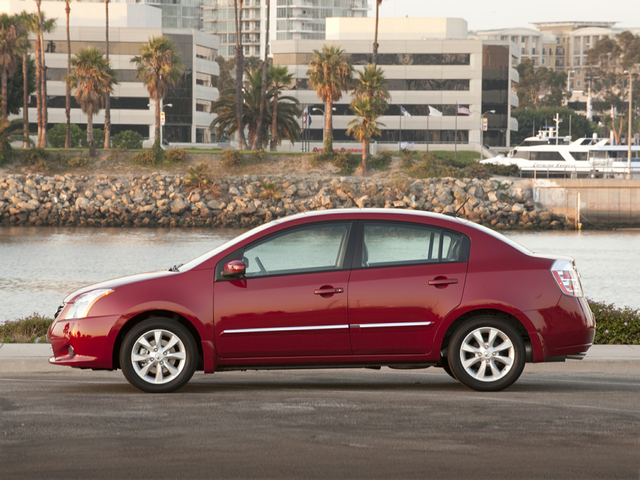
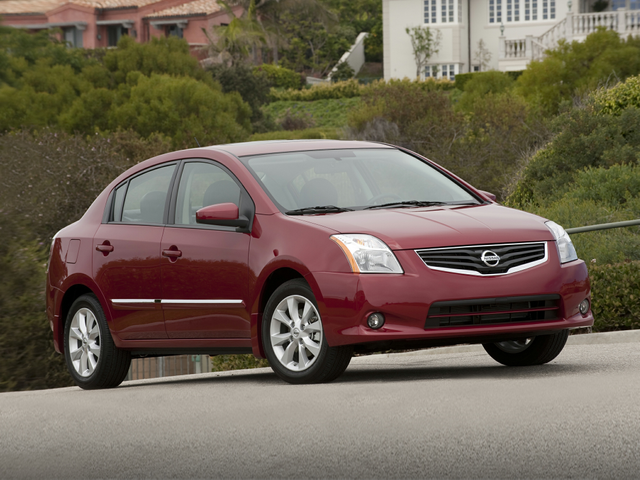
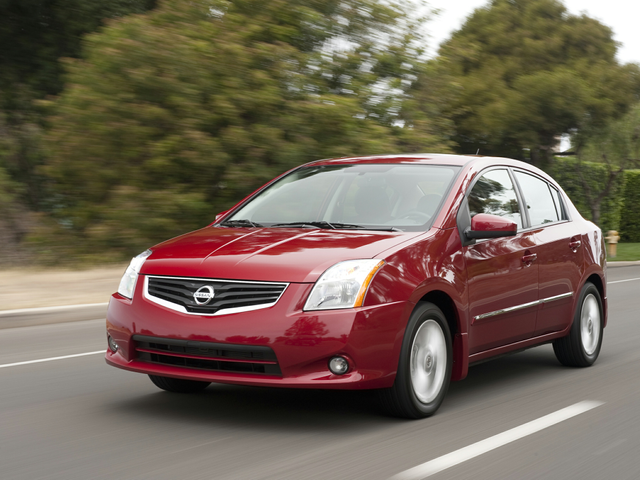
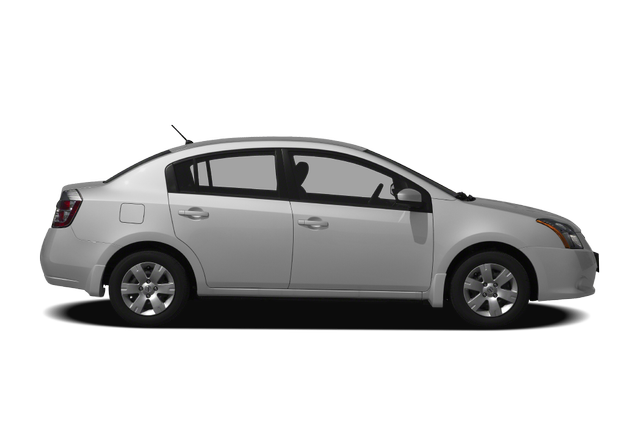
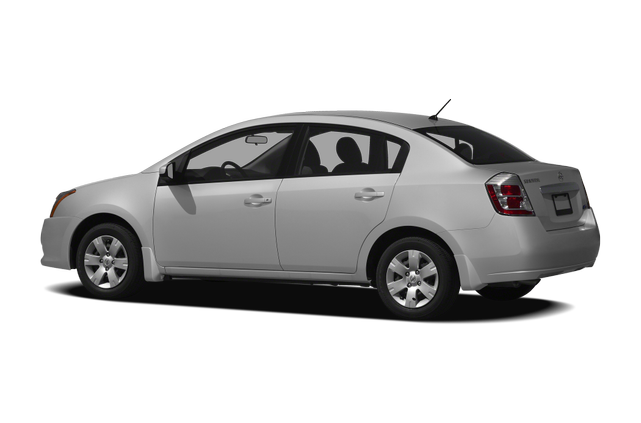
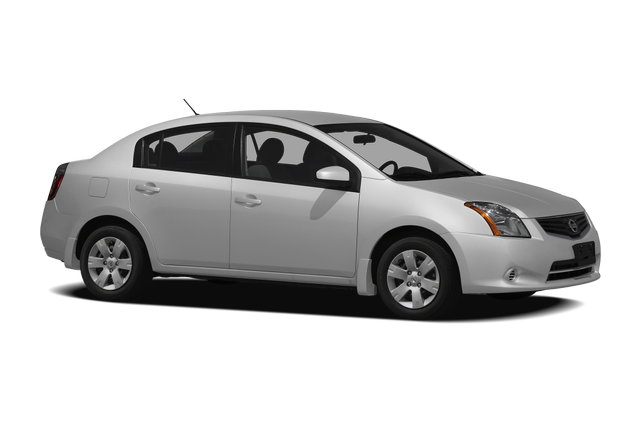
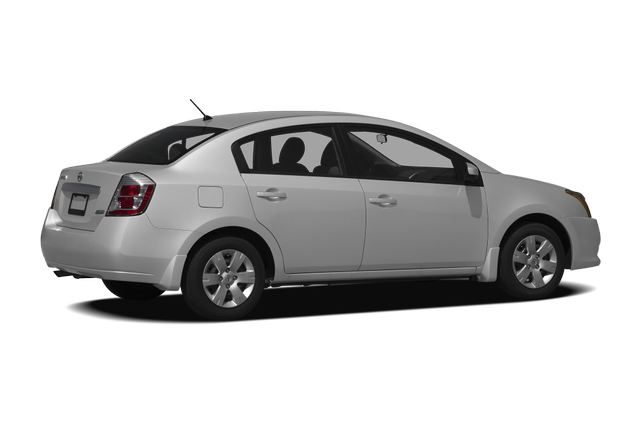
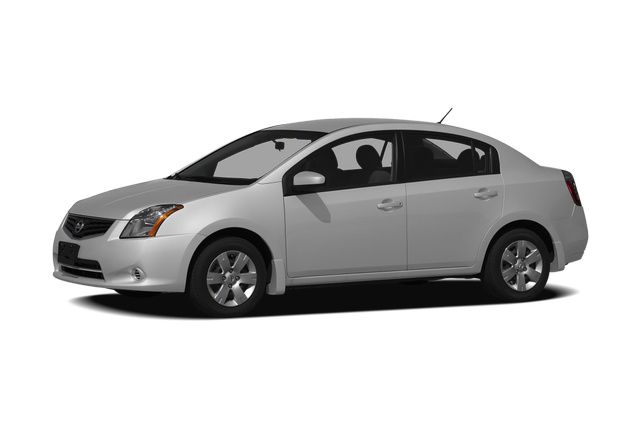
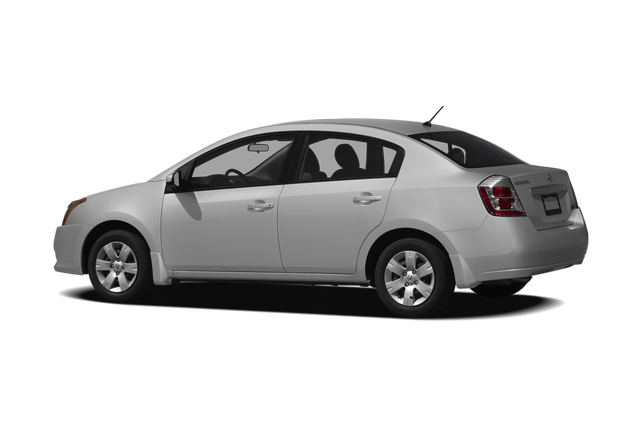
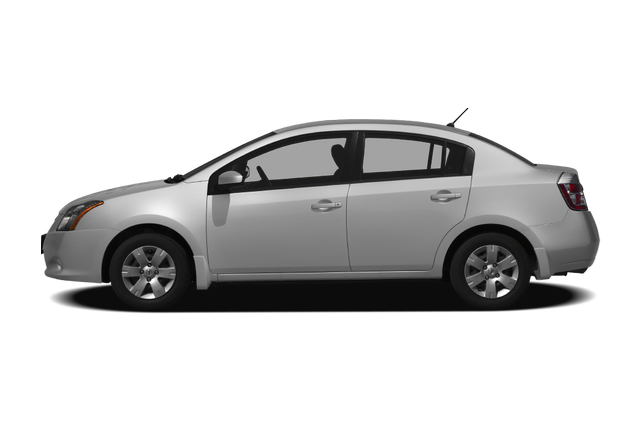
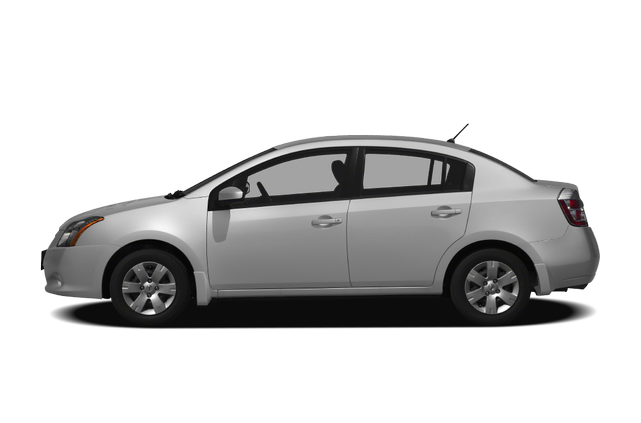
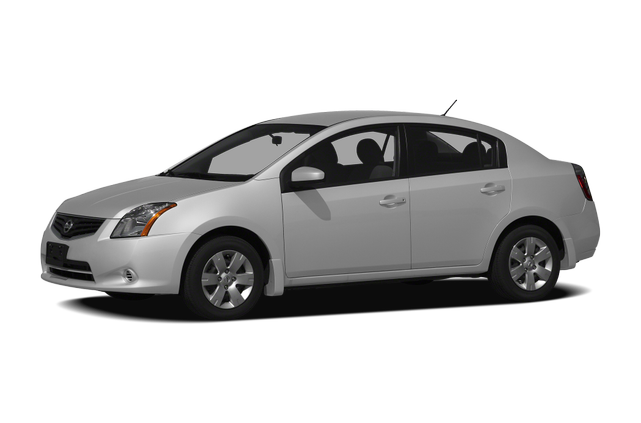
The Sentra’s tall stance and short hood and trunklid make the car look a bit stubby in profile. It’s not nearly as sleek as the Civic, which is still futuristic looking even though it’s been around in its current form since the 2006 model year — an incredible feat. I like the Sentra’s design more than the Corolla’s, which is about as bland and nondescript a car as you’ll find these days. For a side-by-side comparison of the Sentra, Civic and Corolla, click here.

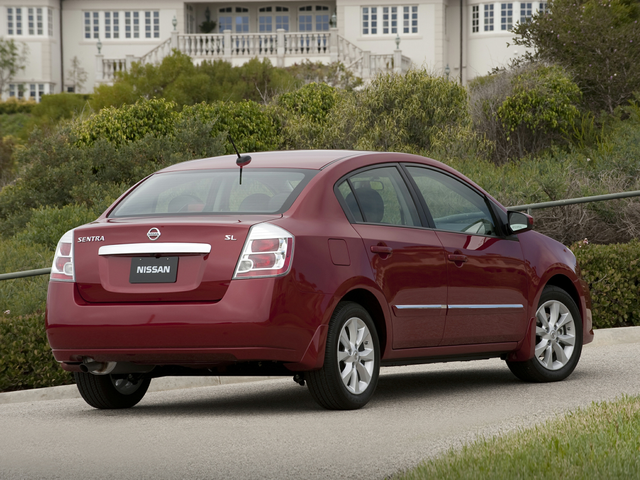
Not everything’s right with the Sentra’s design. A couple of our editors, myself included, weren’t fond of the car’s clear-lens taillights. This design cue was a fad a few years ago, and it’s time for Nissan to ditch the look.

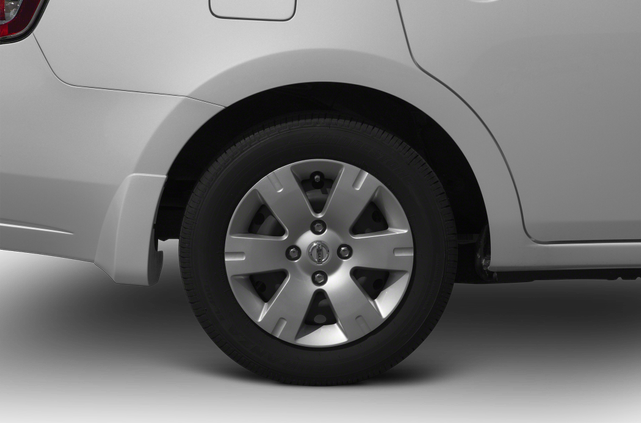
The Sentra comes standard with steel wheels, but our 2.0 SL had 16-inch alloy wheels with an eight-spoke design. Alloy wheels always dress up a car’s exterior, and 2.0 S and 2.0 SL models get chrome door and trunklid accents that serve the same purpose.

Driving It

The Sentra’s off-the-line performance is good, with acceleration that’s much more effortless than the Civic or Corolla, both of which are offered with traditional automatic transmissions with fixed gears. The Sentra’s optional continuously variable automatic transmission, which my car had, provides an infinite number of gear ratios, and that allows engine speed to remain more constant, and usually quieter.

Nissan has done a remarkable job tuning the Sentra’s drivetrain. Performance-oriented SE-R and SE-R Spec V models are available with a 2.5-liter four-cylinder engine, but I tested the base 140-horsepower, 2.0-liter four-cylinder that goes in the majority of Sentra trim levels. The engine was paired with the optional CVT, as mentioned, but a six-speed manual is standard. Nissan is one of the few automakers using CVTs in many of its cars and crossovers, and the Sentra proves the automaker knows what it’s doing.

Overall, the Sentra feels like it has a larger engine under its hood than it does, but not at the expense of fuel economy. The infinite gear ratios in a CVT allow the engine to operate in its most efficient range, and the Sentra with the CVT gets a competitive 26/34 mpg city/highway. That beats the manual transmission’s 24/31-mpg rating. Predictably, gas mileage drops with the larger four-cylinder, down to 24/30 mpg with the CVT and 21/28 mpg in the manual-transmission model, which also prefers premium gas.

Like many other cars with smaller engines — the Civic and Corolla included — the Sentra’s four-cylinder doesn’t have a lot of power in reserve for highway passing. It accelerates up to highway speeds confidently and cruises easily with fast traffic, but don’t expect a burst of power if you stab the gas pedal. If you do stab it, you’re more likely to get just a slight bump in speed and more engine noise.

I like the Sentra’s ride quality, though some Cars.com staffers who drove it thought the suspension was noisy over rougher stretches of road. I noticed some noise over big bumps, but the suspension craftily blended good damping abilities without sacrificing steering response and overall nimbleness.

The Civic handles well but makes occupants pay with a noisy cabin. The Corolla isolates you but doesn’t encourage you to push it on a winding road. The Sentra, meanwhile, falls somewhere between the two. It provides a quieter, more comfortable driving experience than the Civic but isn’t as softly sprung as the Corolla. It’s a nice balance that delivers the benefits of both approaches in one car.

The Inside

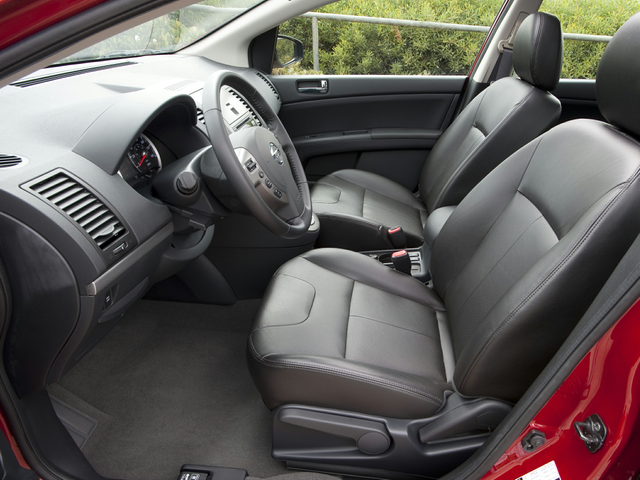
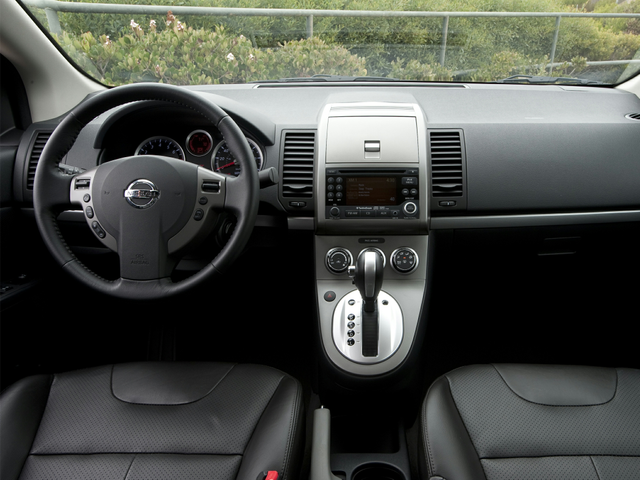
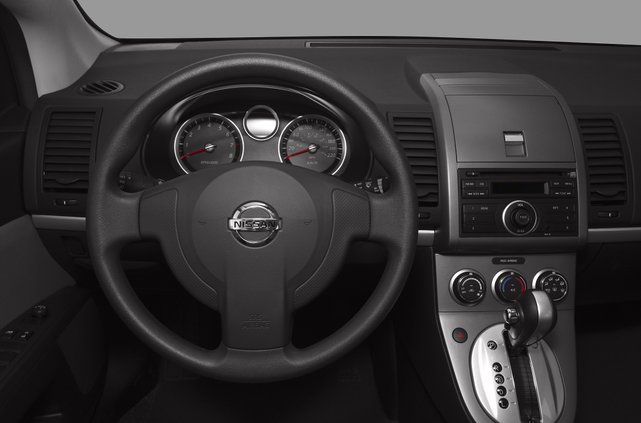
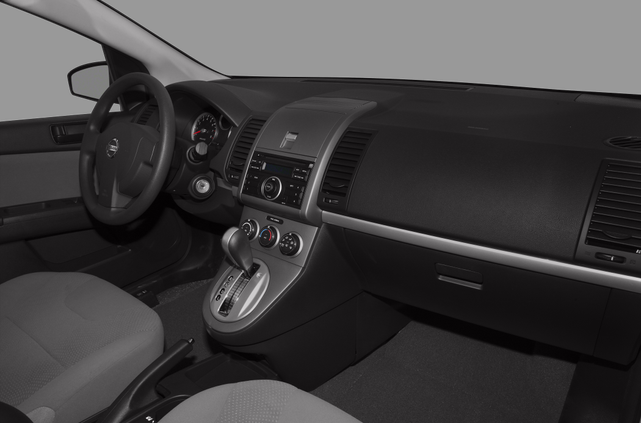
Certain elements of the Sentra’s cabin drew criticism from staff members, including the loud, cheap-sounding noise emanating from the gear selector when moved from Park to Drive, the appearance of the faux-silver trim bordering the selector itself, and the feel of the radio buttons. On the whole, however, the clean-looking cabin utilizes nice materials and has some upscale controls, like the manual air-conditioning knobs, which wouldn’t be out of place in a much more expensive car.

I was able to get fairly comfortable in the driver’s seat, but I wish Nissan would add a telescoping adjustment to the steering wheel (it only tilts). If I could, I would have pulled the steering wheel a little closer so my arms wouldn’t have had to stretch so far forward.

I also have a problem with the Sentra’s instrument panel, or more specifically, one of its gauges. There are two large, backlit analog gauges that are easy to read, but between them is an orange-lit digital readout for fuel level, engine temperature and the trip computer. It’s functionally acceptable, but it’s too bright and distracting in the daytime. You can lower its brightness when the headlights are on but not when they’re off, and who wants to drive around with the headlights on all the time because of a poorly designed gauge?

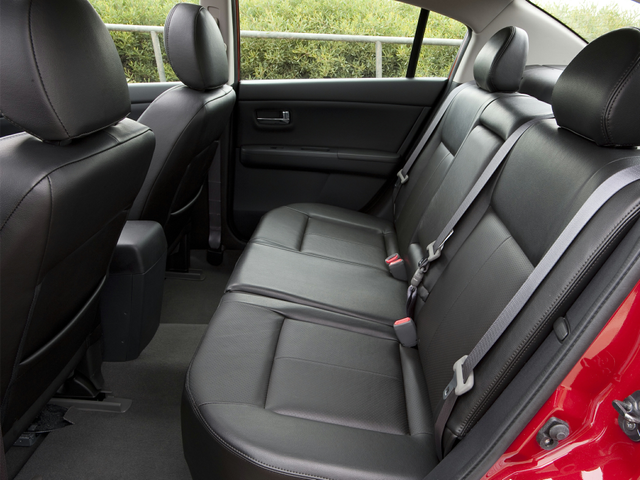
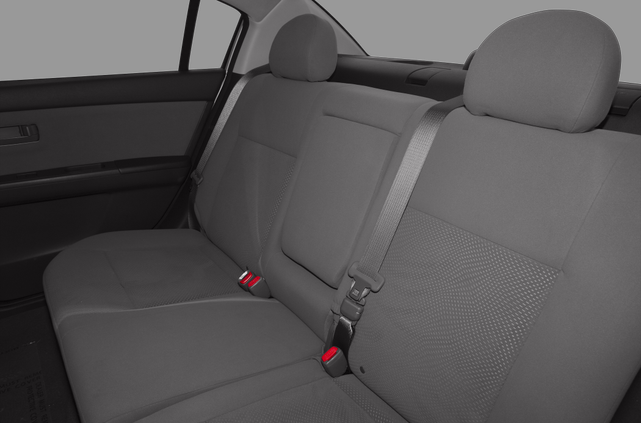
As in many compact cars, if you plan on carrying adults in the backseat you’ll have to make sure front-seat occupants are willing to share their legroom. Even then, the Sentra’s backseat is snug but workable for taller adults. There’s adequate space between two adults sitting in the outboard rear seats, but adding a third in the middle makes for a tight squeeze. Suspension noise is more prevalent when riding in the backseat, too.

Affordable Features

The 2.0 SL is already one of the better-equipped trims in the Sentra lineup, and our test car had some premium options, like leather upholstery and a navigation system. These features are relatively common in this class, but what’s interesting is that they aren’t as expensive as you might think.

The leather seats cost $700. To get leather in a Corolla, you’d have to pay more than twice that, though Toyota includes front seat heaters in the package. It’s not like the Sentra uses cheapo leather, either; staffers commented positively on its high-quality feel.

Even more affordable is the optional navigation system, which costs $400. That’s substantially less than the $1,500-$2,000 these systems typically run and is much closer to the price of a portable navigation system. The Sentra’s 5-inch screen isn’t as large as some other built-in ones, but its graphics are crisp and it features easy-to-use touch-screen operation. We liked the iPod integration with the touch-screen, too.

Cargo Versatility

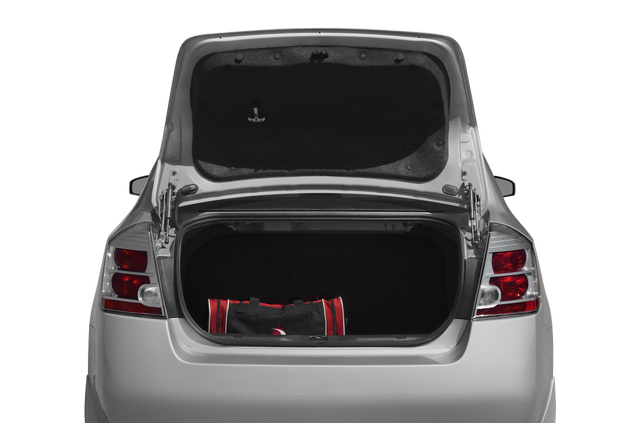
The Sentra’s 13.1-cubic-foot trunk is similar in size to its main competitors, but it offers greater cargo versatility thanks to a large opening when you fold the backseat. It takes an extra step to fold the seats — you have to flip forward the seat cushion first — but once the backrest is down the opening’s extra size is clearly evident. This is an uncommon seat-folding design — many compact cars simply have backrests that fold down — and it may mean you’ll have to move the front seats forward a little so the cushions can flip forward far enough for the backrests to clear them on the way down. The rear head restraints don’t have to be removed before folding the seats; they simply flip forward. Still, it’s an awful lot of work to fold the second row. You can fold the seatbacks without flipping the bottom cushions forward, but if you do you’re left with highly angled backrests that aren’t flat with the cargo floor.

Safety

The Sentra received a Good overall rating — the highest possible score — in the Insurance Institute for Highway Safety’s frontal-offset and side-impact crash tests. It received the next-best score, Acceptable, in IIHS’ rear-impact whiplash-injury test.

Standard safety features include side-impact airbags for the front seats, side curtain airbags for both rows and active front head restraints. Antilock brakes and an electronic stability system are optional.

Check out the Standard Equipment & Specs page for a full list of safety features.

Sentra in the Market

The Sentra has been available in its current form for a few years, but it remains a competitive entry in the compact segment. Its drivetrain performance and suspension tuning are praiseworthy, and its configurable cargo area enhances its utility. Shopping for a new car can be a time-consuming process, but if you make an effort to test-drive a Sentra I think you’ll find that it’s time well-spent.

Send Mike an email  
Senior Road Test Editor
Mike Hanley

Mike Hanley has more than 20 years of experience reporting on the auto industry. His primary focus is new vehicles, and he's currently a Senior Road Test Editor overseeing expert car reviews and comparison tests. He previously managed Editorial content in the Cars.com Research section.

2010 Nissan Sentra review: Our expert's take
By Mike Hanley

Some cars get all the attention, and the Nissan Sentra isn’t one of them. Its name isn’t always uttered in the same sentences as models like the Honda Civic and Toyota Corolla, but after driving one it’s clear that it should be; this car deserves to be on compact-car buyers’ shopping lists. While you probably wouldn’t regret getting a Civic or Corolla, the Sentra outdoes those cars in some areas and offers a number of upscale features for exceptionally affordable prices.

In the world of everyday, economy transportation, the Sentra is a pleasant surprise — a hidden gem for those willing to give it a try.

I tested an uplevel Sentra 2.0 SL. This trim level starts at $18,560, but with options its as-tested price was $20,630.

Styling

The Sentra’s tall stance and short hood and trunklid make the car look a bit stubby in profile. It’s not nearly as sleek as the Civic, which is still futuristic looking even though it’s been around in its current form since the 2006 model year — an incredible feat. I like the Sentra’s design more than the Corolla’s, which is about as bland and nondescript a car as you’ll find these days. For a side-by-side comparison of the Sentra, Civic and Corolla, click here.

Not everything’s right with the Sentra’s design. A couple of our editors, myself included, weren’t fond of the car’s clear-lens taillights. This design cue was a fad a few years ago, and it’s time for Nissan to ditch the look.

The Sentra comes standard with steel wheels, but our 2.0 SL had 16-inch alloy wheels with an eight-spoke design. Alloy wheels always dress up a car’s exterior, and 2.0 S and 2.0 SL models get chrome door and trunklid accents that serve the same purpose.

Driving It

The Sentra’s off-the-line performance is good, with acceleration that’s much more effortless than the Civic or Corolla, both of which are offered with traditional automatic transmissions with fixed gears. The Sentra’s optional continuously variable automatic transmission, which my car had, provides an infinite number of gear ratios, and that allows engine speed to remain more constant, and usually quieter.

Nissan has done a remarkable job tuning the Sentra’s drivetrain. Performance-oriented SE-R and SE-R Spec V models are available with a 2.5-liter four-cylinder engine, but I tested the base 140-horsepower, 2.0-liter four-cylinder that goes in the majority of Sentra trim levels. The engine was paired with the optional CVT, as mentioned, but a six-speed manual is standard. Nissan is one of the few automakers using CVTs in many of its cars and crossovers, and the Sentra proves the automaker knows what it’s doing.

Overall, the Sentra feels like it has a larger engine under its hood than it does, but not at the expense of fuel economy. The infinite gear ratios in a CVT allow the engine to operate in its most efficient range, and the Sentra with the CVT gets a competitive 26/34 mpg city/highway. That beats the manual transmission’s 24/31-mpg rating. Predictably, gas mileage drops with the larger four-cylinder, down to 24/30 mpg with the CVT and 21/28 mpg in the manual-transmission model, which also prefers premium gas.

Like many other cars with smaller engines — the Civic and Corolla included — the Sentra’s four-cylinder doesn’t have a lot of power in reserve for highway passing. It accelerates up to highway speeds confidently and cruises easily with fast traffic, but don’t expect a burst of power if you stab the gas pedal. If you do stab it, you’re more likely to get just a slight bump in speed and more engine noise.

I like the Sentra’s ride quality, though some Cars.com staffers who drove it thought the suspension was noisy over rougher stretches of road. I noticed some noise over big bumps, but the suspension craftily blended good damping abilities without sacrificing steering response and overall nimbleness.

The Civic handles well but makes occupants pay with a noisy cabin. The Corolla isolates you but doesn’t encourage you to push it on a winding road. The Sentra, meanwhile, falls somewhere between the two. It provides a quieter, more comfortable driving experience than the Civic but isn’t as softly sprung as the Corolla. It’s a nice balance that delivers the benefits of both approaches in one car.

The Inside

Certain elements of the Sentra’s cabin drew criticism from staff members, including the loud, cheap-sounding noise emanating from the gear selector when moved from Park to Drive, the appearance of the faux-silver trim bordering the selector itself, and the feel of the radio buttons. On the whole, however, the clean-looking cabin utilizes nice materials and has some upscale controls, like the manual air-conditioning knobs, which wouldn’t be out of place in a much more expensive car.

I was able to get fairly comfortable in the driver’s seat, but I wish Nissan would add a telescoping adjustment to the steering wheel (it only tilts). If I could, I would have pulled the steering wheel a little closer so my arms wouldn’t have had to stretch so far forward.

I also have a problem with the Sentra’s instrument panel, or more specifically, one of its gauges. There are two large, backlit analog gauges that are easy to read, but between them is an orange-lit digital readout for fuel level, engine temperature and the trip computer. It’s functionally acceptable, but it’s too bright and distracting in the daytime. You can lower its brightness when the headlights are on but not when they’re off, and who wants to drive around with the headlights on all the time because of a poorly designed gauge?

As in many compact cars, if you plan on carrying adults in the backseat you’ll have to make sure front-seat occupants are willing to share their legroom. Even then, the Sentra’s backseat is snug but workable for taller adults. There’s adequate space between two adults sitting in the outboard rear seats, but adding a third in the middle makes for a tight squeeze. Suspension noise is more prevalent when riding in the backseat, too.

Affordable Features

The 2.0 SL is already one of the better-equipped trims in the Sentra lineup, and our test car had some premium options, like leather upholstery and a navigation system. These features are relatively common in this class, but what’s interesting is that they aren’t as expensive as you might think.

The leather seats cost $700. To get leather in a Corolla, you’d have to pay more than twice that, though Toyota includes front seat heaters in the package. It’s not like the Sentra uses cheapo leather, either; staffers commented positively on its high-quality feel.

Even more affordable is the optional navigation system, which costs $400. That’s substantially less than the $1,500-$2,000 these systems typically run and is much closer to the price of a portable navigation system. The Sentra’s 5-inch screen isn’t as large as some other built-in ones, but its graphics are crisp and it features easy-to-use touch-screen operation. We liked the iPod integration with the touch-screen, too.

Cargo Versatility

The Sentra’s 13.1-cubic-foot trunk is similar in size to its main competitors, but it offers greater cargo versatility thanks to a large opening when you fold the backseat. It takes an extra step to fold the seats — you have to flip forward the seat cushion first — but once the backrest is down the opening’s extra size is clearly evident. This is an uncommon seat-folding design — many compact cars simply have backrests that fold down — and it may mean you’ll have to move the front seats forward a little so the cushions can flip forward far enough for the backrests to clear them on the way down. The rear head restraints don’t have to be removed before folding the seats; they simply flip forward. Still, it’s an awful lot of work to fold the second row. You can fold the seatbacks without flipping the bottom cushions forward, but if you do you’re left with highly angled backrests that aren’t flat with the cargo floor.

Safety

The Sentra received a Good overall rating — the highest possible score — in the Insurance Institute for Highway Safety’s frontal-offset and side-impact crash tests. It received the next-best score, Acceptable, in IIHS’ rear-impact whiplash-injury test.

Standard safety features include side-impact airbags for the front seats, side curtain airbags for both rows and active front head restraints. Antilock brakes and an electronic stability system are optional.

Check out the Standard Equipment & Specs page for a full list of safety features.

Sentra in the Market

The Sentra has been available in its current form for a few years, but it remains a competitive entry in the compact segment. Its drivetrain performance and suspension tuning are praiseworthy, and its configurable cargo area enhances its utility. Shopping for a new car can be a time-consuming process, but if you make an effort to test-drive a Sentra I think you’ll find that it’s time well-spent.

Send Mike an email  

Available cars near you

Safety review

Based on the 2010 Nissan Sentra base trim
NHTSA crash test and rollover ratings, scored out of 5.
Frontal driver
5/5
Frontal passenger
5/5
Nhtsa rollover rating
4/5
Side driver
5/5
Side rear passenger
4/5

Factory warranties

New car program benefits

Basic
3 years / 36,000 miles
Corrosion
5 years
Powertrain
5 years / 60,000 miles

Certified Pre-Owned program benefits

Age / mileage
6 years / less than 80,000 miles
Basic
N / A
Dealer certification
167-point inspection

Compare similar vehicles

Select cars to compare for more detailed info.
  • 2010
    4.2
    Nissan Sentra
    Starts at
    $15,420
    24 City / 31 Hwy
    MPG
    5
    Seat capacity
    Gas I4
    Engine
    Front-wheel drive
    Drivetrain
    Compare
  • 2016
    4.1
    Nissan Versa
    Starts at
    $11,990
    27 City / 36 Hwy
    MPG
    5
    Seat capacity
    Regular Unleaded I-4
    Engine
    Front-wheel drive
    Drivetrain
    Compare
  • 1995
    4.3
    Volkswagen Jetta
    Starts at
    $12,490
    -
    MPG
    -
    Seat capacity
    -
    Engine
    -
    Drivetrain
    Compare
  • 2012
    4.3
    Nissan Sentra
    Starts at
    $16,430
    24 City / 31 Hwy
    MPG
    5
    Seat capacity
    Gas I4
    Engine
    Front-wheel drive
    Drivetrain
    Compare
  • 2014
    4.0
    Nissan Versa Note
    Starts at
    $13,990
    27 City / 36 Hwy
    MPG
    5
    Seat capacity
    Regular Unleaded I-4
    Engine
    Front-wheel drive
    Drivetrain
    Compare
  • 2009
    4.4
    Ford Focus
    Starts at
    $15,520
    24 City / 33 Hwy
    MPG
    5
    Seat capacity
    Gas I4
    Engine
    Front-wheel drive
    Drivetrain
    Compare
  • Compare more options
    Use our comparison tool to add any vehicle of your choice and see a full list of specifications and features side-by-side.
    Try it now

Consumer reviews

4.2 / 5
Based on 61 reviews
Write a review
Comfort 4.3
Interior 4.1
Performance 4.1
Value 4.3
Exterior 4.1
Reliability 4.3

Most recent

  • I bought this car in 2013 for $15,500 and this car has

    I bought this car in 2013 for $15,500 and this car has been very reliable, minor problems in almost a 15 year old car. Good on gas ...All I do is maintenance and it's been good to me oil change brakes got my money's worth. Car now has 133,000 miles.
    • Purchased a Used car
    • Used for Commuting
    • Does recommend this car
    Comfort 4.0
    Interior 3.0
    Performance 2.0
    Value 4.0
    Exterior 4.0
    Reliability 5.0
    2 people out of 3 found this review helpful. Did you?
    Yes No
  • Picked it up used.

    Picked it up used. Very roomy. Runs very well. Needed minor work that I knew about before purchase - pass cv and strut. Apparently struts go bad in these. Easy enough no big deal. 2 months of virtual perfection. Transmission decides to crap out without warning. Stepper motor code. Says it's the ONLY possibility causing the problems. Replaced it. Nothing. No better no worse. Had to replace whole transmission. Apparently this happens VERY CONSISTENTLY with Nissan cvt. Great car. Shoddy tranny. no feasible workarounds...
    • Does not recommend this car
    Comfort 5.0
    Interior 5.0
    Performance 3.0
    Value 3.0
    Exterior 4.0
    Reliability 2.0
    2 people out of 3 found this review helpful. Did you?
    Yes No
  • Don’t do it !

    I got this car used, at a reputable lot, paid near $6k for it.. it’s been nothing but trouble.. I’ve spent so much fixing this and that, that I could have just bought another car.. NOW it’s been sitting in the shop since April 2022 waiting to replace the motor.. that blew up.. it didn’t even have 150k miles.. and they can’t even find a replacement motor... not worth what I paid for sure.. cutting my losses and selling it for what I can.. will never own another one.
    • Purchased a Used car
    • Used for Transporting family
    • Does not recommend this car
    Comfort 3.0
    Interior 4.0
    Performance 4.0
    Value 1.0
    Exterior 3.0
    Reliability 2.0
    6 people out of 7 found this review helpful. Did you?
    Yes No
  • Terrible

    This car has cost me a lot of money to keep it going. I would not recommend this vehicle to anyone. I’ve replaced the engine, heat, air, tires, Battery, the Altinator, and much more. I paid way too much for it when I bought the car. It is still going but it rides terrible. And it just sounds awful.
    • Purchased a Used car
    • Used for Commuting
    • Does not recommend this car
    Comfort 1.0
    Interior 3.0
    Performance 3.0
    Value 1.0
    Exterior 1.0
    Reliability 2.0
    15 people out of 21 found this review helpful. Did you?
    Yes No
  • Gonna last me a long time!

    Car meets all my needs & is very reliable by make. I plan on keeping it for a very long time! Thanks Nissan of Mobile!
    • Purchased a Used car
    • Used for Commuting
    • Does recommend this car
    Comfort 5.0
    Interior 4.0
    Performance 5.0
    Value 5.0
    Exterior 4.0
    Reliability 5.0
    5 people out of 7 found this review helpful. Did you?
    Yes No
  • Have changed the struts three times

    This auto was good for about 80,000 miles, then it needed new struts, coil, plug wires, brakes, and rotors; The struts lasted about 6 months and had to be replaced again.... still at about 84,000. .. Then at 90,000 miles disc brake pads, rotors, caliper slides, shock &/or strut assembly replaced, and ABS control unit was replaced. ... Brakes had to be replaced again at 92,000.... but thankfully, the mechanic did not charge since he provided a warranty; Now at 114,000 miles, the car is bouncing, thudding, and mechanic said the front passenger strut is badly worn and rear shocks are needing replaced again! Why?? Anyone else have these problems with their 2010 Nissan Sentra
    • Purchased a New car
    • Used for Commuting
    • Does not recommend this car
    Comfort 3.0
    Interior 3.0
    Performance 3.0
    Value 3.0
    Exterior 3.0
    Reliability 2.0
    6 people out of 7 found this review helpful. Did you?
    Yes No
  • Great first car

    Bought this car with 51k miles on it, now has 86k miles and I’ve experienced no problems mechanically or cosmetically. I definitely test it’s limits by taking it on the backroads of Alaska, and it takes a good beating real well! The interior is quite standard, although I would make some changes. Am able to seat four comfortably in the car, along with plenty of trunk space for winter gear, skis, tents, a bike rack, water cases, and whatever else will fit! Great gas mileage, even after having a bike rack on for the past 6-7 months. Would overall recommend this car to a new driver, as it is very maneuverable and dependable.
    • Purchased a Used car
    • Used for Commuting
    • Does recommend this car
    Comfort 4.0
    Interior 4.0
    Performance 5.0
    Value 5.0
    Exterior 4.0
    Reliability 5.0
    0 people out of 0 found this review helpful. Did you?
    Yes No
  • Reliable to drive

    I feel too comfortable Bc there are Navigation whenever I lost, I pressed the home, then automatically guide me home. Heated seat and sun roof and leather seat
    • Purchased a Used car
    • Used for Having fun
    • Does recommend this car
    Comfort 5.0
    Interior 4.0
    Performance 4.0
    Value 4.0
    Exterior 4.0
    Reliability 4.0
    1 person out of 2 found this review helpful. Did you?
    Yes No
  • Transmission issues next day

    Be aware !!!! They keep your down payment there and sale you cars bad transmission In it!!!! They kept my friends down payment 250 of it!!!! Because they got mad she return the car next day cause transmission issues!!!!!! Be aware
    • Purchased a Used car
    • Used for Transporting family
    • Does not recommend this car
    Comfort 1.0
    Interior 1.0
    Performance 1.0
    Value 1.0
    Exterior 1.0
    Reliability 1.0
    0 people out of 1 found this review helpful. Did you?
    Yes No
  • Test drove 2010 in 2019. Very solid for 126K mi

    Test drove 2010 in 2019. Like it a lot, and shopping around it seems like a good deal in general if you are looking to get a used car for under $6K. 126 K on it but ran and handled like I would expect from a new car. Smooth SVT is nice.
    • Purchased a Used car
    • Does recommend this car
    Comfort 5.0
    Interior 4.0
    Performance 4.0
    Value 4.0
    Exterior 4.0
    0 people out of 1 found this review helpful. Did you?
    Yes No
  • Very satisfied

    I needed a simple, reliable car for getting back and forth to work. I bought the car for 3100 dollars with 184000 kilometers on it last summer. So far the most serious thing I've had to do was get the struts replaced. It's a 9 year old car so I do not expect perfection. This is not the first Nissan I've driven and it won't be the last!
    • Purchased a Used car
    • Used for Commuting
    • Does recommend this car
    Comfort 5.0
    Interior 4.0
    Performance 4.0
    Value 4.0
    Exterior 5.0
    Reliability 5.0
    0 people out of 0 found this review helpful. Did you?
    Yes No
  • Great drive

    This car meets all my needs. The seating is comfortable and has a spacious interior that provides great visibility to both the short and tall alike. Great gas mileage, smooth ride and looks sharp.
    • Purchased a New car
    • Used for Having fun
    • Does recommend this car
    Comfort 5.0
    Interior 5.0
    Performance 5.0
    Value 5.0
    Exterior 5.0
    Reliability 5.0
    1 person out of 1 found this review helpful. Did you?
    Yes No

Latest news from Cars.com

See all news

Nissan dealers near you

FAQ

What trim levels are available for the 2010 Nissan Sentra?

The 2010 Nissan Sentra is available in 6 trim levels:

  • 2.0 (2 styles)
  • 2.0 S (1 style)
  • 2.0 SL (1 style)
  • 2.0 SR (1 style)
  • SE-R (1 style)
  • SE-R Spec V (1 style)

What is the MPG of the 2010 Nissan Sentra?

The 2010 Nissan Sentra offers up to 24 MPG in city driving and 31 MPG on the highway. These figures are based on EPA mileage ratings and are for comparison purposes only. The actual mileage will vary depending on vehicle options, trim level, driving conditions, driving habits, vehicle maintenance, and other factors.

What are some similar vehicles and competitors of the 2010 Nissan Sentra?

The 2010 Nissan Sentra compares to and/or competes against the following vehicles:

Is the 2010 Nissan Sentra reliable?

The 2010 Nissan Sentra has an average reliability rating of 4.3 out of 5 according to cars.com consumers. Find real-world reliability insights within consumer reviews from 2010 Nissan Sentra owners.

Is the 2010 Nissan Sentra a good Sedan?

Below are the cars.com consumers ratings for the 2010 Nissan Sentra. 83.6% of drivers recommend this vehicle.

4.2 / 5
Based on 61 reviews
  • Comfort: 4.3
  • Interior: 4.1
  • Performance: 4.1
  • Value: 4.3
  • Exterior: 4.1
  • Reliability: 4.3

Nissan Sentra history

Your list was successfully saved.


Save list Compare
[{"cat":"sedan_compact","stock_type":"used","bodystyle":"Sedan","page_type":"research/make-model-year","oem_page":false,"search_fuel_types":["Gasoline Fuel"]}]