





2023 2022 2021 2020 2019 2018 2017 2016 2015 2014 2013 2012 2011 2010 2009 2008
Dodge Challenger

No Reviews
Shop options
$17,594
Avg. listing price
Shop the 2012 Dodge Challenger
Browse cars & save your favorites
Dealers near you
Find & contact a dealership near you
Listings near 60606
Change location See all listings

Available trims

See the differences side-by-side to compare trims.
  • 2dr Cpe SXT Plus
    Avg. price
    $11,948
    MPG
    18 City / 27 Hwy
    Seat capacity
    5
    Engine
    Gas V6
    Drivetrain
    Rear Wheel Drive
    Shop this trim See all specs
  • 2dr Cpe Rallye Redline
    Avg. price
    $11,948
    MPG
    18 City / 27 Hwy
    Seat capacity
    5
    Engine
    Gas V6
    Drivetrain
    Rear Wheel Drive
    Shop this trim See all specs
  • 2dr Cpe SXT
    Avg. price
    $11,948
    MPG
    18 City / 27 Hwy
    Seat capacity
    5
    Engine
    Gas V6
    Drivetrain
    Rear Wheel Drive
    Shop this trim See all specs
  • 2dr Cpe R/T Classic
    Avg. price
    $15,997
    MPG
    18 City / 27 Hwy
    Seat capacity
    5
    Engine
    Gas V8
    Drivetrain
    Rear Wheel Drive
    Shop this trim See all specs
  • 2dr Cpe R/T
    Avg. price
    $15,997
    MPG
    18 City / 27 Hwy
    Seat capacity
    5
    Engine
    Gas V8
    Drivetrain
    Rear Wheel Drive
    Shop this trim See all specs
  • 2dr Cpe R/T Plus
    Avg. price
    $15,997
    MPG
    18 City / 27 Hwy
    Seat capacity
    5
    Engine
    Gas V8
    Drivetrain
    Rear Wheel Drive
    Shop this trim See all specs
  • 2dr Cpe Yellow Jacket
    Avg. price
    $25,916
    MPG
    18 City / 27 Hwy
    Seat capacity
    5
    Engine
    Gas V8
    Drivetrain
    Rear Wheel Drive
    Shop this trim See all specs
  • 2dr Cpe SRT8 392
    Avg. price
    $25,916
    MPG
    18 City / 27 Hwy
    Seat capacity
    5
    Engine
    Gas V8
    Drivetrain
    Rear Wheel Drive
    Shop this trim See all specs

Notable features

  • Dramatic retro styling
  • V-6 or V-8
  • Manual or automatic
  • Three available suspensions
  • High-performance 470-hp SRT8 version

The good & the bad

The good

  • SRT8's power
  • V-8 exhaust sound
  • Responsive automatic transmission
  • Composed ride, highway stability
  • Backseat room

The bad

  • Retro styling limits visibility
  • V-6 lacks low-end power
  • Minimal steering feedback
  • Overstuffed front seatbacks

Expert 2012 Dodge Challenger review

Our expert's take
Full article

The 2012 Dodge Challenger is the kind of car that can bring a smile to the face of even the most jaded car enthusiast. Try as you might, it’s impossible to escape the considerable charm of this ultimate modern-day boulevard cruiser.

The Challenger’s classic muscle car styling will draw you in, but its refined ride and handling and spacious interior make this big coupe appealing to drive.

We tested two versions of the Challenger: a V-6 version with an as-tested price of $33,590 and the high-performance SRT8 with a sticker price of $48,320. For a side-by-side comparison with the Challenger’s two closest competitors — the Ford Mustang and Chevrolet Camaro — click here.

Styling Consequences
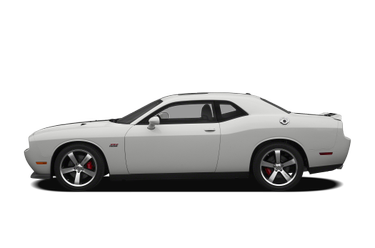
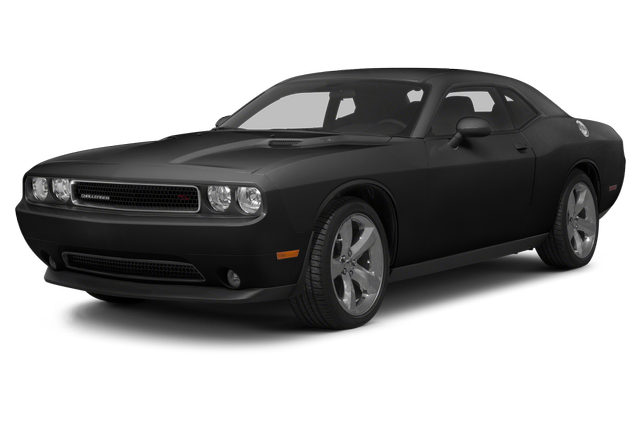
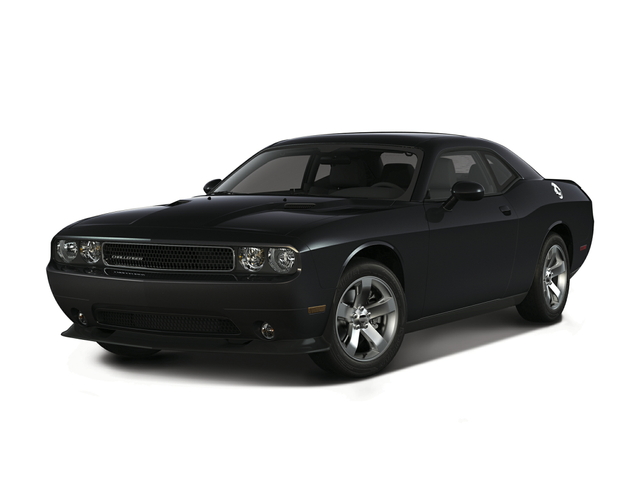
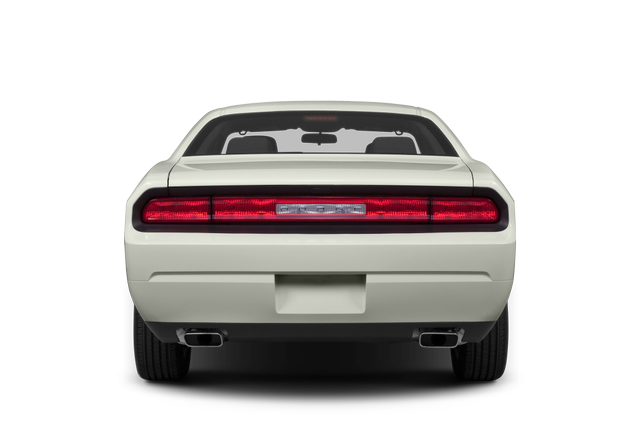
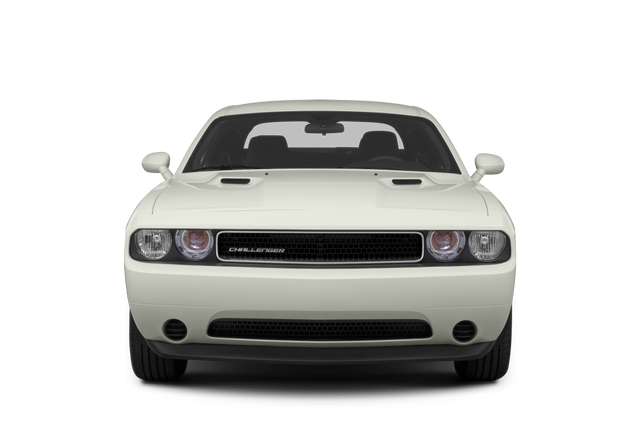
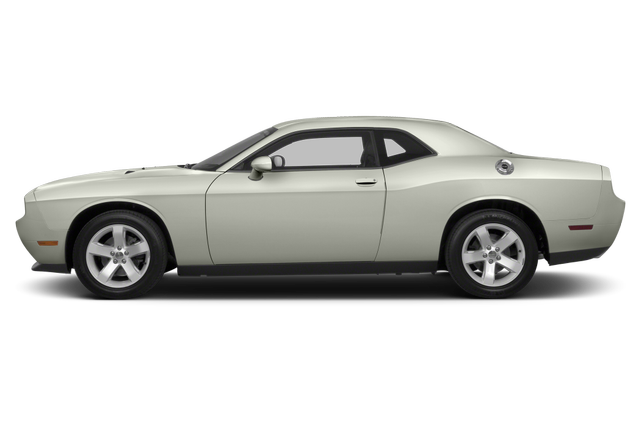
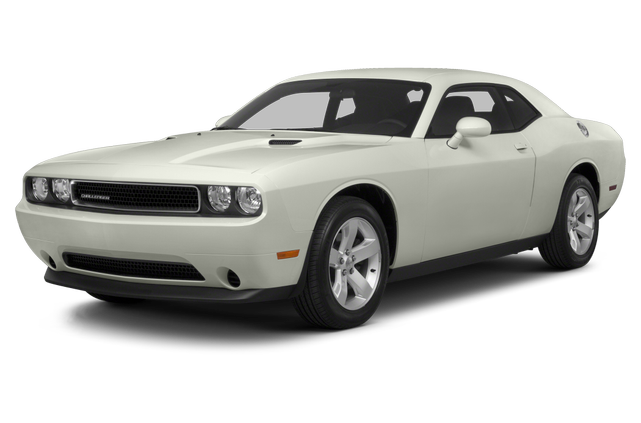
The Challenger is a rolling homage to the original coupe, which was produced in the early 1970s. It takes many of the original’s design cues — hood slits, a rectangular grille and pronounced rear haunches — and incorporates them in a modern way. To Dodge’s credit, the result is a coupe that both recalls the past and looks contemporary. That’s not an easy feat.

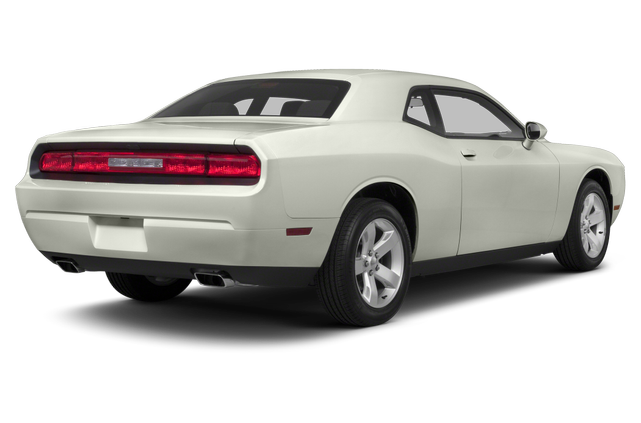
There are reasons why cars no longer look like they did in the ’70s, and the modern-day Challenger showcases one of them with its poor visibility. A big C-pillar and tall trunk make it hard to check your right-side blind spot. It’s also difficult to see curbs when pulling into the street, as they’re lost behind the car’s huge hood. Plus, the roofline makes it hard to see overhead stoplights when you’re first in line at intersections. Still, the Challenger doesn’t compromise visibility as much as another retro muscle car: the Chevrolet Camaro coupe.

Going & Stopping
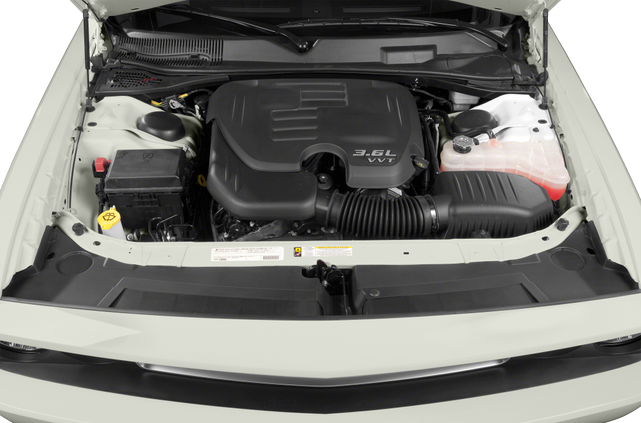
The standard 305-horsepower, 3.6-liter V-6 engine is smooth and refined, but it doesn’t have a lot of grunt from a standing start. It comes alive at midrange engine speeds, which leads to more eager acceleration, but it lacks the SRT8 V-8’s appealing exhaust burble that goes so well with the Challenger’s whole outlook. The V-6 gets an EPA-estimated 18/27 mpg city/highway.

Like an NFL linebacker, the Challenger SRT8 possesses a quickness that’s unexpected in something so big and heavy (its curb weight is around two tons). Dodge pegs the Challenger SRT8’s zero-to-60-mph acceleration time in the high 4-second range, and the 470-hp, 6.4-liter V-8 always pulls strongly, whether you’re cruising in the city or accelerating on the highway. A burbling exhaust note is your constant soundtrack, and it erupts into a howl when you floor the gas pedal.

Driven aggressively, the SRT8 is a monster of a car with a knack for intimidation. Slow down, though, and it turns into a docile cruiser. The rumbly exhaust remains, hinting at its performance potential, but a progressive gas pedal and smooth-shifting five-speed automatic transmission make for low-drama driving. Be prepared for frequent fill-ups, though, as the SRT8 is rated 14/23 mpg. Premium gas is recommended.

Getting an automatic SRT8 was a little disappointing initially, as Dodge also offers a six-speed manual, and I like to change gears myself when driving a performance car, but I grew to like the automatic in the big muscle car that is the Challenger.

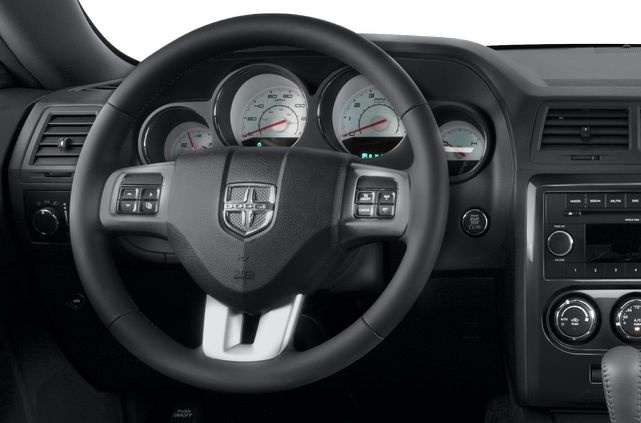
The transmission is responsive, making quick part-throttle downshifts or full-throttle kickdowns when you press the gas pedal. Steering-wheel-mounted shift paddles, which are new for 2012, let you control gear changes, and despite only a slight shift delay after pressing one of the paddles, I preferred to leave the transmission in Drive and let it do the work — it always seemed to be in the right gear.

Both the V-6 Challenger I tested, which had an optional performance brake package with front and rear vented discs, and the SRT8, with its Brembo-brand brakes, have some of the best brake-pedal feel around. The pedal yields linear, predictable response, and there’s none of the hesitation and jerkiness that plague some cars.

Ride & Handling
The V-6 Challenger is available with an optional performance-tuned suspension. It includes larger front and rear stabilizer bars and higher-rate shocks. In terms of firmness, the setup is similar to the SRT8’s standard adaptive suspension; it’s decidedly firm, but it doesn’t punish you the way some performance cars can.

As another editor noted, the V-6 Challenger’s nose feels lighter than the SRT8’s, and the car is a little more nimble overall. A more balanced weight distribution with fewer pounds over the front wheels deserves some of the credit. The change doesn’t transform the V-6 Challenger into a sporty performer like the Mustang, but it does make it a little more engaging.

The Challenger SRT8 rides well. The coupe floats easily over dips and bumps without becoming unsettled, and its highway stability is impressive. It’s a setup equally well-suited to driving across town or across the country.

The SRT8 also corners better than you’d expect. There’s minimal body roll, and the bolstered sport seats help keep you situated in the cockpit.

The two-mode adaptive suspension, which is new for 2012, contributes to the SRT8’s ride and handling. The Sport mode sets damper compression and rebound to a more aggressive setting without compromising ride comfort too much.

The SRT8 will play along if you aim it down a winding stretch of road, but it doesn’t take long to figure out this isn’t what it was made to do. It’s built for the open road — whether that’s a highway or a wide boulevard.

The coupe’s steering tuning drives this point home. The SRT8’s leather-wrapped steering wheel is big and meaty, and it feels good in your hands, but there’s minimal steering feedback. It’s not any better if you get the V-6.

The Inside
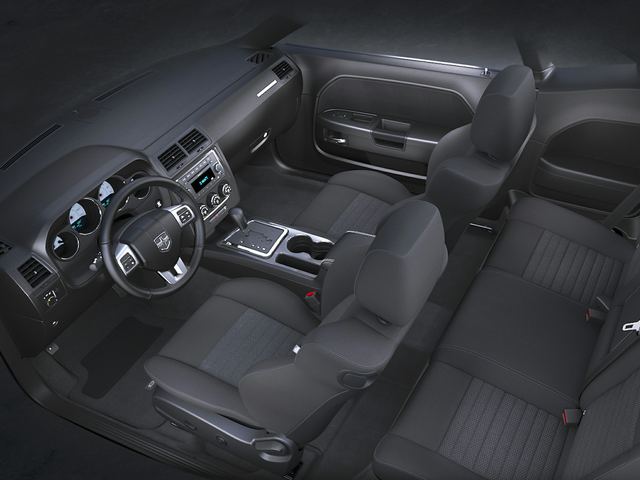
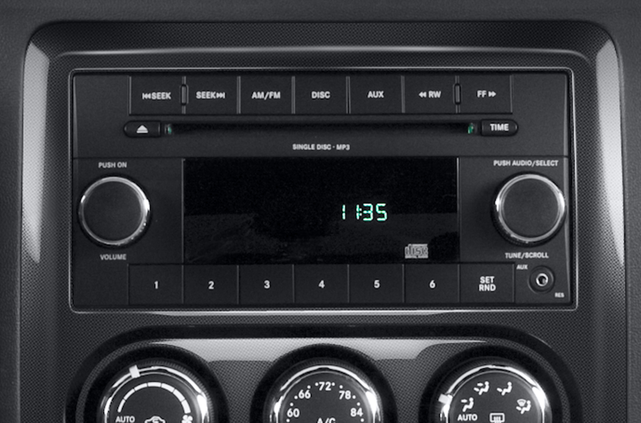
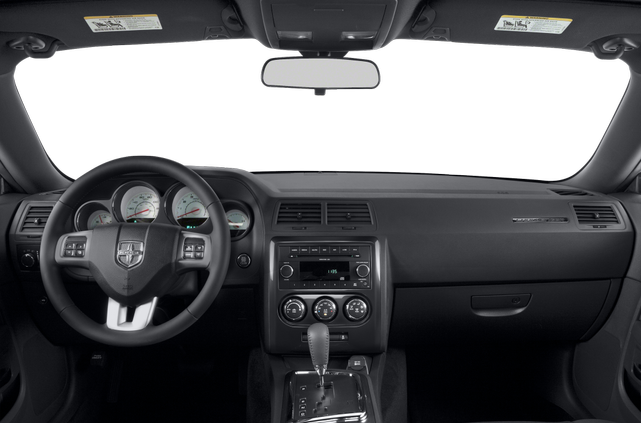
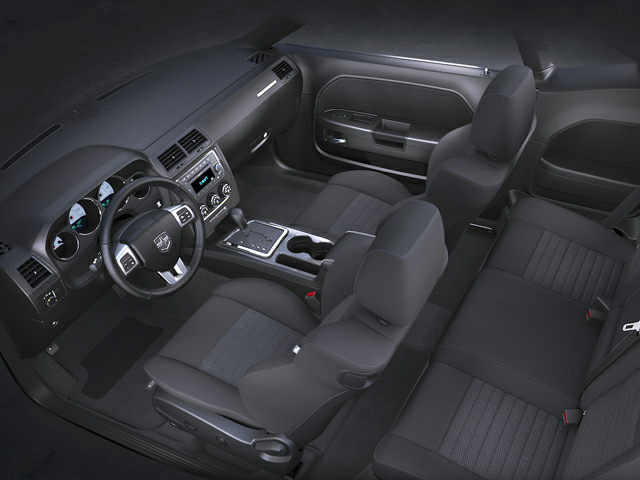
Compared with the Mustang’s or Camaro’s interior, the Challenger’s cabin looks plain despite the use of nice materials overall. Both the Ford and Chevrolet have much stronger retro cues than the Challenger, and those cues drive the distinctiveness of those cars’ interiors. The Challenger’s controls, though, are easy to use and logically placed, and that wins it points.

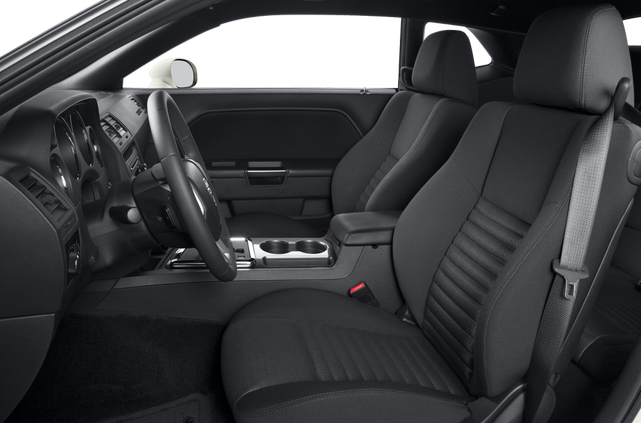
The SRT8’s front bucket seats are appropriately bolstered and wide. The seatbacks, however, are overstuffed. The cushioning presses forward, as if someone ratcheted up the lumbar support when you weren’t looking. The bucket seats in the V-6 Challenger aren’t as form-fitting as the SRT8’s — especially in terms of lateral support — but the cushy, overstuffed feel remains.

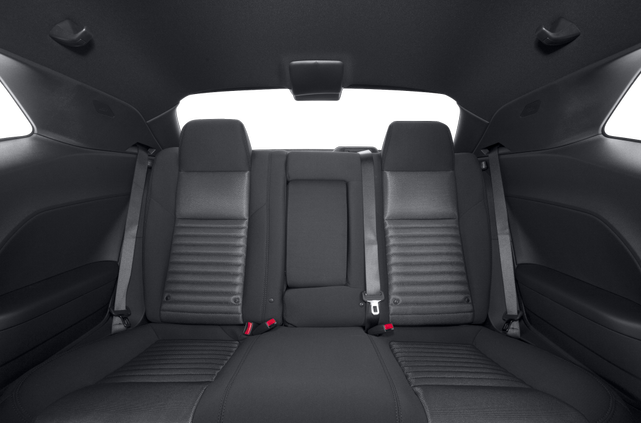
For a coupe, backseat comfort is pretty good for adult passengers. Headroom is passable, and the seat provides decent support. The limiting factor is legroom, but it’s workable if the person in front is willing to share.

Less appealing is the lack of visibility that backseat passengers suffer; they won’t see much out the sides because of those big C-pillars. Our test car’s all-black interior also contributed to the backseat’s cave-like vibe.

Safety
As of publication, the Challenger hadn’t been crash-tested by the Insurance Institute for Highway Safety. Nor had it been subjected to the National Highway Traffic Safety Administration’s new crash-test program for 2011 and newer cars.

Standard safety features include required equipment like antilock brakes and an electronic stability system. Also standard are side-impact airbags for the front seats, side curtain airbags and active front head restraints. The Standard Equipment & Options page lists more safety features. To see how child-safety seats fit in the Challenger, check out MotherProof.com’s Car Seat Check.

Challenger in the Market
Of the modern-day muscle cars, the Challenger — especially in SRT8 form — holds closest to the original formula of blistering straight-line speed matched with hulking road presence. Both the Mustang and Camaro have retro styling cues, but they’re decidedly more modern overall compared with the Challenger’s look.

Even though there’s a modern car underneath the Challenger’s throwback sheet metal, the design’s close adherence to the past will be too much for some shoppers. If you’re a muscle-car fan looking to relive your youth, though, the Dodge Challenger is the purest thing available from a new-car showroom.

Send Mike an email  
Senior Road Test Editor

I oversee Cars.com’s testing-related Editorial content, from our expert car reviews and videos to our multivehicle comparison tests. I’ve been covering the auto industry for more than 20 years, with a focus on helping shoppers find the right car for them. I’m a member of the Midwest Automotive Media Association, and I’m also a juror for the North American Car, Truck and Utility Vehicle of the Year awards. My daily driver is a Honda Odyssey minivan; my very occasional driver is a Ford Focus that’s prepped for cheap endurance racing.

2012 Dodge Challenger review: Our expert's take

The 2012 Dodge Challenger is the kind of car that can bring a smile to the face of even the most jaded car enthusiast. Try as you might, it’s impossible to escape the considerable charm of this ultimate modern-day boulevard cruiser.

The Challenger’s classic muscle car styling will draw you in, but its refined ride and handling and spacious interior make this big coupe appealing to drive.

We tested two versions of the Challenger: a V-6 version with an as-tested price of $33,590 and the high-performance SRT8 with a sticker price of $48,320. For a side-by-side comparison with the Challenger’s two closest competitors — the Ford Mustang and Chevrolet Camaro — click here.

Styling Consequences
The Challenger is a rolling homage to the original coupe, which was produced in the early 1970s. It takes many of the original’s design cues — hood slits, a rectangular grille and pronounced rear haunches — and incorporates them in a modern way. To Dodge’s credit, the result is a coupe that both recalls the past and looks contemporary. That’s not an easy feat.

There are reasons why cars no longer look like they did in the ’70s, and the modern-day Challenger showcases one of them with its poor visibility. A big C-pillar and tall trunk make it hard to check your right-side blind spot. It’s also difficult to see curbs when pulling into the street, as they’re lost behind the car’s huge hood. Plus, the roofline makes it hard to see overhead stoplights when you’re first in line at intersections. Still, the Challenger doesn’t compromise visibility as much as another retro muscle car: the Chevrolet Camaro coupe.

Going & Stopping
The standard 305-horsepower, 3.6-liter V-6 engine is smooth and refined, but it doesn’t have a lot of grunt from a standing start. It comes alive at midrange engine speeds, which leads to more eager acceleration, but it lacks the SRT8 V-8’s appealing exhaust burble that goes so well with the Challenger’s whole outlook. The V-6 gets an EPA-estimated 18/27 mpg city/highway.

Like an NFL linebacker, the Challenger SRT8 possesses a quickness that’s unexpected in something so big and heavy (its curb weight is around two tons). Dodge pegs the Challenger SRT8’s zero-to-60-mph acceleration time in the high 4-second range, and the 470-hp, 6.4-liter V-8 always pulls strongly, whether you’re cruising in the city or accelerating on the highway. A burbling exhaust note is your constant soundtrack, and it erupts into a howl when you floor the gas pedal.

Driven aggressively, the SRT8 is a monster of a car with a knack for intimidation. Slow down, though, and it turns into a docile cruiser. The rumbly exhaust remains, hinting at its performance potential, but a progressive gas pedal and smooth-shifting five-speed automatic transmission make for low-drama driving. Be prepared for frequent fill-ups, though, as the SRT8 is rated 14/23 mpg. Premium gas is recommended.

Getting an automatic SRT8 was a little disappointing initially, as Dodge also offers a six-speed manual, and I like to change gears myself when driving a performance car, but I grew to like the automatic in the big muscle car that is the Challenger.

The transmission is responsive, making quick part-throttle downshifts or full-throttle kickdowns when you press the gas pedal. Steering-wheel-mounted shift paddles, which are new for 2012, let you control gear changes, and despite only a slight shift delay after pressing one of the paddles, I preferred to leave the transmission in Drive and let it do the work — it always seemed to be in the right gear.

Both the V-6 Challenger I tested, which had an optional performance brake package with front and rear vented discs, and the SRT8, with its Brembo-brand brakes, have some of the best brake-pedal feel around. The pedal yields linear, predictable response, and there’s none of the hesitation and jerkiness that plague some cars.

Ride & Handling
The V-6 Challenger is available with an optional performance-tuned suspension. It includes larger front and rear stabilizer bars and higher-rate shocks. In terms of firmness, the setup is similar to the SRT8’s standard adaptive suspension; it’s decidedly firm, but it doesn’t punish you the way some performance cars can.

As another editor noted, the V-6 Challenger’s nose feels lighter than the SRT8’s, and the car is a little more nimble overall. A more balanced weight distribution with fewer pounds over the front wheels deserves some of the credit. The change doesn’t transform the V-6 Challenger into a sporty performer like the Mustang, but it does make it a little more engaging.

The Challenger SRT8 rides well. The coupe floats easily over dips and bumps without becoming unsettled, and its highway stability is impressive. It’s a setup equally well-suited to driving across town or across the country.

The SRT8 also corners better than you’d expect. There’s minimal body roll, and the bolstered sport seats help keep you situated in the cockpit.

The two-mode adaptive suspension, which is new for 2012, contributes to the SRT8’s ride and handling. The Sport mode sets damper compression and rebound to a more aggressive setting without compromising ride comfort too much.

The SRT8 will play along if you aim it down a winding stretch of road, but it doesn’t take long to figure out this isn’t what it was made to do. It’s built for the open road — whether that’s a highway or a wide boulevard.

The coupe’s steering tuning drives this point home. The SRT8’s leather-wrapped steering wheel is big and meaty, and it feels good in your hands, but there’s minimal steering feedback. It’s not any better if you get the V-6.

The Inside
Compared with the Mustang’s or Camaro’s interior, the Challenger’s cabin looks plain despite the use of nice materials overall. Both the Ford and Chevrolet have much stronger retro cues than the Challenger, and those cues drive the distinctiveness of those cars’ interiors. The Challenger’s controls, though, are easy to use and logically placed, and that wins it points.

The SRT8’s front bucket seats are appropriately bolstered and wide. The seatbacks, however, are overstuffed. The cushioning presses forward, as if someone ratcheted up the lumbar support when you weren’t looking. The bucket seats in the V-6 Challenger aren’t as form-fitting as the SRT8’s — especially in terms of lateral support — but the cushy, overstuffed feel remains.

For a coupe, backseat comfort is pretty good for adult passengers. Headroom is passable, and the seat provides decent support. The limiting factor is legroom, but it’s workable if the person in front is willing to share.

Less appealing is the lack of visibility that backseat passengers suffer; they won’t see much out the sides because of those big C-pillars. Our test car’s all-black interior also contributed to the backseat’s cave-like vibe.

Safety
As of publication, the Challenger hadn’t been crash-tested by the Insurance Institute for Highway Safety. Nor had it been subjected to the National Highway Traffic Safety Administration’s new crash-test program for 2011 and newer cars.

Standard safety features include required equipment like antilock brakes and an electronic stability system. Also standard are side-impact airbags for the front seats, side curtain airbags and active front head restraints. The Standard Equipment & Options page lists more safety features. To see how child-safety seats fit in the Challenger, check out MotherProof.com’s Car Seat Check.

Challenger in the Market
Of the modern-day muscle cars, the Challenger — especially in SRT8 form — holds closest to the original formula of blistering straight-line speed matched with hulking road presence. Both the Mustang and Camaro have retro styling cues, but they’re decidedly more modern overall compared with the Challenger’s look.

Even though there’s a modern car underneath the Challenger’s throwback sheet metal, the design’s close adherence to the past will be too much for some shoppers. If you’re a muscle-car fan looking to relive your youth, though, the Dodge Challenger is the purest thing available from a new-car showroom.

Send Mike an email  

Safety review

Based on the 2012 Dodge Challenger base trim
NHTSA crash test and rollover ratings, scored out of 5.
Rollover rating
4 out of 5
11.1%
Risk of rollover
11.1%
Risk of rollover

Factory warranties

Basic
3 years / 36,000 miles
Corrosion
5 years / 100,000 miles
Powertrain
5 years / 100,000 miles
Roadside Assistance
3 years / 36,000 miles

Compare similar vehicles

Select cars to compare for more detailed info.
  • 2012
    Dodge Challenger
    Starts at
    $25,195
    MPG
    18 City / 27 Hwy
    Seat capacity
    5
    Engine
    Gas V6
    Drivetrain
    Rear-wheel drive
    Compare
  • 2014
    Dodge Charger
    Starts at
    $26,995
    MPG
    19 City / 31 Hwy
    Seat capacity
    5
    Engine
    Regular Unleaded V-6
    Drivetrain
    Rear-wheel drive
    Compare
  • 2010
    Chevrolet Camaro
    Starts at
    $22,680
    MPG
    18 City / 29 Hwy
    Seat capacity
    4
    Engine
    Gas V6
    Drivetrain
    Rear-wheel drive
    Compare
  • 2015
    Dodge Challenger
    Starts at
    $26,995
    MPG
    15 City / 23 Hwy
    Seat capacity
    5
    Engine
    Intercooled Supercharger Premium Unleaded V-8
    Drivetrain
    Rear-wheel drive
    Compare

Consumer reviews

No reviews yet

This car doesn’t have a consumer review yet.
Write the first review

Latest Challenger stories

See all Dodge Challenger articles

Dodge dealers near you

FAQ

What trim levels are available for the 2012 Dodge Challenger?

The 2012 Dodge Challenger is available in 8 trim levels:

  • R/T (1 style)
  • R/T Classic (1 style)
  • R/T Plus (1 style)
  • Rallye Redline (1 style)
  • SRT8 392 (1 style)
  • SXT (1 style)
  • SXT Plus (1 style)
  • Yellow Jacket (1 style)

What is the MPG of the 2012 Dodge Challenger?

The 2012 Dodge Challenger offers up to 18 MPG in city driving and 27 MPG on the highway. These figures are based on EPA mileage ratings and are for comparison purposes only. The actual mileage will vary depending on vehicle options, trim level, driving conditions, driving habits, vehicle maintenance, and other factors.

What are some similar vehicles and competitors of the 2012 Dodge Challenger?

The 2012 Dodge Challenger compares to and/or competes against the following vehicles:

Dodge Challenger history

Your list was successfully saved.


Save list Compare
[{"cat":"coupeconvertible_coupe","stock_type":"used","bodystyle":"Coupe","page_type":"research/make-model-year","oem_page":false,"search_fuel_types":["Gasoline Fuel"]}]