




2026 2025 2024 2023 2022 2021 2020 2019 2018 2017 2016 2015 2014 2013 2012 2011 2010 2009 2008 2007 2006 2005 2004 2003 2002 2001 2000 1999 1998 1997 1996 1995 1994 1993 1992
Toyota 4Runner

No Reviews
Shop options
$17,950
Avg. listing price
New 1994 Toyota 4Runner
Shop the 1994 Toyota 4Runner
Browse cars & save your favorites
Dealers near you
Find & contact a dealership near you
Listings near 60606
Change location See all listings

The good & the bad

This vehicle doesn't have any good or bad insights yet.

Use our comparison tool to look at this model side-by-side with other vehicles or view the full specifications list .

Start your comparison

Available trims

See the differences side-by-side to compare trims.
  • 4dr 5-Spd 4WDemand
    Shop this trim See all specs
  • 4dr V6 Auto 2WD
    Avg. price
    $17,950
    Shop this trim See all specs
  • 4dr 5-Spd V6 4WDemand
    Shop this trim See all specs
  • 4dr Auto V6 4WD
    Shop this trim See all specs

Consumer reviews

No reviews yet

This car doesn’t have a consumer review yet.
Write the first review

1994 Toyota 4Runner review: Our expert's take

By Cars.com Editors

A phrenologist is one who reads the bumps on your noggin to determine whether your future holds wealth, fame, fortune or more lumps on the head.

Owners of the Toyota 4Runner are the phrenologist’s best customer, or at least they should be based on the weak . . . er, week we spent banging the dome on the Japanese-built sport-utility vehicle.

In just seven days with the machine, we have enough dents and assorted bumps on the noggin to keep a dozen phrenologists employed.

The dimpled dome is a result of the 4Runner standing rather high off the pavement to allow ample clearance for those two or three times in any owner’s lifetime when he or she navigates the machine off the road.

Step on the running board, grab the steering wheel, lift your torso into the air and-“Bong!”-one more point of interest for the phrenologist. Stars appear. Birds start to chatter. Tough way to start your drive to work.

Once seated and the medication takes effect, there are a few other problems with the 4Runner. For one, though most Japanese have adopted the strategy that if you are going to sell here, you should design and build here, 4Runner obviously is the exception to the rule.

It’s traditionally narrow to accommodate the smaller Japanese frame as well as the smaller roadways in the home country. So you suffer a shortage of leg and hip room.

Worse, when your vision clears and you peer at the steering wheel hub there’s no “SRS” advisory staring back at you to inform the driver that a supplemental restraint system, or air bag, is housed there. One is needed.

4Runner has one other annoyance that can prove costly in terms of cleaning bills. It’s easy to rub your legs against the door lip and running board when leaving the front seat. In back you sit over the axle and the door opening exposes the wheel well, which you can rub against when making an exit. You have to wash the vehicle often in the winter when salt and scum cakes up on the body, or wash your clothes a lot if you don’t.

But 4Runner does have its good points, such as a responsive 3-liter, 150-horsepower, V-6 engine that comes alive without too much pedal pressure. The price you pay for above-average performance is a 14 mile-per-gallon city/16 m.p.g. highway fuel economy rating. If only our test vehicle got that good mileage.

Anti-lock brakes as standard, although it is rear-wheel ABS only. But two wheels with ABS are better than none. Think the phrenologist said that.

No qualms with the suspension system, which minimized road harshness. Ride and handling were decent despite having oversized W/31-by-10.5 tires, which on many vehicles only serve to provide a gyroscope ride as you lean and sway in each turn or when stepping out to pass.

Though the vehicle had oversized tires and a high center of gravity, it had more than respectable road manners.

4Runner prov ed especially functional when Ma Nature left many inches of the white stuff on the roadway. While those around us were slipping and sliding and using the ditch for valet parking, 4Runner cruised unimpeded. The only drawback is that when four-wheel-drive is engaged using the floor-mounted transfer case, the ride gets a bit bumpy-especially in the back seat.

That’s the price you pay for the added security. And speaking of price, when you see other cars skating into the ditch ahead of you, you find that the 14/16 mileage rating is a bit more tolerable. You can buy a lot of gas for what it costs to be extracted from a culvert-even if you have to buy it more often.

Our test vehicle was the four-door, four-wheel-drive 4Runner LE, which has a base price of $22,988. Standard equipment included a four-speed automatic, power steering, power brakes, rear window defogger and wiper (a slightly larger and faster sweeping wiper would be nice for a vehicle tha will spend a great deal of time on the road in bad weather), power rear window, AM-FM stereo radio, side door impact beams and cupholders.

Options included a radio upgrade to include cassette, six speakers and power antenna for $675, rear seat heater at $160, power glass moonroof at $810, cloth seats with seven-way driver’s adjustment at $290, bronze privacy glass at $160, chrome running boards at $435, roof rack/towing hitch, cargo mat and rear wind deflector at $625, security system at $695, and a value package consisting of air conditioning, cruise control, power windows/door locks/outside mirrors, carpeted floor mats, chrome wheels and the oversized tires at $3,281. With a $1,000 option package discount, the vehicle stickered at just about $30,000. Add $385 for freight.

Changes we’d like to see on future 4Runners would be more cabin width, lower vehicle stance, redesign of the door lips and openings to keep clothes clean, push-button four-wheel-drive rather than the space-robbing transfer case, and an engine that gets 4 more miles per gallon city and highway.

Oh, and if the engineers and designers can’t come up with a more manageable way to enter the 4Runner as well as making the door opening bigger and/or the roof line taller if not softer, we’d like to see one more standard feature-a helmet.
Read full review
1994 Toyota 4Runner review: Our expert's take
By Cars.com Editors

A phrenologist is one who reads the bumps on your noggin to determine whether your future holds wealth, fame, fortune or more lumps on the head.

Owners of the Toyota 4Runner are the phrenologist’s best customer, or at least they should be based on the weak . . . er, week we spent banging the dome on the Japanese-built sport-utility vehicle.

In just seven days with the machine, we have enough dents and assorted bumps on the noggin to keep a dozen phrenologists employed.

The dimpled dome is a result of the 4Runner standing rather high off the pavement to allow ample clearance for those two or three times in any owner’s lifetime when he or she navigates the machine off the road.

Step on the running board, grab the steering wheel, lift your torso into the air and-“Bong!”-one more point of interest for the phrenologist. Stars appear. Birds start to chatter. Tough way to start your drive to work.

Once seated and the medication takes effect, there are a few other problems with the 4Runner. For one, though most Japanese have adopted the strategy that if you are going to sell here, you should design and build here, 4Runner obviously is the exception to the rule.

It’s traditionally narrow to accommodate the smaller Japanese frame as well as the smaller roadways in the home country. So you suffer a shortage of leg and hip room.

Worse, when your vision clears and you peer at the steering wheel hub there’s no “SRS” advisory staring back at you to inform the driver that a supplemental restraint system, or air bag, is housed there. One is needed.

4Runner has one other annoyance that can prove costly in terms of cleaning bills. It’s easy to rub your legs against the door lip and running board when leaving the front seat. In back you sit over the axle and the door opening exposes the wheel well, which you can rub against when making an exit. You have to wash the vehicle often in the winter when salt and scum cakes up on the body, or wash your clothes a lot if you don’t.

But 4Runner does have its good points, such as a responsive 3-liter, 150-horsepower, V-6 engine that comes alive without too much pedal pressure. The price you pay for above-average performance is a 14 mile-per-gallon city/16 m.p.g. highway fuel economy rating. If only our test vehicle got that good mileage.

Anti-lock brakes as standard, although it is rear-wheel ABS only. But two wheels with ABS are better than none. Think the phrenologist said that.

No qualms with the suspension system, which minimized road harshness. Ride and handling were decent despite having oversized W/31-by-10.5 tires, which on many vehicles only serve to provide a gyroscope ride as you lean and sway in each turn or when stepping out to pass.

Though the vehicle had oversized tires and a high center of gravity, it had more than respectable road manners.

4Runner prov ed especially functional when Ma Nature left many inches of the white stuff on the roadway. While those around us were slipping and sliding and using the ditch for valet parking, 4Runner cruised unimpeded. The only drawback is that when four-wheel-drive is engaged using the floor-mounted transfer case, the ride gets a bit bumpy-especially in the back seat.

That’s the price you pay for the added security. And speaking of price, when you see other cars skating into the ditch ahead of you, you find that the 14/16 mileage rating is a bit more tolerable. You can buy a lot of gas for what it costs to be extracted from a culvert-even if you have to buy it more often.

Our test vehicle was the four-door, four-wheel-drive 4Runner LE, which has a base price of $22,988. Standard equipment included a four-speed automatic, power steering, power brakes, rear window defogger and wiper (a slightly larger and faster sweeping wiper would be nice for a vehicle tha will spend a great deal of time on the road in bad weather), power rear window, AM-FM stereo radio, side door impact beams and cupholders.

Options included a radio upgrade to include cassette, six speakers and power antenna for $675, rear seat heater at $160, power glass moonroof at $810, cloth seats with seven-way driver’s adjustment at $290, bronze privacy glass at $160, chrome running boards at $435, roof rack/towing hitch, cargo mat and rear wind deflector at $625, security system at $695, and a value package consisting of air conditioning, cruise control, power windows/door locks/outside mirrors, carpeted floor mats, chrome wheels and the oversized tires at $3,281. With a $1,000 option package discount, the vehicle stickered at just about $30,000. Add $385 for freight.

Changes we’d like to see on future 4Runners would be more cabin width, lower vehicle stance, redesign of the door lips and openings to keep clothes clean, push-button four-wheel-drive rather than the space-robbing transfer case, and an engine that gets 4 more miles per gallon city and highway.

Oh, and if the engineers and designers can’t come up with a more manageable way to enter the 4Runner as well as making the door opening bigger and/or the roof line taller if not softer, we’d like to see one more standard feature-a helmet.

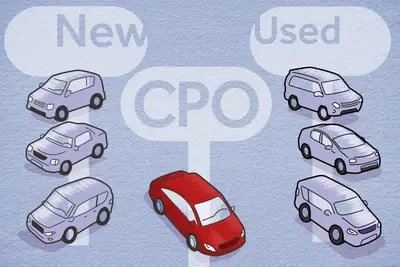
Certified Pre-Owned program benefits

Age / mileage
7 years / less than 85,000 miles
Basic
12 months / 12, 000 miles
Dealer certification
160- or 174-point inspections

Compare similar vehicles

Select cars to compare for more detailed info.
  • 1994
    Toyota 4Runner
    Starts at
    $20,308
    MPG
    -
    Seat capacity
    -
    Engine
    -
    Drivetrain
    -
    Compare
  • 1997
    Lexus LX 450
    Starts at
    $48,700
    MPG
    13 City / 15 Hwy
    Seat capacity
    7
    Engine
    Gas I6
    Drivetrain
    Four-wheel drive
    Compare
  • 1992
    Hyundai ELANTRA
    Starts at
    $8,995
    MPG
    -
    Seat capacity
    -
    Engine
    -
    Drivetrain
    -
    Compare
  • 1992
    Toyota Pickup Truck
    Starts at
    $8,998
    MPG
    -
    Seat capacity
    -
    Engine
    -
    Drivetrain
    -
    Compare
  • 1992
    Toyota 4Runner
    Starts at
    $18,738
    MPG
    -
    Seat capacity
    -
    Engine
    -
    Drivetrain
    -
    Compare
  • 1992
    Chevrolet Caprice
    Starts at
    $17,300
    MPG
    -
    Seat capacity
    -
    Engine
    -
    Drivetrain
    -
    Compare
  • 2001
    Lexus LX 470
    Starts at
    $61,855
    MPG
    13 City / 16 Hwy
    Seat capacity
    8
    Engine
    Gas V8
    Drivetrain
    Four-wheel drive
    Compare
  • Compare more options
    Use our comparison tool to add any vehicle of your choice and see a full list of specifications and features side-by-side.
    Try it now

Toyota dealers near you

Latest 4Runner stories

See all Toyota 4Runner articles

FAQ

What trim levels are available for the 1994 Toyota 4Runner?

The 1994 Toyota 4Runner is available in 1 trim level:

  • (4 styles)

What are some similar vehicles and competitors of the 1994 Toyota 4Runner?

The 1994 Toyota 4Runner compares to and/or competes against the following vehicles:

Toyota 4Runner history

Your list was successfully saved.


Save list Compare
[{"cat":"suv_midsize","stock_type":"used","bodystyle":"SUV","page_type":"research/make-model-year","oem_page":false,"search_fuel_types":[null]}]