



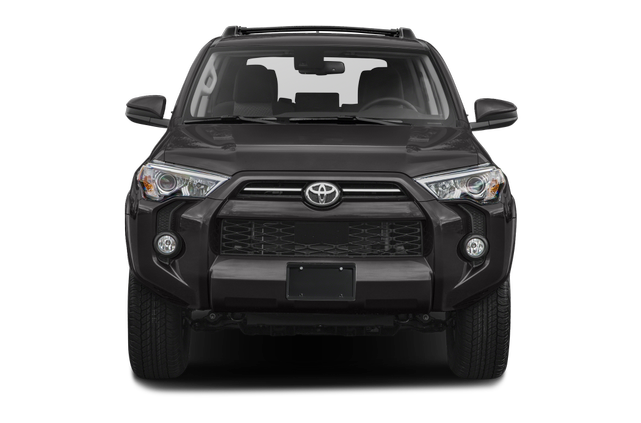
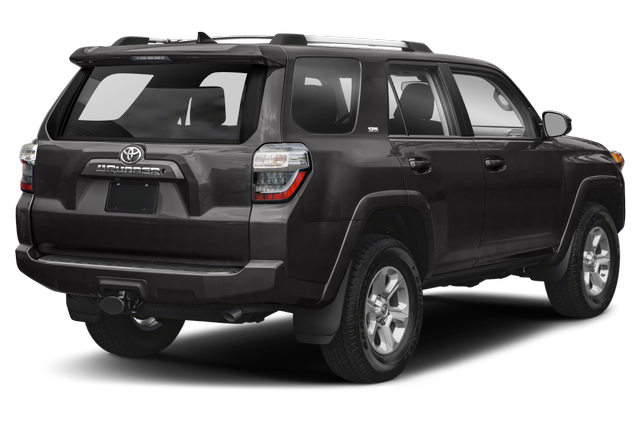
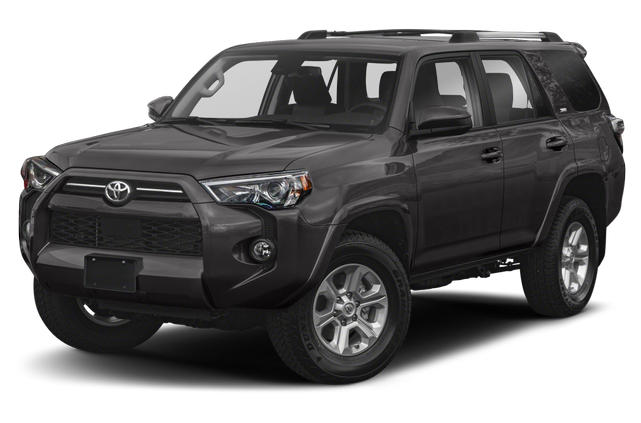
2026 2025 2024 2023 2022 2021 2020 2019 2018 2017 2016 2015 2014 2013 2012 2011 2010 2009 2008 2007 2006 2005 2004 2003 2002 2001 2000 1999 1998 1997 1996 1995 1994 1993 1992
Toyota 4Runner

Shop options
$37,406
Avg. listing price
Shop the 2021 Toyota 4Runner
Browse cars & save your favorites
Dealers near you
Find & contact a dealership near you
Listings near 43287
Change location See all listings

Available trims

See the differences side-by-side to compare trims.
  • SR5 2WD (GS)
    Avg. price
    $31,800
    MPG
    16 City / 19 Hwy
    Seat capacity
    7
    Engine
    Regular Gasoline V-6
    Drivetrain
    Rear Wheel Drive
    Shop this trim See all specs
  • SR5 2WD (SE)
    Avg. price
    $31,800
    MPG
    16 City / 19 Hwy
    Seat capacity
    7
    Engine
    Regular Gasoline V-6
    Drivetrain
    Rear Wheel Drive
    Shop this trim See all specs
  • SR5 2WD (Natl)
    Avg. price
    $31,800
    MPG
    16 City / 19 Hwy
    Seat capacity
    7
    Engine
    Regular Gasoline V-6
    Drivetrain
    Rear Wheel Drive
    Shop this trim See all specs
  • SR5 4WD (SE)
    Avg. price
    $31,800
    MPG
    16 City / 19 Hwy
    Seat capacity
    7
    Engine
    Regular Gasoline V-6
    Drivetrain
    Four Wheel Drive
    Shop this trim See all specs
  • SR5 4WD (GS)
    Avg. price
    $31,800
    MPG
    16 City / 19 Hwy
    Seat capacity
    7
    Engine
    Regular Gasoline V-6
    Drivetrain
    Four Wheel Drive
    Shop this trim See all specs
  • SR5 4WD (Natl)
    Avg. price
    $31,800
    MPG
    16 City / 19 Hwy
    Seat capacity
    7
    Engine
    Regular Gasoline V-6
    Drivetrain
    Four Wheel Drive
    Shop this trim See all specs
  • Trail Special Edition 2WD (SE)
    Avg. price
    $37,170
    MPG
    16 City / 19 Hwy
    Seat capacity
    5
    Engine
    Regular Gasoline V-6
    Drivetrain
    Rear Wheel Drive
    Shop this trim See all specs
  • Trail Special Edition 2WD (GS)
    Avg. price
    $37,170
    MPG
    16 City / 19 Hwy
    Seat capacity
    5
    Engine
    Regular Gasoline V-6
    Drivetrain
    Rear Wheel Drive
    Shop this trim See all specs
  • Trail Special Edition 2WD (Natl)
    Avg. price
    $37,170
    MPG
    16 City / 19 Hwy
    Seat capacity
    5
    Engine
    Regular Gasoline V-6
    Drivetrain
    Rear Wheel Drive
    Shop this trim See all specs
  • SR5 Premium 2WD (SE)
    Avg. price
    $35,812
    MPG
    16 City / 19 Hwy
    Seat capacity
    7
    Engine
    Regular Gasoline V-6
    Drivetrain
    Rear Wheel Drive
    Shop this trim See all specs
  • SR5 Premium 2WD (Natl)
    Avg. price
    $35,812
    MPG
    16 City / 19 Hwy
    Seat capacity
    7
    Engine
    Regular Gasoline V-6
    Drivetrain
    Rear Wheel Drive
    Shop this trim See all specs
  • SR5 Premium 2WD (GS)
    Avg. price
    $35,812
    MPG
    16 City / 19 Hwy
    Seat capacity
    7
    Engine
    Regular Gasoline V-6
    Drivetrain
    Rear Wheel Drive
    Shop this trim See all specs
  • Trail Special Edition 4WD (SE)
    Avg. price
    $37,170
    MPG
    16 City / 19 Hwy
    Seat capacity
    5
    Engine
    Regular Gasoline V-6
    Drivetrain
    Four Wheel Drive
    Shop this trim See all specs
  • Trail Special Edition 4WD (GS)
    Avg. price
    $37,170
    MPG
    16 City / 19 Hwy
    Seat capacity
    5
    Engine
    Regular Gasoline V-6
    Drivetrain
    Four Wheel Drive
    Shop this trim See all specs
  • Trail Special Edition 4WD (Natl)
    Avg. price
    $37,170
    MPG
    16 City / 19 Hwy
    Seat capacity
    5
    Engine
    Regular Gasoline V-6
    Drivetrain
    Four Wheel Drive
    Shop this trim See all specs
  • TRD Off Road 4WD (GS)
    Avg. price
    $36,951
    MPG
    16 City / 19 Hwy
    Seat capacity
    5
    Engine
    Regular Gasoline V-6
    Drivetrain
    Four Wheel Drive
    Shop this trim See all specs
  • TRD Off Road 4WD (SE)
    Avg. price
    $36,951
    MPG
    16 City / 19 Hwy
    Seat capacity
    5
    Engine
    Regular Gasoline V-6
    Drivetrain
    Four Wheel Drive
    Shop this trim See all specs
  • TRD Off Road 4WD (Natl)
    Avg. price
    $36,951
    MPG
    16 City / 19 Hwy
    Seat capacity
    5
    Engine
    Regular Gasoline V-6
    Drivetrain
    Four Wheel Drive
    Shop this trim See all specs
  • SR5 Premium 4WD (GS)
    Avg. price
    $35,812
    MPG
    16 City / 19 Hwy
    Seat capacity
    7
    Engine
    Regular Gasoline V-6
    Drivetrain
    Four Wheel Drive
    Shop this trim See all specs
  • SR5 Premium 4WD (SE)
    Avg. price
    $35,812
    MPG
    16 City / 19 Hwy
    Seat capacity
    7
    Engine
    Regular Gasoline V-6
    Drivetrain
    Four Wheel Drive
    Shop this trim See all specs
  • SR5 Premium 4WD (Natl)
    Avg. price
    $35,812
    MPG
    16 City / 19 Hwy
    Seat capacity
    7
    Engine
    Regular Gasoline V-6
    Drivetrain
    Four Wheel Drive
    Shop this trim See all specs
  • TRD Off Road Premium 4WD (GS)
    Avg. price
    $38,353
    MPG
    16 City / 19 Hwy
    Seat capacity
    5
    Engine
    Regular Gasoline V-6
    Drivetrain
    Four Wheel Drive
    Shop this trim See all specs
  • TRD Off Road Premium 4WD (SE)
    Avg. price
    $38,353
    MPG
    16 City / 19 Hwy
    Seat capacity
    5
    Engine
    Regular Gasoline V-6
    Drivetrain
    Four Wheel Drive
    Shop this trim See all specs
  • TRD Off Road Premium 4WD (Natl)
    Avg. price
    $38,353
    MPG
    16 City / 19 Hwy
    Seat capacity
    5
    Engine
    Regular Gasoline V-6
    Drivetrain
    Four Wheel Drive
    Shop this trim See all specs
  • Venture 4WD (SE)
    Avg. price
    $39,093
    MPG
    16 City / 19 Hwy
    Seat capacity
    5
    Engine
    Regular Gasoline V-6
    Drivetrain
    Four Wheel Drive
    Shop this trim See all specs
  • Venture 4WD (GS)
    Avg. price
    $39,093
    MPG
    16 City / 19 Hwy
    Seat capacity
    5
    Engine
    Regular Gasoline V-6
    Drivetrain
    Four Wheel Drive
    Shop this trim See all specs
  • Venture 4WD (Natl)
    Avg. price
    $39,093
    MPG
    16 City / 19 Hwy
    Seat capacity
    5
    Engine
    Regular Gasoline V-6
    Drivetrain
    Four Wheel Drive
    Shop this trim See all specs
  • Limited 2WD (GS)
    Avg. price
    $38,606
    MPG
    16 City / 19 Hwy
    Seat capacity
    7
    Engine
    Regular Gasoline V-6
    Drivetrain
    Rear Wheel Drive
    Shop this trim See all specs
  • Limited 2WD (SE)
    Avg. price
    $38,606
    MPG
    16 City / 19 Hwy
    Seat capacity
    7
    Engine
    Regular Gasoline V-6
    Drivetrain
    Rear Wheel Drive
    Shop this trim See all specs
  • Limited 2WD (Natl)
    Avg. price
    $38,606
    MPG
    16 City / 19 Hwy
    Seat capacity
    7
    Engine
    Regular Gasoline V-6
    Drivetrain
    Rear Wheel Drive
    Shop this trim See all specs
  • Nightshade 2WD (SE)
    Avg. price
    $39,834
    MPG
    16 City / 19 Hwy
    Seat capacity
    7
    Engine
    Regular Gasoline V-6
    Drivetrain
    Rear Wheel Drive
    Shop this trim See all specs
  • Nightshade 2WD (GS)
    Avg. price
    $39,834
    MPG
    16 City / 19 Hwy
    Seat capacity
    7
    Engine
    Regular Gasoline V-6
    Drivetrain
    Rear Wheel Drive
    Shop this trim See all specs
  • Nightshade 2WD (Natl)
    Avg. price
    $39,834
    MPG
    16 City / 19 Hwy
    Seat capacity
    7
    Engine
    Regular Gasoline V-6
    Drivetrain
    Rear Wheel Drive
    Shop this trim See all specs
  • Limited 4WD (GS)
    Avg. price
    $38,606
    MPG
    16 City / 19 Hwy
    Seat capacity
    7
    Engine
    Regular Gasoline V-6
    Drivetrain
    Four Wheel Drive
    Shop this trim See all specs
  • Limited 4WD (SE)
    Avg. price
    $38,606
    MPG
    16 City / 19 Hwy
    Seat capacity
    7
    Engine
    Regular Gasoline V-6
    Drivetrain
    Four Wheel Drive
    Shop this trim See all specs
  • Limited 4WD (Natl)
    Avg. price
    $38,606
    MPG
    16 City / 19 Hwy
    Seat capacity
    7
    Engine
    Regular Gasoline V-6
    Drivetrain
    Four Wheel Drive
    Shop this trim See all specs
  • Nightshade 4WD (GS)
    Avg. price
    $39,834
    MPG
    16 City / 19 Hwy
    Seat capacity
    7
    Engine
    Regular Gasoline V-6
    Drivetrain
    Four Wheel Drive
    Shop this trim See all specs
  • Nightshade 4WD (SE)
    Avg. price
    $39,834
    MPG
    16 City / 19 Hwy
    Seat capacity
    7
    Engine
    Regular Gasoline V-6
    Drivetrain
    Four Wheel Drive
    Shop this trim See all specs
  • Nightshade 4WD (Natl)
    Avg. price
    $39,834
    MPG
    16 City / 19 Hwy
    Seat capacity
    7
    Engine
    Regular Gasoline V-6
    Drivetrain
    Four Wheel Drive
    Shop this trim See all specs
  • TRD Pro 4WD (SE)
    Avg. price
    $45,717
    MPG
    16 City / 19 Hwy
    Seat capacity
    5
    Engine
    Regular Gasoline V-6
    Drivetrain
    Four Wheel Drive
    Shop this trim See all specs
  • TRD Pro 4WD (GS)
    Avg. price
    $45,717
    MPG
    16 City / 19 Hwy
    Seat capacity
    5
    Engine
    Regular Gasoline V-6
    Drivetrain
    Four Wheel Drive
    Shop this trim See all specs
  • TRD Pro 4WD (Natl)
    Avg. price
    $45,717
    MPG
    16 City / 19 Hwy
    Seat capacity
    5
    Engine
    Regular Gasoline V-6
    Drivetrain
    Four Wheel Drive
    Shop this trim See all specs

Notable features

  • New Trail Edition
  • Seats up to seven with available third row
  • 270-hp V-6 standard
  • Rear- or four-wheel drive
  • Apple CarPlay, Android Auto standard
  • Off-road-oriented TRD Pro version available

The good & the bad

The good

  • Off-road capability
  • 5,000-pound maximum towing capacity
  • Automatic emergency braking standard
  • Sliding cargo floor available

The bad

  • Tall step-in height
  • Busy control layout
  • Clumsy on-road driving manners
  • Fuel economy

Expert 2021 Toyota 4Runner review

Our expert's take
Full article

The verdict: Driving a 2020 Toyota 4Runner on the city streets of my neighborhood was like bringing a moose along to shop for an apartment: It was clumsy, loud and a little daunting. In the right environment, however, this rugged, capable SUV would be right at home.

Versus the competition: The 4Runner’s combination of old-school looks and off-road capability stand out, but other SUVs offer similar off-road abilities with better fuel economy and more comfortable on-road dynamics.

Related: Most Popular All-Wheel-Drive SUVs on Cars.com

Toyota’s large SUV gets a host of updates for 2020, including more standard safety features, an updated multimedia system, and additional USB ports for the backseat. Compare it with the 2019 model. Due to its construction — a rear-wheel-drive platform and off-road emphasis — the 4Runner has few direct competitors, and two are Jeeps: the Wrangler Unlimited and Grand Cherokee. See the models compared. If you’re someone who doesn’t need off-road capability, you might be better off with the slightly larger Toyota Highlander or smaller (externally) RAV4; see those three Toyotas compared.

Fish Out of Water

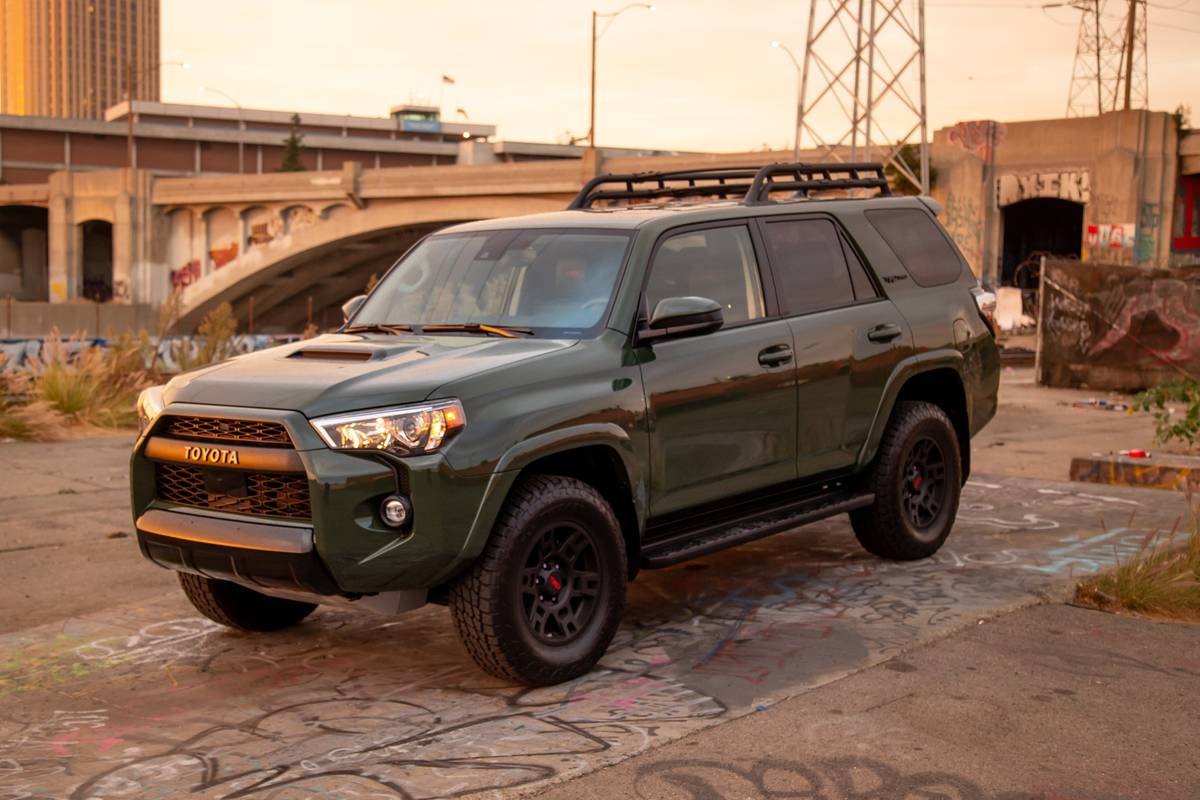
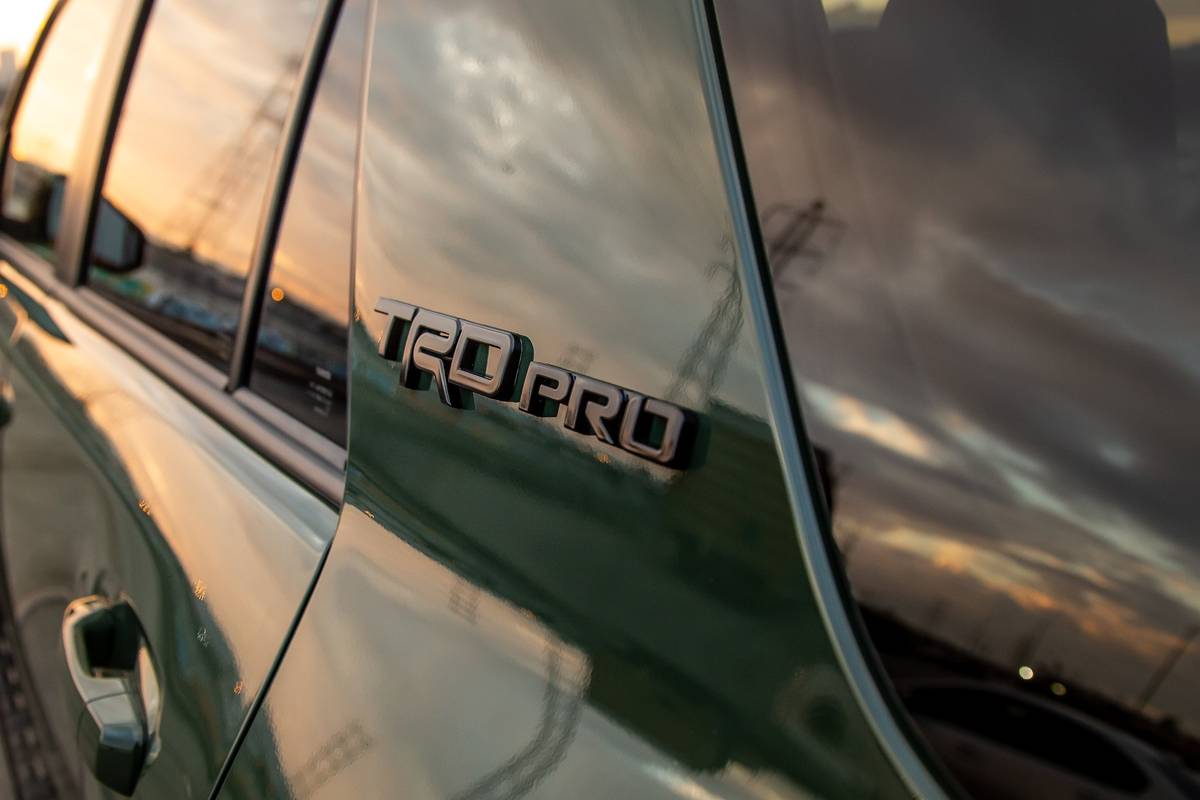
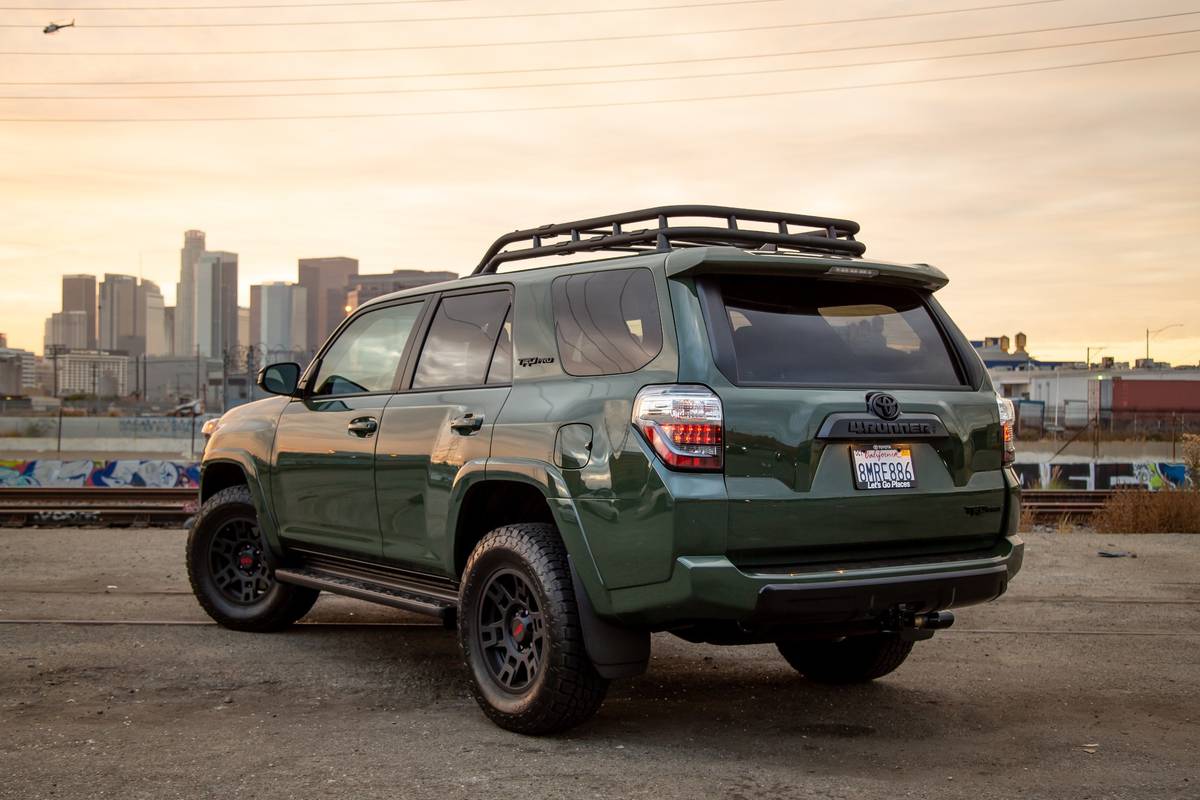
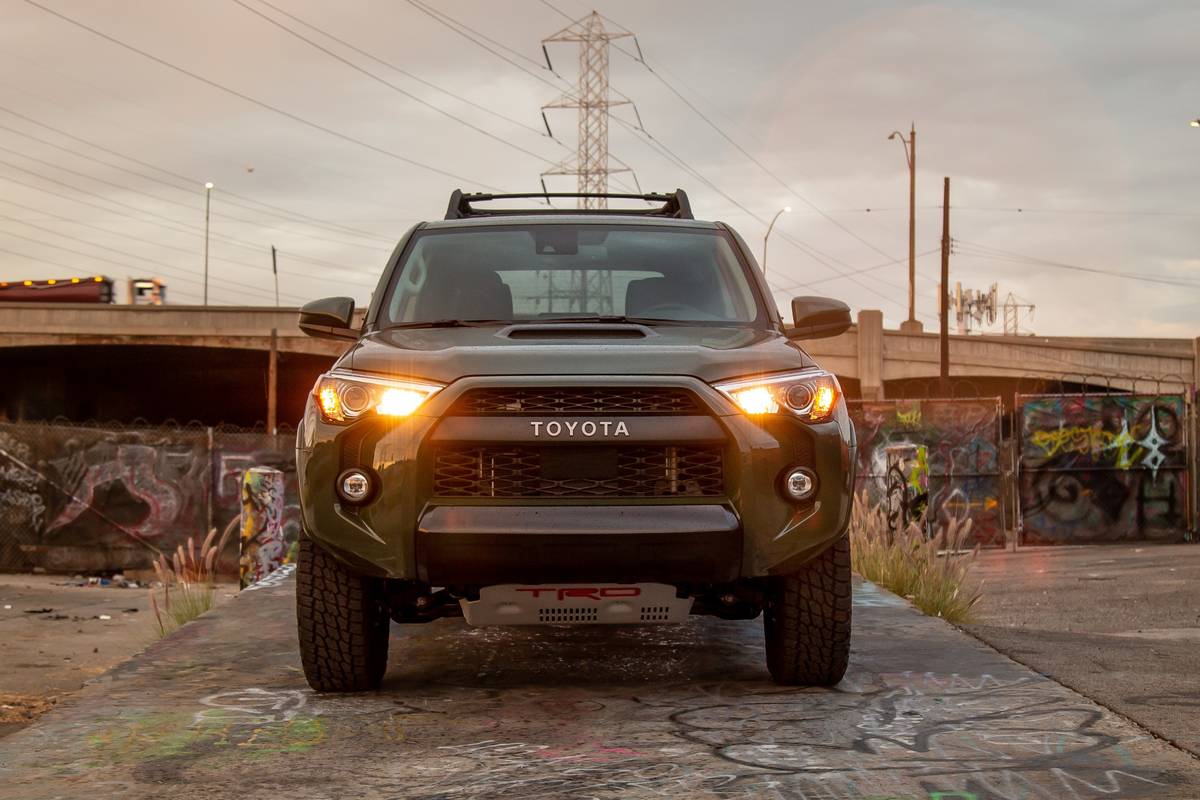
The 4Runner’s throwback body-on-frame construction makes for capable off-road driving but clumsy on-road manners — which were amplified in the off-road-optimized TRD Pro trim level I tested. Another Cars.com editor drove it off road (impressions to come below), but my time was spent exclusively on pavement. Neither the car nor I were very happy about it.

After launching myself into the driver’s seat — the model’s 9.6-inch ground clearance makes for a tall step-in height — I was underwhelmed by just about every aspect of driving the 4Runner, with a couple of exceptions.

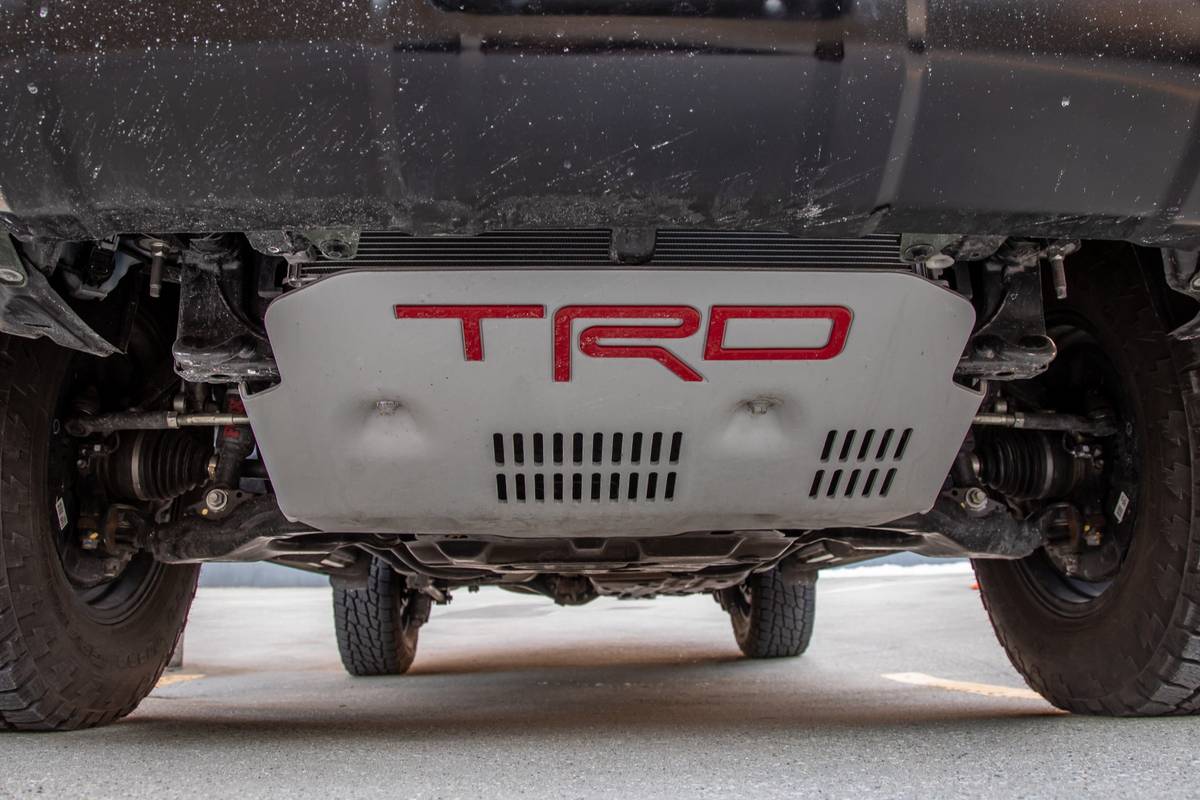
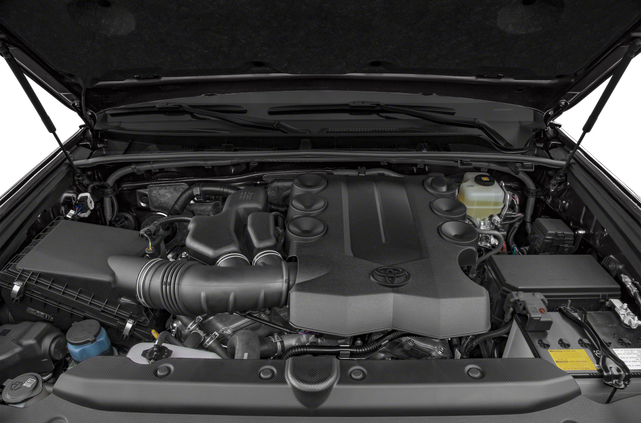
All models come with a 270-horsepower, 4.0-liter V-6. TRD Pro versions come with standard four-wheel drive, while the others can have rear- or four-wheel drive. From a stop, the powertrain chugged to life with a low, slow groan. Toyota says the TRD got a new cat-back exhaust to give it a “powerful-sounding growl,” but the cat sounded more wounded than powerful. That was especially true on the highway, where the powertrain strained and struggled to move all of the SUV’s 4,400 pounds. It’s not quick and power builds slowly (but steadily).

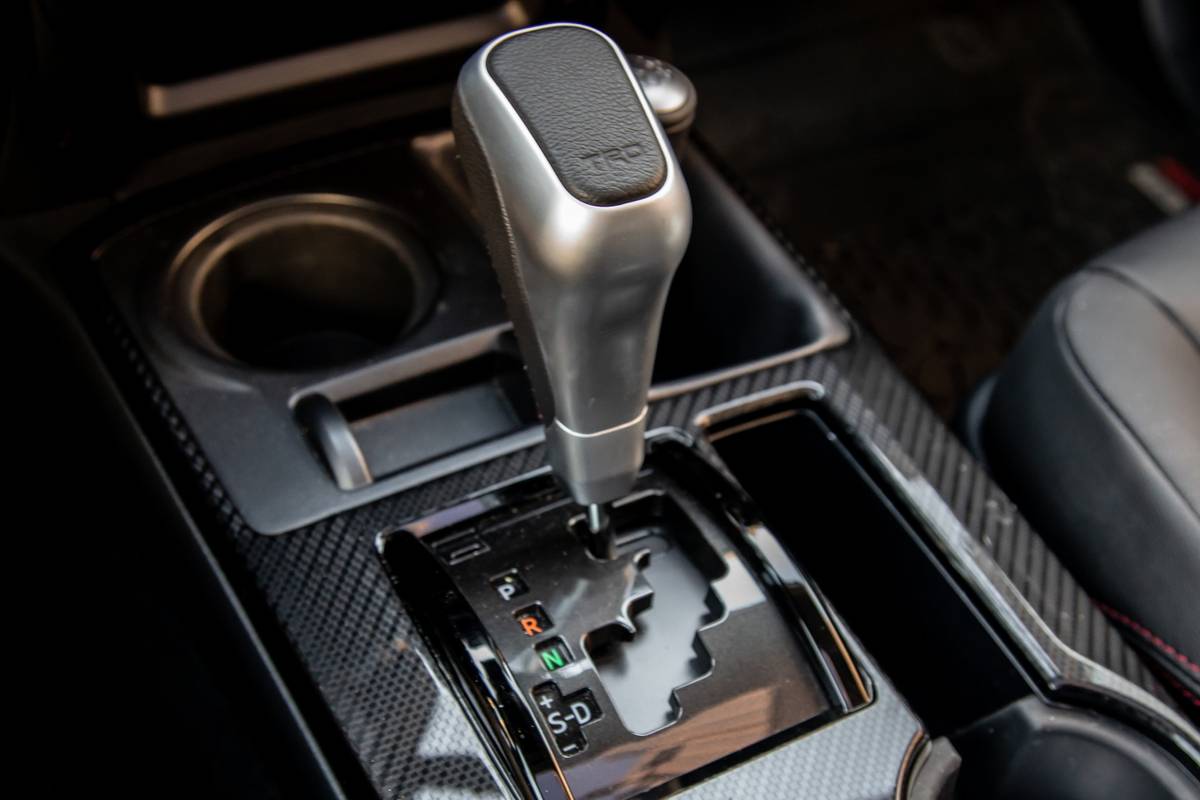
Some more gears would help, but an ancient five-speed automatic is the sole transmission. That would also help with fuel economy. In its base trim, the 4Runner’s EPA-estimated fuel economy is from a prior decade: 16/19/17 mpg city/highway/combined, much lower than a base Grand Cherokee (19/26/21 mpg).

The TRD Pro’s soft suspension, tuned for off-road use, made for a surprisingly cushy ride. There was quite a bit of bounce and wobble, but for the most part, it capably rolled through most potholes and speed bumps with little fuss. Where it felt out of place was in terms of handling, with a lot of pitch and lean in corners that felt sloppy. Its large turning circle also made it a chore to park.

A couple of bad weather days, however, provided an opportunity for the 4Runner to strut its stuff. I drove it through ice and snow and a gross sleety mixture of both with nary a slip or slide; it powered through the heavy, slick precipitation like a tank. During such low-visibility driving, I especially appreciated the commanding view of the road afforded by the 4Runner’s tall ride height and clear forward sight lines.

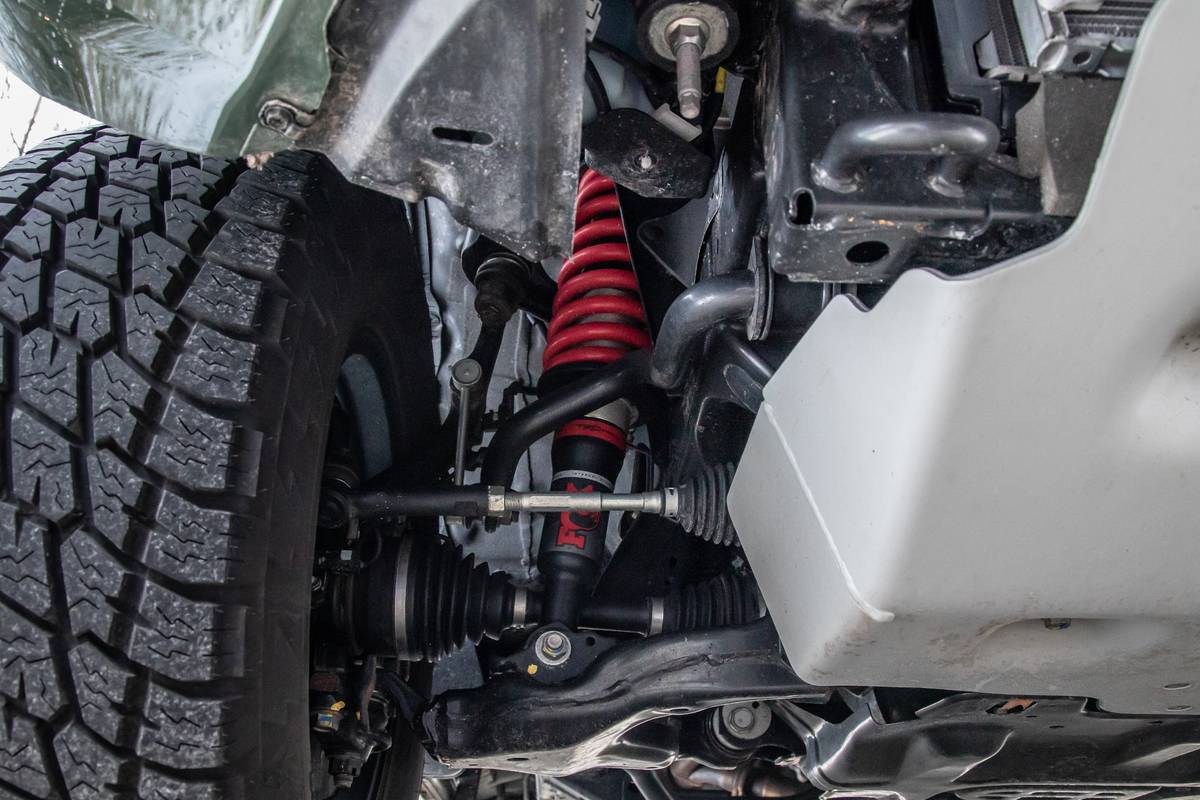
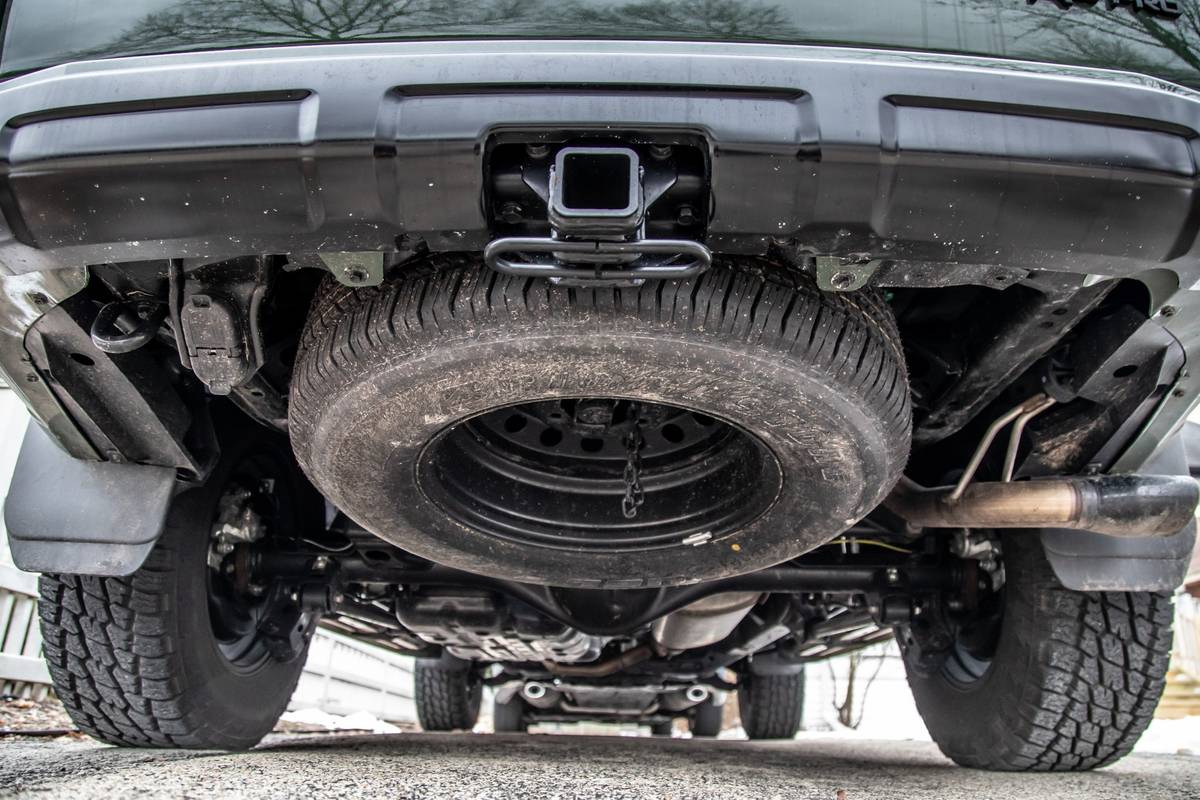
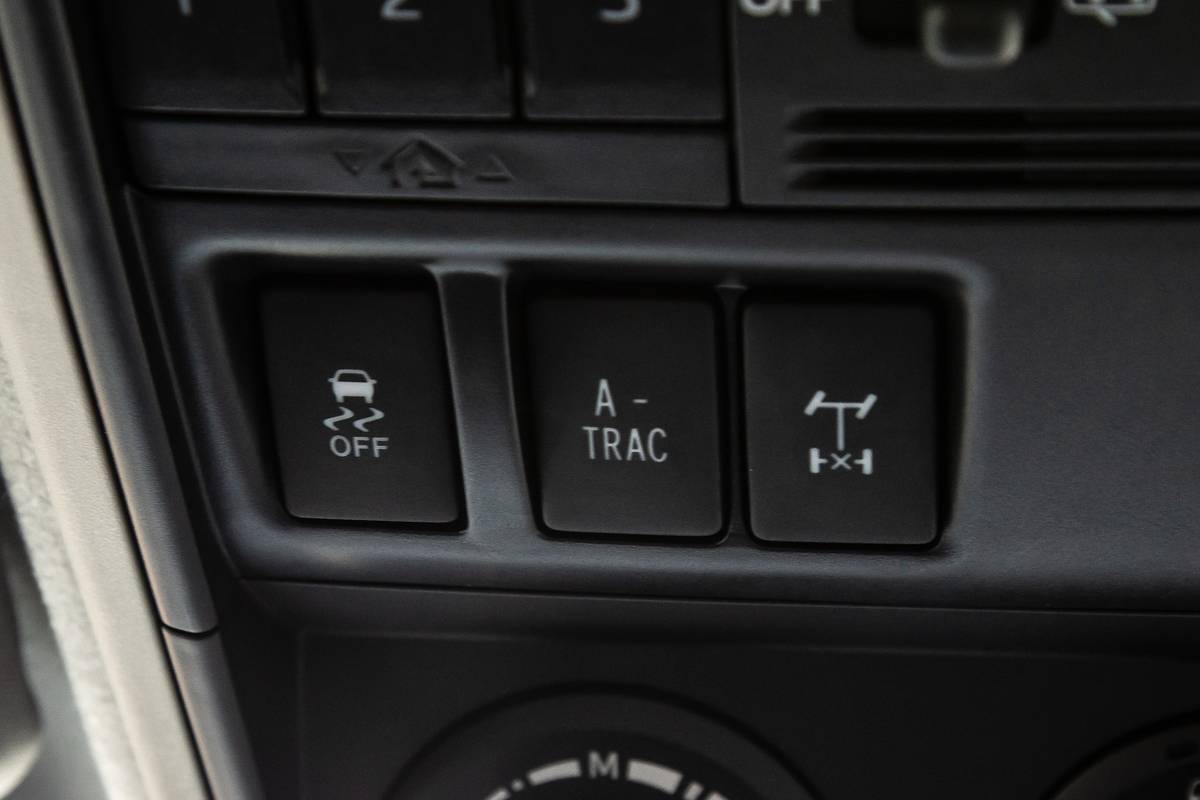
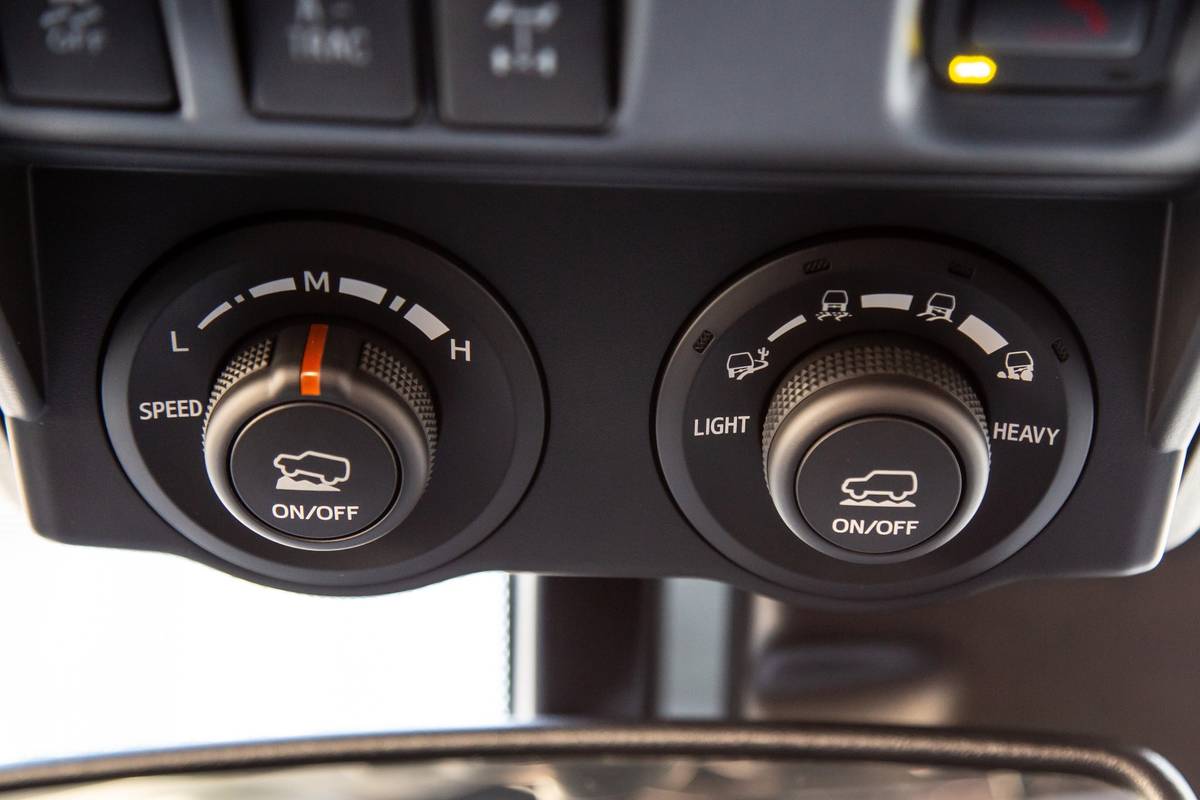
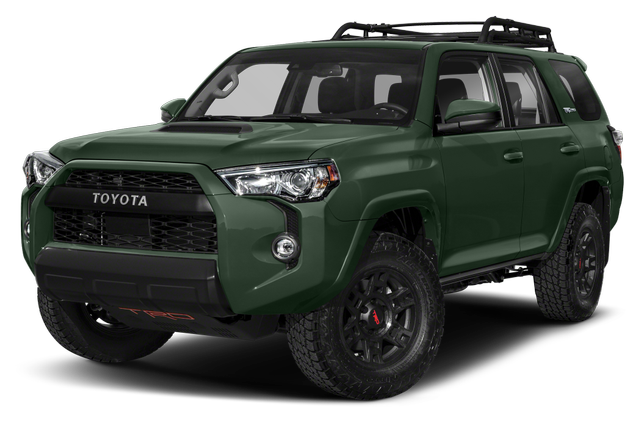
For those able to use the 4Runner TRD Pro how it was intended, the model has a ton of adventure-ready off-road gear: a part-time four-wheel-drive system, a two-speed transfer case with Low range, a selectable locking rear differential, and Toyota’s Multi-Terrain Select traction control system, which allows the settings to be adjusted depending on terrain (dirt, sand, rock, snow, etc.). Toyota’s Crawl Control electronic traction control system, which maintains a constant speed in slow-speed off-road situations, is also standard, as is an Active Traction Control system that distributes torque to one wheel when slippage is detected.

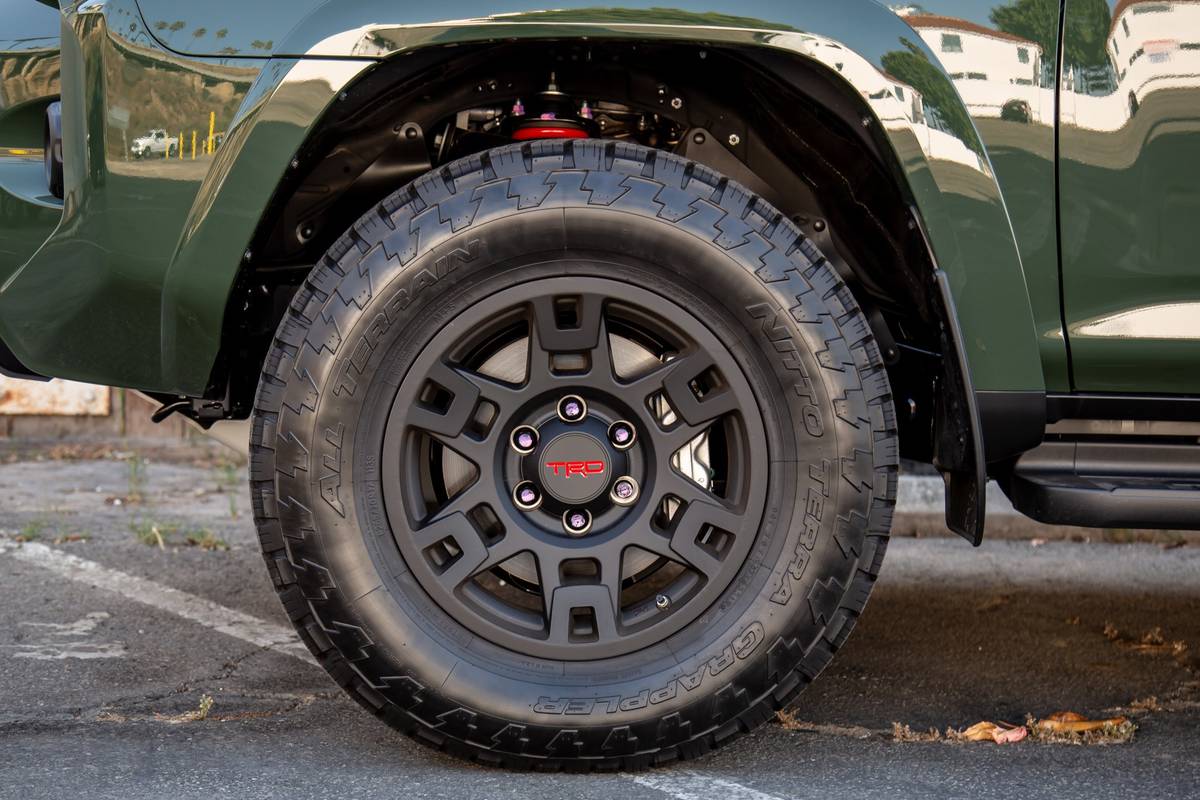
My colleague Brian Wong tested a 2019 4Runner (mechanically identical to the 2020) off-road and said it’s anything but sloppy. The tires were sufficiently grippy, the suspension had plenty of flex, and when the situation got sticky, the excellent Crawl Control system bailed him out. Its upgraded shocks paid the most dividends on gravel or sand — surfaces on which the previous 4Runner TRD Pro model wasn’t entirely comfortable.

Note that the 4Runner can be had in more road-appropriate forms than the TRD, the best of which would be the Limited. It’s the only trim that offers full-time four-wheel drive, which doesn’t need to be deactivated on dry pavement and activated when needed, as does part-time 4WD (to prevent damage). But even in its classiest trim, the 4Runner is more of a truck than most crossovers on the market — which is part of its appeal to some buyers.

Though body-on-frame vehicles often have higher towing capacities, the 4Runner is rated to tow 5,000 pounds. The 2020 Highlander has the same rating, while the 2020 RAV4 tops out at 3,500 pounds in two of its higher trim levels (1,500 pounds is standard).

Control Reboot

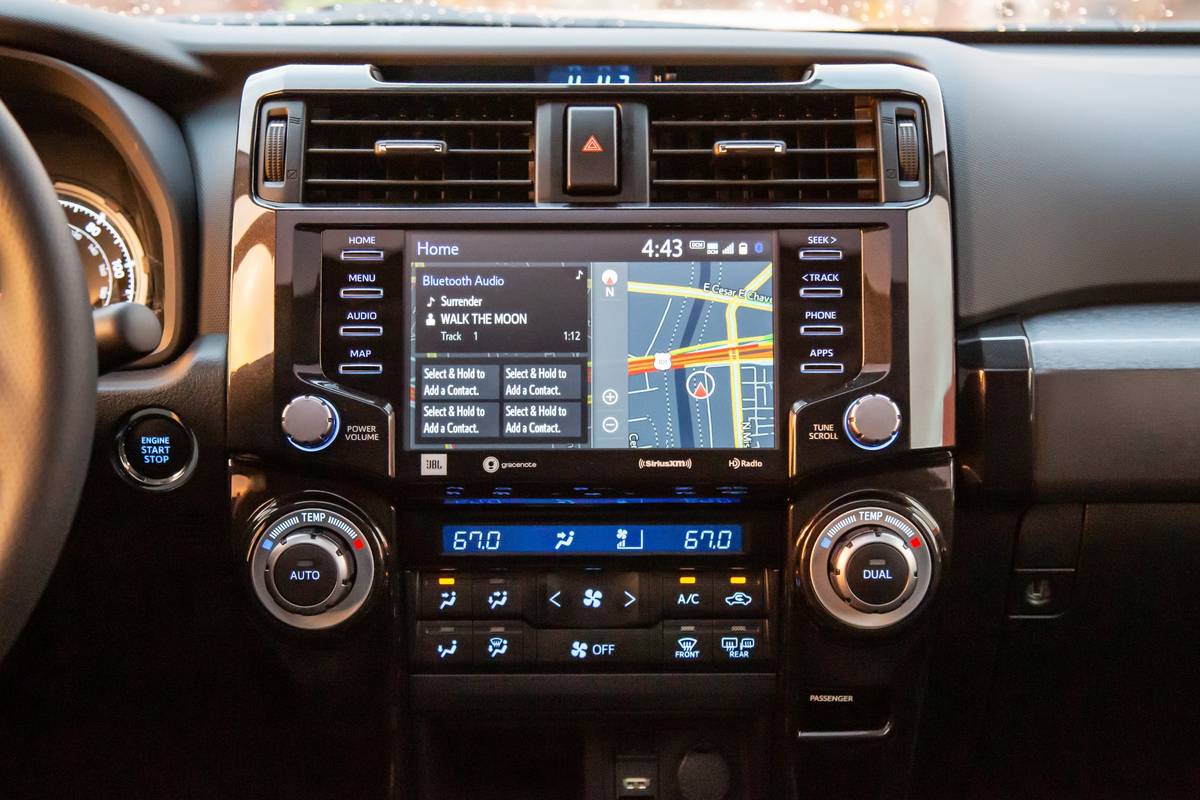
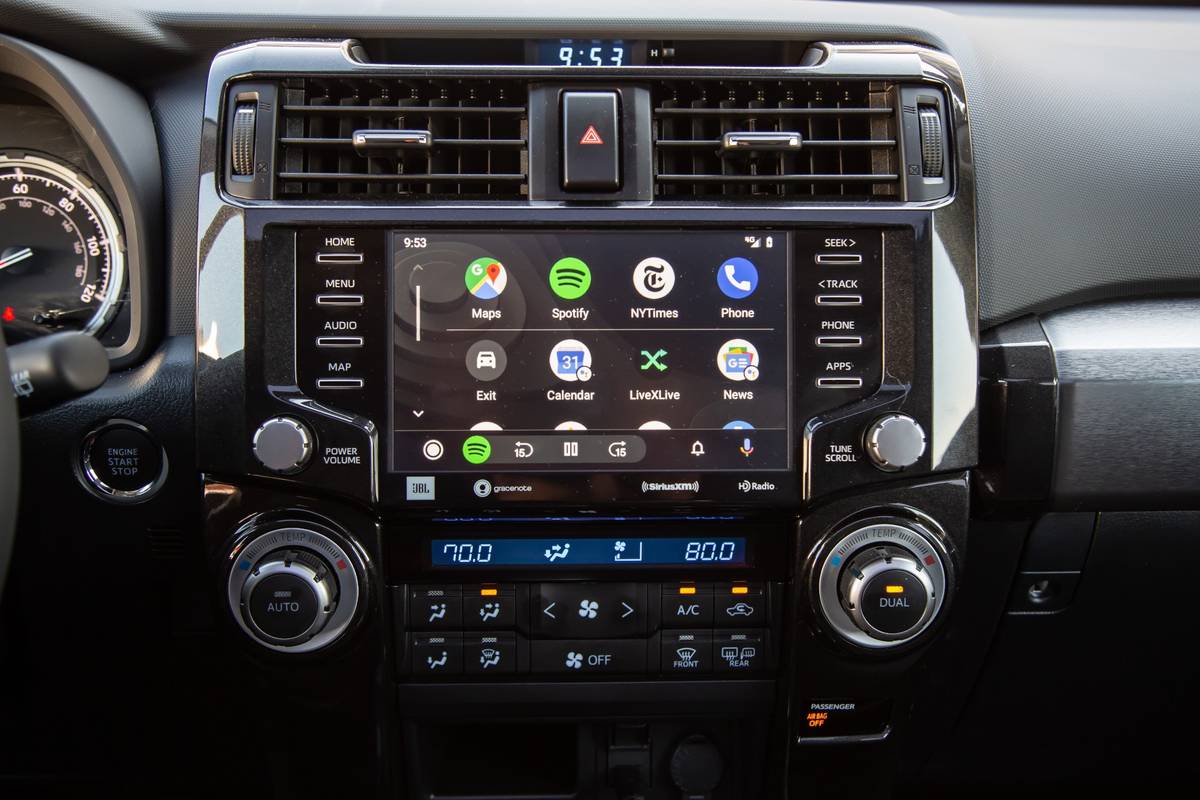
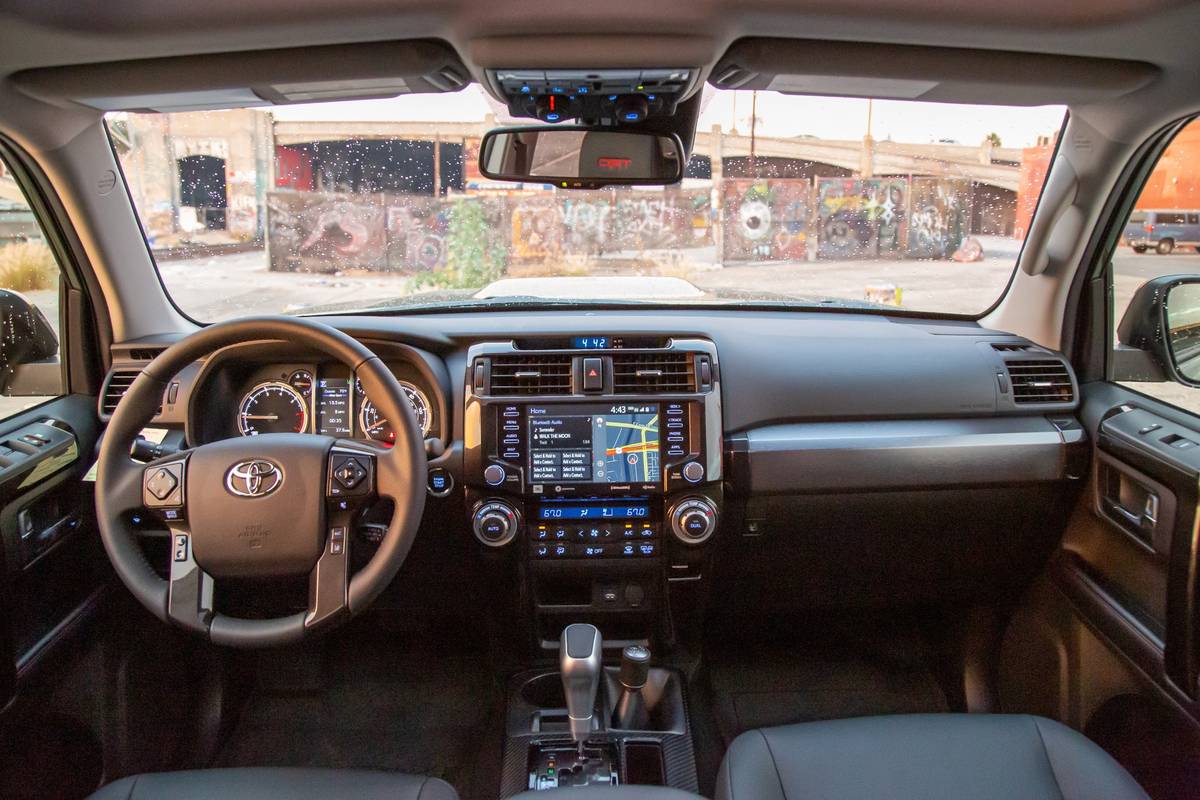
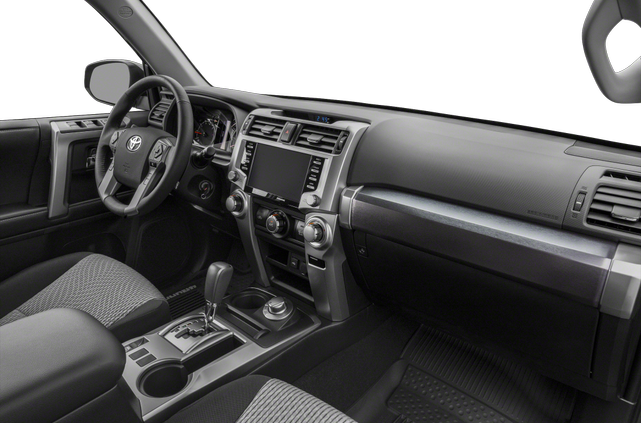
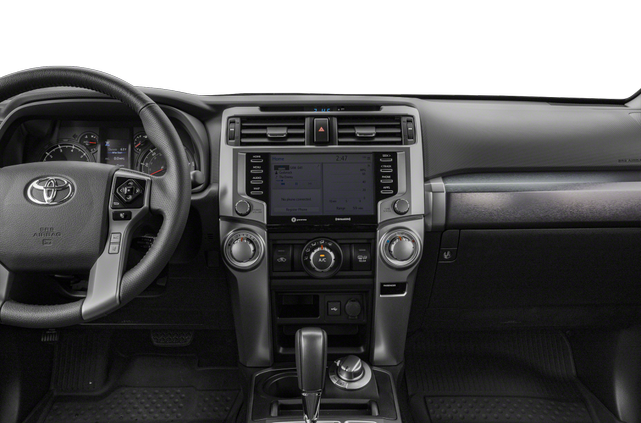
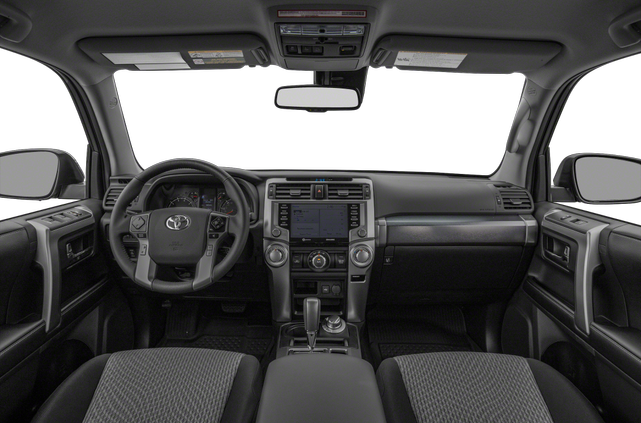
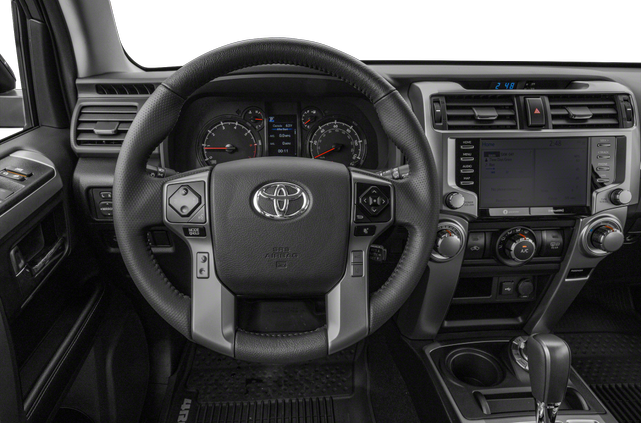
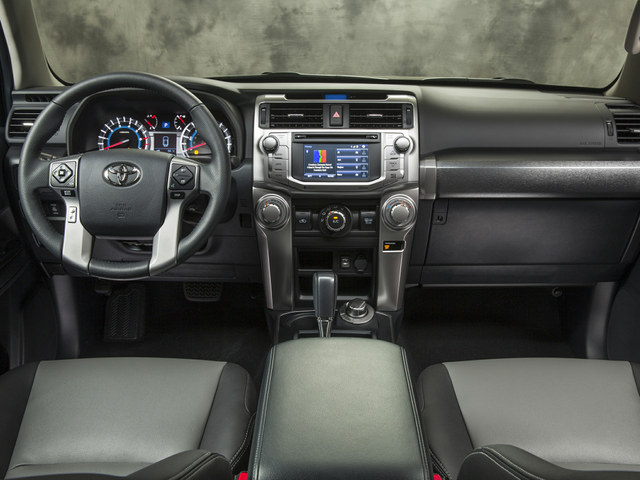
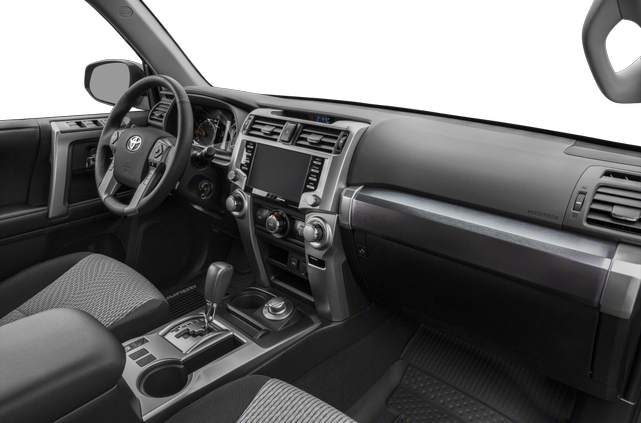
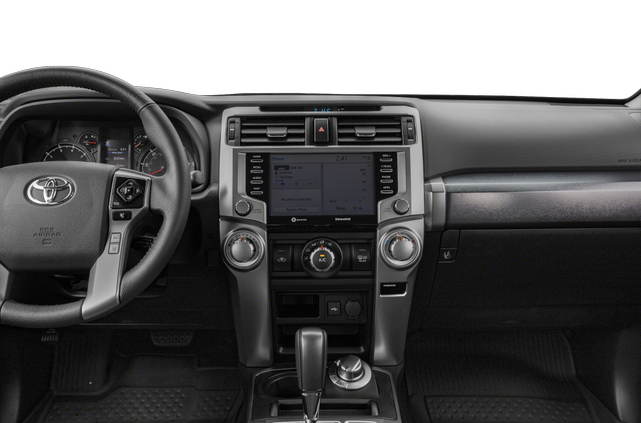
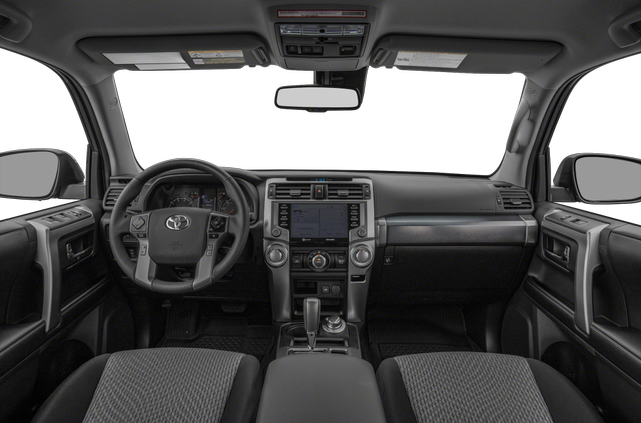
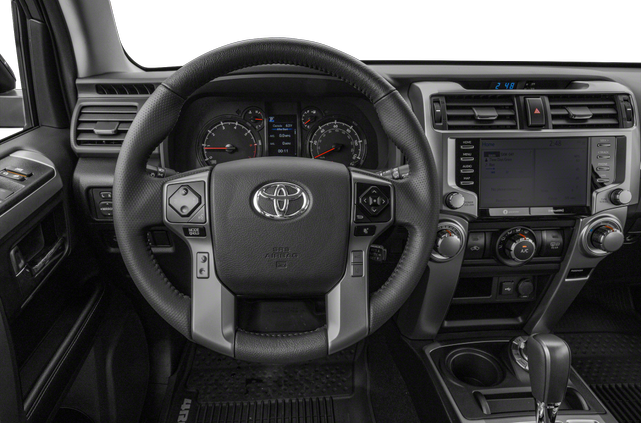
For 2020, the 4Runner’s instrument panel got revised, making it look more modern than in years past, but it’s still not as slick as what you’ll see in competitors — or even in other Toyotas. The 4Runner’s 8-inch touchscreen — up from last year’s tiny 6.1-inch unit — finally has Apple CarPlay and Android Auto compatibility. It’s one of the last Toyota vehicles to begin offering the smartphone integration systems.

While the 8-inch screen is new to the 4Runner, it looks a few years old, with dated graphics and a busy interface comprised of buttons, knobs and panels. It also still seems itty-bitty, nestled as it is in the SUV’s expansive dashboard.

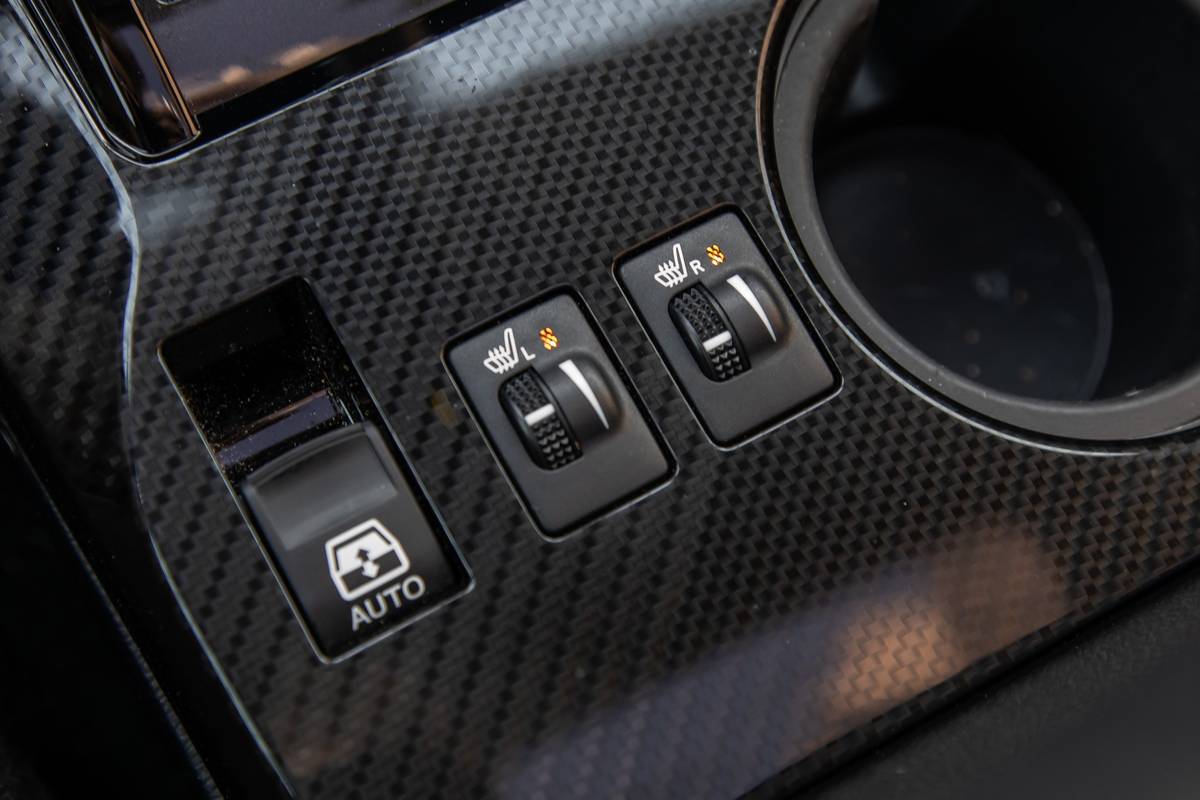
On the plus side, it’s straightforward in terms of usability, as are many of the SUV’s other controls. I found the placement of the window and door-lock controls on the top of the door especially handy, along with large, easy-to-read climate controls under the screen.

Room for Days

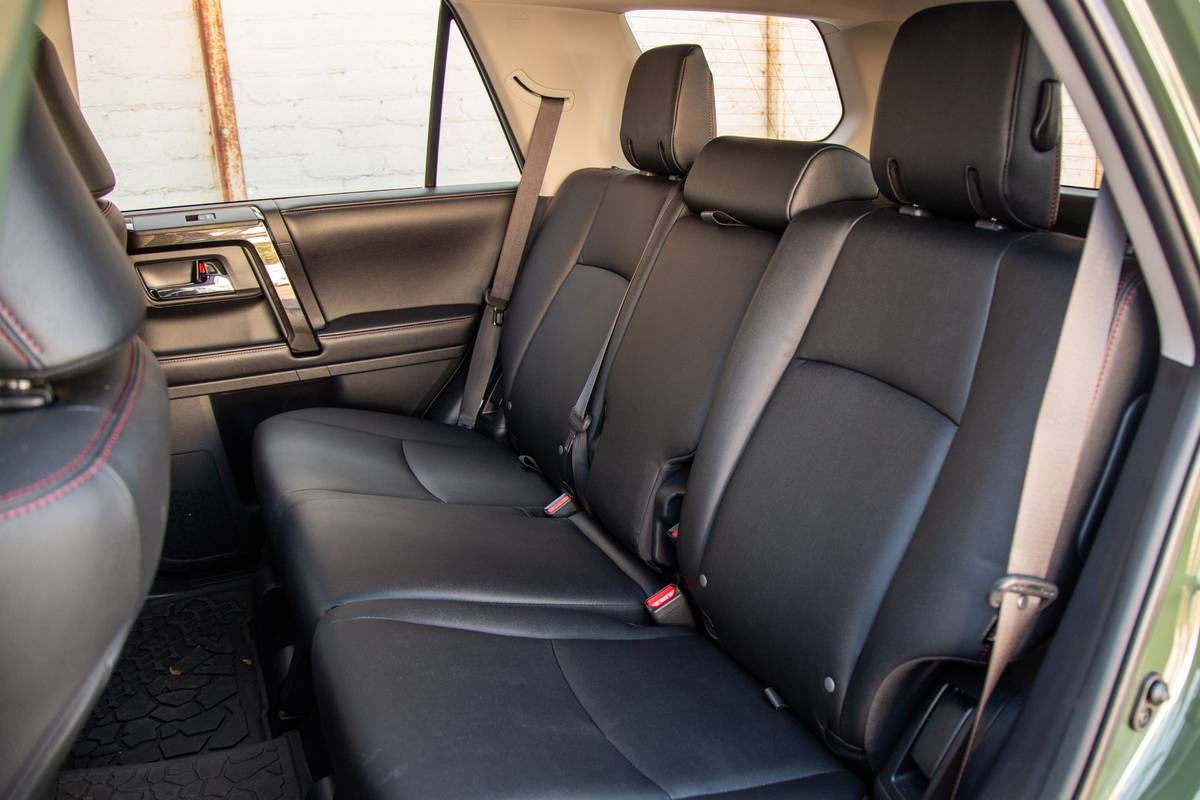
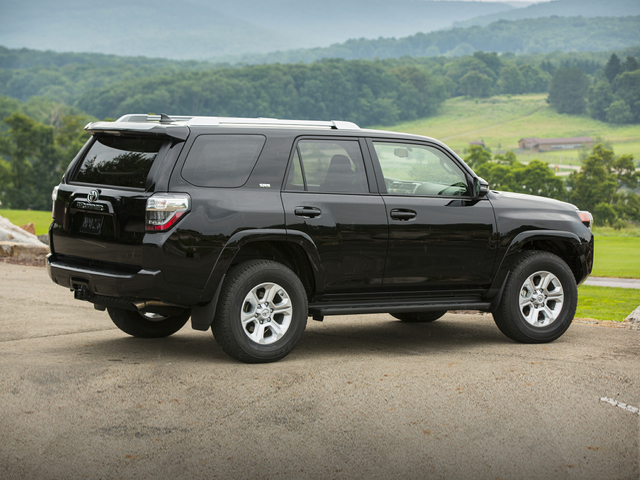
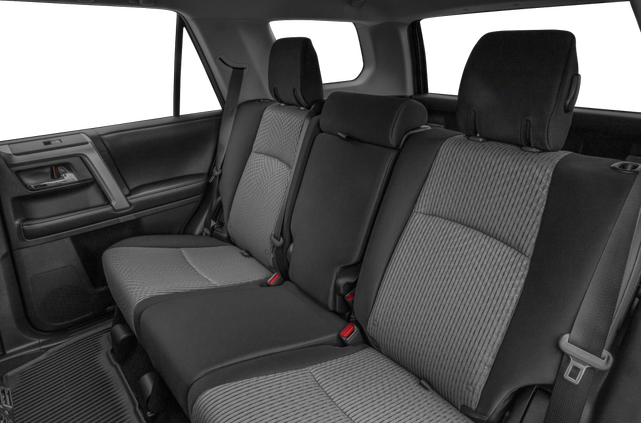
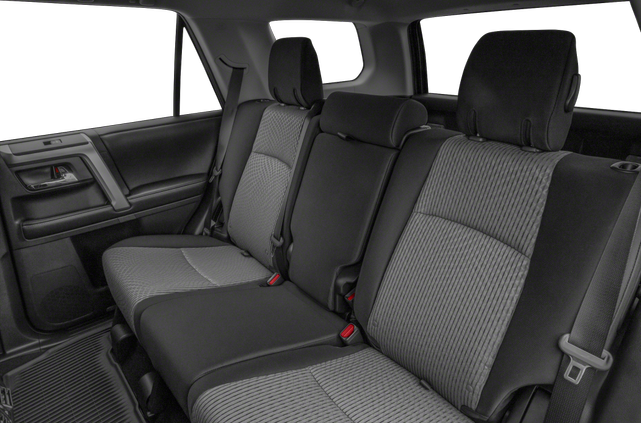
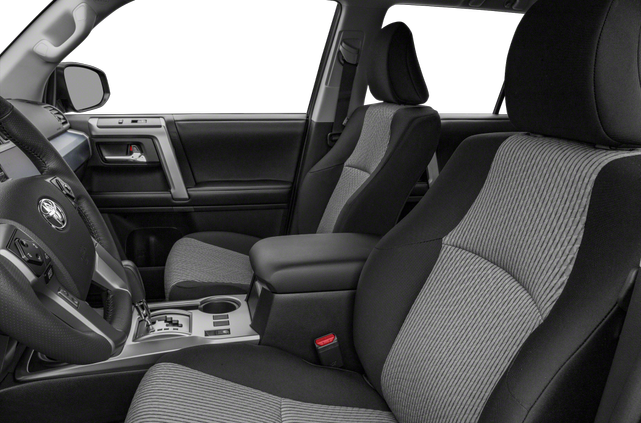
The 4Runner can have room for five or seven people in two or three rows of seats. I tested a two-row model and found it plenty roomy for my family of five. Three child-safety seats easily fit across the second-row bench — something not many SUVs can do comfortably and safely. The 4Runner’s easy-access Latch anchors and ample legroom also made car-seat installation a breeze. Getting my kids to make the long climb up into their car seats was not so easy, however, though the running boards helped. The Grand Cherokee can also fit three car seats across its second row, but its Latch anchors aren’t as accessible. Read the full 4Runner Car Seat Check.

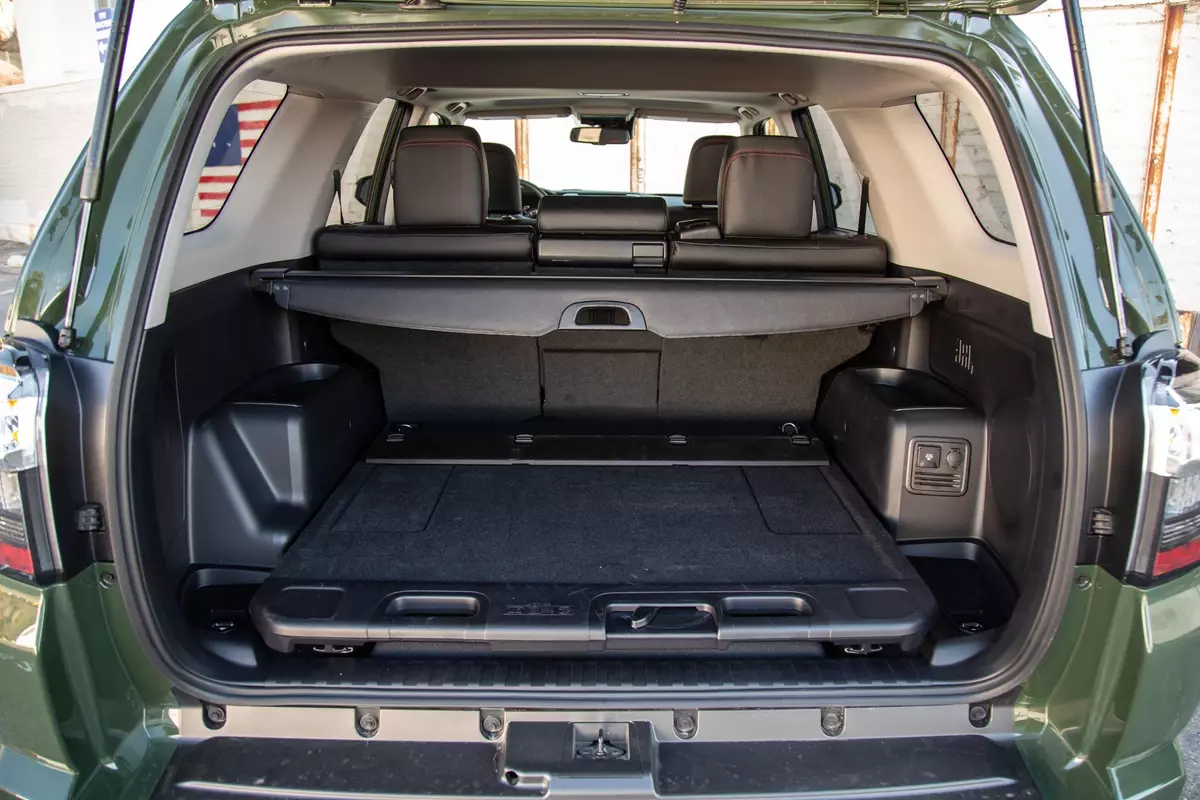
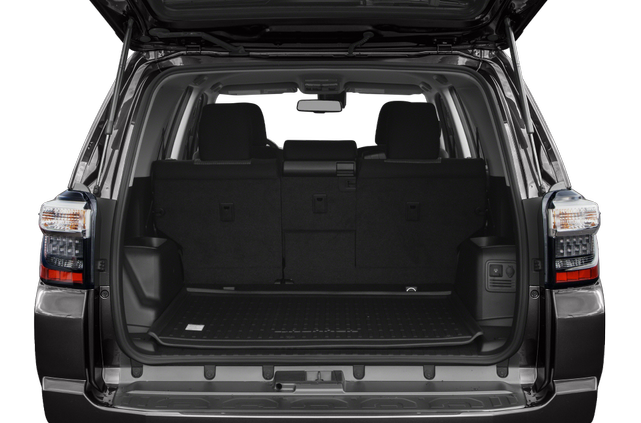
Behind the backseat, I found more than enough room for a full grocery run — even when I couldn’t resist the mystery miscellaneous aisle at Aldi. With the second-row seats in use, the cargo area offers up to 47.2 cubic feet of space. For more room, the second-row seats fold in a 60/40 split; the seat bottom cushions tumble forward and the seatback goes down to create a totally flat load floor, opening up a cavernous 89.7 cubic feet of space (TRD Pro trim levels have a little less).

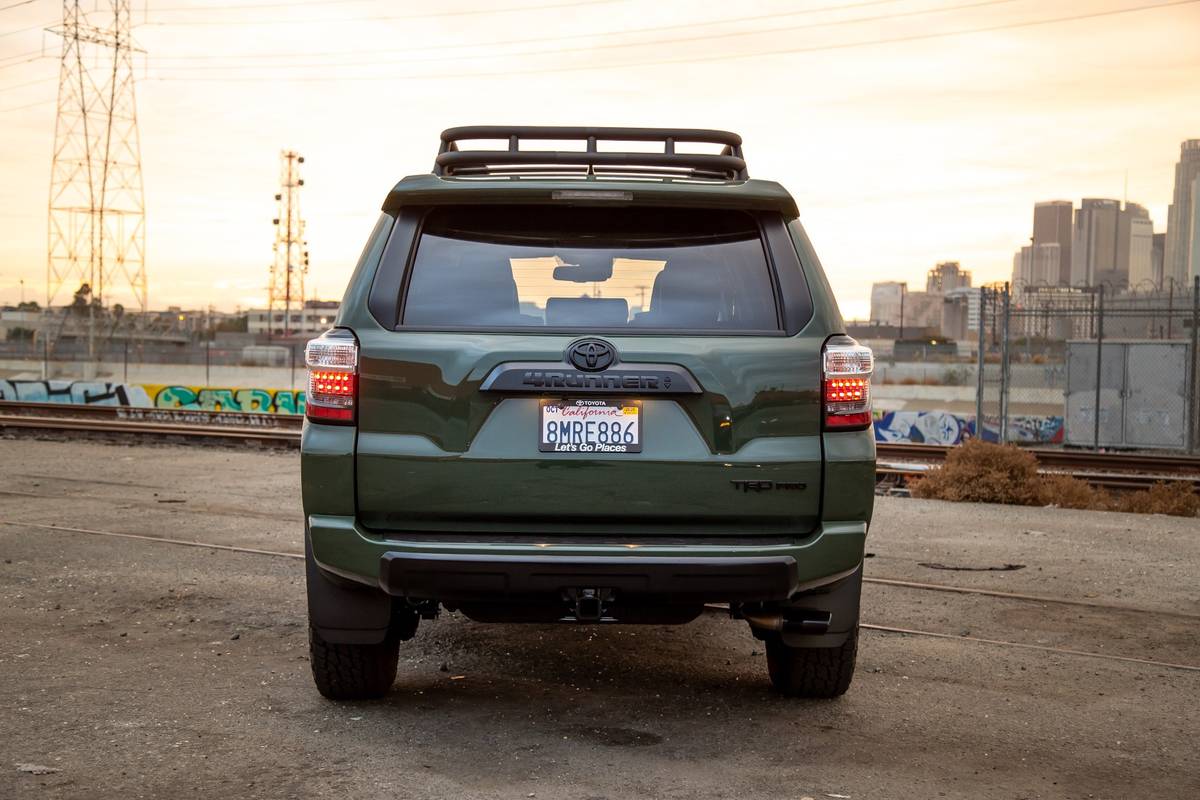
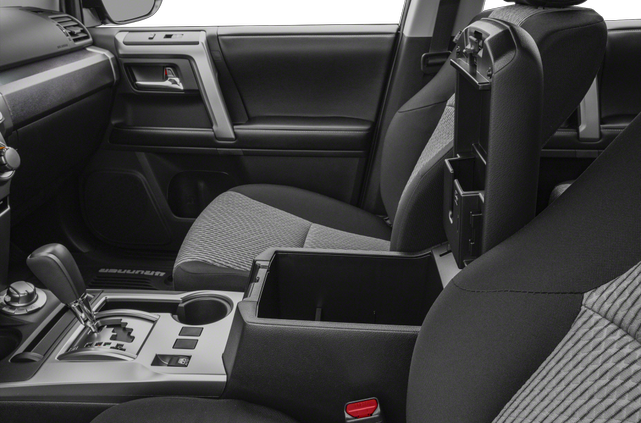
Aside from the impressive amount of space, the 4Runner has a couple of other cargo highlights. In front, there are several spaces for small items, from the huge center console box to smaller cubbies near the shifter. Also, a roof rack is standard on the TRD Pro.

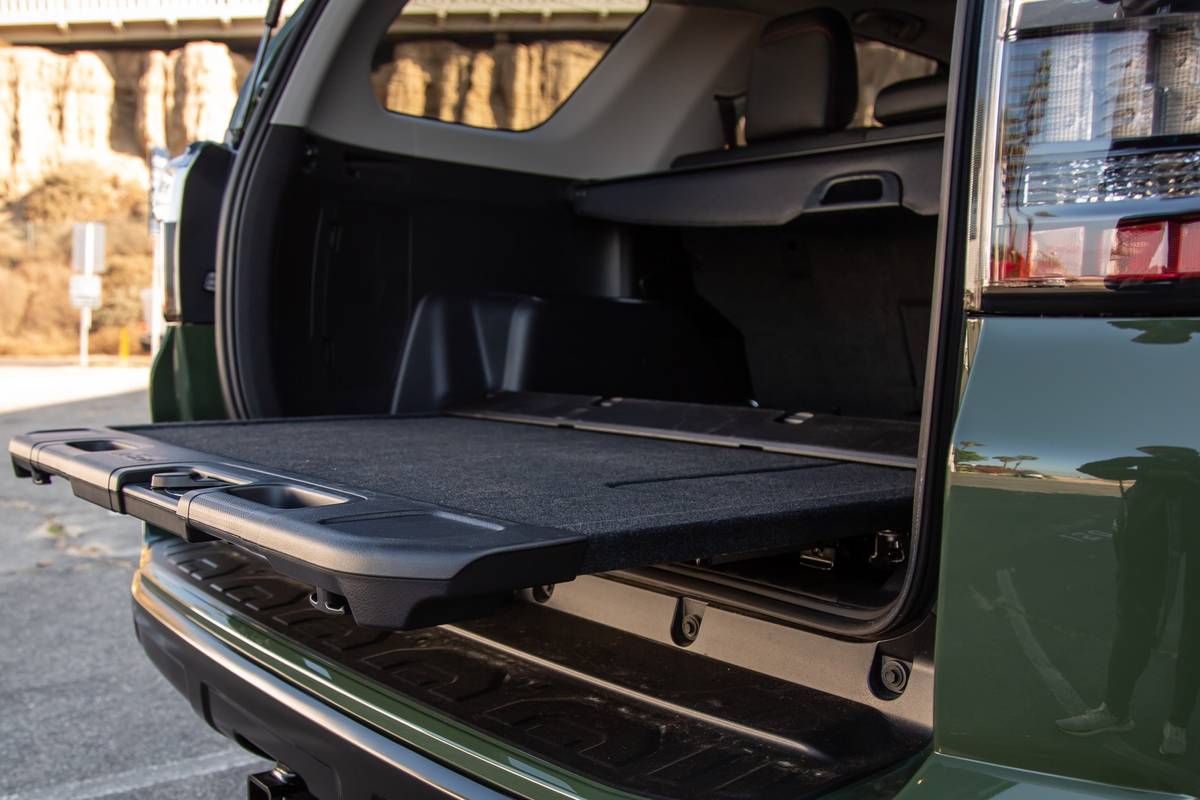
The rear cargo area has a couple of neat extras. There’s an available sliding cargo deck that can support up to 440 pounds that makes loading and unloading heavy items easier, and it can double as a more comfortable seat for tailgating or camping. Also, the rear window can be powered down via a button near the shifter, allowing quick access to your cargo without opening the liftgate.

More From Cars.com:

Safety and Value

In Insurance Institute for Highway Safety crash tests, the 4Runner earned a disappointing score of marginal (out of good, acceptable, marginal and poor) in the frontal small overlap test. Only three out of the 23 models tested in the Institute’s Midsize SUV class as of publication scored that low or lower … but one was the Jeep Grand Cherokee.  The 4Runner has a four star (out of five) safety rating from the National Highway Traffic Safety Administration.

More and more automakers are standardizing active safety and driver assistance features. Toyota was among the first to do so, but it’s taken a while for the 4Runner to catch up. For 2020, the Toyota Safety Sense-P package is standard; it includes automatic emergency braking, lane departure and sway warnings, automatic high beams and adaptive cruise control. (Unlike many newer models, the 4Runner’s cruise control doesn’t operate down to a stop.) On the Grand Cherokee, many of these features are available, not standard.

All that added equipment comes at a reasonable price, too. The 2020 4Runner starts at $37,240, $810 more than the outgoing model (all prices include destination charges). The 2020 Jeep Grand Cherokee starts a little lower, at $33,540.

The 2020 Toyota 4Runner is a capable, rugged, utility-focused SUV, but be ready to sacrifice on-road comfort and fuel economy to get it, even if you select one of the more on-road-optimized trim levels.

Cars.com’s Editorial department is your source for automotive news and reviews. In line with Cars.com’s long-standing ethics policy, editors and reviewers don’t accept gifts or free trips from automakers. The Editorial department is independent of Cars.com’s advertising, sales and sponsored content departments.

News Editor

Hellbent on finding a journalism job after earning an English degree from DePaul University, I stumbled into the automotive industry in 2003 — much to the delight of my Corvette-obsessed dad. After working as an editor at Consumer Guide Automotive for several years, I joined Cars.com in 2011 and am currently an expert reviewer, certified car-seat technician and mom of three. I wear a lot of hats — many of them while driving a minivan. My first car was a 1994 Mercury Tracer, and I currently drive a 2012 Mazda5.

2021 Toyota 4Runner review: Our expert's take
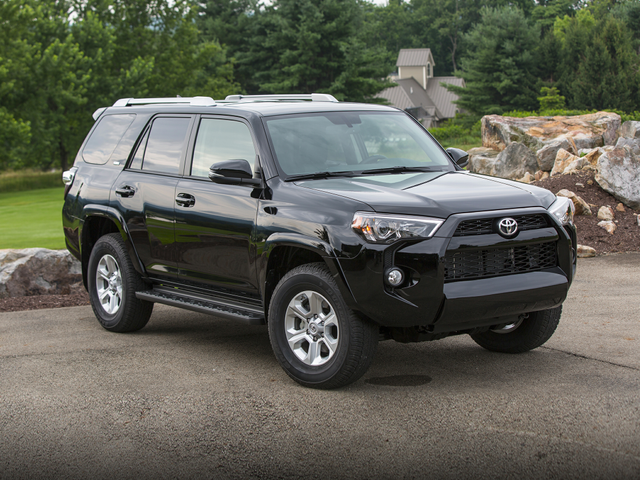
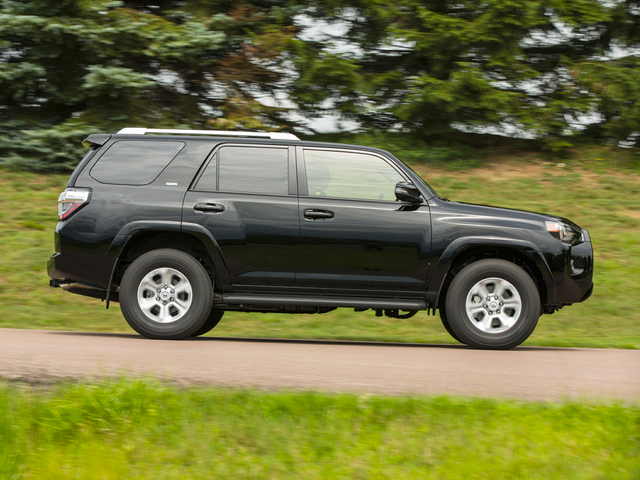
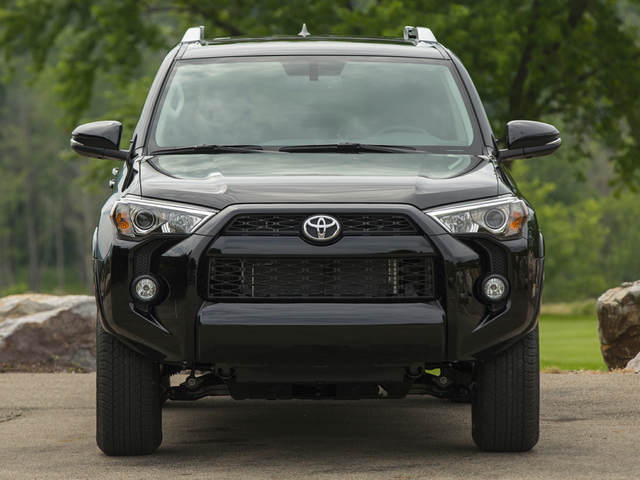
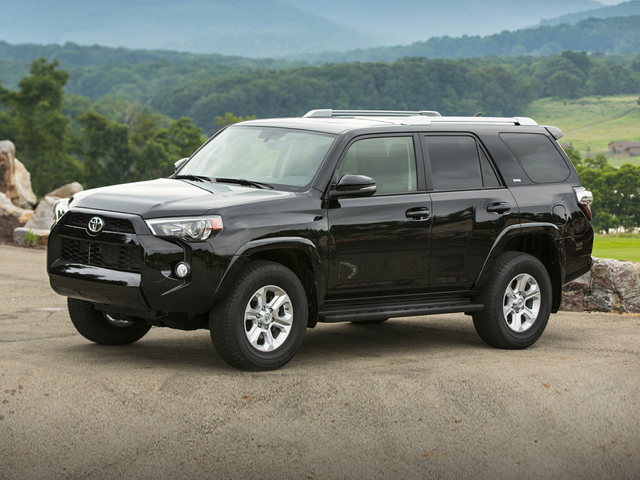
2021 Toyota 4Runner 2021 Toyota 4Runner 2021 Toyota 4Runner 2021 Toyota 4Runner 2021 Toyota 4Runner 2021 Toyota 4Runner 2021 Toyota 4Runner 2021 Toyota 4Runner 2021 Toyota 4Runner 2021 Toyota 4Runner 2021 Toyota 4Runner 2021 Toyota 4Runner 2021 Toyota 4Runner 2021 Toyota 4Runner 2021 Toyota 4Runner 2021 Toyota 4Runner 2021 Toyota 4Runner 2021 Toyota 4Runner 2021 Toyota 4Runner 2021 Toyota 4Runner 2021 Toyota 4Runner 2021 Toyota 4Runner 2021 Toyota 4Runner 2021 Toyota 4Runner

The verdict: Driving a 2020 Toyota 4Runner on the city streets of my neighborhood was like bringing a moose along to shop for an apartment: It was clumsy, loud and a little daunting. In the right environment, however, this rugged, capable SUV would be right at home.

Versus the competition: The 4Runner’s combination of old-school looks and off-road capability stand out, but other SUVs offer similar off-road abilities with better fuel economy and more comfortable on-road dynamics.

Related: Most Popular All-Wheel-Drive SUVs on Cars.com

Toyota’s large SUV gets a host of updates for 2020, including more standard safety features, an updated multimedia system, and additional USB ports for the backseat. Compare it with the 2019 model. Due to its construction — a rear-wheel-drive platform and off-road emphasis — the 4Runner has few direct competitors, and two are Jeeps: the Wrangler Unlimited and Grand Cherokee. See the models compared. If you’re someone who doesn’t need off-road capability, you might be better off with the slightly larger Toyota Highlander or smaller (externally) RAV4; see those three Toyotas compared.

Fish Out of Water

The 4Runner’s throwback body-on-frame construction makes for capable off-road driving but clumsy on-road manners — which were amplified in the off-road-optimized TRD Pro trim level I tested. Another Cars.com editor drove it off road (impressions to come below), but my time was spent exclusively on pavement. Neither the car nor I were very happy about it.

After launching myself into the driver’s seat — the model’s 9.6-inch ground clearance makes for a tall step-in height — I was underwhelmed by just about every aspect of driving the 4Runner, with a couple of exceptions.

All models come with a 270-horsepower, 4.0-liter V-6. TRD Pro versions come with standard four-wheel drive, while the others can have rear- or four-wheel drive. From a stop, the powertrain chugged to life with a low, slow groan. Toyota says the TRD got a new cat-back exhaust to give it a “powerful-sounding growl,” but the cat sounded more wounded than powerful. That was especially true on the highway, where the powertrain strained and struggled to move all of the SUV’s 4,400 pounds. It’s not quick and power builds slowly (but steadily).

Some more gears would help, but an ancient five-speed automatic is the sole transmission. That would also help with fuel economy. In its base trim, the 4Runner’s EPA-estimated fuel economy is from a prior decade: 16/19/17 mpg city/highway/combined, much lower than a base Grand Cherokee (19/26/21 mpg).

2021 Toyota 4Runner 2021 Toyota 4Runner 2021 Toyota 4Runner 2021 Toyota 4Runner 2021 Toyota 4Runner 2021 Toyota 4Runner

The TRD Pro’s soft suspension, tuned for off-road use, made for a surprisingly cushy ride. There was quite a bit of bounce and wobble, but for the most part, it capably rolled through most potholes and speed bumps with little fuss. Where it felt out of place was in terms of handling, with a lot of pitch and lean in corners that felt sloppy. Its large turning circle also made it a chore to park.

A couple of bad weather days, however, provided an opportunity for the 4Runner to strut its stuff. I drove it through ice and snow and a gross sleety mixture of both with nary a slip or slide; it powered through the heavy, slick precipitation like a tank. During such low-visibility driving, I especially appreciated the commanding view of the road afforded by the 4Runner’s tall ride height and clear forward sight lines.

For those able to use the 4Runner TRD Pro how it was intended, the model has a ton of adventure-ready off-road gear: a part-time four-wheel-drive system, a two-speed transfer case with Low range, a selectable locking rear differential, and Toyota’s Multi-Terrain Select traction control system, which allows the settings to be adjusted depending on terrain (dirt, sand, rock, snow, etc.). Toyota’s Crawl Control electronic traction control system, which maintains a constant speed in slow-speed off-road situations, is also standard, as is an Active Traction Control system that distributes torque to one wheel when slippage is detected.

My colleague Brian Wong tested a 2019 4Runner (mechanically identical to the 2020) off-road and said it’s anything but sloppy. The tires were sufficiently grippy, the suspension had plenty of flex, and when the situation got sticky, the excellent Crawl Control system bailed him out. Its upgraded shocks paid the most dividends on gravel or sand — surfaces on which the previous 4Runner TRD Pro model wasn’t entirely comfortable.

Note that the 4Runner can be had in more road-appropriate forms than the TRD, the best of which would be the Limited. It’s the only trim that offers full-time four-wheel drive, which doesn’t need to be deactivated on dry pavement and activated when needed, as does part-time 4WD (to prevent damage). But even in its classiest trim, the 4Runner is more of a truck than most crossovers on the market — which is part of its appeal to some buyers.

Though body-on-frame vehicles often have higher towing capacities, the 4Runner is rated to tow 5,000 pounds. The 2020 Highlander has the same rating, while the 2020 RAV4 tops out at 3,500 pounds in two of its higher trim levels (1,500 pounds is standard).

Control Reboot

2021 Toyota 4Runner 2021 Toyota 4Runner 2021 Toyota 4Runner 2021 Toyota 4Runner 2021 Toyota 4Runner 2021 Toyota 4Runner 2021 Toyota 4Runner

For 2020, the 4Runner’s instrument panel got revised, making it look more modern than in years past, but it’s still not as slick as what you’ll see in competitors — or even in other Toyotas. The 4Runner’s 8-inch touchscreen — up from last year’s tiny 6.1-inch unit — finally has Apple CarPlay and Android Auto compatibility. It’s one of the last Toyota vehicles to begin offering the smartphone integration systems.

While the 8-inch screen is new to the 4Runner, it looks a few years old, with dated graphics and a busy interface comprised of buttons, knobs and panels. It also still seems itty-bitty, nestled as it is in the SUV’s expansive dashboard.

On the plus side, it’s straightforward in terms of usability, as are many of the SUV’s other controls. I found the placement of the window and door-lock controls on the top of the door especially handy, along with large, easy-to-read climate controls under the screen.

Room for Days

2021 Toyota 4Runner 2021 Toyota 4Runner 2021 Toyota 4Runner 2021 Toyota 4Runner 2021 Toyota 4Runner

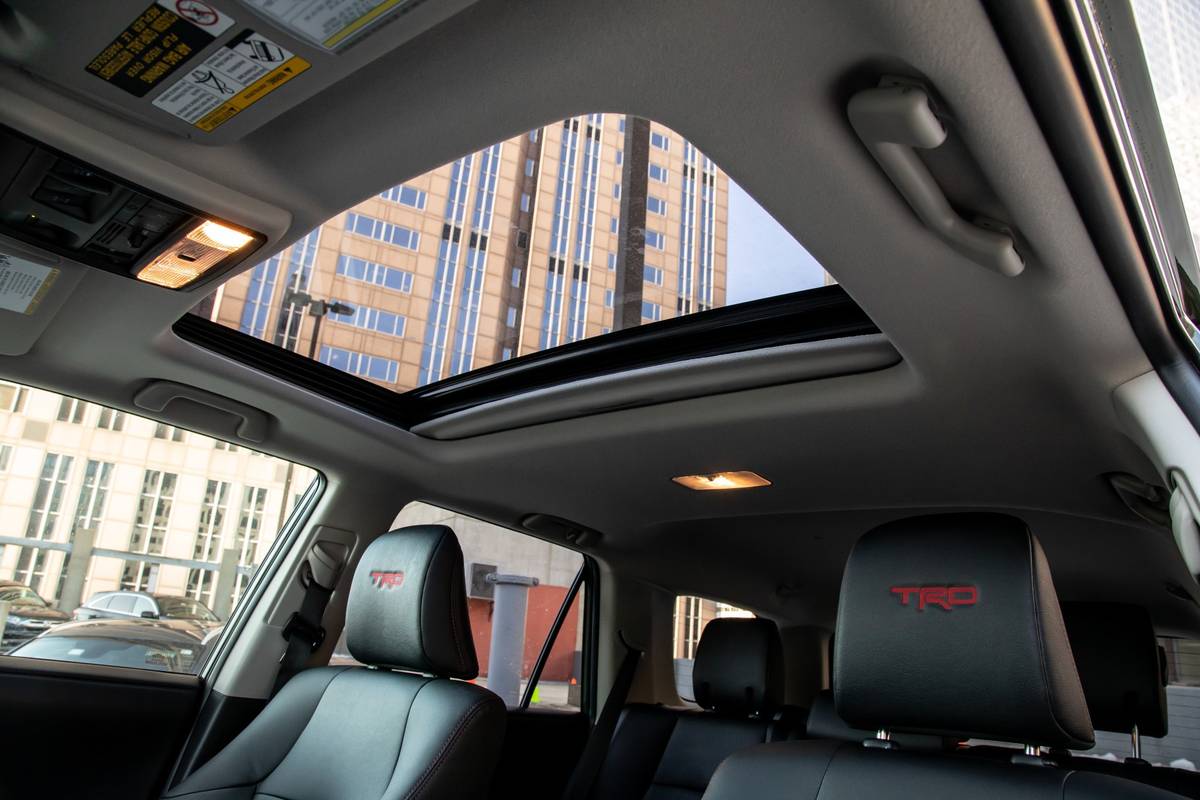
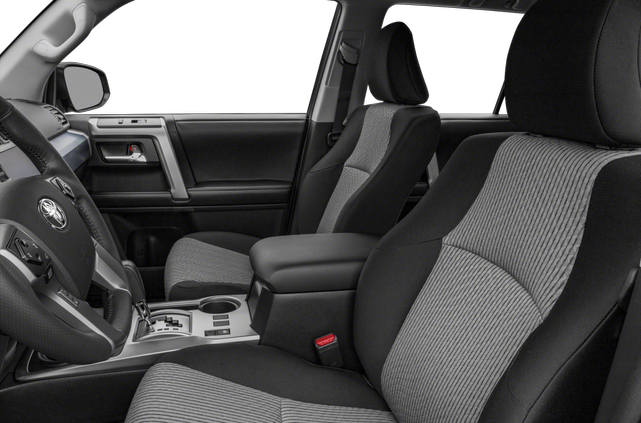
The 4Runner can have room for five or seven people in two or three rows of seats. I tested a two-row model and found it plenty roomy for my family of five. Three child-safety seats easily fit across the second-row bench — something not many SUVs can do comfortably and safely. The 4Runner’s easy-access Latch anchors and ample legroom also made car-seat installation a breeze. Getting my kids to make the long climb up into their car seats was not so easy, however, though the running boards helped. The Grand Cherokee can also fit three car seats across its second row, but its Latch anchors aren’t as accessible. Read the full 4Runner Car Seat Check.

Behind the backseat, I found more than enough room for a full grocery run — even when I couldn’t resist the mystery miscellaneous aisle at Aldi. With the second-row seats in use, the cargo area offers up to 47.2 cubic feet of space. For more room, the second-row seats fold in a 60/40 split; the seat bottom cushions tumble forward and the seatback goes down to create a totally flat load floor, opening up a cavernous 89.7 cubic feet of space (TRD Pro trim levels have a little less).

Aside from the impressive amount of space, the 4Runner has a couple of other cargo highlights. In front, there are several spaces for small items, from the huge center console box to smaller cubbies near the shifter. Also, a roof rack is standard on the TRD Pro.

The rear cargo area has a couple of neat extras. There’s an available sliding cargo deck that can support up to 440 pounds that makes loading and unloading heavy items easier, and it can double as a more comfortable seat for tailgating or camping. Also, the rear window can be powered down via a button near the shifter, allowing quick access to your cargo without opening the liftgate.

More From Cars.com:

Safety and Value

In Insurance Institute for Highway Safety crash tests, the 4Runner earned a disappointing score of marginal (out of good, acceptable, marginal and poor) in the frontal small overlap test. Only three out of the 23 models tested in the Institute’s Midsize SUV class as of publication scored that low or lower … but one was the Jeep Grand Cherokee.  The 4Runner has a four star (out of five) safety rating from the National Highway Traffic Safety Administration.

More and more automakers are standardizing active safety and driver assistance features. Toyota was among the first to do so, but it’s taken a while for the 4Runner to catch up. For 2020, the Toyota Safety Sense-P package is standard; it includes automatic emergency braking, lane departure and sway warnings, automatic high beams and adaptive cruise control. (Unlike many newer models, the 4Runner’s cruise control doesn’t operate down to a stop.) On the Grand Cherokee, many of these features are available, not standard.

All that added equipment comes at a reasonable price, too. The 2020 4Runner starts at $37,240, $810 more than the outgoing model (all prices include destination charges). The 2020 Jeep Grand Cherokee starts a little lower, at $33,540.

The 2020 Toyota 4Runner is a capable, rugged, utility-focused SUV, but be ready to sacrifice on-road comfort and fuel economy to get it, even if you select one of the more on-road-optimized trim levels.

Cars.com’s Editorial department is your source for automotive news and reviews. In line with Cars.com’s long-standing ethics policy, editors and reviewers don’t accept gifts or free trips from automakers. The Editorial department is independent of Cars.com’s advertising, sales and sponsored content departments.

Safety review

Based on the 2021 Toyota 4Runner base trim
NHTSA crash test and rollover ratings, scored out of 5.
Overall rating
4 out of 5
Combined side rating front seat
5 out of 5
Combined side rating rear seat
5 out of 5
Frontal barrier crash rating driver
4 out of 5
Frontal barrier crash rating passenger
3 out of 5
Overall frontal barrier crash rating
4 out of 5
Overall side crash rating
5 out of 5
Rollover rating
3 out of 5
Side barrier rating
5 out of 5
Side barrier rating driver
5 out of 5
Side barrier rating passenger rear seat
5 out of 5
Side pole rating driver front seat
4 out of 5
24.6%
Risk of rollover
Side barrier rating driver
5 out of 5
Side barrier rating passenger rear seat
5 out of 5
Side pole rating driver front seat
4 out of 5
24.6%
Risk of rollover

Factory warranties

New car program benefits

Basic
3 years / 36,000 miles
Corrosion
5 years
Powertrain
5 years / 60,000 miles
Maintenance
2 years / 25,000 miles
Roadside Assistance
2 years

Certified Pre-Owned program benefits

Age / mileage
7 years / less than 85,000 miles
Basic
12 months / 12, 000 miles
Dealer certification
160- or 174-point inspections

Compare similar vehicles

Select cars to compare for more detailed info.
  • 2021
    4.9
    Toyota 4Runner
    Starts at
    $36,765
    MPG
    16 City / 19 Hwy
    Seat capacity
    7
    Warranty
    -
    Engine
    Regular Gasoline V-6
    Drivetrain
    Rear-wheel drive
    Payload Capacity
    -
    Towing Capacity
    -
    Compare
  • 2020
    4.8
    Toyota 4Runner
    Starts at
    $36,120
    MPG
    16 City / 19 Hwy
    Seat capacity
    7
    Warranty
    -
    Engine
    Regular Gasoline V-6
    Drivetrain
    Rear-wheel drive
    Payload Capacity
    -
    Towing Capacity
    -
    Compare
  • 2025
    4.3
    Toyota 4Runner Hybrid
    Starts at
    $52,490
    MPG
    23 City / 24 Hwy
    Seat capacity
    5
    Warranty
    60 month/60,000 miles
    Engine
    Intercooled Turbo Gas/Electric I-4
    Drivetrain
    Four-wheel drive
    Payload Capacity
    -
    Towing Capacity
    -
    Compare
  • 2022
    4.1
    Toyota Tacoma
    Starts at
    $27,150
    MPG
    20 City / 23 Hwy
    Seat capacity
    2
    Warranty
    -
    Engine
    Regular Unleaded I-4
    Drivetrain
    Rear-wheel drive
    Payload Capacity
    N/A
    Towing Capacity
    3,500 lbs
    Compare
  • 2023
    4.3
    Lexus GX 460
    Starts at
    $58,875
    MPG
    15 City / 19 Hwy
    Seat capacity
    6
    Warranty
    -
    Engine
    Premium Unleaded V-8
    Drivetrain
    Four-wheel drive
    Payload Capacity
    -
    Towing Capacity
    -
    Compare
  • Compare more options
    Use our comparison tool to add any vehicle of your choice and see a full list of specifications and features side-by-side.
    Try it now

Consumer reviews

4.9 out of 5
Based on 45 reviews
Write a review
Comfort
4.9 out of 5
Interior
4.8 out of 5
Performance
4.7 out of 5
Value
4.8 out of 5
Exterior
4.8 out of 5
Reliability
4.9 out of 5

Most recent

  • This is the biggest reason I'm happy with this car.

    This is the biggest reason I'm happy with this car. It's actually known for reliability and I can attest to this. In fact, maintenance has been straightforward and would last well beyond 200,000 miles if cared for.
    • Purchased a Used car
    • Used for Transporting family
    • Does recommend this car
    Comfort
    5.0 out of 5
    Interior
    4.0 out of 5
    Performance
    5.0 out of 5
    Value
    5.0 out of 5
    Exterior
    5.0 out of 5
    Reliability
    4.0 out of 5
    0 people out of 0 found this review helpful. Did you?
    Yes No
  • My wife drives this vehicle and she is a small gal.

    My wife drives this vehicle and she is a small gal. She said it fits her great and rides very smooth. Gas mileage isnt the best but she doesnt drive it everyday so its not a big deal for us .
    • Does recommend this car
    Comfort
    5.0 out of 5
    Interior
    5.0 out of 5
    Performance
    5.0 out of 5
    Value
    4.0 out of 5
    Exterior
    5.0 out of 5
    Reliability
    5.0 out of 5
    2 people out of 2 found this review helpful. Did you?
    Yes No
  • I had it for about 2 years and I just t changed it to

    I had it for about 2 years and I just t changed it to the new vehicle. It wasn't bad but it wasn't good neither.
    • Does not recommend this car
    Comfort
    2.0 out of 5
    Interior
    2.0 out of 5
    Performance
    2.0 out of 5
    Value
    3.0 out of 5
    Exterior
    1.0 out of 5
    Reliability
    3.0 out of 5
    10 people out of 28 found this review helpful. Did you?
    Yes No
  • First Toyota after 4 f150’s and a Ram

    One of the last SUV’s with a real 4x4 and towing capacity. The engine and transmission lasts longer than anything similar. Not the greatest mpg but this is greatly off set by reliability and longevity.
    • Purchased a New car
    • Used for Having fun
    • Does recommend this car
    Comfort
    5.0 out of 5
    Interior
    5.0 out of 5
    Performance
    5.0 out of 5
    Value
    5.0 out of 5
    Exterior
    5.0 out of 5
    Reliability
    5.0 out of 5
    36 people out of 38 found this review helpful. Did you?
    Yes No
  • Amazing Off Road Vehicle

    My only complaint about this vehicle is the two tone interior. I feel like the color should be consistent. Other than that, this SUV is the total package
    • Purchased a New car
    • Used for Off-roading
    • Does recommend this car
    Comfort
    5.0 out of 5
    Interior
    4.0 out of 5
    Performance
    5.0 out of 5
    Value
    5.0 out of 5
    Exterior
    5.0 out of 5
    Reliability
    5.0 out of 5
    25 people out of 26 found this review helpful. Did you?
    Yes No
  • My first New Car

    This Car met all my needs. It has plenty of legroom in the front and back .The ride is good love it , Compare to other cars that i tested
    • Purchased a New car
    • Used for Having fun
    • Does recommend this car
    Comfort
    5.0 out of 5
    Interior
    5.0 out of 5
    Performance
    5.0 out of 5
    Value
    5.0 out of 5
    Exterior
    5.0 out of 5
    Reliability
    5.0 out of 5
    15 people out of 18 found this review helpful. Did you?
    Yes No
  • Ame el carro

    This car is the best car ever me encanta la camara el Espacio que tiene el carro súper comodo no lo cambio por ningun otro carro
    • Purchased a New car
    • Used for Transporting family
    • Does recommend this car
    Comfort
    5.0 out of 5
    Interior
    5.0 out of 5
    Performance
    5.0 out of 5
    Value
    5.0 out of 5
    Exterior
    5.0 out of 5
    Reliability
    5.0 out of 5
    6 people out of 9 found this review helpful. Did you?
    Yes No
  • The perfect combination of traditional and modern!

    I’ve wanted a 4Runner for a while. With the 2020-21 updates it has as much modern tech to be current (safety sense/LED Headlamps/Modern infotainment with Apple Car Play) while still having the reliable V-6 and 5 speed Automatic. I love that it’s a body on frame traditional SUV with a normally aspirated engine and reliable transmission. I’m so glad Toyota still has this generation still in production! There’s a reason these still sell so well!
    • Purchased a New car
    • Used for Transporting family
    • Does recommend this car
    Comfort
    5.0 out of 5
    Interior
    5.0 out of 5
    Performance
    5.0 out of 5
    Value
    5.0 out of 5
    Exterior
    5.0 out of 5
    Reliability
    5.0 out of 5
    4 people out of 6 found this review helpful. Did you?
    Yes No
  • Toyota reliability

    Toyota 4runner's are, in my opinion, reliable good investment if purchasing to own, if you take care of the vehicle it will last for as long as u want it to be.
    • Purchased a New car
    • Used for Commuting
    • Does recommend this car
    Comfort
    5.0 out of 5
    Interior
    5.0 out of 5
    Performance
    5.0 out of 5
    Value
    5.0 out of 5
    Exterior
    5.0 out of 5
    Reliability
    5.0 out of 5
    5 people out of 7 found this review helpful. Did you?
    Yes No
  • Reliability will be seen in time .

    we upgraded in to the next size class of vehicle. was surprised that a 4x4 can actually give you a comfortable ride. the 2 dogs might not be happy now that they went from the backseat to the rear compartment, where they have more room.
    • Purchased a New car
    • Used for Having fun
    • Does recommend this car
    Comfort
    5.0 out of 5
    Interior
    5.0 out of 5
    Performance
    5.0 out of 5
    Value
    5.0 out of 5
    Exterior
    5.0 out of 5
    Reliability
    3.0 out of 5
    2 people out of 4 found this review helpful. Did you?
    Yes No
  • Most reliable car I have ever owned

    I love this car had no problem buying this vehicle it was quick and easy would advise anyone to shop here they really know how to treat you
    • Purchased a New car
    • Used for Having fun
    • Does recommend this car
    Comfort
    5.0 out of 5
    Interior
    5.0 out of 5
    Performance
    5.0 out of 5
    Value
    5.0 out of 5
    Exterior
    5.0 out of 5
    Reliability
    5.0 out of 5
    3 people out of 3 found this review helpful. Did you?
    Yes No
  • Very comfortable and fun to drive.

    This car is the whole package. Room for the family, cargo and dogs. Smooth ride on road and great off road capability. We do a lot of mountain driving and the gravel roads feel as smooth as the paved ones in this.
    • Purchased a New car
    • Used for Commuting
    • Does recommend this car
    Comfort
    5.0 out of 5
    Interior
    5.0 out of 5
    Performance
    5.0 out of 5
    Value
    5.0 out of 5
    Exterior
    5.0 out of 5
    Reliability
    5.0 out of 5
    2 people out of 2 found this review helpful. Did you?
    Yes No

Latest 4Runner stories

See all Toyota 4Runner articles

Toyota dealers near you

FAQ

What trim levels are available for the 2021 Toyota 4Runner?

The 2021 Toyota 4Runner is available in 9 trim levels:

  • Limited (6 styles)
  • Nightshade (6 styles)
  • SR5 (6 styles)
  • SR5 Premium (6 styles)
  • TRD Off Road (3 styles)
  • TRD Off Road Premium (3 styles)
  • TRD Pro (3 styles)
  • Trail Special Edition (6 styles)
  • Venture (3 styles)

What is the MPG of the 2021 Toyota 4Runner?

The 2021 Toyota 4Runner offers up to 16 MPG in city driving and 19 MPG on the highway. These figures are based on EPA mileage ratings and are for comparison purposes only. The actual mileage will vary depending on vehicle options, trim level, driving conditions, driving habits, vehicle maintenance, and other factors.

What are some similar vehicles and competitors of the 2021 Toyota 4Runner?

The 2021 Toyota 4Runner compares to and/or competes against the following vehicles:

Is the 2021 Toyota 4Runner reliable?

The 2021 Toyota 4Runner has an average reliability rating of 4.9 out of 5 according to cars.com consumers. Find real-world reliability insights within consumer reviews from 2021 Toyota 4Runner owners.

Is the 2021 Toyota 4Runner a good SUV?

Below are the cars.com consumers ratings for the 2021 Toyota 4Runner. 95.6% of drivers recommend this vehicle.

4.9 / 5
Based on 45 reviews
  • Comfort: 4.9
  • Interior: 4.8
  • Performance: 4.7
  • Value: 4.8
  • Exterior: 4.8
  • Reliability: 4.9

Toyota 4Runner history

Your list was successfully saved.


Save list Compare
[{"cat":"suv_midsize","stock_type":"used","bodystyle":"SUV","page_type":"research/make-model-year","oem_page":false,"search_fuel_types":["Gasoline Fuel"]}]