





2026 2025 2024 2023 2022 2021 2020 2019 2018 2017 2016 2015 2014 2013 2012 2011 2010 2009 2008 2007 2006 2005 2004 2003 2002 2001 2000 1999 1998 1997 1996 1995 1994 1993 1992
Toyota 4Runner

No Reviews
Shop options
$42,270
Starting price

Our Expert's Take

The 2026 Toyota 4Runner offers diverse trims from the base SR5 to the off-road TRD Pro. The Toyota Safety Sense 3.0 suite of safety features is standard. The available hybrid powertrain is focused more on power than efficiency; its fuel economy isn't significantly better than the base engine's. The 4Runner maintains a 6,000-pound towing capacity and versatile four-wheel-drive options. Read full review

Shop the 2026 Toyota 4Runner
Browse cars & save your favorites
Dealers near you
Find & contact a dealership near you
Listings near 43287
Change location See all listings

Available trims

See the differences side-by-side to compare trims.
  • SR5 2WD (GS)
    Starts at
    $42,270
    MPG
    20 City / 26 Hwy
    Seat capacity
    7
    Engine
    Intercooled Turbo Regular Gasoline I-4
    Drivetrain
    Rear Wheel Drive
    Shop this trim See all specs
  • SR5 2WD (Natl)
    Starts at
    $42,270
    MPG
    20 City / 26 Hwy
    Seat capacity
    7
    Engine
    Intercooled Turbo Regular Gasoline I-4
    Drivetrain
    Rear Wheel Drive
    Shop this trim See all specs
  • SR5 2WD (SE)
    Starts at
    $42,270
    MPG
    20 City / 26 Hwy
    Seat capacity
    7
    Engine
    Intercooled Turbo Regular Gasoline I-4
    Drivetrain
    Rear Wheel Drive
    Shop this trim See all specs
  • SR5 4WD (GS)
    Starts at
    $44,270
    MPG
    19 City / 25 Hwy
    Seat capacity
    7
    Engine
    Intercooled Turbo Regular Gasoline I-4
    Drivetrain
    Four Wheel Drive
    Shop this trim See all specs
  • SR5 4WD (Natl)
    Starts at
    $44,270
    MPG
    19 City / 25 Hwy
    Seat capacity
    7
    Engine
    Intercooled Turbo Regular Gasoline I-4
    Drivetrain
    Four Wheel Drive
    Shop this trim See all specs
  • SR5 4WD (SE)
    Starts at
    $44,270
    MPG
    19 City / 25 Hwy
    Seat capacity
    7
    Engine
    Intercooled Turbo Regular Gasoline I-4
    Drivetrain
    Four Wheel Drive
    Shop this trim See all specs
  • TRD Sport 2WD (SE)
    Starts at
    $48,750
    MPG
    20 City / 26 Hwy
    Seat capacity
    5
    Engine
    Intercooled Turbo Regular Gasoline I-4
    Drivetrain
    Rear Wheel Drive
    Shop this trim See all specs
  • TRD Sport 2WD (Natl)
    Starts at
    $48,750
    MPG
    20 City / 26 Hwy
    Seat capacity
    5
    Engine
    Intercooled Turbo Regular Gasoline I-4
    Drivetrain
    Rear Wheel Drive
    Shop this trim See all specs
  • TRD Sport 2WD (GS)
    Starts at
    $48,750
    MPG
    20 City / 26 Hwy
    Seat capacity
    5
    Engine
    Intercooled Turbo Regular Gasoline I-4
    Drivetrain
    Rear Wheel Drive
    Shop this trim See all specs
  • TRD Off Road 4WD (GS)
    Starts at
    $50,690
    MPG
    19 City / 25 Hwy
    Seat capacity
    5
    Engine
    Intercooled Turbo Regular Gasoline I-4
    Drivetrain
    Four Wheel Drive
    Shop this trim See all specs
  • TRD Off Road 4WD (SE)
    Starts at
    $50,690
    MPG
    19 City / 25 Hwy
    Seat capacity
    5
    Engine
    Intercooled Turbo Regular Gasoline I-4
    Drivetrain
    Four Wheel Drive
    Shop this trim See all specs
  • TRD Off Road 4WD (Natl)
    Starts at
    $50,690
    MPG
    19 City / 25 Hwy
    Seat capacity
    5
    Engine
    Intercooled Turbo Regular Gasoline I-4
    Drivetrain
    Four Wheel Drive
    Shop this trim See all specs
  • TRD Sport 4WD (Natl)
    Starts at
    $50,750
    MPG
    19 City / 25 Hwy
    Seat capacity
    5
    Engine
    Intercooled Turbo Regular Gasoline I-4
    Drivetrain
    Four Wheel Drive
    Shop this trim See all specs
  • TRD Sport 4WD (SE)
    Starts at
    $50,750
    MPG
    19 City / 25 Hwy
    Seat capacity
    5
    Engine
    Intercooled Turbo Regular Gasoline I-4
    Drivetrain
    Four Wheel Drive
    Shop this trim See all specs
  • TRD Sport 4WD (GS)
    Starts at
    $50,750
    MPG
    19 City / 25 Hwy
    Seat capacity
    5
    Engine
    Intercooled Turbo Regular Gasoline I-4
    Drivetrain
    Four Wheel Drive
    Shop this trim See all specs
  • TRD Sport Premium 2WD (Natl)
    Starts at
    $54,110
    MPG
    20 City / 26 Hwy
    Seat capacity
    5
    Engine
    Intercooled Turbo Regular Gasoline I-4
    Drivetrain
    Rear Wheel Drive
    Shop this trim See all specs
  • TRD Sport Premium 2WD (SE)
    Starts at
    $54,110
    MPG
    20 City / 26 Hwy
    Seat capacity
    5
    Engine
    Intercooled Turbo Regular Gasoline I-4
    Drivetrain
    Rear Wheel Drive
    Shop this trim See all specs
  • TRD Sport Premium 2WD (GS)
    Starts at
    $54,110
    MPG
    20 City / 26 Hwy
    Seat capacity
    5
    Engine
    Intercooled Turbo Regular Gasoline I-4
    Drivetrain
    Rear Wheel Drive
    Shop this trim See all specs
  • TRD Sport Premium 4WD (GS)
    Starts at
    $56,110
    MPG
    19 City / 25 Hwy
    Seat capacity
    5
    Engine
    Intercooled Turbo Regular Gasoline I-4
    Drivetrain
    Four Wheel Drive
    Shop this trim See all specs
  • TRD Sport Premium 4WD (Natl)
    Starts at
    $56,110
    MPG
    19 City / 25 Hwy
    Seat capacity
    5
    Engine
    Intercooled Turbo Regular Gasoline I-4
    Drivetrain
    Four Wheel Drive
    Shop this trim See all specs
  • TRD Sport Premium 4WD (SE)
    Starts at
    $56,110
    MPG
    19 City / 25 Hwy
    Seat capacity
    5
    Engine
    Intercooled Turbo Regular Gasoline I-4
    Drivetrain
    Four Wheel Drive
    Shop this trim See all specs
  • TRD Off Road Premium 4WD (SE)
    Starts at
    $56,470
    MPG
    19 City / 25 Hwy
    Seat capacity
    5
    Engine
    Intercooled Turbo Regular Gasoline I-4
    Drivetrain
    Four Wheel Drive
    Shop this trim See all specs
  • TRD Off Road Premium 4WD (GS)
    Starts at
    $56,470
    MPG
    19 City / 25 Hwy
    Seat capacity
    5
    Engine
    Intercooled Turbo Regular Gasoline I-4
    Drivetrain
    Four Wheel Drive
    Shop this trim See all specs
  • TRD Off Road Premium 4WD (Natl)
    Starts at
    $56,470
    MPG
    19 City / 25 Hwy
    Seat capacity
    5
    Engine
    Intercooled Turbo Regular Gasoline I-4
    Drivetrain
    Four Wheel Drive
    Shop this trim See all specs
  • Limited 2WD (Natl)
    Starts at
    $56,900
    MPG
    20 City / 24 Hwy
    Seat capacity
    7
    Engine
    Intercooled Turbo Regular Gasoline I-4
    Drivetrain
    Rear Wheel Drive
    Shop this trim See all specs
  • Limited 2WD (SE)
    Starts at
    $56,900
    MPG
    20 City / 24 Hwy
    Seat capacity
    7
    Engine
    Intercooled Turbo Regular Gasoline I-4
    Drivetrain
    Rear Wheel Drive
    Shop this trim See all specs
  • Limited 2WD (GS)
    Starts at
    $56,900
    MPG
    20 City / 24 Hwy
    Seat capacity
    7
    Engine
    Intercooled Turbo Regular Gasoline I-4
    Drivetrain
    Rear Wheel Drive
    Shop this trim See all specs
  • Limited 4WD (Natl)
    Starts at
    $58,900
    MPG
    20 City / 24 Hwy
    Seat capacity
    7
    Engine
    Intercooled Turbo Regular Gasoline I-4
    Drivetrain
    Four Wheel Drive
    Shop this trim See all specs
  • Limited 4WD (SE)
    Starts at
    $58,900
    MPG
    20 City / 24 Hwy
    Seat capacity
    7
    Engine
    Intercooled Turbo Regular Gasoline I-4
    Drivetrain
    Four Wheel Drive
    Shop this trim See all specs
  • Limited 4WD (GS)
    Starts at
    $58,900
    MPG
    20 City / 24 Hwy
    Seat capacity
    7
    Engine
    Intercooled Turbo Regular Gasoline I-4
    Drivetrain
    Four Wheel Drive
    Shop this trim See all specs

Notable features

  • No significant changes for 2026 after 2025 redesign
  • Two- or three-row, body-on-frame mid-size SUV
  • Turbo 2.4-liter four-cylinder with optional hybrid power
  • Eight-speed automatic transmission
  • Rear- or four-wheel drive
  • Terrain modes with crawl control available
  • Locking rear differential, disconnecting stabilizer bar available

The good & the bad

The good

  • Strong, aggressive styling
  • Exceptionally capable off-road
  • There’s a trim for every need
  • Torquey turbo four-cylinder
  • Upper trims are quite nice

The bad

  • Pricing at top end borders on outrageous
  • Both standard and hybrid four-cylinders can be gruff
  • Price overlap with Toyota’s Land Cruiser
  • Disappointing fuel economy even with hybrid powertrain
  • Not as space-efficient as most crossover-style SUVs

Expert 2026 Toyota 4Runner review

Our expert's take
By Cars.com Editors
Full article

What Car Shoppers Need to Know

  • The Toyota 4Runner is a rugged mid-size SUV that shares its body-on-frame platform with the Toyota Tacoma mid-size pickup truck.
  • The 4Runner has a standard turbocharged four-cylinder engine that comes with rear- or four-wheel drive, as well as an optional 4WD-only hybrid powertrain.
  • Most 4Runners have two rows and five seats, but the SR5 and gas-only Limited trims offer an optional third-row seat, upping seating capacity to seven people.

The Toyota 4Runner mid-size SUV mixes hardiness and build quality in a way that has earned it great popularity among adventure-seeking buyers. It rides on a body-on-frame platform that contributes to excellent off-road capability but adversely affects on-road driving manners and interior room compared with SUVs that use car-based unibody platforms. Even so, the 4Runner is by most measures more civilized and comfortable than its primary off-roader rivals, the Jeep Wrangler and Ford Bronco.

What’s New for 2026?

The Toyota 4Runner was redesigned for 2025, when it switched from a V-6 to a turbo four-cylinder engine and gained its first hybrid powertrain. It sees only minor changes for 2026: Electronically disconnecting anti-roll bars are newly optional on the TRD Off-Road Premium trim (they continue to come standard on the high-end TRD Pro and Trailhunter trims).

Pricing

The 4Runner is an off-roader at heart, but just how much of an off-roader it is depends on the trim level you choose. Toyota offers nine trims for the 4Runner, four of which are equipped for higher levels of off-road capability. The following prices are correct as of July 2026 and include a $1,595 destination fee (manufacturers sometimes change a vehicle’s pricing over the course of a model year).

  • SR5: $43,665
  • TRD Sport: $50,145
  • TRD Off-Road: $52,085
  • TRD Sport Premium: $55,505
  • TRD Off-Road Premium: $57,865
  • Limited: $58,295
  • Platinum: $65,755
  • Trailhunter: $69,795
  • TRD Pro: $69,995

Trims and Features

Every 4Runner comes standard with Toyota Safety Sense 3.0, which includes forward collision warning with pedestrian detection, automatic emergency braking, adaptive cruise control, lane departure alert with steering assist, lane-centering steering, road-sign recognition and automatic high beams. While they’re not part of Safety Sense, front and rear cross-traffic alert, blind spot warning and traffic jam assist also come standard.

SR5

Standard features of the base SR5 include cloth upholstery, manually adjustable front seats, an 8-inch touchscreen, wireless Apple CarPlay and Android Auto, an eight-speaker audio system, keyless entry and start, heated side mirrors, a power liftgate and 17-inch alloy wheels.

TRD Sport

The TRD Sport adds heated front seats, automatic climate control, a 12.3-inch digital instrument cluster, wireless phone charger, black hood scoop and 20-inch wheels. The TRD Sport Premium features synthetic leather upholstery, ventilated and power-adjustable front seats, a heated steering wheel, power-adjustable steering column, 14-inch touchscreen, 14-speaker JBL audio system and hands-free power liftgate. It also upgrades to a 360-degree camera system.

TRD Off-Road, TRD Off-Road Premium

The TRD Off-Road adds more off-road capability in the form of a locking rear differential, Multi-Terrain Select drive modes for various surfaces, an inch-higher ground clearance than the SR5 trim, running boards, Bilstein remote-reservoir dampers and matte-black 18-inch wheels wearing 33-inch all-terrain tires. In addition, it has skid plates to protect the transfer case, oil pan and fuel tank.

The TRD Off-Road Premium gets the same features as the TRD Sport Premium and adds Toyota’s Multi-Terrain Monitor, which uses the 360-degree camera system to help drivers see obstacles and place the wheels when off-roading.

Limited

The 4Runner Limited has more of a luxury bent. Its 4WD system adds a locking center differential, and on top of the TRD Off-Road Premium and TRD Sport Premium models’ content, it adds leather upholstery, dual-zone automatic climate control and a power moonroof. Also standard are front and rear parking sensors.

Platinum

The Platinum is also focused on luxury. It adds upgraded leather, heated and reclining second-row seats, a digital camera rearview mirror, rain-sensing windshield wipers, smartphone-as-a-key functionality, and black 20-inch wheels and exterior accents.

Trailhunter, TRD Pro

The two most dedicated off-roaders are the Trailhunter and TRD Pro. They come with a lot of the same features and are priced only a couple of hundred dollars apart. Both add another inch of ground clearance over the TRD Off-Road for a total of 10.1 inches. Both also have disconnecting sway bars for greater suspension articulation, plus modified front bumpers for better approach angles so they can climb steeper hills without scraping their undercarriages. They also have synthetic leather upholstery, a distinctive grille with block “Toyota” lettering, an LED light bar, and prewired auxiliary switches for aftermarket accessories.

The TRD Pro also gets a black hood scoop, power moonroof, sport exhaust, Fox adjustable remote-reservoir shocks and matte-black wheels. The Trailhunter is distinguished by its intake snorkel, matte-bronze wheels, Old Man Emu-brand shocks that balance off-road and on-road needs, rock rails and an onboard air compressor. Also included are skid plates for the transfer case, oil pan, rear differential and fuel tank. In place of the moonroof, it has an ARB-brand roof rack.

Powertrains and Fuel Economy

The 4Runner’s base engine is a turbo 2.4-liter four-cylinder that Toyota calls i-Force; it makes 278 horsepower and 317 pounds-feet of torque. The i-Force Max uses the same engine but with the addition of an electric motor to create a hybrid powertrain; it ups output to 326 hp and 465 pounds-feet. The i-Force Max comes standard on the Platinum, TRD Pro and Trailhunter trims, and it’s optional on the TRD Off-Road, TRD Off-Road Premium and Limited. Both engines are mated to an eight-speed automatic transmission. RWD is standard on the SR5, TRD Sport, TRD Sport Premium and Limited, with 4WD available. Every other trim level comes standard with 4WD.

With the base engine, the 4Runner’s EPA-estimated fuel economy tops out at 20/26/22 mpg city/highway/combined with RWD, and adding 4WD drops that to a high of 20/24/21 mpg. The hybrid powertrain is focused more on added horsepower than improved fuel economy; it’s available only with 4WD and is rated 23/24/23 mpg. That’s around 10 mpg less than most other mid-size hybrid SUVs.

Trim

Powertrain

City MPG

Highway MPG

Combined MPG

SR5, Sport, Sport Premium RWD

Turbo 2.4-liter

20

26

22

Limited RWD

Turbo 2.4-liter

20

24

22

SR5, Sport, Sport Premium,

Off-Road, Off-Road Premium 4WD

Turbo 2.4-liter

19

25

21

Limited 4WD

Turbo 2.4-liter

20

24

21

4WD

Hybrid

23

24

23

Interior

The 4Runner comes with two or three rows and up to seven seats, but the available third row is only offered on the SR5 and non-hybrid Limited trims — and it’s rather cramped to boot. The 4Runner’s interior has a sturdy, high-quality feel, but some competitors have a classier ambiance. Cloth upholstery and manually adjustable front seats come standard on the base model, and moving up one trim level adds heated front seats. Step up to the Sport Premium to get synthetic leather upholstery, power-adjustable front seats and a heated steering wheel. The Limited gets leather upholstery, while the Platinum adds upgraded leather and heated and reclining second-row seats. The two top off-roaders, the TRD Pro and Trailhunter, revert to synthetic leather for easy cleanup.

An 8-inch touchscreen is standard, but Premium and higher trims get a 14-inch touchscreen. Overall, the 4Runner’s infotainment system is on par with those in rival vehicles, though we wish its touchscreen had a “home” screen and that the controls for the available digital instrument panel were more intuitive. Thankfully, the dashboard layout favors physical buttons and knobs over touch-sensitive or virtual controls, which is a setup our editors much prefer.

The 4Runner’s cargo space is mostly on par with other two-row mid-size SUVs. By factory measurements, the two-row gas-only models have 48.4 cubic feet of space behind the backseat and 90.2 cubic feet behind the front row with the second row folded flat. Two-row models with the hybrid power plant have 42.6 and 82.6 cubic feet, respectively. Three-row versions come only with the gas engine and have 12.1 cubic feet of space behind the third row, 44.8 cubic feet behind the second row and 84.4 cubic feet behind the first row.

Versus the Competition

The 4Runner is frequently cross-shopped against the smaller Jeep Wrangler and Ford Bronco, two purpose-built off-roaders that come with removable doors and tops and available two-door body styles. Both are more capable off-road than the 4Runner, but they’re not as roomy overall nor as comfortable as the 4Runner. The Honda Passport and Subaru Outback, both redesigned for 2026, are five-seat mid-size SUVs with an outdoor-adventure focus and better everyday comfort. Another rival is the Jeep Grand Cherokee, which offers a third-row seat in its long-wheelbase L trim. It’s a more comfortable choice with more luxurious appointments, and while a hybrid version is no longer available, its new turbo 2.0-liter four-cylinder engine is just as efficient overall as the 4Runner’s hybrid powertrain.

Do We Like the Toyota 4Runner?

As an alternative to the Bronco and Wrangler, the 4Runner makes a strong case for itself — if you plan to regularly use its off-the-beaten-path capabilities. For everyday use, though, most other compact and mid-size SUVs will be more practical choices with better on-road driving manners, comfort, space efficiency and fuel economy. Most similarly sized competitors are also much more affordable than the 4Runner; like the Bronco and Wrangler, the 4Runner is relatively pricey to start and gets eye-wateringly expensive at the upper end of its model line.

2026 Toyota 4Runner review: Our expert's take

What Car Shoppers Need to Know

  • The Toyota 4Runner is a rugged mid-size SUV that shares its body-on-frame platform with the Toyota Tacoma mid-size pickup truck.
  • The 4Runner has a standard turbocharged four-cylinder engine that comes with rear- or four-wheel drive, as well as an optional 4WD-only hybrid powertrain.
  • Most 4Runners have two rows and five seats, but the SR5 and gas-only Limited trims offer an optional third-row seat, upping seating capacity to seven people.

The Toyota 4Runner mid-size SUV mixes hardiness and build quality in a way that has earned it great popularity among adventure-seeking buyers. It rides on a body-on-frame platform that contributes to excellent off-road capability but adversely affects on-road driving manners and interior room compared with SUVs that use car-based unibody platforms. Even so, the 4Runner is by most measures more civilized and comfortable than its primary off-roader rivals, the Jeep Wrangler and Ford Bronco.

What’s New for 2026?

The Toyota 4Runner was redesigned for 2025, when it switched from a V-6 to a turbo four-cylinder engine and gained its first hybrid powertrain. It sees only minor changes for 2026: Electronically disconnecting anti-roll bars are newly optional on the TRD Off-Road Premium trim (they continue to come standard on the high-end TRD Pro and Trailhunter trims).

Pricing

The 4Runner is an off-roader at heart, but just how much of an off-roader it is depends on the trim level you choose. Toyota offers nine trims for the 4Runner, four of which are equipped for higher levels of off-road capability. The following prices are correct as of July 2026 and include a $1,595 destination fee (manufacturers sometimes change a vehicle’s pricing over the course of a model year).

  • SR5: $43,665
  • TRD Sport: $50,145
  • TRD Off-Road: $52,085
  • TRD Sport Premium: $55,505
  • TRD Off-Road Premium: $57,865
  • Limited: $58,295
  • Platinum: $65,755
  • Trailhunter: $69,795
  • TRD Pro: $69,995

Trims and Features

Every 4Runner comes standard with Toyota Safety Sense 3.0, which includes forward collision warning with pedestrian detection, automatic emergency braking, adaptive cruise control, lane departure alert with steering assist, lane-centering steering, road-sign recognition and automatic high beams. While they’re not part of Safety Sense, front and rear cross-traffic alert, blind spot warning and traffic jam assist also come standard.

SR5

Standard features of the base SR5 include cloth upholstery, manually adjustable front seats, an 8-inch touchscreen, wireless Apple CarPlay and Android Auto, an eight-speaker audio system, keyless entry and start, heated side mirrors, a power liftgate and 17-inch alloy wheels.

TRD Sport

The TRD Sport adds heated front seats, automatic climate control, a 12.3-inch digital instrument cluster, wireless phone charger, black hood scoop and 20-inch wheels. The TRD Sport Premium features synthetic leather upholstery, ventilated and power-adjustable front seats, a heated steering wheel, power-adjustable steering column, 14-inch touchscreen, 14-speaker JBL audio system and hands-free power liftgate. It also upgrades to a 360-degree camera system.

TRD Off-Road, TRD Off-Road Premium

The TRD Off-Road adds more off-road capability in the form of a locking rear differential, Multi-Terrain Select drive modes for various surfaces, an inch-higher ground clearance than the SR5 trim, running boards, Bilstein remote-reservoir dampers and matte-black 18-inch wheels wearing 33-inch all-terrain tires. In addition, it has skid plates to protect the transfer case, oil pan and fuel tank.

The TRD Off-Road Premium gets the same features as the TRD Sport Premium and adds Toyota’s Multi-Terrain Monitor, which uses the 360-degree camera system to help drivers see obstacles and place the wheels when off-roading.

Limited

The 4Runner Limited has more of a luxury bent. Its 4WD system adds a locking center differential, and on top of the TRD Off-Road Premium and TRD Sport Premium models’ content, it adds leather upholstery, dual-zone automatic climate control and a power moonroof. Also standard are front and rear parking sensors.

Platinum

The Platinum is also focused on luxury. It adds upgraded leather, heated and reclining second-row seats, a digital camera rearview mirror, rain-sensing windshield wipers, smartphone-as-a-key functionality, and black 20-inch wheels and exterior accents.

Trailhunter, TRD Pro

The two most dedicated off-roaders are the Trailhunter and TRD Pro. They come with a lot of the same features and are priced only a couple of hundred dollars apart. Both add another inch of ground clearance over the TRD Off-Road for a total of 10.1 inches. Both also have disconnecting sway bars for greater suspension articulation, plus modified front bumpers for better approach angles so they can climb steeper hills without scraping their undercarriages. They also have synthetic leather upholstery, a distinctive grille with block “Toyota” lettering, an LED light bar, and prewired auxiliary switches for aftermarket accessories.

The TRD Pro also gets a black hood scoop, power moonroof, sport exhaust, Fox adjustable remote-reservoir shocks and matte-black wheels. The Trailhunter is distinguished by its intake snorkel, matte-bronze wheels, Old Man Emu-brand shocks that balance off-road and on-road needs, rock rails and an onboard air compressor. Also included are skid plates for the transfer case, oil pan, rear differential and fuel tank. In place of the moonroof, it has an ARB-brand roof rack.

Powertrains and Fuel Economy

The 4Runner’s base engine is a turbo 2.4-liter four-cylinder that Toyota calls i-Force; it makes 278 horsepower and 317 pounds-feet of torque. The i-Force Max uses the same engine but with the addition of an electric motor to create a hybrid powertrain; it ups output to 326 hp and 465 pounds-feet. The i-Force Max comes standard on the Platinum, TRD Pro and Trailhunter trims, and it’s optional on the TRD Off-Road, TRD Off-Road Premium and Limited. Both engines are mated to an eight-speed automatic transmission. RWD is standard on the SR5, TRD Sport, TRD Sport Premium and Limited, with 4WD available. Every other trim level comes standard with 4WD.

With the base engine, the 4Runner’s EPA-estimated fuel economy tops out at 20/26/22 mpg city/highway/combined with RWD, and adding 4WD drops that to a high of 20/24/21 mpg. The hybrid powertrain is focused more on added horsepower than improved fuel economy; it’s available only with 4WD and is rated 23/24/23 mpg. That’s around 10 mpg less than most other mid-size hybrid SUVs.

Trim

Powertrain

City MPG

Highway MPG

Combined MPG

SR5, Sport, Sport Premium RWD

Turbo 2.4-liter

20

26

22

Limited RWD

Turbo 2.4-liter

20

24

22

SR5, Sport, Sport Premium,

Off-Road, Off-Road Premium 4WD

Turbo 2.4-liter

19

25

21

Limited 4WD

Turbo 2.4-liter

20

24

21

4WD

Hybrid

23

24

23

Interior

The 4Runner comes with two or three rows and up to seven seats, but the available third row is only offered on the SR5 and non-hybrid Limited trims — and it’s rather cramped to boot. The 4Runner’s interior has a sturdy, high-quality feel, but some competitors have a classier ambiance. Cloth upholstery and manually adjustable front seats come standard on the base model, and moving up one trim level adds heated front seats. Step up to the Sport Premium to get synthetic leather upholstery, power-adjustable front seats and a heated steering wheel. The Limited gets leather upholstery, while the Platinum adds upgraded leather and heated and reclining second-row seats. The two top off-roaders, the TRD Pro and Trailhunter, revert to synthetic leather for easy cleanup.

An 8-inch touchscreen is standard, but Premium and higher trims get a 14-inch touchscreen. Overall, the 4Runner’s infotainment system is on par with those in rival vehicles, though we wish its touchscreen had a “home” screen and that the controls for the available digital instrument panel were more intuitive. Thankfully, the dashboard layout favors physical buttons and knobs over touch-sensitive or virtual controls, which is a setup our editors much prefer.

The 4Runner’s cargo space is mostly on par with other two-row mid-size SUVs. By factory measurements, the two-row gas-only models have 48.4 cubic feet of space behind the backseat and 90.2 cubic feet behind the front row with the second row folded flat. Two-row models with the hybrid power plant have 42.6 and 82.6 cubic feet, respectively. Three-row versions come only with the gas engine and have 12.1 cubic feet of space behind the third row, 44.8 cubic feet behind the second row and 84.4 cubic feet behind the first row.

Versus the Competition

The 4Runner is frequently cross-shopped against the smaller Jeep Wrangler and Ford Bronco, two purpose-built off-roaders that come with removable doors and tops and available two-door body styles. Both are more capable off-road than the 4Runner, but they’re not as roomy overall nor as comfortable as the 4Runner. The Honda Passport and Subaru Outback, both redesigned for 2026, are five-seat mid-size SUVs with an outdoor-adventure focus and better everyday comfort. Another rival is the Jeep Grand Cherokee, which offers a third-row seat in its long-wheelbase L trim. It’s a more comfortable choice with more luxurious appointments, and while a hybrid version is no longer available, its new turbo 2.0-liter four-cylinder engine is just as efficient overall as the 4Runner’s hybrid powertrain.

Do We Like the Toyota 4Runner?

As an alternative to the Bronco and Wrangler, the 4Runner makes a strong case for itself — if you plan to regularly use its off-the-beaten-path capabilities. For everyday use, though, most other compact and mid-size SUVs will be more practical choices with better on-road driving manners, comfort, space efficiency and fuel economy. Most similarly sized competitors are also much more affordable than the 4Runner; like the Bronco and Wrangler, the 4Runner is relatively pricey to start and gets eye-wateringly expensive at the upper end of its model line.

Design your vehicle

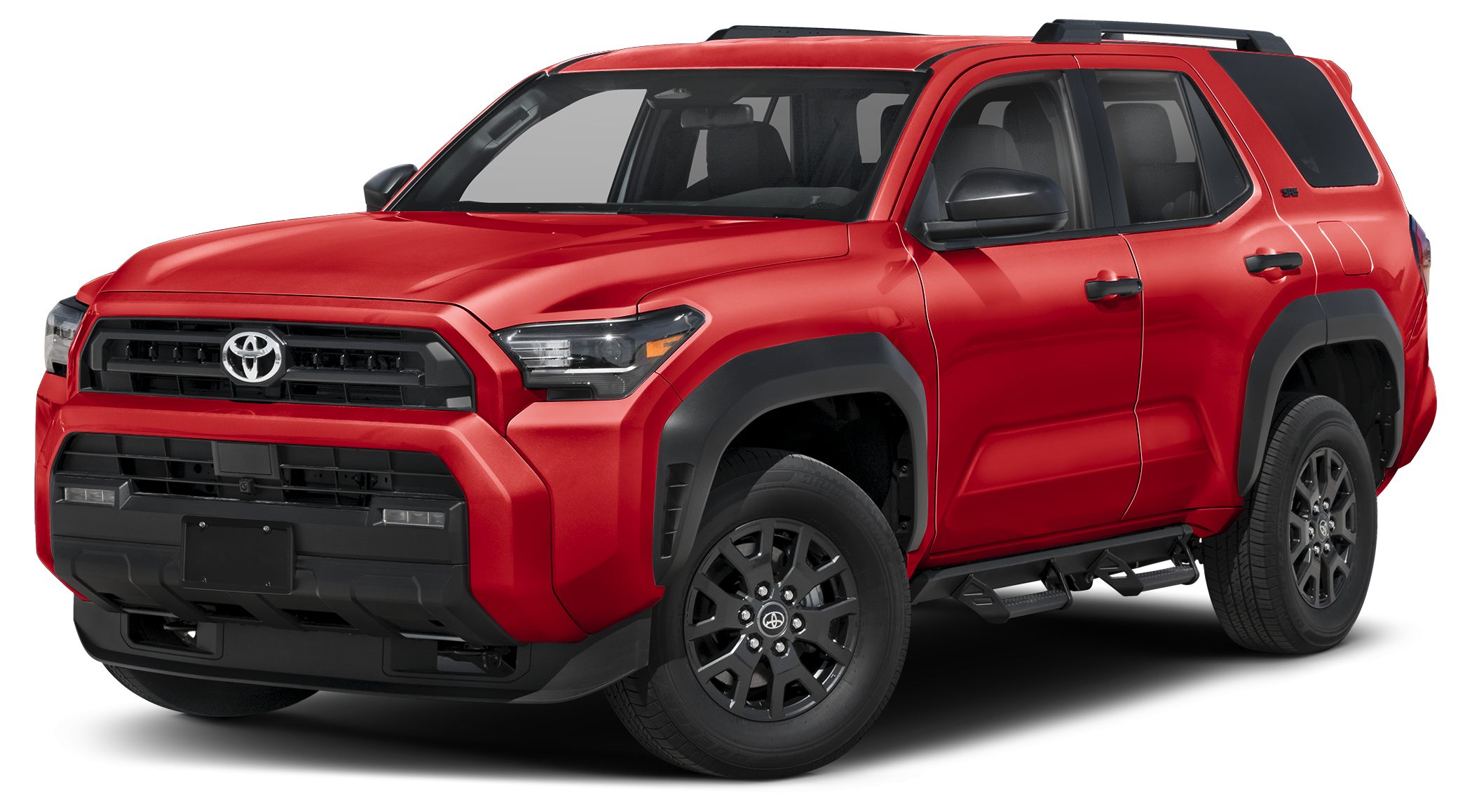
Black 2026 Toyota 4Runner
Continue your design

Your message was sent. You'll receive a response shortly.

2026 Report Card

Car Seat Safety

Latch
A
Infant
B
Rear-facing Convertible
B
Front-facing Convertible
A
Booster
B
See more details
award winner

Safety review

Based on the 2026 Toyota 4Runner base trim
NHTSA crash test and rollover ratings, scored out of 5.
Overall rating
4 out of 5
Combined side rating front seat
5 out of 5
Combined side rating rear seat
5 out of 5
Frontal barrier crash rating driver
4 out of 5
Frontal barrier crash rating passenger
4 out of 5
Overall frontal barrier crash rating
4 out of 5
Overall side crash rating
5 out of 5
Rollover rating
4 out of 5
Side barrier rating
5 out of 5
Side barrier rating driver
5 out of 5
Side barrier rating passenger rear seat
5 out of 5
Side pole rating driver front seat
5 out of 5
18.5%
Risk of rollover
Side barrier rating driver
5 out of 5
Side barrier rating passenger rear seat
5 out of 5
Side pole rating driver front seat
5 out of 5
18.5%
Risk of rollover

Factory warranties

Basic
3 years / 36,000 miles
Corrosion
5 years
Powertrain
5 years / 60,000 miles
Maintenance
2 years / 25,000 miles
Roadside Assistance
2 years

Compare similar vehicles

Select cars to compare for more detailed info.
  • 2026
    Toyota 4Runner
    Starts at
    $42,270
    MPG
    20 City / 26 Hwy
    Seat capacity
    7
    Warranty
    -
    Engine
    Intercooled Turbo Regular Gasoline I-4
    Drivetrain
    Rear-wheel drive
    Compare
  • 2025
    4.8
    Toyota 4Runner
    Starts at
    $41,270
    MPG
    20 City / 26 Hwy
    Seat capacity
    7
    Warranty
    -
    Engine
    Intercooled Turbo Regular Gasoline I-4
    Drivetrain
    Rear-wheel drive
    Compare
  • 2026
    Lexus GX 550
    Starts at
    $66,785
    MPG
    15 City / 21 Hwy
    Seat capacity
    7
    Warranty
    -
    Engine
    Twin Turbo Premium Gasoline V-6
    Drivetrain
    Four-wheel drive
    Compare
  • 2026
    4.7
    Toyota Land Cruiser
    Starts at
    $57,600
    MPG
    22 City / 25 Hwy
    Seat capacity
    5
    Warranty
    -
    Engine
    Intercooled Turbo Gas/Electric I-4
    Drivetrain
    Four-wheel drive
    Compare
  • 2026
    3.0
    Ford Bronco
    Starts at
    $40,795
    MPG
    18 City / 22 Hwy
    Seat capacity
    4
    Warranty
    -
    Engine
    Intercooled Turbo Regular Gasoline I-4
    Drivetrain
    Four-wheel drive
    Compare
  • 2025
    4.3
    Toyota 4Runner Hybrid
    Starts at
    $52,490
    MPG
    23 City / 24 Hwy
    Seat capacity
    5
    Warranty
    60 month/60,000 miles
    Engine
    Intercooled Turbo Gas/Electric I-4
    Drivetrain
    Four-wheel drive
    Compare
  • 2023
    4.3
    Lexus GX 460
    Starts at
    $58,875
    MPG
    15 City / 19 Hwy
    Seat capacity
    6
    Warranty
    -
    Engine
    Premium Unleaded V-8
    Drivetrain
    Four-wheel drive
    Compare
  • 2025
    4.0
    Honda Passport
    Starts at
    $42,400
    MPG
    19 City / 24 Hwy
    Seat capacity
    5
    Warranty
    -
    Engine
    Regular Gasoline V-6
    Drivetrain
    All-wheel drive
    Compare
  • Compare more options
    Use our comparison tool to add any vehicle of your choice and see a full list of specifications and features side-by-side.
    Try it now

Consumer reviews

No reviews yet

This car doesn’t have a consumer review yet.
Write the first review

Latest 4Runner stories

See all Toyota 4Runner articles

Toyota dealers near you

FAQ

What trim levels are available for the 2026 Toyota 4Runner?

The 2026 Toyota 4Runner is available in 6 trim levels:

  • Limited (6 styles)
  • SR5 (6 styles)
  • TRD Off Road (3 styles)
  • TRD Off Road Premium (3 styles)
  • TRD Sport (6 styles)
  • TRD Sport Premium (6 styles)

What is the MPG of the 2026 Toyota 4Runner?

The 2026 Toyota 4Runner offers up to 20 MPG in city driving and 26 MPG on the highway. These figures are based on EPA mileage ratings and are for comparison purposes only. The actual mileage will vary depending on vehicle options, trim level, driving conditions, driving habits, vehicle maintenance, and other factors.

What are some similar vehicles and competitors of the 2026 Toyota 4Runner?

The 2026 Toyota 4Runner compares to and/or competes against the following vehicles:

Toyota 4Runner history

Your list was successfully saved.


Save list Compare
[{"cat":"suv_midsize","stock_type":"new","bodystyle":"SUV","page_type":"research/make-model-year","oem_page":false,"search_fuel_types":["Gasoline Fuel"]}]